Scaling down a massive tray bake into this precise springform allows the fruit to surrender its juices without drowning the crumb in an amateurish puddle.

You are not looking for a fruit-filled sponge that collapses the second it hits the plate. This Sour Cream Peach Coffee Cake relies on a structural acidity that keeps the center lofty and the edges crisp enough to offer a real fight to your fork. When you bake smaller, you gain absolute control over the moisture migration from every single peach slice. Small batch, full conviction is the only way to treat late-summer stone fruit.
Why Small-Batch Works Here for This Sour Cream Peach Coffee Cake
Prep: 10 min · Serves: 12 · Difficulty: Easy
- Sour cream provides structural fat density.
- Brown sugar swirls create rich pockets.
- Fresh peaches offer seasonal moisture control.
- Springform pans enable even side browning.
- Precision ratios prevent a soggy center.
Baking this peach upside down cake taught me that smaller yields offer bigger flavor. Make less. Mean more.
Get The Full Cake Recipe
Print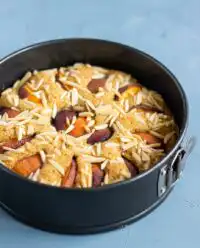
Sour Cream Peach Coffee Cake
- Total Time: 80 mins
- Yield: 12 servings
Description
This small-batch peach coffee cake features a tender, sour cream-enriched crumb and a spiced fruit topping that caramelizes beautifully. It is perfectly designed for a springform pan to ensure structural integrity and even browning, making it the ideal treat for highlighting peak-season stone fruit.
Ingredients
- 2 large eggs
- 1/2 cup buttermilk
- 1/4 cup vegetable oil
- 1/2 cup sour cream
- 1 cup granulated sugar
- 2 cups all-purpose flour
- 1 teaspoon baking powder
- 1/2 teaspoon baking soda
- 1/4 teaspoon salt
- 2 cups fresh peaches, chopped
- 2 tablespoons melted butter
- 1/2 cup dark brown sugar
- 1 teaspoon ground cinnamon
- 4 tablespoons all-purpose flour
- 1/2 cup powdered sugar
- 1 tablespoon heavy cream
- 1/2 teaspoon vanilla extract
Instructions
- Prepare the pan. Preheat your oven to 350 degrees and thoroughly coat a 9-inch springform pan with non-stick spray.
- Emulsify wet ingredients. Beat eggs in a stand mixer until frothy, then gradually add buttermilk, oil, and sour cream until a stable, smooth emulsion forms.
- Incorporate sugar. Add granulated sugar and continue beating for two minutes until the mixture is glossy and slightly thickened.
- Whisk dry ingredients. In a separate bowl, whisk together the flour, baking powder, baking soda, and salt until uniform.
- Combine batter. Add the dry mixture to the wet ingredients on low speed, mixing just until the white streaks of flour disappear.
- Prepare fruit topping. Toss chopped peaches with melted butter, brown sugar, cinnamon, and the extra flour in a clean bowl.
- Assemble and bake. Pour the batter into the pan, top with the peach mixture, swirl gently with a knife, and bake for 70 minutes or until a toothpick comes out clean.
- Cool and finish. Allow the cake to cool completely in the pan before releasing the latch, then whisk glaze ingredients together and drizzle over the top.
Notes
- Use full-fat sour cream to ensure the necessary acidity and richness required for a stable cake structure.
- Bring all dairy ingredients to room temperature before mixing to prevent the oil from seizing during emulsification.
- Measure flour using a digital scale to avoid over-packing, which can result in a dry and crumbly cake texture.
- Tent the cake with aluminum foil if the top browns too quickly before the center has fully set.
- Ensure peaches are firm and not overripe to prevent excess juice from making the center of the cake gummy.
- Prep Time: 10 mins
- Cook Time: 70 mins
- Category: Dessert
- Method: Baking
- Cuisine: American
The Lineup
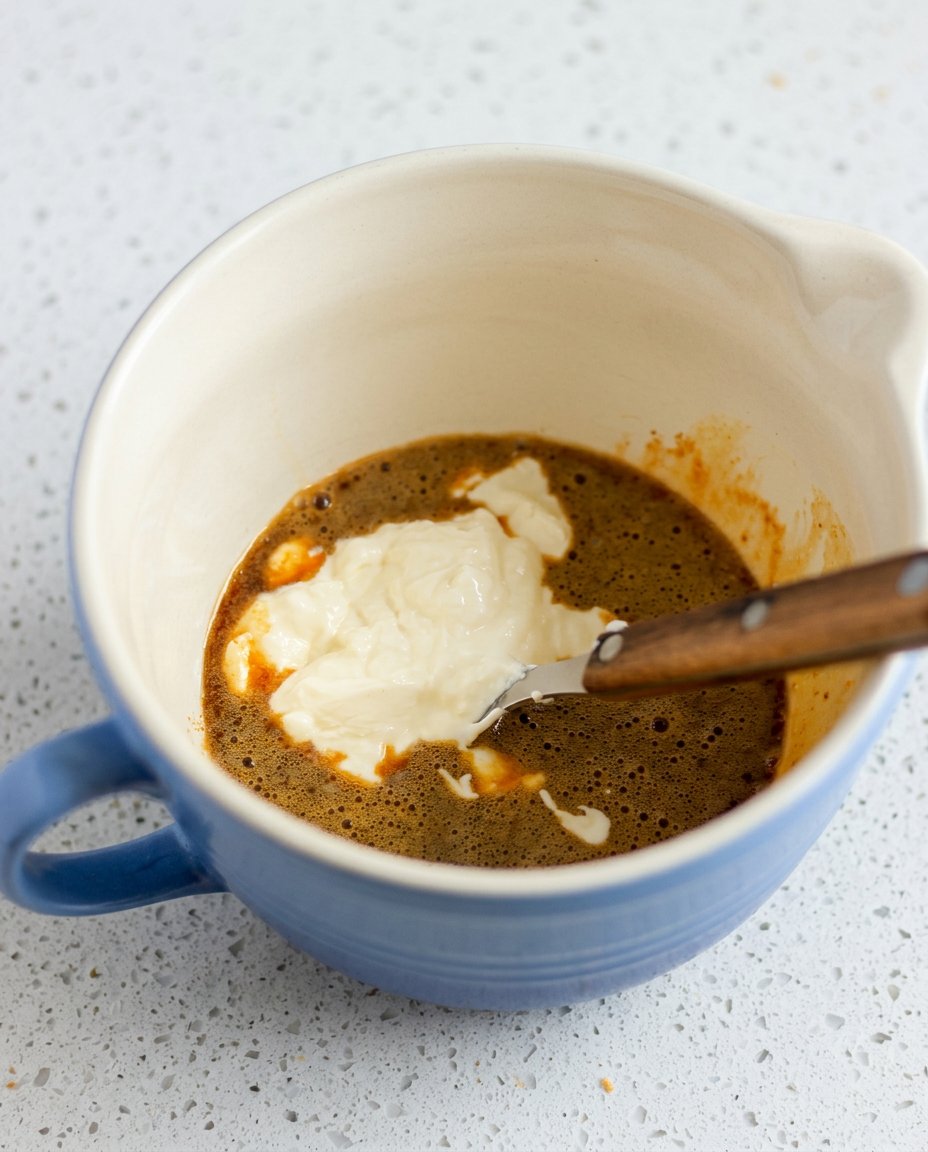
Most bakers treat sour cream like an afterthought, but here it is the lead architect of crumb density. You need the fat and the acid to play nice with the stone fruit so the structure remains firm. This lineup is about balancing the sugar against the natural tang of the dairy.
- Sour Cream: This is your moisture regulator that prevents the flour from becoming tough during the long bake time.
- Buttermilk: The secondary acid that activates the baking soda for a localized lift in the center of the cake.
- Fresh Peaches: Use fruit that is firm to the touch; overripe peaches will dump too much water into your batter.
- Vegetable Oil: Unlike butter, oil remains liquid at room temperature, which translates to a softer mouthfeel the next day.
- Dark Brown Sugar: The molasses content adds a required depth that white sugar simply cannot mimic in the swirl.
- Cinnamon: This spice acts as the aromatic bridge between the buttery batter and the tart stone fruit.
- Eggs: These provide the necessary protein structure to hold up the weight of the fruit filling.
| Ingredient | Why It Matters |
|---|---|
| Sour Cream | Controls crumb moisture and adds necessary fat. |
| Buttermilk | Works with leaveners for a tender, lofty height. |
| Peaches | Provides the central flavor and seasonal texture. |
| Brown Sugar | Creates the deep, caramelized interior swirl effect. |
| Vegetable Oil | Keeps the coffee cake soft even after refrigeration. |
The Method
Step 1: Prep Your Equipment and Oven
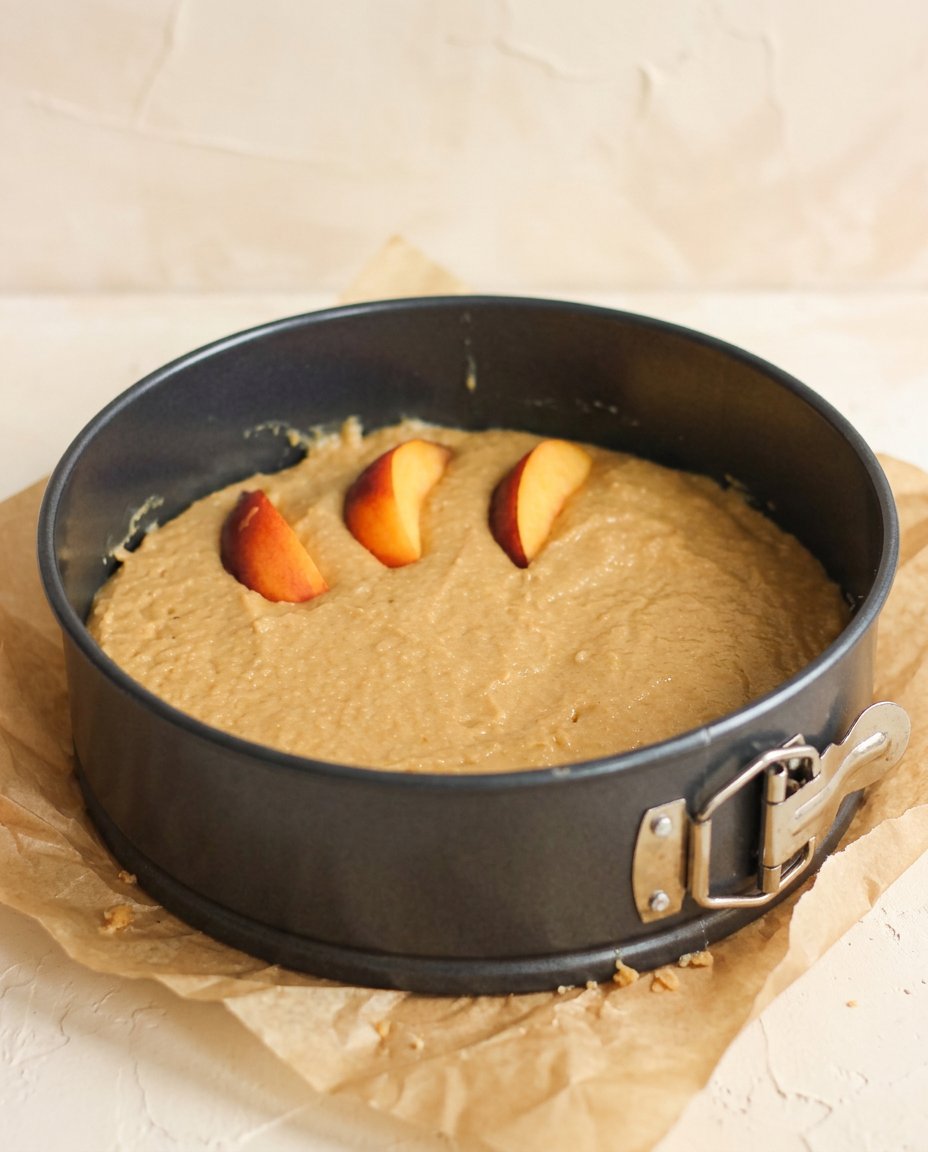
Preheat your oven to 350 degrees and prep a 9-inch springform pan with a thorough coating of non-stick spray. Using a springform pan is non-negotiable here because it allows you to release the cake without flipping it, which would ruin the fruit distribution on top. You should feel the grit of the pan coating to know you have covered every inch of the metal walls.
Step 2: Emulsify the Wet Ingredients
In the bowl of a stand mixer, beat the two large eggs on medium speed until they are light and frothy. Slowly stream in the buttermilk, vegetable oil, and sour cream while the mixer is running to create a stable emulsion. You want the mixture to look like a thick, pale yellow cream with no visible streaks of oil floating on the surface.
Step 3: Aerate with Sugar
Add the granulated sugar to the wet mixture and continue beating for another two minutes. This step is not just about sweetness; it is about dissolving the sugar crystals to create a smooth texture that will eventually caramelize in the oven. The batter should look glossy and slightly thickened once the sugar is fully integrated.
Step 4: Whisk and Combine Dry Goods
In a separate medium bowl, whisk together the flour, baking powder, baking soda, and salt until the mixture is uniform. Switch your mixer to the lowest setting and add the dry ingredients to the wet batter, mixing only until the white streaks of flour disappear. Over-mixing at this stage will develop gluten, turning your cake into a loaf of bread, which is a mistake we must avoid.
Step 5: Transfer the Base Batter
Pour the thick batter into your prepared springform pan, using a silicone spatula to smooth it into an even layer. The batter will be heavy and viscous, which is exactly what you want to support the weight of the peaches. It should sit about halfway up the sides of the pan, leaving plenty of room for the fruit and the rise.
Step 6: Bake Your Sour Cream Peach Coffee Cake for Maximum Golden Color
In a clean bowl, toss your chopped peaches with the melted butter, brown sugar, cinnamon, and the extra four tablespoons of flour. Distribute this heavy fruit mixture over the top of the batter and use a knife to swirl it gently into the top inch. Slide the pan into the oven and bake for 70 minutes, or until the center feels firm and a toothpick comes out clean. If the top browns too fast, tent it loosely with a piece of aluminum foil.
Step 7: Cool to Set the Structure
Remove the cake from the oven and place it on a wire rack to cool completely before you even think about opening the springform latch. The internal steam needs time to redistribute through the crumb, which finishes the cooking process. You will notice the edges pulling away slightly from the sides of the metal as it reaches room temperature.
Step 8: Apply the Vanilla Glaze
Whisk the powdered sugar, softened butter, heavy cream, and vanilla together until the glaze is thick enough to hold a ribbon shape. Drizzle it over the cooled cake in a deliberate pattern, allowing it to pool slightly in the crevices left by the peaches. The white glaze against the dark cinnamon swirls provides the visual drama we are after.
Notes from Testing
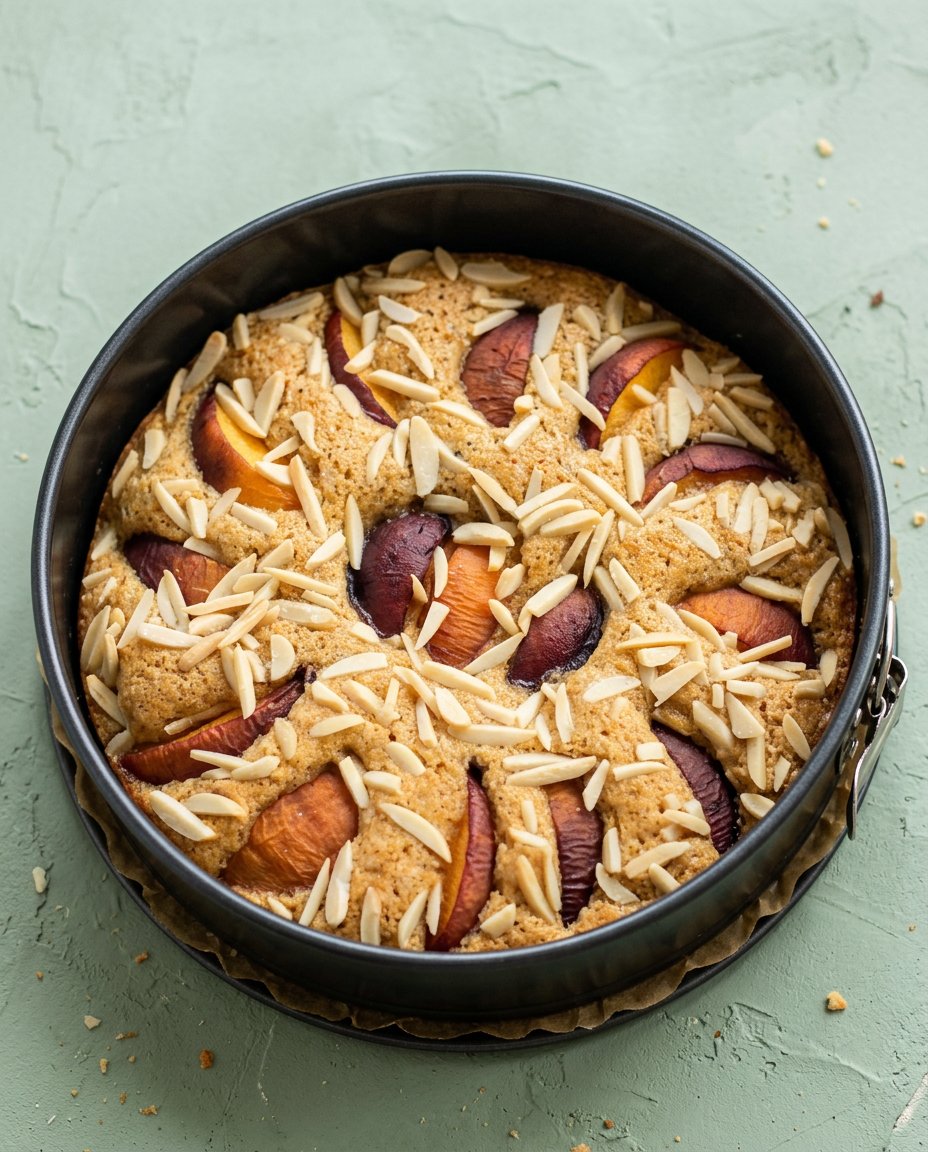
Precision with your leaveners is the difference between a tall cake and a flat mess. The recipe is a starting point, but you are the variable in the kitchen, especially when measuring flour. I recommend using a digital scale to ensure you aren’t packing too much flour into your measuring cups, which leads to a dry, crumbly cake.
Acidity is the secret weapon in this build. If you find your cake lacks a certain brightness, consider how you are using the white almond sour cream cake logic of balancing fats. The sour cream needs to be full-fat to provide the necessary richness that cuts through the sugar.
If your cake is gooey in the center despite the timer going off, here is why and how to fix it. This usually happens because the peaches were too large or too wet, releasing excess juice into the batter. To fix it, tent the cake with foil to prevent further browning and give it another 10 minutes in the oven until the internal temperature reaches 200 degrees.
Texture matters as much as flavor when dealing with stone fruit. When you peel your peaches, use a sharp paring knife or a quick blanching method to remove only the skin. Leaving the skin on can create a chewy, unpleasant texture that interrupts the softness of the crumb.
Temperature of your dairy ingredients can make or break the emulsion. Pull your eggs, sour cream, and buttermilk out of the fridge 30 minutes before you start. Cold ingredients will seize the oil and butter, resulting in a batter that looks curdled and bakes unevenly.
For more insight on the chemistry of dairy in baking, you can study this guide to achieving a tender cake crumb which breaks down the role of acidity. Understanding why we use both baking powder and soda will change how you approach every recipe in your folder.
Frequently Asked Questions
Can I use frozen peaches for this recipe?
Yes, you can use frozen peaches, but you must thaw and drain them thoroughly before mixing. If you add them while still frozen, they will release too much water during the bake, leading to a soggy center. Pat them dry with a paper towel to remove any excess moisture before tossing them with the sugar and flour.
How long does this coffee cake stay fresh?
This cake will keep well in the refrigerator for up to one week if wrapped tightly in plastic wrap and foil. Because of the sour cream and oil, it stays remarkably moist compared to butter-based cakes. I recommend bringing slices to room temperature before serving to allow the fats to soften for the best texture.
What if I do not have a springform pan?
You can use a deep 9-inch square pan, but the removal process will be more difficult. I suggest lining the pan with parchment paper that hangs over the edges so you can lift the entire cake out once it has cooled. That is not a mistake in your equipment — that is data that tells you how to adapt to your kitchen’s limitations.
Why did my peaches sink to the bottom?
Peaches sink when the batter is too thin or the fruit pieces are cut too large and heavy. By tossing the peaches in four tablespoons of flour, you create a coating that helps them grip the batter and stay suspended. Make sure your batter is thick and luscious before you start the swirling process.
Can I substitute the sour cream with Greek yogurt?
Full-fat Greek yogurt is a viable substitute for sour cream because it offers a similar level of acidity and fat. Avoid using non-fat yogurt, as the lack of lipids will result in a tougher, drier crumb that lacks the richness of the original version. The texture will be slightly tangier, but the structural integrity will hold up well.
Is the glaze mandatory for this cake?
While the cake is delicious on its own, the glaze provides a necessary moisture barrier and a punch of sweetness that balances the tart peaches. If you choose to skip it, consider a light dusting of powdered sugar just before serving. However, the glaze helps keep the exposed fruit on top from drying out if the cake sits for a few days.
Rebel Swaps
If you want to deviate from the summer classic, try a seasonal shift by replacing the peaches with firm pears or even tart apples. The structural logic remains the same, but the moisture levels will vary, so keep a close eye on the bake time. You can find similar adaptable techniques in this peach dump cake recipe for when you need a faster fix.
Switching up the spices is another way to take this cake somewhere else entirely. Replace half of the cinnamon with ground cardamom or a pinch of ginger to lean into a more floral, complex flavor profile. These spices pair beautifully with the tang of the sour cream and give the cake a more sophisticated edge.
Nut enthusiasts can add a layer of crunch by tossing half a cup of toasted pecans into the brown sugar filling. The fat from the nuts will meld with the melted butter, creating a praline-like texture inside the cake. This variation adds a savory note that balances the sweetness of the vanilla glaze perfectly.
Cutting, Plating, Presenting
Serve this cake while it is still slightly warm to maximize the contrast between the crisp edges and the soft, fruit-filled center. A sharp serrated knife is the best tool for the job, as it will saw through the peaches without squashing the delicate crumb. I like to serve thick wedges on a plain white plate to let the visual drama of the cinnamon swirl take center stage.
Pairing this with a strong, dark roast coffee is the traditional move for a reason. The bitterness of the coffee cuts through the richness of the sour cream and the sweetness of the glaze. If you are serving this for a brunch, you might also enjoy the pairing ideas found in my banana coffee cake guide, which focuses on complementary morning flavors.
For a more decadent dessert presentation, add a dollop of unsweetened whipped cream or a scoop of vanilla bean ice cream. The cold cream melting into the warm cake creates a sauce that highlights the cinnamon and brown sugar. It turns a humble breakfast cake into something that feels deliberate and celebratory for any occasion.
Sign Off
Baking this cake is a masterclass in moisture management and structural integrity. By choosing the small-batch approach, you have ensured that every bite is concentrated with flavor rather than being lost in a sea of filler. This peach cake is proof that when you respect the chemistry of your ingredients, the results speak for themselves.
You are now equipped to handle the most temperamental summer fruits with confidence. Take this recipe, treat it as your foundation, and make it yours by adjusting the spices or the fruit to match your mood. Tradition noted, but your kitchen is your own laboratory. 🍰
Make less. Mean more. Share your results with the community and let me see those cross-section cuts.