I recall a rainy afternoon spent in a small boulangerie near the Belgian border, where the scent of warm cinnamon and caramelized sugar filled the air. It was there that I first understood the true depth of the speculoos biscuit, a treat that is far more than a simple accompaniment to coffee. This Biscoff Cake is an homage to that memory, translating the crunch of the cookie into a tender, sophisticated sponge.

Achieving the perfect balance in a Biscoff Cake requires a delicate hand and an understanding of how fats and sugars interact within the crumb. By combining premium butter with the unique profile of cookie butter, we create a cake that is remarkably moist yet possesses a refined structure. Every slice offers a journey through layers of spiced warmth and silky buttercream, designed for those who appreciate the quiet mastery of classic flavors.
Mastering the Art of Speculoos
There is a certain magic that occurs when the spiced, caramelized notes of a traditional biscuit meet the soft, airy texture of a well-crafted sponge. This Biscoff Cake is not merely a dessert; it is a study in textural contrast and flavor harmony. Unlike many modern cakes that rely on excessive sweetness, this recipe focuses on the complex, toasted profile of the Biscoff spread, allowing the natural warmth of cinnamon to shine through.
Working with small batches allows us to focus on the precision of the emulsion, ensuring each cake layer is light and consistent. You will find that the inclusion of crushed cookie pieces within the batter provides a delightful surprise—a subtle variation in texture that mimics the artisanal pastries of Europe. It is a recipe that demands patience but rewards the baker with a result that is undeniably superior in both taste and presentation.
Print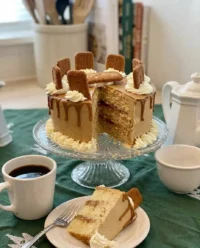
Biscoff Cake
- Total Time: 1 hour 10 mins
- Yield: 12 servings
- Diet: Vegetarian
Description
A sophisticated celebration of Belgian speculoos, this layered cake features a tender, spiced sponge balanced by the deep caramelized notes of Biscoff spread and a cloud-like buttercream. It is an artisanal-quality dessert that perfectly pairs the warmth of cinnamon with a refined, moist crumb.
Ingredients
- All-purpose flour
- Cornstarch
- Baking powder
- Baking soda
- Ground cinnamon
- Unsalted butter, room temperature
- Vegetable oil
- Light brown sugar
- Large eggs, room temperature
- Biscoff spread
- Vanilla extract
- Buttermilk
- Speculoos (Biscoff) cookies
- Powdered sugar
- Milk
Instructions
- Preheat your oven to 180°C (350°F) and grease and line two 8-inch cake tins with parchment paper.
- Sift together the all-purpose flour, cornstarch, baking soda, baking powder, and cinnamon to aerate the dry ingredients.
- Using an electric mixer, cream the butter, vegetable oil, and light brown sugar for at least two minutes until light and fluffy.
- Add the eggs one by one, mixing well after each addition to ensure a stable emulsion, then whisk in the Biscoff spread and vanilla.
- Gently fold in the dry ingredients and buttermilk by hand using a spatula, alternating between them to preserve the batter’s airiness.
- Crush Biscoff cookies into rustic chunks and fold them into the batter before distributing evenly into the prepared tins.
- Bake for 37 to 40 minutes or until a tester comes out with a few moist crumbs.
- Beat the buttercream ingredients (powdered sugar, butter, vanilla, milk) for a full 10 minutes on medium-high speed before folding in cookie crumbs and Biscoff spread.
- Assemble the cooled cake by leveling the layers, creating a buttercream border to hold a center of warmed Biscoff spread between the sponges.
Notes
For the most stable structure, ensure your buttermilk and eggs are at true room temperature before mixing. To achieve a professional finish, chill your cake layers for 30 minutes before assembly to reduce crumbling while you frost.
- Prep Time: 30 mins
- Cook Time: 40 mins
- Category: Dessert
- Method: Baking
- Cuisine: Belgian
The Foundation of Flavor
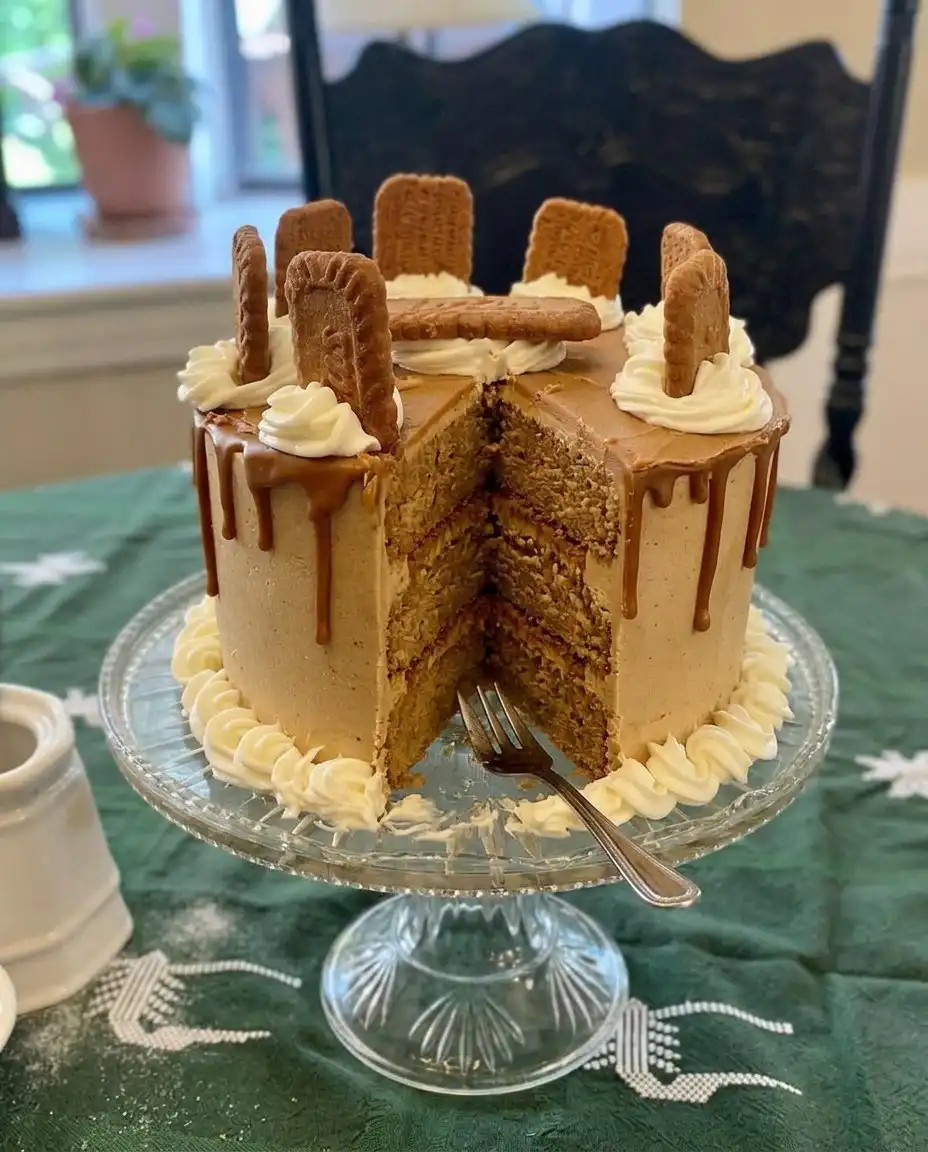
To achieve a result that mirrors the quality of a professional patisserie, the selection of your ingredients is paramount. Each element in this Biscoff Cake serves a specific structural or flavorful purpose.
- All-Purpose Flour & Cornstarch: This combination mimics the lower protein content of French pastry flour, providing a tender crumb that melts on the tongue.
- Leavening Agents: A precise ratio of baking powder and baking soda provides the necessary lift, reacting with the acidity of the buttermilk for a light, airy rise.
- Light Brown Sugar: Unlike white sugar, the molasses content here complements the caramel notes of the cookie butter while adding essential moisture.
- Unsalted Butter & Vegetable Oil: We use both to capture the unparalleled flavor of butter and the lasting moisture of oil, creating a superior mouthfeel.
- Biscoff Spread: This is the heart of the recipe, providing the concentrated essence of toasted spice and caramelized sugar.
- Buttermilk: This provides a subtle tang that balances the sweetness and activates the leavening agents for a perfect sponge structure.
- Speculoos Cookies: Using the plain variety ensures the focus remains on the authentic biscuit flavor without the interference of cream fillings.
The Method of Precision
Step 1: Mises en Place and Preparation
Begin by preheating your oven to 180°C (350°F). In the world of fine pastry, preparation is the first step toward success. Grease two 8-inch cake tins with care and line the bottoms with parchment paper. Sift together the flour, cornstarch, baking soda, baking powder, and cinnamon. Sifting is vital as it aerates the dry ingredients and prevents any clumps, ensuring a uniform texture in the finished sponge.
Step 2: Creating the Emulsion
In a large bowl, combine the room-temperature unsalted butter, vegetable oil, and firmly packed brown sugar. Use an electric mixer to cream these together for at least two minutes. You are looking for a light, creamy consistency where the sugar has begun to dissolve into the fats. This stage creates the tiny air pockets that will expand in the oven, giving the cake its lift.
Step 3: Incorporating the Eggs
Add the large, room-temperature eggs one by one. It is essential to mix for 10 to 15 seconds after each addition. This allows the fats and the liquid in the eggs to emulsify properly. If added too quickly, the batter may break, resulting in a dense cake. Once the eggs are integrated, whisk in the Biscoff spread and vanilla extract until the mixture is glossy and fragrant.
Step 4: The Delicate Fold
From this point forward, put away your electric mixer. Adding the dry ingredients and buttermilk must be done by hand with a spatula to avoid over-developing the gluten. Add half of the flour mixture and fold gently using a “J” motion. Pour in the buttermilk, fold until just combined, and then finish with the remaining flour. This gentle technique preserves the air you have worked so hard to incorporate.
Step 5: Texture and Baking
Break the Biscoff cookies into small, rustic chunks by hand and fold them into the batter. Distribute the mixture evenly between your prepared tins. Lightly tap the tins on the counter to release any large air bubbles that could create holes in the crumb. Bake for 37 to 40 minutes. The cakes are ready when a tester comes out with just a few moist crumbs clinging to it.
Step 6: Aerating the Buttercream
The secret to a professional buttercream is time. Combine the powdered sugar, butter, vanilla, and milk, then beat on medium-high speed for a full 10 minutes. This extended mixing time dissolves the sugar crystals completely and incorporates air, resulting in a frosting that is as light as a cloud. Only then should you fold in the cookie crumbs and the additional Biscoff spread.
Step 7: The Art of Assembly
Level your cooled cake layers with a serrated knife to ensure a stable foundation. Place the first layer on your stand and apply a smooth layer of buttercream. Use a piping bag to create a “dam” or border around the edge of the cake. This architectural step allows you to fill the center with slightly warmed Biscoff spread without it leaking out the sides. Top with the second layer and finish with a smooth coat of frosting and decorative cookie shards.
Pastry Wisdom for Perfect Results
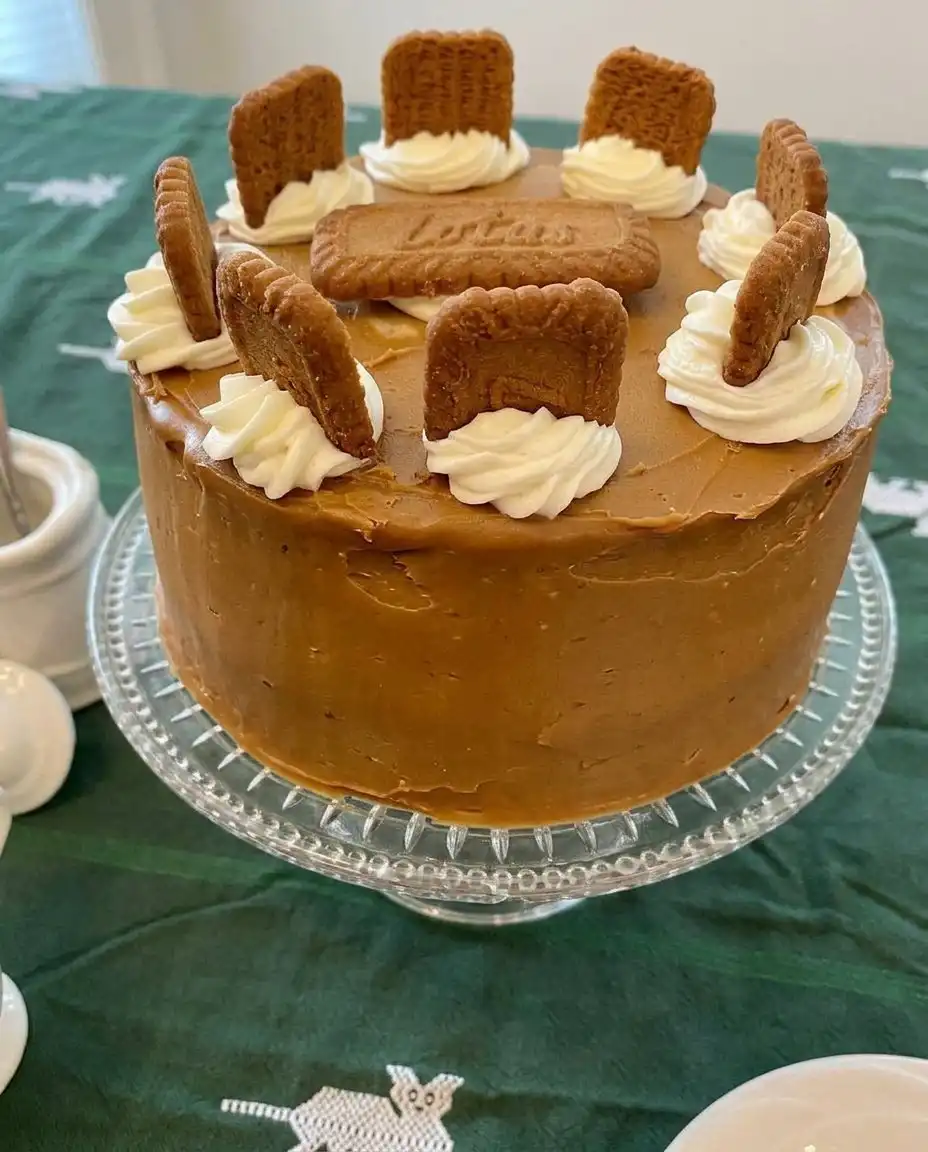
The difference between a good cake and a professional one often lies in the temperature of the ingredients. Verify that your butter, eggs, and buttermilk are all at room temperature (approximately 21°C or 70°F) before you begin. This allows the ingredients to bond into a stable emulsion. If your kitchen is particularly cold, you can briefly warm the eggs in a bowl of tepid water.
When working with cookie butter, precision is key. If you find the spread is too firm to fold into the batter, warm it for a few seconds until it reaches a thick, pourable consistency. For those looking to broaden their repertoire of refined desserts, our recipe index offers a wealth of techniques to explore. You might also find inspiration in this moist Biscoff cake guide for adjusting moisture levels in different climates.
Refined Twists on a Modern Classic
While the traditional Biscoff profile is perfection on its own, a few subtle adjustments can transform the experience. For a more complex flavor, consider adding a teaspoon of espresso powder to the dry ingredients; the bitterness of the coffee beautifully highlights the toasted notes of the cookies. Alternatively, a pinch of Maldon sea salt sprinkled between the layers can provide a sophisticated counterpoint to the sweetness.
If you enjoy the combination of caramel and crunch, you might find interest in our snickers cake, which utilizes similar principles of layering flavors and textures. For a festive occasion, you can also substitute the plain Biscoff cookies in the batter for a version with a chocolate coating, creating small pockets of melted cocoa throughout the sponge.
The Final Presentation
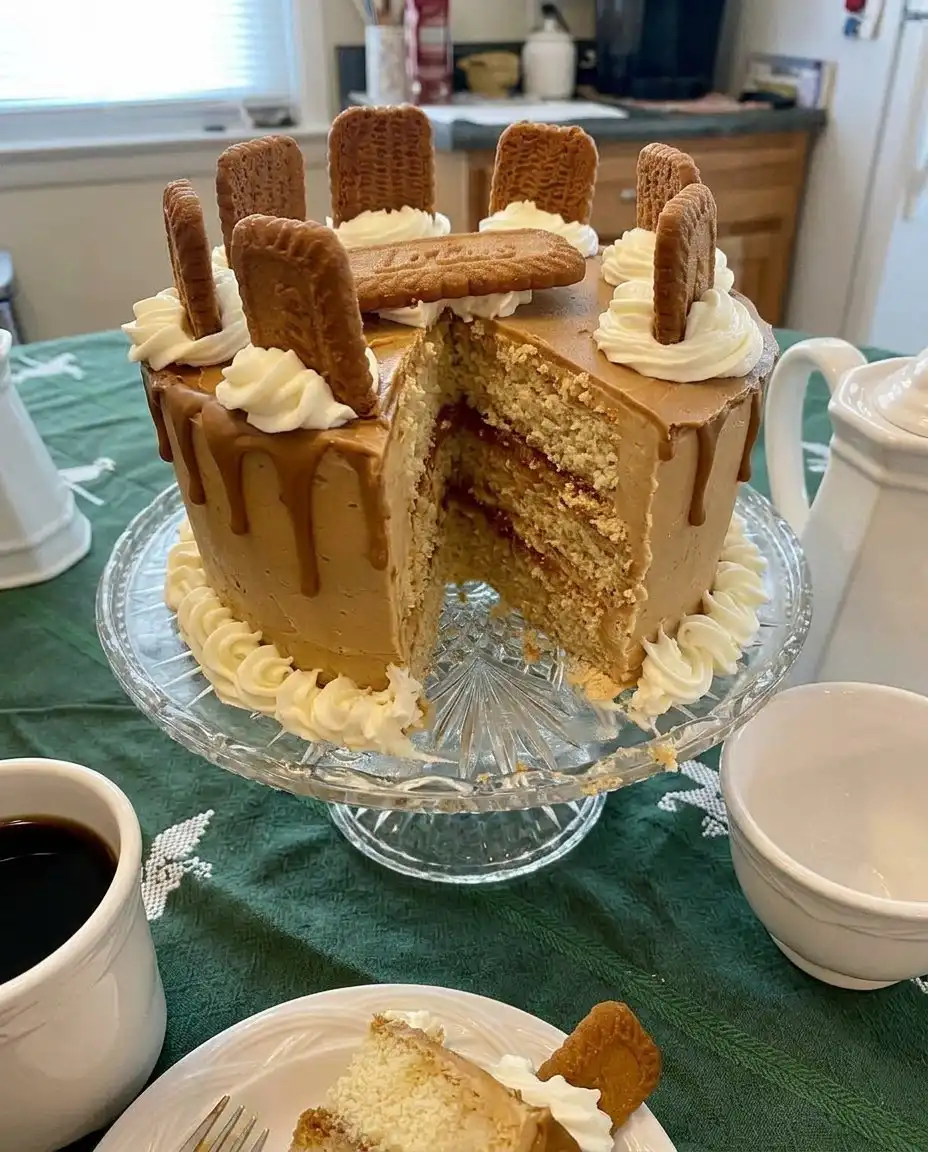
Presentation is the final act of the baker’s craft. Serve this Biscoff Cake on a chilled white porcelain plate to allow the warm tones of the frosting to stand out. A small glass of dessert wine or a dark, bitter espresso provides the perfect beverage pairing, cutting through the richness of the buttercream. If you are preparing this for a gathering, consider our guide on celebration cakes for tips on transporting and displaying multi-layered desserts.
For a truly elegant touch, garnish each slice with a single whole Biscoff cookie placed at an angle and a light dusting of cinnamon. The cake is best enjoyed at room temperature, which allows the fats in the buttercream to soften and the flavors of the spiced sponge to become more pronounced.
The Art of Small Batch Mastery
There is a profound satisfaction in mastering a recipe that honors tradition while embracing modern flavors. This Biscoff Cake is a testament to what can be achieved through patience, quality ingredients, and the careful application of technique. As you share this cake with friends and family, remember that the most beautiful desserts are those made with a devotion to the craft. If you found success with this recipe, I invite you to try our Ferrero Rocher cake for another exploration of refined textures.
I would be delighted to see your creations and the joy they bring to your table. Please share your baking journey with our community on Instagram, Facebook, or Pinterest. Continued learning is the path to true mastery, and I am honored to be part of your journey.