During my early days in a small Parisian patisserie, I learned that the most profound flavors often come from the simplest foundations. This coconut cake is a celebration of that lesson, where the humble coconut is treated with the same reverence as a fine dark chocolate or a delicate vanilla bean. Achieving a perfect crumb requires a deep understanding of how moisture and fat interact within the structure of the sponge.

This particular recipe is a study in texture, balancing the light, airy quality of a classic European sponge with the rich, creamy profile demanded by modern palates. We use a combination of egg whites for lift and sour cream for a tender, moist finish that remains stable under a generous layer of frosting. The result is a cake that feels substantial yet dissolves gracefully on the tongue, leaving a clean, tropical finish.
Mastering the Tropical Classic
You will find that this cake stands apart because of its unwavering commitment to authentic texture. In the world of French pastry, we often speak of the ‘mou’ or the soft, yielding nature of a cake, and this recipe captures that essence perfectly. By using canned coconut milk rather than the thinner carton variety, we introduce a level of fat that creates a silky mouthfeel that is impossible to replicate with water or dairy alone.
Furthermore, the use of five egg whites instead of whole eggs is a deliberate choice to maintain a pristine, snowy white interior. This technique, often seen in high-end wedding cakes, allows the flavor of the coconut and vanilla extracts to shine without being overshadowed by the richness of yolks. It is a sophisticated approach to a flavor profile that is too often made overly sweet or heavy. This cake is a testament to the fact that when we respect the science of our ingredients, the results are always extraordinary.
Print
Coconut Cake
- Total Time: 54 mins
- Yield: 12 servings
- Diet: Vegetarian
Description
A sophisticated triple-layer coconut cake featuring a velvety crumb and a pristine snowy white interior. This recipe combines the richness of full-fat coconut milk with a light, airy structure and a luscious coconut cream cheese frosting for a truly professional result.
Ingredients
- 3 cups cake flour
- 1 tablespoon baking powder
- 1/2 teaspoon baking soda
- 1 teaspoon salt
- 3/4 cup unsalted butter, softened to room temperature
- 1 3/4 cups granulated sugar
- 5 large egg whites, room temperature
- 1/2 cup sour cream, room temperature
- 1 teaspoon vanilla extract
- 1 teaspoon coconut extract
- 1 cup canned full-fat coconut milk, shaken and room temperature
- 1 cup sweetened shredded coconut
- 8 ounces brick cream cheese, softened
- 1/2 cup unsalted butter, softened
- 4 cups confectioners’ sugar
- 2 tablespoons coconut milk
- 1/2 teaspoon vanilla extract
- 1/2 teaspoon coconut extract
- 1 1/2 cups shredded coconut for decoration
Instructions
- Preheat your oven to 350°F (177°C) and prepare three 8-inch cake pans by greasing them and lining the bottoms with parchment paper.
- In a medium bowl, whisk and sift together the cake flour, baking powder, baking soda, and salt twice to ensure proper aeration.
- Using a stand mixer with a paddle attachment, beat the softened butter and granulated sugar on medium-high speed for 2 minutes until pale and fluffy.
- Reduce the speed and add egg whites one at a time, followed by the sour cream, vanilla extract, and coconut extract until incorporated.
- Add the dry ingredients in three parts, alternating with the coconut milk in two parts, beginning and ending with the flour mixture.
- Gently fold in the shredded coconut by hand using a flexible spatula.
- Divide the batter evenly between the three pans and bake for 21 to 24 minutes or until a skewer inserted in the center comes out clean.
- Cool the cakes in their pans for 10 minutes before inverting them onto a wire rack to cool completely.
- Prepare the frosting by beating the butter and cream cheese until smooth, then gradually add confectioners’ sugar, coconut milk, and extracts until light and spreadable.
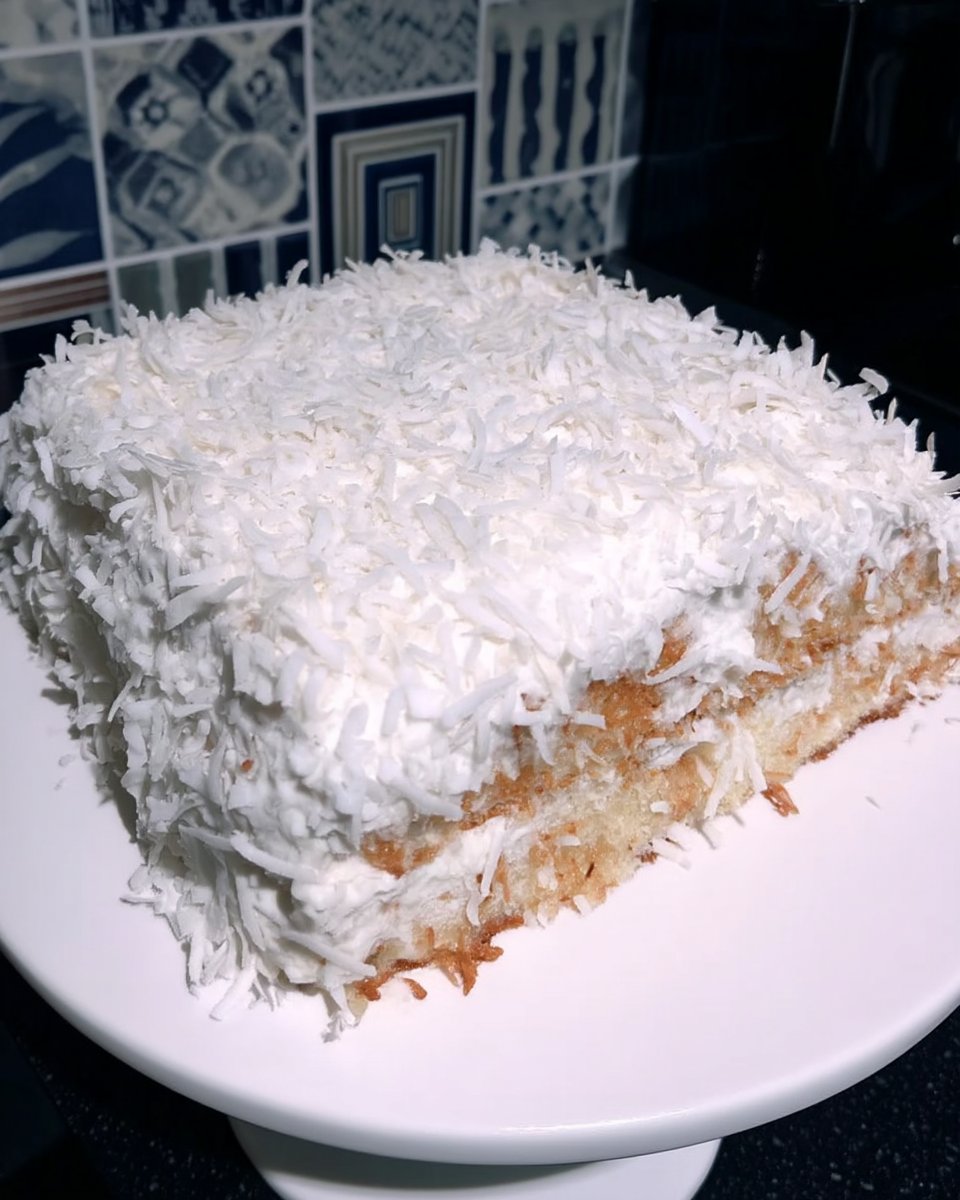
- Level the cooled cakes, layer with frosting, and coat the exterior with remaining frosting before pressing shredded coconut into the sides and top.
Notes
To ensure a successful emulsion, always allow your dairy and eggs to reach room temperature before mixing. For the cleanest presentation, apply a thin crumb coat of frosting and chill the cake for 15 minutes before applying the final layer of decor. Using a kitchen scale to divide the batter between pans will ensure even layers and consistent baking times.
- Prep Time: 30 mins
- Cook Time: 24 mins
- Category: Dessert
- Method: Baking
- Cuisine: French-American
The Foundation of Quality
Success in the kitchen begins with the careful selection of your components. For this cake, every ingredient serves a structural purpose that contributes to the final masterpiece.
- Cake Flour: This is non-negotiable for a refined crumb. Cake flour has a lower protein content (around 7-9%) compared to all-purpose flour, which prevents excess gluten development and results in a soft, velvety texture.
- Unsalted Butter: Quality butter is the heart of the flavor. Ensure it is softened to exactly room temperature (about 65°F or 18°C) so it creams properly with the sugar, creating the tiny air pockets necessary for a light cake.
- Canned Coconut Milk: We require the full-fat, unsweetened variety found in cans. Shake the can well before measuring to incorporate the thick cream that often settles at the top.
- Egg Whites: These provide the structural ‘skeleton’ of the cake without adding fat, allowing the cake to rise beautifully while maintaining its delicate nature.
- Sour Cream: The acidity in sour cream reacts with the baking soda to create a fine, uniform rise while adding a subtle tang that balances the sweetness of the frosting.
The Method
Step 1: Preparation and Precision
Begin by preheating your oven to 350°F (177°C). Prepare three 8-inch cake pans by greasing them thoroughly and lining the bottoms with parchment paper. This step is vital; the parchment provides a barrier that allows the cakes to release easily without tearing the delicate base. Lightly grease the parchment as well to provide a double layer of protection.
Step 2: Sifting and Whisking Dry Goods
In a medium bowl, whisk together the cake flour, baking powder, baking soda, and salt. I recommend sifting these ingredients together twice. Sifting not only removes lumps but also aerates the flour, which is a secret to achieving that coveted professional texture. Set this mixture aside while you focus on the fats.
Step 3: The Creaming Stage
Using a stand mixer fitted with the paddle attachment, beat the softened butter and granulated sugar on medium-high speed. You are looking for the mixture to become pale and notably fluffy, which usually takes about 2 full minutes. This process, known as creaming, is where you build the aeration that will carry the cake’s rise in the oven.
Step 4: Incorporating the Proteins and Aromatics
Lower the mixer speed and add the egg whites one at a time, ensuring each is fully incorporated before adding the next. Follow this with the sour cream, vanilla extract, and coconut extract. Do not be alarmed if the mixture appears slightly curdled at this stage; this is a common occurrence when different fat percentages and temperatures meet, and it will smooth out once the dry ingredients are introduced.
Step 5: Alternating the Liquids and Solids
With the mixer on its lowest setting, add the dry ingredients in three parts, alternating with the coconut milk in two parts. Start and end with the flour. This ‘dry-liquid-dry-liquid-dry’ method prevents the batter from breaking and ensures the gluten is not over-worked. Finally, fold in the shredded coconut by hand using a flexible spatula to ensure you reach the very bottom of the bowl.
Step 6: Baking to Perfection
Divide the batter evenly among the three prepared pans. For true precision, I recommend using a kitchen scale to weigh each pan. Bake for 21 to 24 minutes. The cakes are finished when a wooden skewer inserted into the center comes out clean or with just a few moist crumbs. Allow them to rest in the pans for 10 minutes before inverting them onto a wire rack to cool completely.
Step 7: Crafting the Coconut Cream Cheese Frosting
While the cakes cool, prepare the frosting by beating the butter and brick cream cheese until completely smooth. Gradually add the confectioners’ sugar, coconut milk, and extracts. Beat on high speed for 3 minutes to achieve a light, spreadable consistency. If the frosting feels too soft, a short chill in the refrigerator will restore its structure.
Step 8: Final Assembly and Adornment
Level your cooled cakes by removing any slight domes with a serrated knife. Place the first layer on a stand and spread a generous cup of frosting over it. Repeat with the second and third layers. Cover the top and sides with the remaining frosting, then gently press the shredded coconut into the sides and over the top. The coconut acts as both a flavor agent and a beautiful, rustic decoration.
Pastry Wisdom
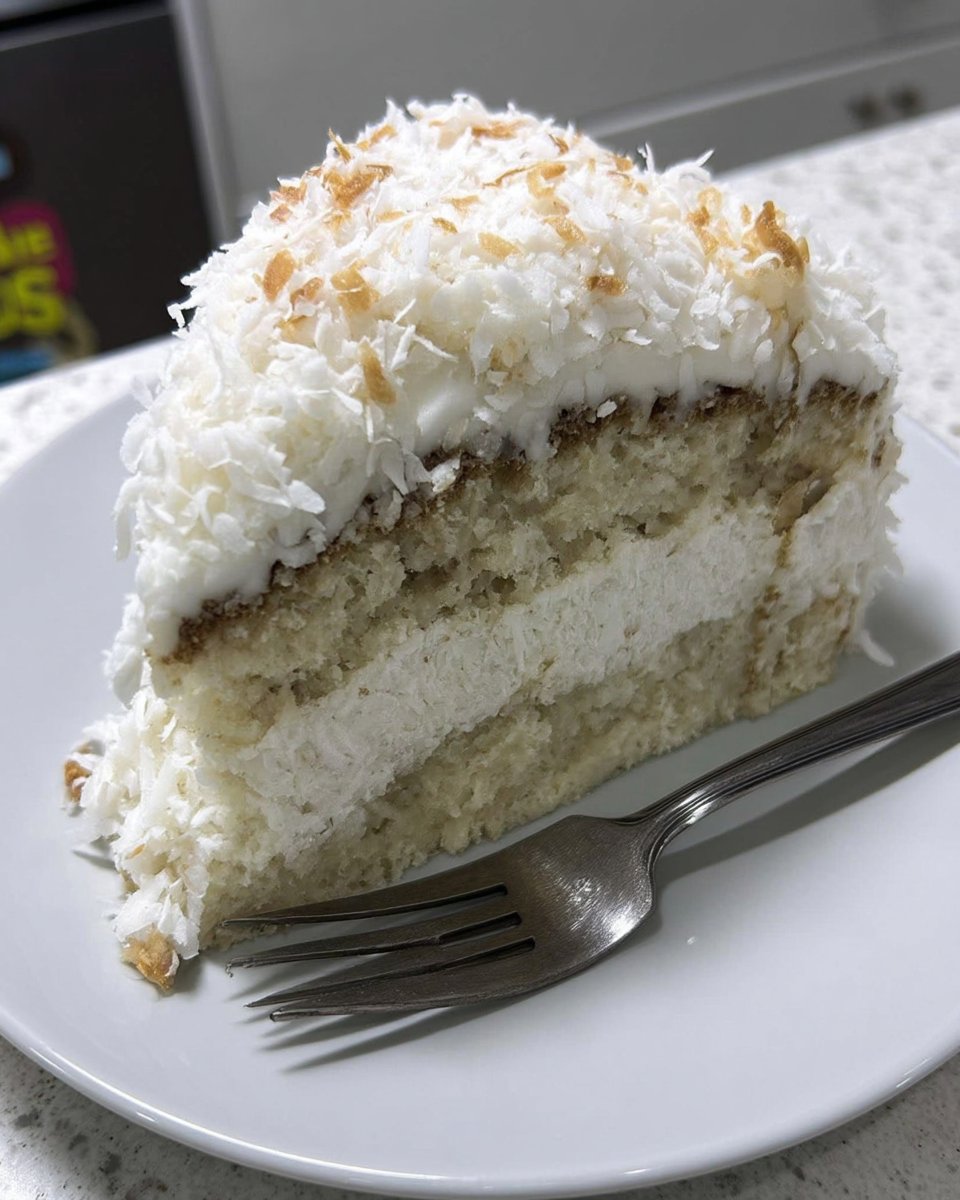
Temperature is perhaps the most overlooked ingredient in a pastry chef’s kitchen. To achieve a perfect emulsion, all your liquid ingredients—the egg whites, sour cream, and coconut milk—must be at room temperature. If they are cold, they will seize the butter, leading to a heavy, dense cake rather than a light sponge. If you find your kitchen is particularly cool, you can place your eggs in a bowl of warm water for a few minutes to take the chill off. For those who wish to expand their repertoire of fundamental bakes, I suggest reviewing our guide on classic recipes to understand the core principles of cake architecture.
Another secret to professional results is the ‘crumb coat.’ Before doing your final frosting, apply a very thin layer of buttercream over the entire cake and refrigerate it for 15 minutes. This seals in any stray crumbs, providing a pristine surface for the final decorative layer. When applying the shredded coconut to the sides, hold the cake stand over a large baking sheet to catch the excess, making the process much cleaner.
Refined Twists
While the classic coconut profile is timeless, there are several ways to adapt this recipe to suit a specific occasion. For a brighter, more acidic finish, you might consider adding the finely grated zest of two limes to the batter and the frosting. This ‘Coconut-Lime’ variation is particularly refreshing during the summer months and aligns with our philosophy of using fruit fresh elements to balance rich fats.
Another elegant modification is to toast the coconut for the exterior decoration. By spreading the shredded coconut on a baking sheet and placing it in a 325°F (163°C) oven for 5 to 7 minutes, you develop a deep, nutty aroma and a golden hue that provides a beautiful contrast to the white frosting. For an even more indulgent experience, you could replace the coconut milk in the frosting with a thick coconut cream or ‘cream of coconut’ for a punchier, sweeter finish.
Presentation and Service
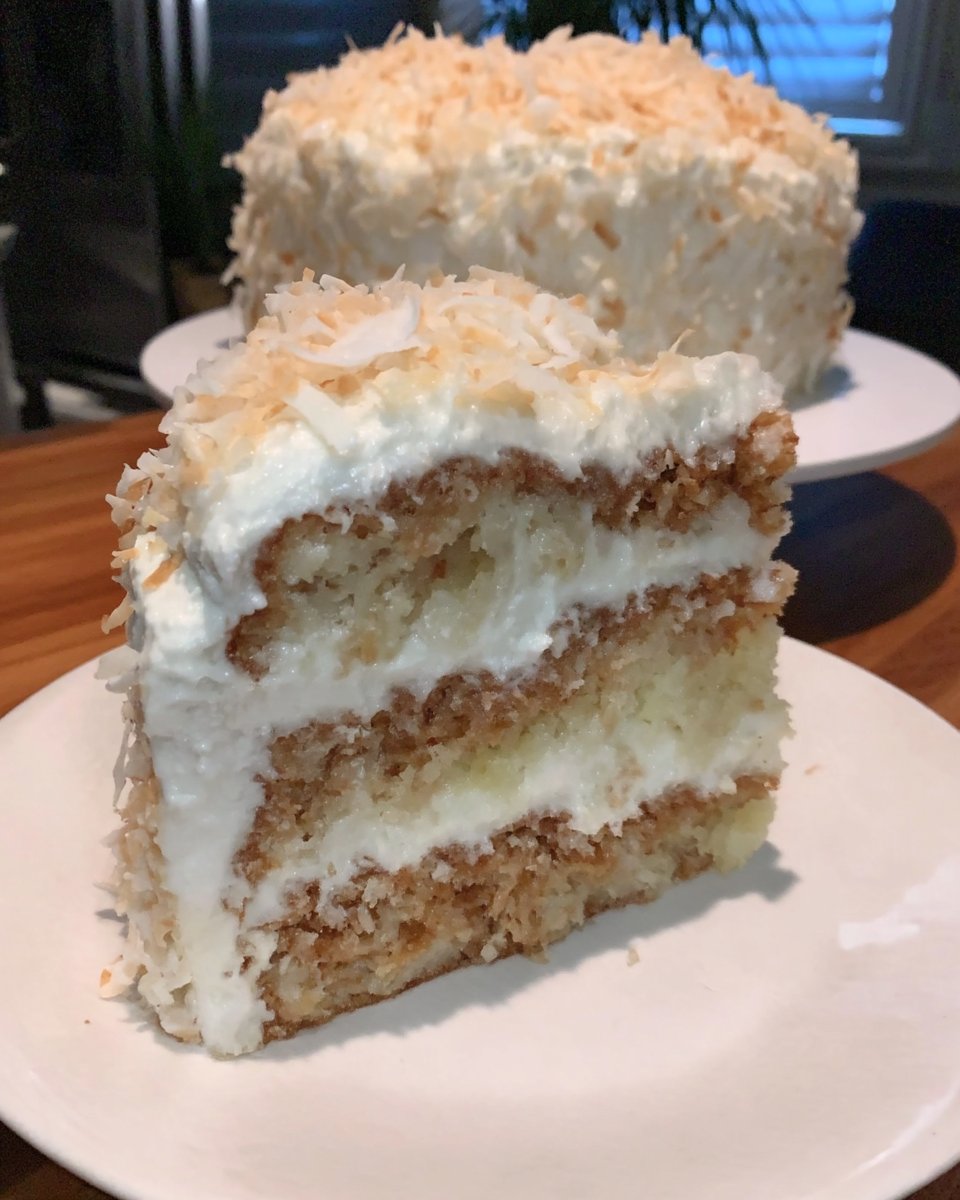
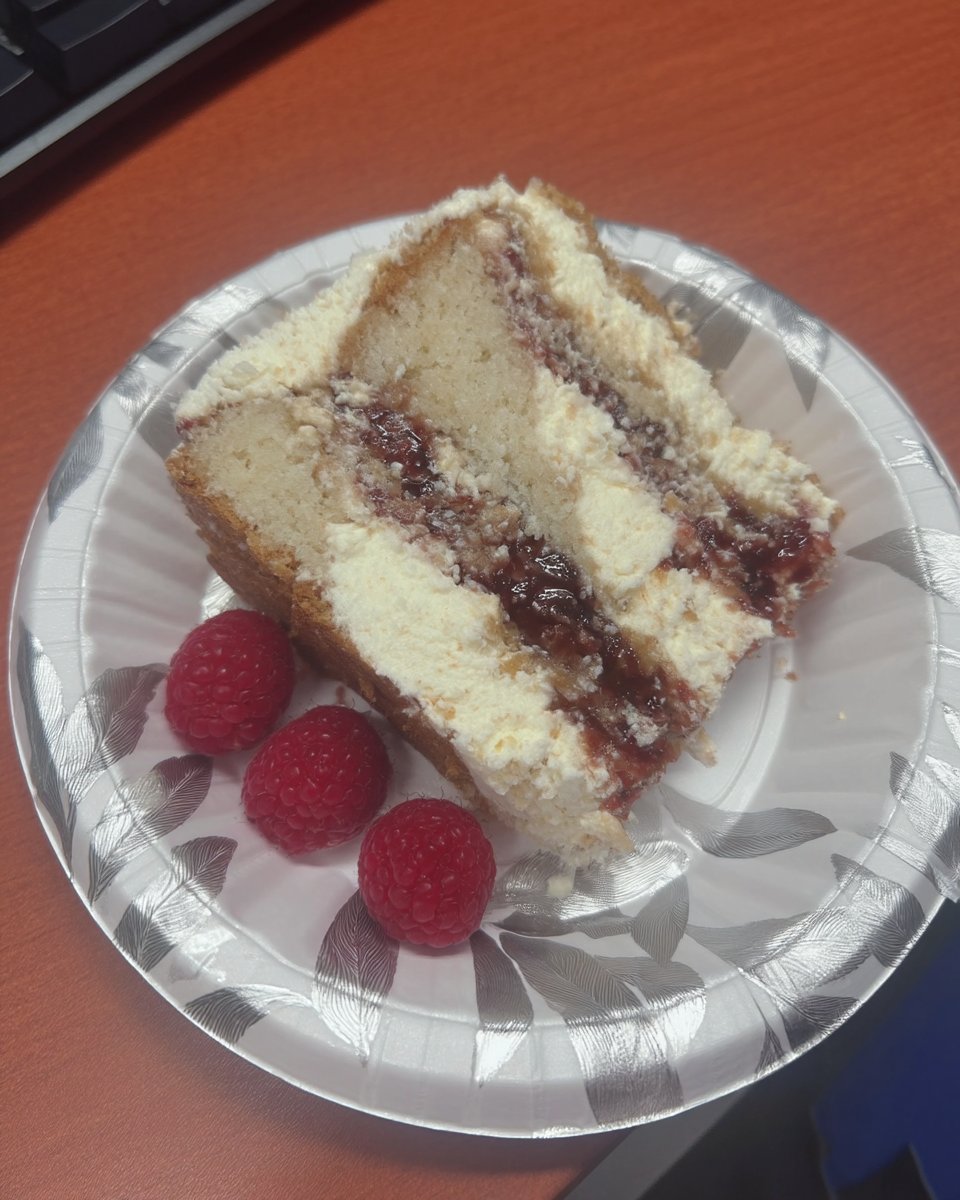
To truly honor the work you have put into this cake, presentation must be handled with care. I prefer to serve this cake on a simple glass or marble pedestal to allow the texture of the coconut to be the visual focus. When slicing, use a long, thin knife dipped in hot water and wiped dry between each cut; this ensures a sharp, clean edge that reveals the beautiful layers within.
This cake pairs wonderfully with a light, sparkling wine or a delicate white tea. If you are hosting a larger gathering, it sits beautifully alongside a strawberry tres leches cake, providing a variety of textures and fruit profiles for your guests. Always allow the cake to sit at room temperature for at least 30 minutes before serving, as the butter in the cake and the cream cheese in the frosting need to soften slightly to provide the best flavor and mouthfeel.
The Art of the Small Batch
Mastering this coconut cake is a milestone for any home baker. It teaches the importance of temperature, the nuance of the creaming method, and the satisfaction of building a dessert from the ground up with premium ingredients. Once you have perfected this delicate sponge, you may find yourself drawn to other deep, traditional flavors, such as our german chocolate cake, which offers a different but equally rewarding technical challenge. For further exploration into the world of dependable, high-quality baking, I often find great inspiration at Sally’s Baking Addiction.
Please share your beautiful creations with our community. You can find us and follow our latest pastry journeys on Instagram, Pinterest, and Facebook. Remember, in the world of fine pastry, your patience and precision are your greatest tools.