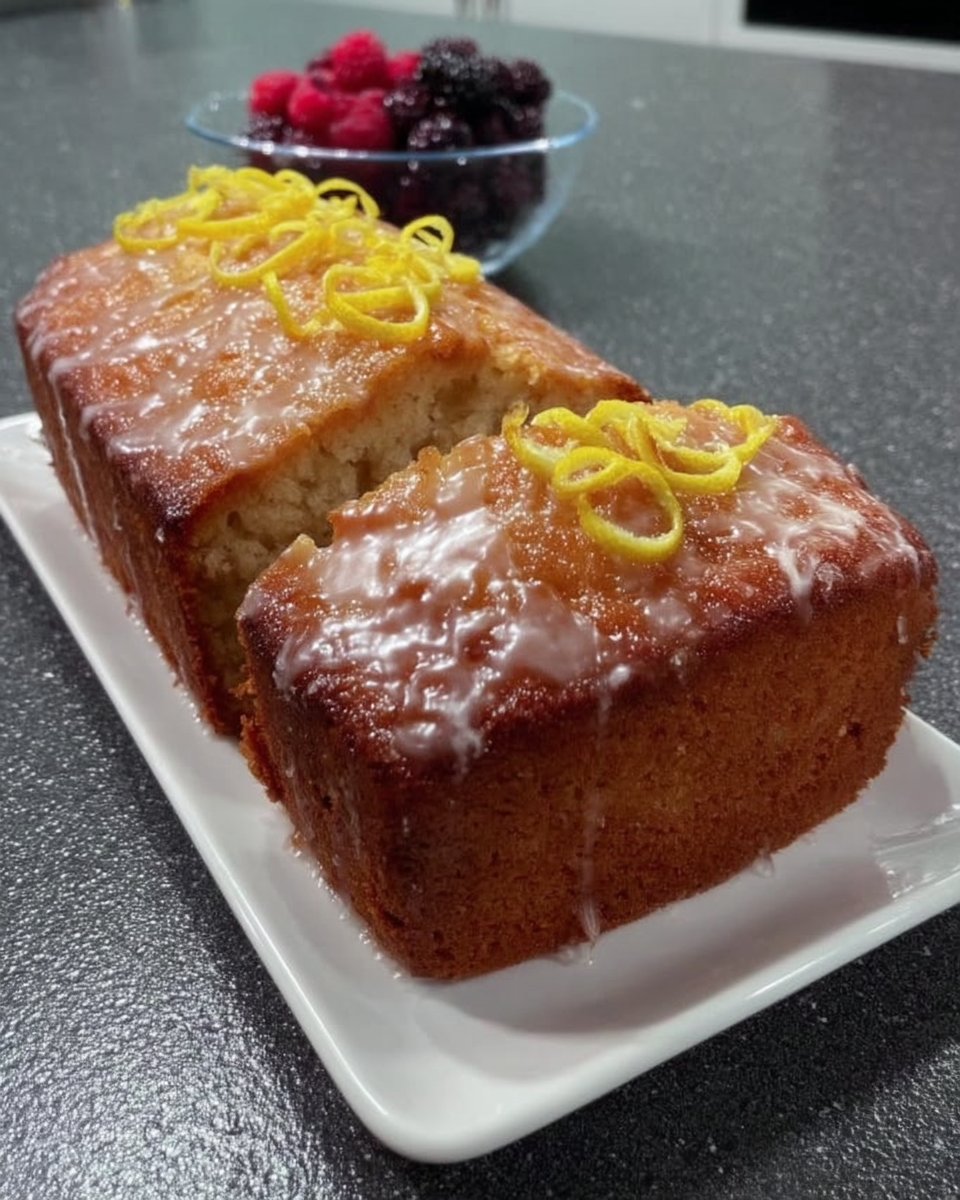
There is a profound joy in working with enriched doughs, a sentiment that takes me back to the patisseries of France where *brioche* is treated with reverence. While the traditional French *Galette des Rois* relies on puff pastry and frangipane, this vibrant American King Cake shares that same spirit of celebration and technique. It requires patience and a gentle hand, but the result—a tender, golden crumb swirled with cinnamon and pecans—is a masterpiece of festive baking.

This recipe yields two generous rings, making it perfect for the communal nature of Mardi Gras. We use a scalded milk method to ensure the crumb remains impossibly soft, while the glaze provides a sweet, distinct finish. Whether you are hiding the baby for tradition or simply seeking a refined sweet bread, this recipe offers the precision you need for a perfect result.
A Festive Tradition of Precision
This King Cake strikes the delicate balance between a light, airy bread and a decadent pastry. The dough is enriched with butter and eggs, similar to a classic brioche, giving it a rich flavor profile that supports the sweet cinnamon-pecan filling without becoming heavy.
What I adore most about this recipe is the technical satisfaction of the rise. Watching the yeast bloom and the dough double in volume confirms that your patience has paid off. It is a festive centerpiece that tastes as vibrant as it looks, perfect for sharing with those you hold dear.
Print
King Cake
- Total Time: 3 hours 10 mins
- Yield: 2 cakes (24 servings)
- Diet: Vegetarian
Description
This traditional Mardi Gras King Cake features a rich, brioche-style dough swirled with a decadent cinnamon-pecan filling. Topped with a sweet glaze and festive sanding sugars, these two golden rings are the ultimate centerpiece for any carnival celebration.
Ingredients
- 1 cup whole milk
- 1/2 cup unsalted butter
- 1/2 cup warm water (110°F/45°C)
- 2 (.25 ounce) packages active dry yeast
- 2/3 cup white sugar, divided
- 2 large eggs
- 1 1/2 teaspoons salt
- 1/2 teaspoon freshly grated nutmeg
- 5 1/2 cups all-purpose flour, divided
- 1 cup brown sugar, packed
- 1 cup pecans, toasted and chopped
- 2 teaspoons ground cinnamon
- 1/2 cup raisins
- 1/2 cup unsalted butter, melted
- 2 cups confectioners’ sugar
- 2 tablespoons water
- Purple, green, and gold sanding sugars
- 1 small plastic baby
Instructions
- Heat milk in a saucepan over medium heat until steaming; stir in 1/2 cup butter until melted and let cool to room temperature.
- In a large bowl, whisk together 110°F water, yeast, and 1 tablespoon of sugar; let stand for 10 minutes until foamy.
- Add the cooled milk mixture, eggs, salt, nutmeg, and remaining sugar to the yeast; whisk vigorously for 30 seconds.
- Using a stand mixer with a dough hook, beat in the flour one cup at a time until a soft dough forms.
- Turn dough onto a floured surface and knead for 8 to 10 minutes until smooth, elastic, and it passes the windowpane test.
- Place in a greased bowl, cover with a damp cloth, and let rise in a warm spot until doubled, about 1.5 hours.
- Punch the dough down and divide into two equal halves; roll each half into a 10×16-inch rectangle.
- Combine brown sugar, pecans, cinnamon, raisins, 2 tablespoons of flour, and melted butter; sprinkle over the dough.
- Roll each rectangle tightly into a log from the long side, pinch the seam, and join ends to form a ring.
- Place on parchment-lined sheets, use scissors to cut steam vents 1/3 way through at 1-inch intervals, and rise for 45 minutes.
- Bake at 375°F (190°C) for 25 minutes until golden brown and the internal temperature reaches 190°F.
- Insert the plastic baby into the bottom of the warm cake, then whisk confectioners’ sugar and water to glaze and decorate with colored sugars.
Notes
To ensure a perfect rise, always verify your yeast is active by checking for a thick foam during the blooming stage. When shaping the rings, tuck the seams under and pinch them firmly to prevent the sweet cinnamon filling from escaping during the baking process.
- Prep Time: 2 hours 45 mins
- Cook Time: 25 mins
- Category: Pastry
- Method: Baking
- Cuisine: American
The Foundation of Flavor
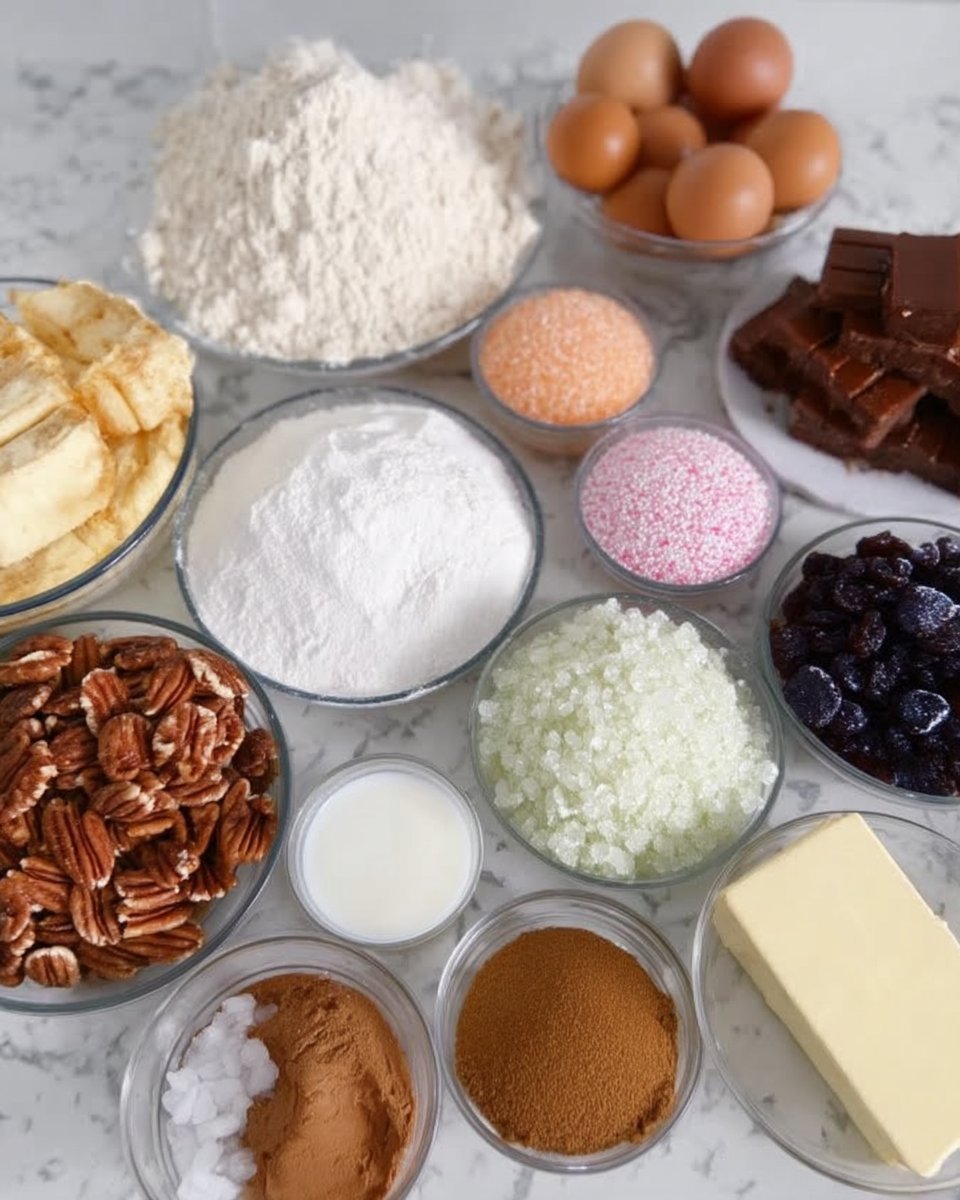
To achieve the perfect texture, we must begin with high-quality ingredients. Precision here ensures the dough is tender rather than tough.
- Yeast: We use active dry yeast. Ensure it is fresh; if it does not foam vigorously with the warm water and sugar, it must be replaced.
- Whole Milk & Butter: The milk is scalded to denature proteins, which softens the gluten structure. Combined with unsalted butter, it creates the tender, rich crumb characteristic of fine enriched breads.
- Flour: All-purpose flour provides just enough protein for structure while keeping the cake soft. Measure by weight or the spoon-and-level method to avoid a dense ring.
- The Aromatics: Freshly grated nutmeg in the dough and cinnamon in the filling provide warmth. Toasting the pecans briefly before adding them can deepen their flavor profile.
Mastering the Method
Step 1: Scald the Milk
Begin by heating the milk in a small saucepan over medium heat. Stir frequently until it is steaming and small bubbles appear at the edges (do not let it boil over). Remove from heat and stir in the butter until melted. Allow this mixture to cool to room temperature. This cooling step is vital; if the milk is too hot, it will kill the yeast.
Step 2: Activate the Yeast
In a large bowl, whisk together warm water (110°F/45°C), the yeast, and 1 tablespoon of sugar. Let this stand for about 10 minutes until the mixture is foamy and alive. This “blooming” confirms your yeast is active.
Step 3: Mix the Dough
Add the cooled milk mixture, eggs, salt, nutmeg, and the remaining sugar to the yeast mixture. Whisk vigorously for 30 seconds. With a stand mixer fitted with a dough hook, beat in the flour, one cup at a time, until the dough comes together.
Step 4: Knead for Structure
Turn the dough onto a lightly floured surface. Knead rhythmically for 8 to 10 minutes until the dough is smooth and elastic. It should pass the “windowpane test”—stretching thin without tearing—indicating properly developed gluten.
Step 5: The First Rise
Place the dough in a greased bowl, turning it once to coat. Cover with a damp cloth and let it rise in a warm, draft-free spot until doubled in volume, approximately 1 ½ hours. Once risen, gently punch it down and divide it into two equal halves.
Step 6: Fill and Shape
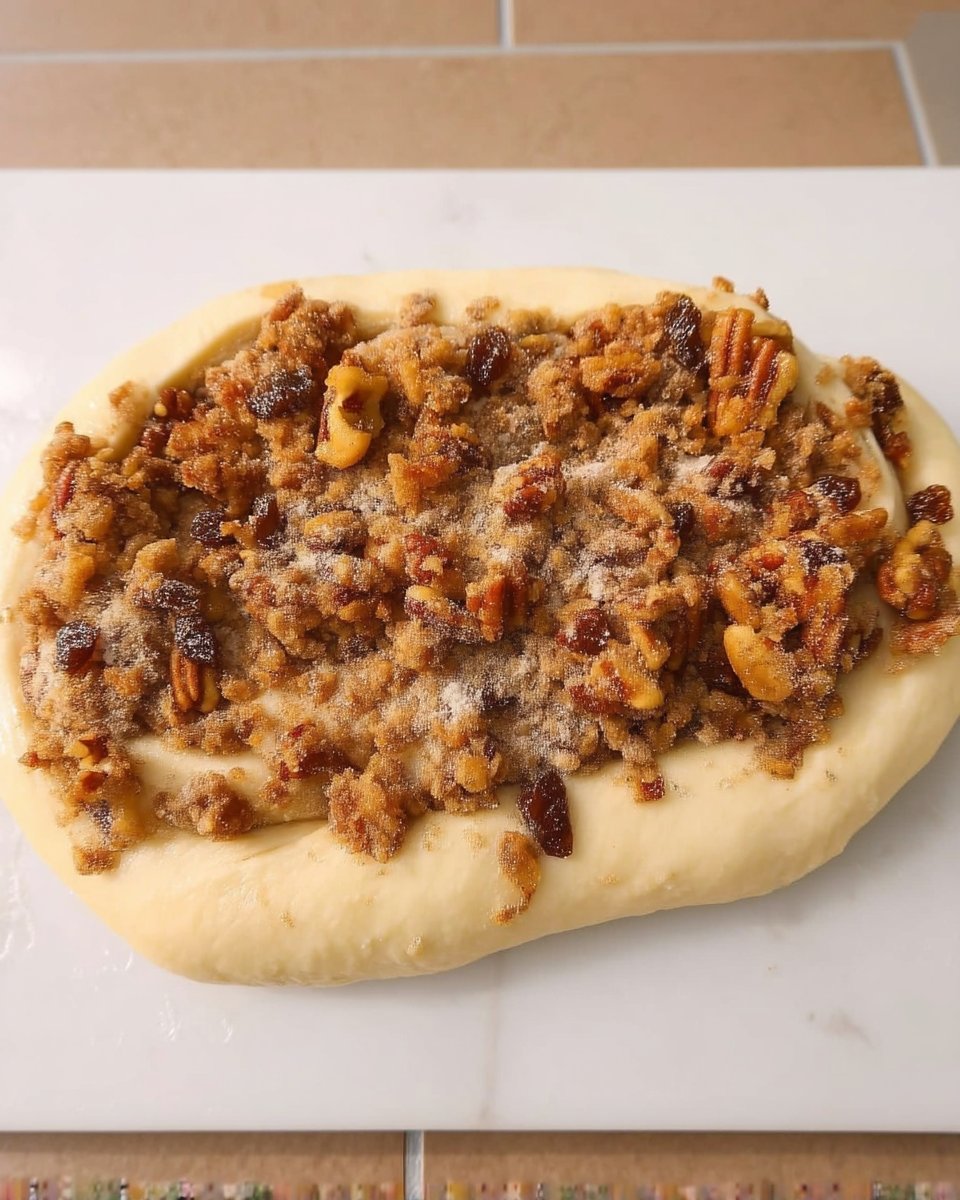
Roll each half into a 10×16-inch rectangle. Mix the brown sugar, pecans, flour, raisins, cinnamon, and melted butter until crumbly. Sprinkle this filling evenly over the dough rectangles. Roll each tightly into a log, sealing the seam. Bring the ends together to form a ring, pinching tightly to close.
Step 7: Second Rise and Bake
Place rings on parchment-lined baking sheets, seam side down. Using scissors, make cuts 1/3 of the way through the ring at 1-inch intervals to allow steam to escape. Cover and let rise again until doubled, about 30–45 minutes. Bake at 375°F (190°C) for 25 minutes, rotating pans halfway, until golden brown and the internal temperature reads 190°F.
Step 8: Glaze and Serve
Once baked, carefully insert the plastic baby into the bottom of the warm cakes. Whisk the confectioners’ sugar and water to create a smooth glaze. Pour over the warm cakes and immediately sprinkle with purple, green, and gold sugar.
Laura’s Pastry Secrets
- Temperature Control: Yeast is a living organism. Use a digital thermometer to ensure your water is exactly 110°F. Too cool, and it won’t wake up; too hot, and it will die.
- The Scalding Technique: Do not skip scalding the milk. This process deactivates whey proteins that can weaken gluten, ensuring your cake has a lofty, structured rise. It is a technique used in many classic recipes to improve texture.
- Seam Management: When forming your rings, pinch the seams aggressively and place the ring seam-side down on the baking sheet. This prevents the filling from leaking out during the bake.
- Doneness Cue: While color is a good indicator, an internal temperature of 190°F (88°C) is the most precise way to ensure the center is fully baked but not dry.
Refined Twists on the Classic
- Cream Cheese Filling: For a richer variation, beat 8 ounces of cream cheese with an egg yolk and sugar, spreading it alongside the cinnamon mixture. This adds a tang reminiscent of a Danish pastry.
- Fruit Infusions: Incorporate dried cherries or orange zest into the dough for a citrus brightness. If you enjoy fruit-forward pastries, you might appreciate the technique in our blueberry coffee cake.
- Alternate Shapes: While the ring is traditional, you can also braid the dough strands for a more intricate appearance, similar to *challah* or *babka*. For another perspective on this festive classic, you might enjoy exploring the King Cake recipe from House of Nash Eats.
Presentation and Pairing
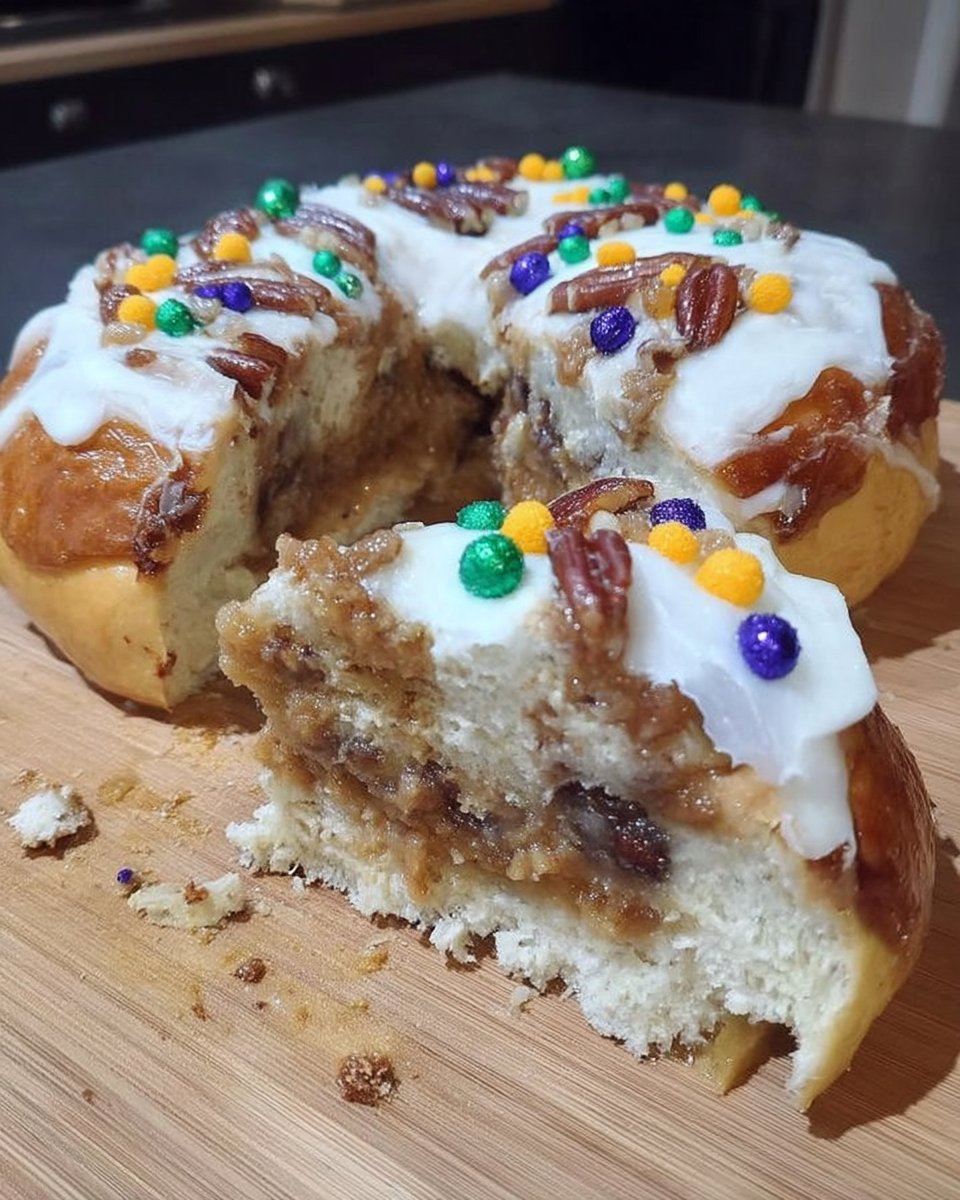
Serve this cake fresh, preferably slightly warm, to appreciate the softness of the enriched dough. A slice pairs beautifully with a dark roast coffee or a *Café au Lait* to balance the sweetness of the glaze.
For a refined presentation, ensure your sanding sugar bands are distinct and vibrant. This centerpiece belongs among your most cherished celebration cakes, offering both visual beauty and historical significance.
The Joy of Sharing
Baking a King Cake is about more than just the pastry; it is an act of participating in a centuries-old tradition of gathering. The care you put into scalding the milk, kneading the dough, and shaping the ring translates directly into the joy of your guests. Like a timeless vintage cake, this recipe connects us to history through the language of flour and sugar.
I hope this recipe brings warmth and elegance to your table. *Bon appétit!*
Connect with us: