I vividly recall my first autumn at a small Parisian pastry atelier, where we spent entire afternoons mastering the subtle art of color gradients in sponge batter. Our instructor insisted that the beauty of an Ombre Cake lies not in bold contrasts, but in the graceful, almost imperceptible transition from one shade to the next. It was a lesson in patience, requiring us to measure out pigments with the same care we used for our precious fleur de sel to create something truly harmonious.

This particular version pairs the tropical richness of coconut milk with the bright, clean acidity of lemon and the tart snap of fresh blueberries. We use a sturdy yet remarkably tender base that maintains its structural integrity under the weight of a silky coconut buttercream. By focusing on small-batch precision, you can achieve a level of detail and crumb quality that is often lost in larger, more commercial productions.
The Art of This Technique
Mastering the Ombre Cake is a significant milestone for any dedicated home baker because it requires a balance of chemical precision and artistic intuition. This recipe is beloved not just for its striking visual appeal, but for the way the coconut milk provides a moist, tight crumb that feels luxurious on the palate. Unlike standard sponges that can be airy but dry, this method produces a cake with a satisfying weight and a delicate, melting texture that honors traditional European techniques.
Furthermore, the flavor profile is a thoughtful study in contrasts. The sweetness of the powdered sugar in the frosting is tempered by the natural oils of the lemon zest and the earthiness of the blueberries. When you cut into the cake, the gradient reveals your technical skill, showing that you have treated each layer as an individual component of a larger masterpiece. It is a dessert that demands a slower pace, encouraging you to appreciate the process as much as the final, beautiful result.
Print
Ombre Cake
- Total Time: 1 hour 10 mins
- Yield: 12 servings
- Diet: Vegetarian
Description
This elegant three-layer dessert features a sophisticated color gradient and a tropical flavor profile of coconut and lemon. A moist, French-inspired sponge is paired with a silky citrus buttercream and fresh blueberries for a professional finish.
Ingredients
- 200 g unsalted butter, softened (approx. 7 oz)
- 200 g granulated sugar (approx. 1 cup)
- 6 large eggs, room temperature
- 425 g all-purpose flour (approx. 3.4 cups)
- 10 g baking powder (approx. 2 tsp)
- 20 cl coconut milk (approx. 3/4 cup)
- Yellow and blue gel food coloring
- 200 g powdered sugar, sifted
- 1 tsp coconut aroma
- Zest of 1 lemon
- Fresh blueberries
Instructions
- Cream the softened butter and granulated sugar together in a large bowl until the mixture is light, fluffy, and well-aerated.
- Add the eggs one at a time, beating thoroughly after each addition to create a stable emulsion.
- Sift the flour and baking powder together, then gently fold them into the wet ingredients using a spatula until no streaks remain.
- Slowly pour in the coconut milk and stir gently until the batter is smooth, glossy, and fragrant.
- Divide the batter into three equal portions and use the yellow and blue gel colors to create three distinct shades for the ombre gradient.
- Pour the batters into greased and lined 18 cm (7-inch) pans and bake at 180°C (350°F) for 25 to 30 minutes.
- While the cakes cool, beat 200 g of softened butter with the powdered sugar, coconut aroma, and lemon zest until voluminous.
- Assemble the cake by stacking the layers from darkest to lightest with frosting in between, then apply a final coat and garnish with blueberries.
Notes
For the most precise color transition, use a toothpick to add gel coloring in very small increments. To achieve the cleanest slices that showcase the internal gradient, ensure the cake is thoroughly chilled and use a sharp knife dipped in hot water between each cut.
- Prep Time: 40 mins
- Cook Time: 30 mins
- Category: Dessert
- Method: Baking
- Cuisine: French-inspired
The Foundation of Quality
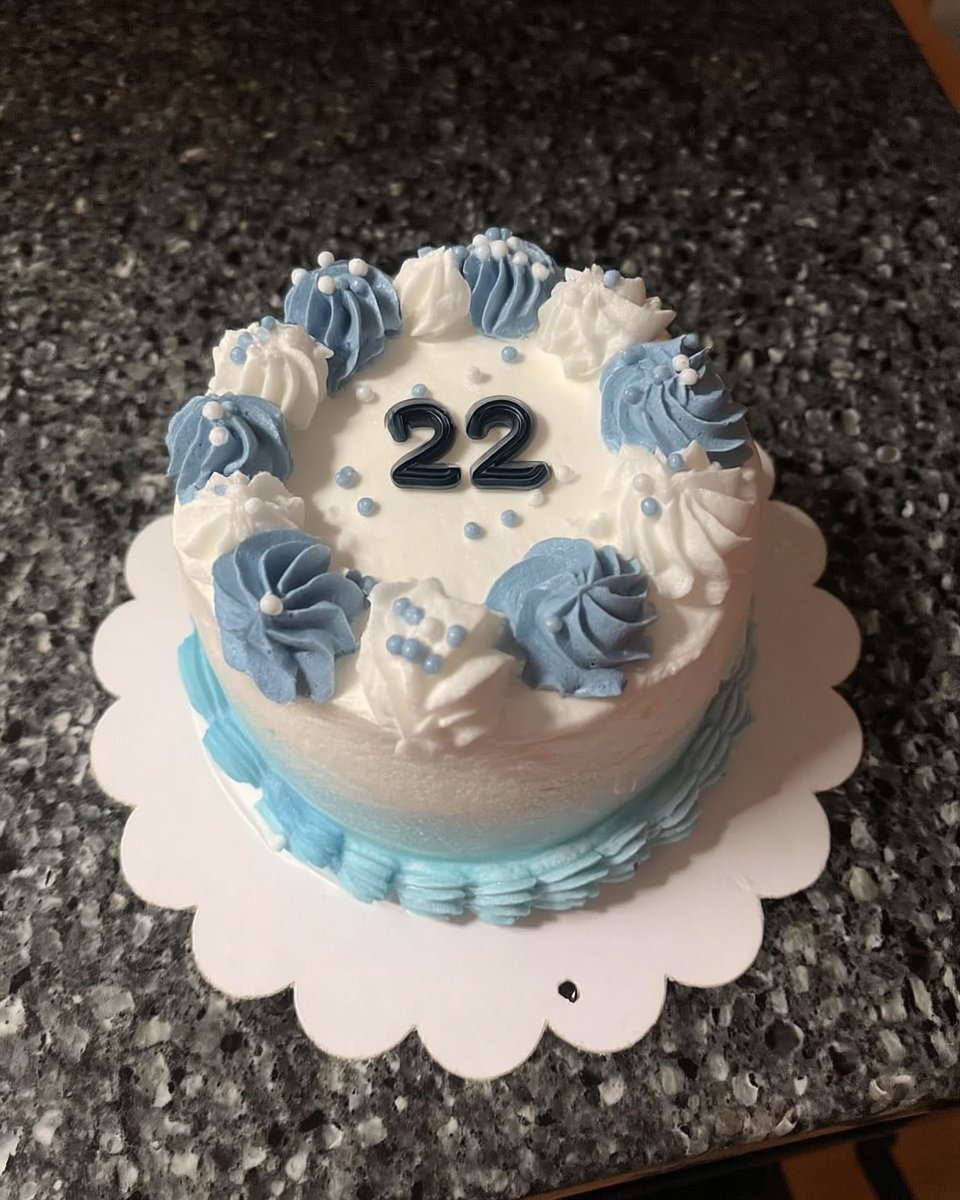
To achieve a professional result, every ingredient must be selected for its quality and prepared at the correct temperature to create a stable emulsion.
- Unsalted Butter (200 g / 7 oz): Use a high-fat European-style butter if possible. It must be softened to approximately 18-20°C (65-68°F) to allow for proper aeration during the creaming stage.
- Granulated Sugar (200 g / 1 cup): Fine sugar crystals help to create those necessary air pockets when beaten with the butter.
- Fresh Eggs (6 large): These provide the primary structure and leavening. They must be at room temperature to prevent the batter from breaking or curdling.
- All-Purpose Flour (425 g / 3.4 cups): This specific weight provides enough protein to support the height of the layers while maintaining a tender bite.
- Baking Powder (10 g / 2 tsp): This chemical leavener provides a consistent lift, working in tandem with the air incorporated during mixing.
- Coconut Milk (20 cl / approx. 3/4 cup): This adds fat and moisture, resulting in a unique, velvety mouthfeel and a subtle tropical aroma.
- Food Coloring (Yellow and Blue): Use professional-grade gel colors to achieve precise hues without altering the hydration of the batter.
- Fresh Blueberries: These offer a burst of acidity and color, grounding the sweetness of the buttercream.
- Coconut Aroma and Lemon Zest: These concentrated flavor agents define the sophisticated character of the frosting.
The Step-by-Step Method
Step 1: Creaming the Fat and Sugar
Begin by placing your 200 g of softened butter and 200 g of sugar into a large bowl. Use a whisk or a stand mixer to beat them until the mixture is visibly lighter in color and has a fluffy, aerated texture. This step is vital because the sugar crystals cut through the butter to create tiny voids that will expand in the oven. Take your time here; several minutes of mixing will produce a much more delicate cake.
Step 2: Incorporating the Eggs
Add the six eggs one at a time, beating thoroughly after each addition. You are looking to create a perfect emulsion between the fat in the butter and the water in the eggs. If the batter looks like it is separating, simply add a spoonful of your measured flour to help it bind. Proper emulsion is the secret to a cake that is moist rather than greasy.
Step 3: Folding the Dry Ingredients
Sift the 425 g of flour and 10 g of baking powder together to remove any lumps and introduce even more air. Gently fold these into the wet mixture using a large spatula. Work from the bottom up, turning the bowl as you go. You want to mix until no streaks of flour remain, but avoid overworking the batter, which would develop too much gluten and result in a tough texture.
Step 4: Adding the Coconut Milk
Slowly pour in the 20 cl of coconut milk. This addition should be done with care to keep the batter smooth and homogeneous. The coconut milk should be at room temperature to match the rest of the ingredients. Once incorporated, the batter should be thick, glossy, and fragrant with a hint of the tropics.
Step 5: Tinting the Layers
Divide the batter into three equal portions. Leave the first portion plain for a bright yellow base. To the second, add a tiny amount of yellow and blue gel to create a soft, pale teal. To the third, add a bit more pigment for a deeper, more saturated ocean blue. Use a clean toothpick for each color adjustment to maintain total control over the gradient.
Step 6: The Precision Bake
Distribute the colored batters into prepared 18 cm (7-inch) pans that have been greased and lined with parchment paper. Bake at 180°C (350°F) for 25 to 30 minutes. Do not open the oven door too early, as the sudden drop in temperature can cause the delicate centers to collapse. The cakes are finished when a wooden skewer comes out clean and the edges just begin to pull away from the pan.
Step 7: Preparing the Coconut Frosting
While the layers cool on a wire rack, beat 200 g of softened butter with 200 g of sifted powdered sugar. Once the mixture is white and voluminous, add the coconut aroma and the zest of one lemon. The zest provides a bright, citrusy perfume that cuts through the richness of the butter. This frosting should be firm enough to hold its shape but soft enough to spread without tearing the cake surface.
Step 8: Assembly and Decoration
Place the darkest layer on your serving plate and spread a thin, even layer of buttercream over it. Follow with the medium-toned layer, and finally the lightest layer on top. Apply a thin crumb coat to the entire cake and chill for twenty minutes. Finish with a smooth final layer of frosting, and garnish the top with fresh blueberries and delicate edible flowers for a look that is as refined as it is delicious.
Precision Secrets for the Perfect Crumb
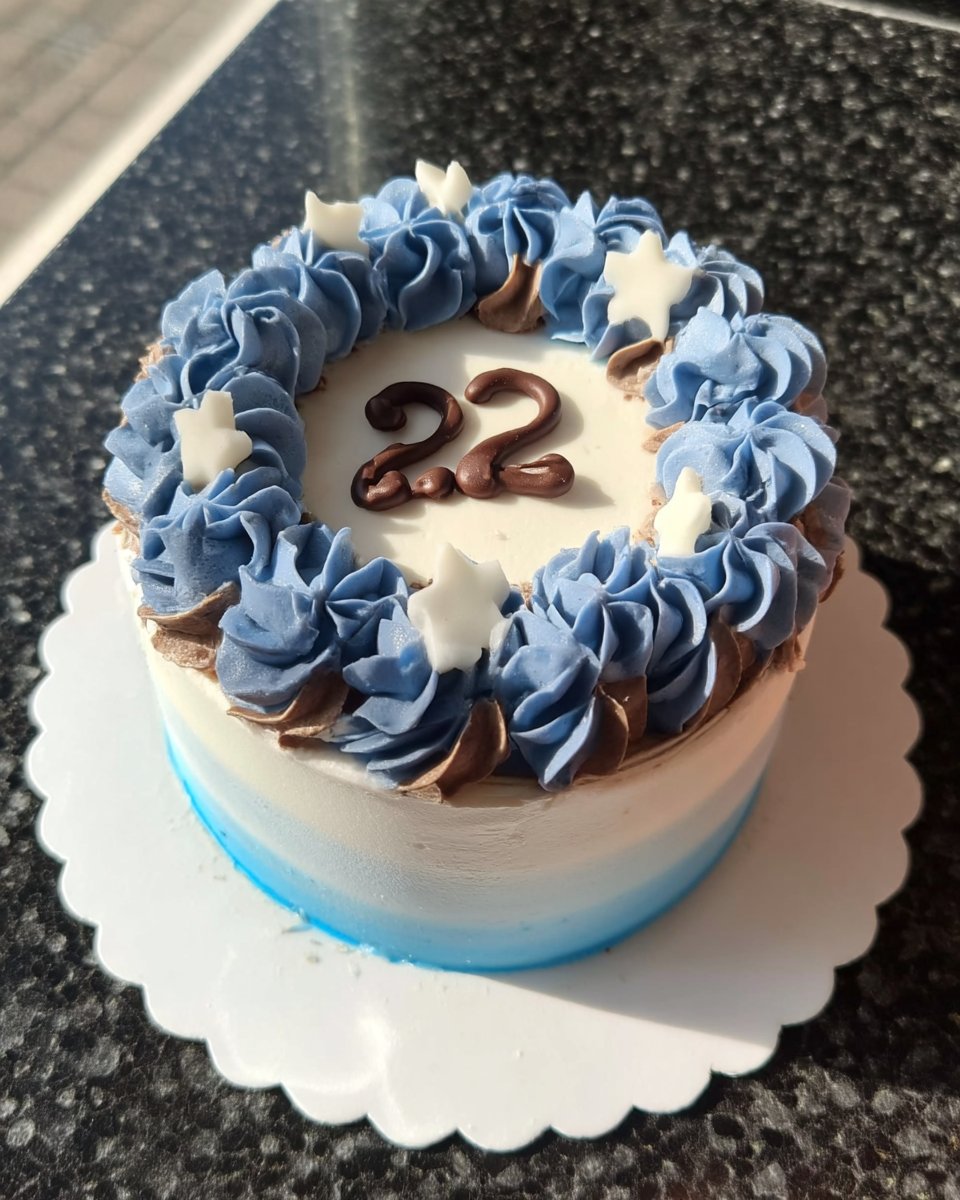
Temperature control is the most frequent point of failure in cake baking. If your butter is too cold, it will not trap air; if it is too warm, it will melt and lose its structure. Aim for a texture like cool clay. Additionally, when coloring your batter, always remember that the colors will deepen slightly as the cake bakes. It is better to be slightly too light than too dark when aiming for a sophisticated gradient. If you are looking to master more colorful designs, you might also find our lemon rainbow cake a rewarding challenge for your technical skills. Another secret is the crumb coat; never skip this step as it keeps the final frosting layer pristine and free of unsightly cake fragments.
Refined Twists on the Classic
While the coconut and lemon combination is a classic, you can build on this mastery by experimenting with different citrus notes. Replacing the lemon zest with lime zest and adding a touch of ginger to the batter creates a more zesty, spicy profile. You could also substitute the blueberries for raspberries or thin slices of strawberry between the layers for a different aesthetic. For those who appreciate a more nostalgic look, applying these gradient techniques to a vintage cake design can result in a stunning centerpiece for any formal gathering. Always maintain the base ratio of fat to flour to guarantee that your variations remain structurally sound.
Presentation and Service
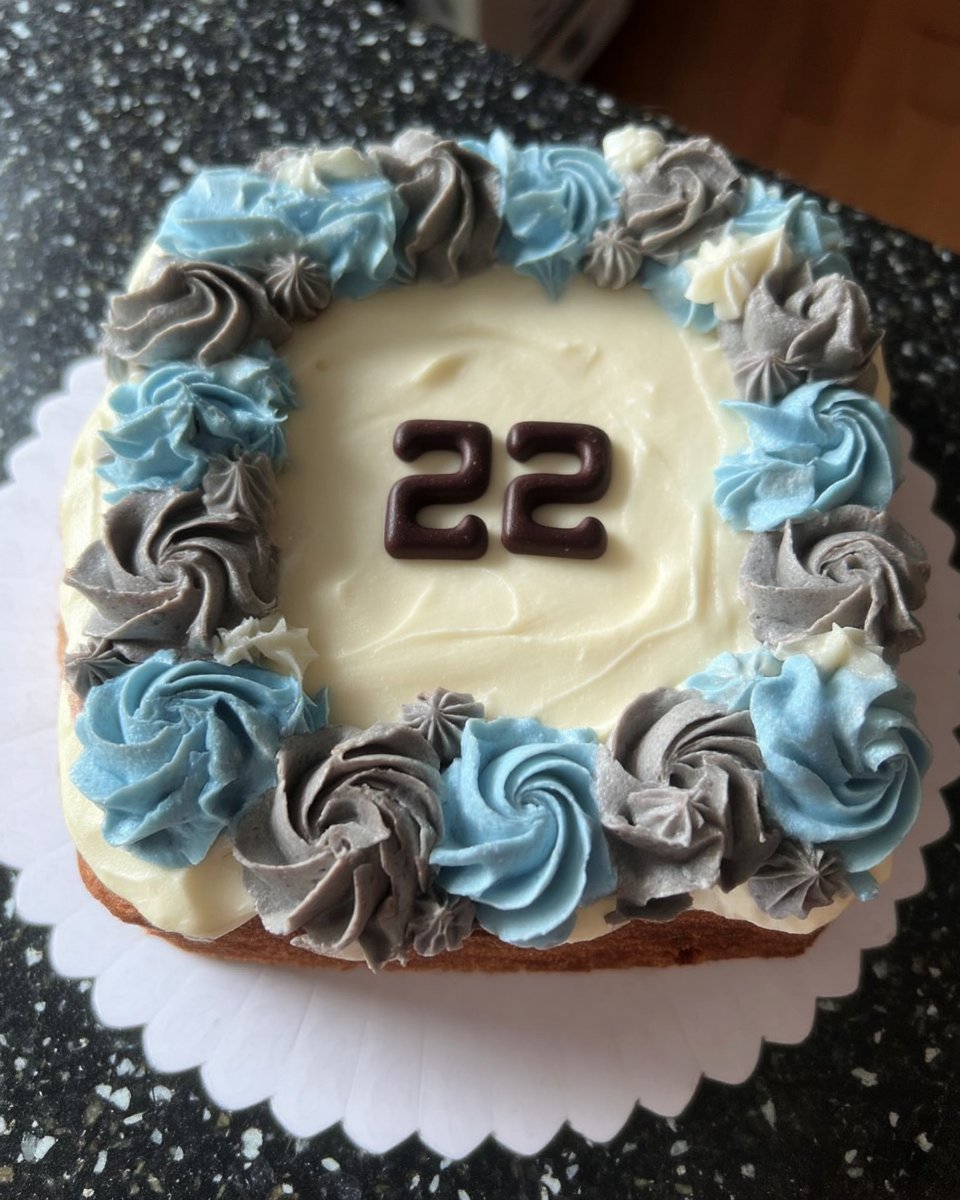
Presentation is the final touch that honors the effort you put into the baking process. Serve this cake on a chilled porcelain platter to keep the buttercream firm. I recommend slicing the cake while it is slightly cool using a sharp knife dipped in hot water; this creates the cleanest possible cut to show off the ombre effect. Pair a slice with a delicate white tea or a glass of chilled champagne to complement the coconut notes. For a more romantic setting, you might consider serving this alongside our heart cake for a varied dessert table that showcases different shapes and techniques.
The Satisfaction of Mastery
Creating an Ombre Cake is a testament to your growth as a baker, combining the technical rigors of French-inspired sponge making with a modern aesthetic sensibility. Each slice represents a moment of precision and a commitment to quality that mass-produced desserts simply cannot replicate. I encourage you to continue your journey by exploring our other celebration cakes to further refine your technical skills. For more inspiration on these delicate gradient techniques, you can also view this lemon and coconut ombre guide. Please share your creations with our community on Instagram, Pinterest, or Facebook.