I remember my first summer in a Parisian patisserie, where we were taught that even the simplest flavors deserve the utmost respect and precision. This Oreo Cake is an homage to that philosophy, taking a beloved childhood treat and applying the disciplined techniques of French pastry to achieve a truly sophisticated result. When we work in small batches, we have the luxury of focusing on every grain of sugar and every fold of the spatula, turning a nostalgic cookie into a centerpiece of quiet elegance.

In this recipe, we focus on the harmony between a tender, fine-crumbed sponge and the crunch of dark cocoa biscuits. This is not merely a rustic dessert; it is a study in texture and balance, designed for those who appreciate the subtle difference that high-quality butter and room-temperature ingredients make in the final crumb. By following these methodical steps, you will create a cake that is as structurally sound as it is delicate on the palate.
The Art of This Technique
There is a specific joy in mastering the Oreo Cake, a dessert that balances the deep, slightly bitter notes of dark cocoa with the creamy sweetness of a refined buttercream. This recipe matters because it bridges the gap between approachable home baking and professional pastry precision. Unlike commercial versions that can be cloyingly sweet, this version relies on a controlled crumb and a glossy ganache emulsion to provide a luxurious experience.
You will find that the inclusion of sour cream and egg whites creates a texture that is remarkably light yet stable enough for stacking. This small-batch approach allows you to monitor the aeration of the butter and the incorporation of the flour with a level of care that larger recipes often lack. It is a testament to the idea that mastery of fundamentals can transform a simple cookie into a work of culinary art.
Print
Oreo Cake
- Total Time: 2 hours 15 mins
- Yield: 8 servings
- Diet: Vegetarian
Description
This elegant Oreo cake features a tender white sponge folded with cocoa biscuit pieces, layered with a silky cookies-and-cream buttercream and topped with a glossy chocolate ganache. It is a sophisticated, small-batch take on a nostalgic favorite, designed for a refined palate.
Ingredients
- Unsalted European-style butter
- Large egg whites
- Sour cream
- Whole milk
- All-purpose flour
- Granulated sugar
- Baking soda
- Baking powder
- Kosher salt
- Vanilla extract
- Dark cocoa biscuits (Oreos)
- Semisweet chocolate (60% cocoa)
- Heavy cream
- Confectioners’ sugar
Instructions
- Preheat oven to 350°F (175°C) and grease three 6-inch cake pans, using damp cake strips for the most even rise.
- Sift the flour, sugar, baking soda, baking powder, and salt into a large bowl to ensure a light, aerated crumb.
- Cream the room-temperature butter in a stand mixer for 3 minutes until pale and fluffy, then mix in the dry ingredients on low until the texture resembles coarse sand.
- In a separate bowl, whisk together the egg whites, sour cream, milk, and vanilla, then gradually incorporate into the mixer and beat for 60 seconds until glossy.
- Gently fold the chopped cookies into the batter by hand and divide the mixture evenly between the prepared pans.
- Bake for 25-30 minutes until the centers spring back, then cool in the pans for 10 minutes before transferring to a wire rack.
- Whip the butter for the frosting for 5 minutes, then add sugar and cream; reserve a small amount of white frosting before mixing crushed cookies into the remainder.
- Prepare the ganache by pouring simmered cream over chocolate, resting for 2 minutes, and whisking until emulsified and glossy.
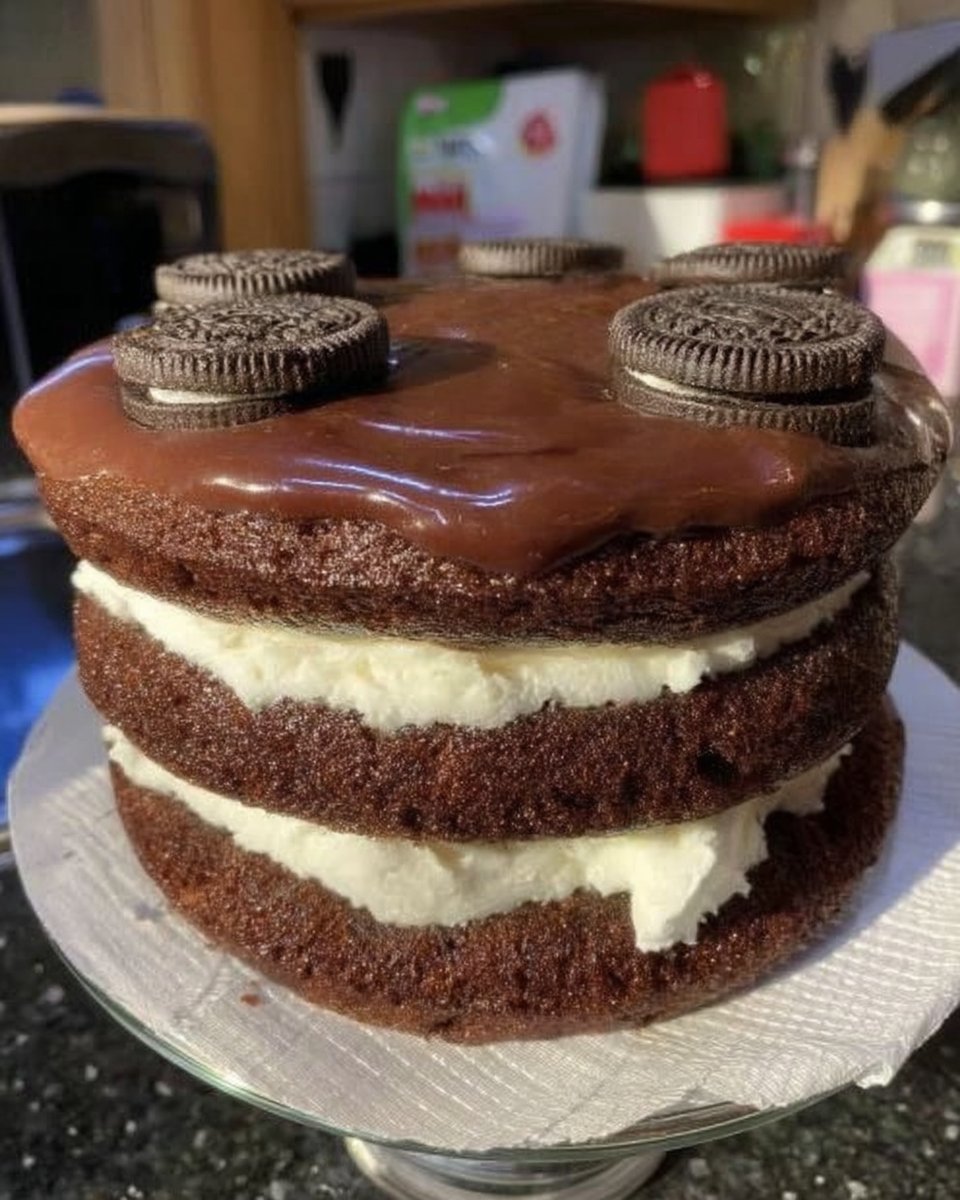
- Assemble by layering the sponge with buttercream and ganache, apply a crumb coat and chill, then finish with the final frosting layer, ganache drips, and decorative dollops.
Notes
For the best structural integrity, ensure your cake layers are completely chilled before attempting to assemble and frost. Using a digital scale to weigh your batter into the pans will guarantee even layers that bake at the same rate, resulting in a more professional appearance.
- Prep Time: 45 mins
- Cook Time: 30 mins
- Category: Dessert
- Method: Baking
- Cuisine: American
The Foundation of Quality
To achieve the perfect Oreo Cake, one must start with ingredients at their optimal state. The chemistry of baking relies on the temperatures of your dairy and the freshness of your leavening agents to create that coveted tender crumb.
- Unsalted Butter: Use premium European-style butter if possible, as the higher fat content leads to a richer flavor and a more stable emulsion during the creaming stage.
- Large Egg Whites: By using only the whites, we maintain a pristine white color for the cake layers and achieve a lighter, more ethereal texture compared to using whole eggs.
- Sour Cream and Whole Milk: These are essential for moisture. The acidity in the sour cream tenderizes the gluten, making sure the sponge is soft rather than chewy.
- All-Purpose Flour: Sifting your flour twice is a small step that makes a significant difference in the aeration of the batter.
- Dark Cocoa Biscuits (Oreos): Choose fresh, crisp cookies. We chop them by hand to control the size of the pieces, providing a visual contrast and a varied texture in every bite.
- Semisweet Chocolate: For the ganache, select a chocolate with at least 60% cocoa solids to balance the sweetness of the buttercream.
The Method
Step 1: Preparing the Mise en Place
Begin by preheating your oven to 350°F (175°C). Prepare three 6-inch (15cm) cake pans by buttering them generously and dusting with a light coating of flour. For the most professional results, I highly recommend using damp cake strips around the exterior of your pans. This technique slows the heating of the pan edges, allowing the center to rise at the same rate as the sides, resulting in perfectly flat tops and an even, moist crumb throughout.
Step 2: Sifting and Aerating the Dry Ingredients
Into a large bowl, sift together the all-purpose flour, granulated sugar, baking soda, baking powder, and kosher salt. Sifting is a non-negotiable step in my kitchen; it removes any lumps and begins the process of aerating the flour, which is vital for a cake that is light rather than dense. Set this mixture aside while you prepare the fats.
Step 3: The Creaming Stage
In a stand mixer fitted with the paddle attachment, beat the room-temperature butter on medium speed for about 3 minutes. You are looking for a pale, almost white color and a fluffy texture. This step creates tiny air pockets that will be expanded by the leavening agents in the oven. Once the butter is ready, add the sifted dry ingredients and mix on low speed just until the mixture looks like coarse sand and the butter is evenly distributed.
Step 4: Emulsifying the Wet Ingredients
In a separate medium bowl, whisk together the egg whites, sour cream, whole milk, and vanilla extract. It is vital that these are at room temperature to avoid curdling the butter. With the mixer on its lowest setting, gradually pour the liquid mixture into the butter and flour. Increase the speed slightly and beat for about 60 seconds until the batter is smooth, glossy, and shows a slight increase in volume.
Step 5: Incorporating the Cookies
Using a silicone spatula, gently fold in the chopped cookies. We use a folding motion—cutting through the center and lifting from the bottom—to avoid overworking the gluten, which would make the cake tough. Divide the batter evenly among your three prepared pans. I suggest using a digital scale to make sure each pan has exactly the same weight for uniform baking times.
Step 6: The Controlled Bake
Bake for 25 to 30 minutes. The cakes are done when the centers feel springy to a light touch and a wooden skewer comes out with only a few moist crumbs. Avoid over-baking, as the small size of these layers means they can dry out quickly. Allow the cakes to rest in their pans for 10 minutes before inverting them onto a wire rack to cool completely. Cooling is essential before you even think about the buttercream.
Step 7: Crafting the Silky Buttercream
Beat the unsalted butter for at least 5 minutes until it is exceptionally light. Gradually add the confectioners’ sugar and heavy cream on low speed, then increase the speed to whip it into a cloud-like consistency. Set aside a small portion for your white decorative dollops before folding the finely crushed cookies into the remaining frosting. The contrast between the white peaks and the speckled cookie frosting is a classic aesthetic choice.
Step 8: The Glossy Ganache Emulsion
Heat the cream until just simmering, then pour it over the chocolate chips. Let it sit for two minutes before whisking from the center outward to create a perfect emulsion. The ganache should be glossy and pourable. If it feels too thick for a graceful drip, add a teaspoon of warm cream until the consistency is right. Testing a small drip on the side of a glass is a professional trick to verify the flow.
Step 9: Final Assembly and Presentation
Place your first layer on a cake stand and apply a level layer of Oreo buttercream, followed by a light swirl of ganache. Repeat with the second layer. Once the final layer is placed, apply a thin ‘crumb coat’ of frosting to lock in any loose bits, chill for 15 minutes, and then apply the final smooth layer of buttercream. Press cookie crumbs into the base for a ‘skirt’ effect, pour the ganache over the top to create elegant drips, and finish with the reserved white buttercream dollops using an open star tip.
Pastry Wisdom for Success
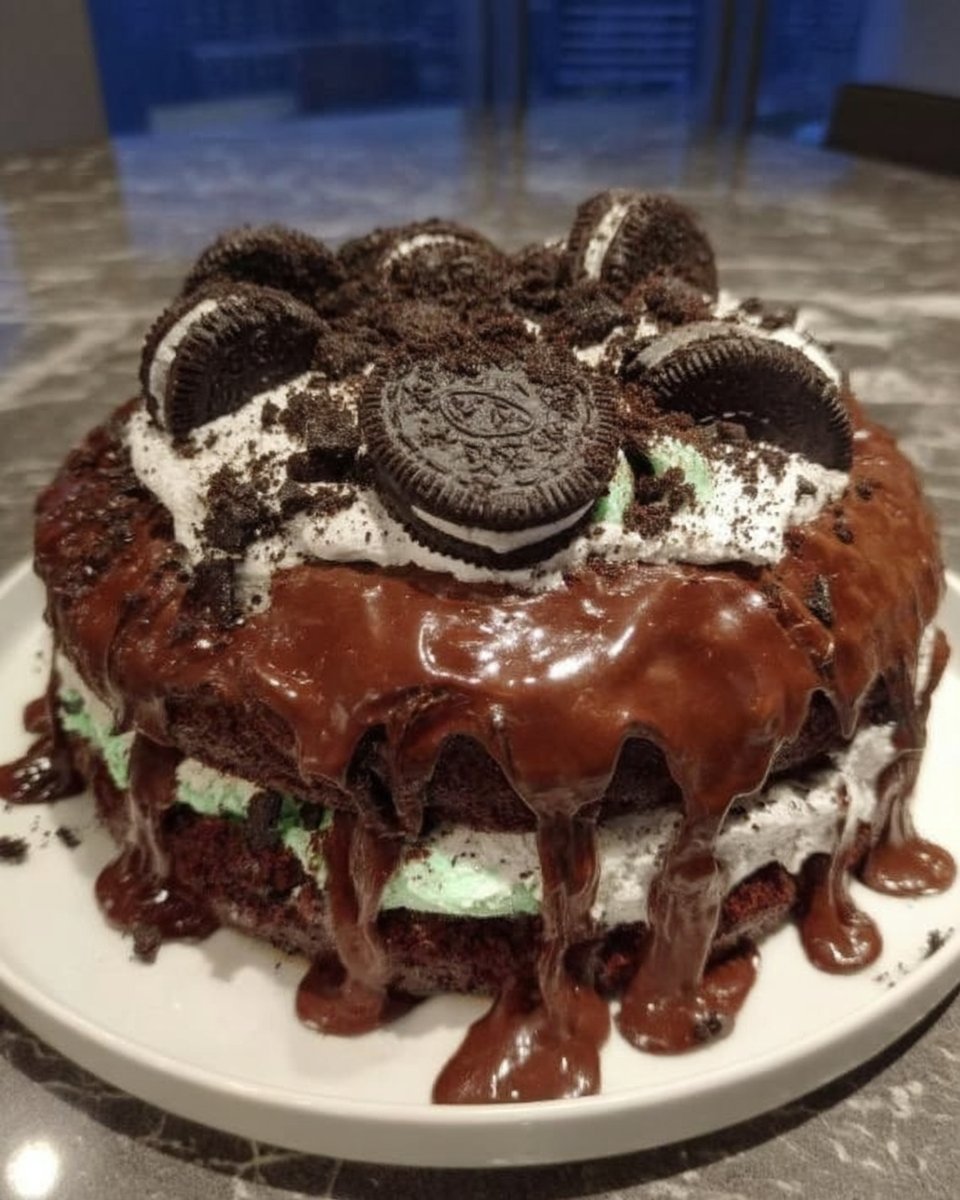
Precision is the difference between a good cake and an extraordinary one. When making this Oreo Cake, always use a digital scale for your measurements; volume can vary wildly depending on how you scoop your flour. Another secret to a refined finish is the temperature of your ganache. It should be slightly warm to the touch (around 90°F or 32°C) when you perform the drip. If it is too hot, it will run off the cake; too cold, and it will clump. For those looking to master other cocoa-based textures, reading about the moisture balance in our chocolate-fudge-cake can provide excellent context. You might also find inspiration in this professional guide on cookies and cream cake for further refining your decoration techniques.
Refined Twists on the Classic
While the traditional Oreo Cake is a masterpiece of balance, you can introduce subtle variations to suit the season or occasion. For a sophisticated floral note, infuse the milk with a teaspoon of dried culinary lavender before mixing the batter. Alternatively, for a richer, more indulgent profile, you might consider layering in a thin spread of salted caramel between the sponge and the buttercream, much like the flavors found in our snickers-cake. Another elegant variation is to substitute the vanilla extract with peppermint oil during the winter months for a refreshing cookies-and-cream-mint experience that is always a favorite at festive gatherings.
Presentation and Service
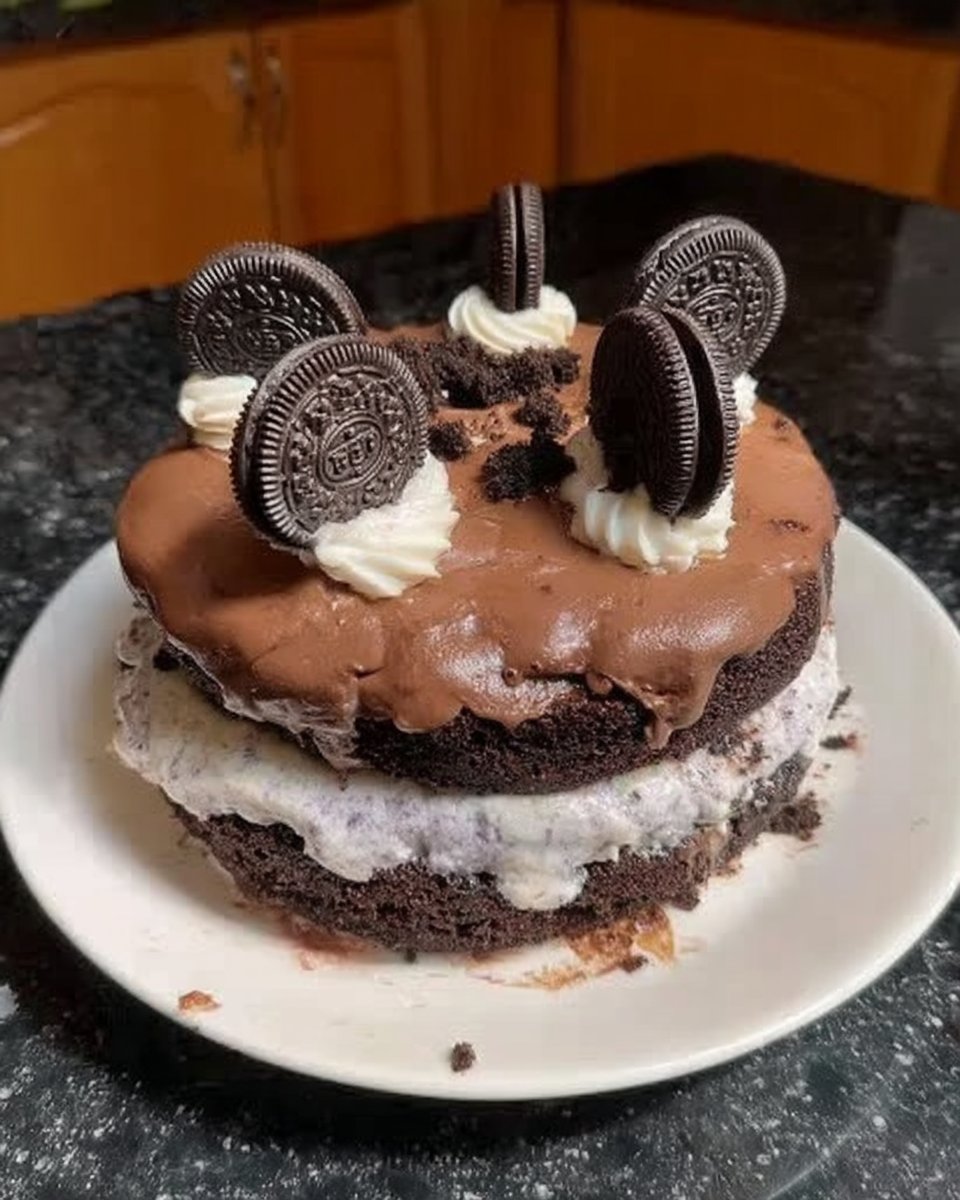
To truly honor the effort put into your Oreo Cake, serve it at cool room temperature. This allows the butter in the sponge and the frosting to soften just enough to release their full flavor profile. Slice the cake using a sharp knife dipped in hot water and wiped dry between each cut to achieve those pristine, professional layers. I find this cake pairs beautifully with a glass of cold whole milk for a traditional touch, or a strong espresso to cut through the richness of the buttercream. If you are hosting a larger gathering, consider serving small slices alongside a piece of old-fashioned-chocolate-cake to offer your guests a variety of cocoa textures.
The Art of Small Batches
Mastering the Oreo Cake is more than just following a recipe; it is about the quiet satisfaction of creating something beautiful through patience and technique. As you slice into your creation, take a moment to appreciate the clean lines and the contrast of colors that only careful assembly can provide. For your next project, you might consider the hazelnut elegance of our ferrero-rocher-cake to continue your journey into refined pastry. We invite you to share your results and join our community of dedicated bakers on Instagram, Pinterest, and Facebook. Happy baking, and may your kitchen always be filled with the scent of dark cocoa and vanilla.