I recall a summer afternoon in Menton, where a master patissier taught me that the secret to a true Tiramisu Cake is not in the sugar, but in the patience of the fold. It is a dessert that requires a quiet hand and a deep respect for the balance of bitter espresso and cloud-like mascarpone. This recipe celebrates that classic European restraint, transforming a rustic Italian staple into a structured, elegant masterpiece suitable for the most refined tables.

In this small-batch version, we focus on the architectural integrity of the Savoiardi ladyfingers and the silky stability of a properly whipped crème. While traditional versions can often become overly soft, our method provides a sliceable, sophisticated texture that holds its form beautifully. It is an exercise in restraint and precision, resulting in a flavor profile that is deep, resonant, and remarkably light on the palate.
The Grace of a Roman Classic
There is a certain poetry in a dessert that balances the intensity of dark espresso with the velvet sweetness of Italian cheese. You will love this Tiramisu Cake because it honors the traditional roots of the dish while refining the presentation for a modern kitchen. Unlike larger, commercial versions that rely on heavy stabilizers, this recipe uses the natural fat content of premium mascarpone and heavy whipping cream to create a luscious, stable mousse.
This method is perfect for those who appreciate the finer details of pastry. By treating each ladyfinger with a precise dip rather than a long soak, we maintain a delicate crumb that feels like a sponge cake rather than a pudding. The addition of a coffee-flavored liqueur adds a layer of sophistication that lingers on the tongue, making each small bite feel like a grand occasion. It is a testament to the idea that when you use superior ingredients, you do not need to hide behind excessive sweetness.
Print
Tiramisu Cake
- Total Time: 4 hours 30 mins
- Yield: 9 servings
- Diet: Vegetarian
Description
A sophisticated take on the Italian classic, featuring layers of espresso-dipped Savoiardi ladyfingers and a silky mascarpone-and-cream mousse. This recipe emphasizes structural integrity and a balanced sweetness for a perfect, sliceable dessert.
Ingredients
- 360 ml Heavy Whipping Cream (at least 36% fat, chilled)
- 225 g Mascarpone Cheese (room temperature)
- 67 g Granulated Sugar
- 5 ml Pure Vanilla Extract
- 360 ml Cold Espresso or strong cold brew
- 45 ml Coffee Liqueur (optional)
- 24 pieces Savoiardi Ladyfingers
- Dutch-processed Cocoa Powder
Instructions
- In a chilled bowl, whisk heavy whipping cream, granulated sugar, and vanilla extract until stiff peaks form.
- Briefly stir room-temperature mascarpone to smooth it out, then gently fold it into the whipped cream using a silicone spatula until uniform.
- In a shallow bowl, combine the cold espresso and optional coffee liqueur.
- Quickly dip each ladyfinger into the espresso mixture for no more than one second per side to moisten the exterior while keeping the center dry.
- Arrange a tight, single layer of dipped ladyfingers in the bottom of an 8×8-inch pan.
- Spread half of the mascarpone mixture evenly over the ladyfingers using an offset spatula.
- Create a second layer of dipped ladyfingers, then cover with the remaining mascarpone cream and smooth the surface.
- Generously dust the top with cocoa powder using a fine-mesh sieve.
- Refrigerate for at least 4 hours, though overnight is preferred, to allow the textures to set.
Notes
To ensure the most stable texture, ensure your mascarpone is truly at room temperature before mixing; otherwise, it will create tiny lumps in the chilled cream. For the cleanest presentation, prepare the cake a full 24 hours in advance to allow the espresso to fully permeate the ladyfingers without them becoming soggy.
- Prep Time: 30 mins
- Cook Time: 0 mins
- Category: Dessert
- Method: No-Bake
- Cuisine: Italian
Selecting the Finest Provisions
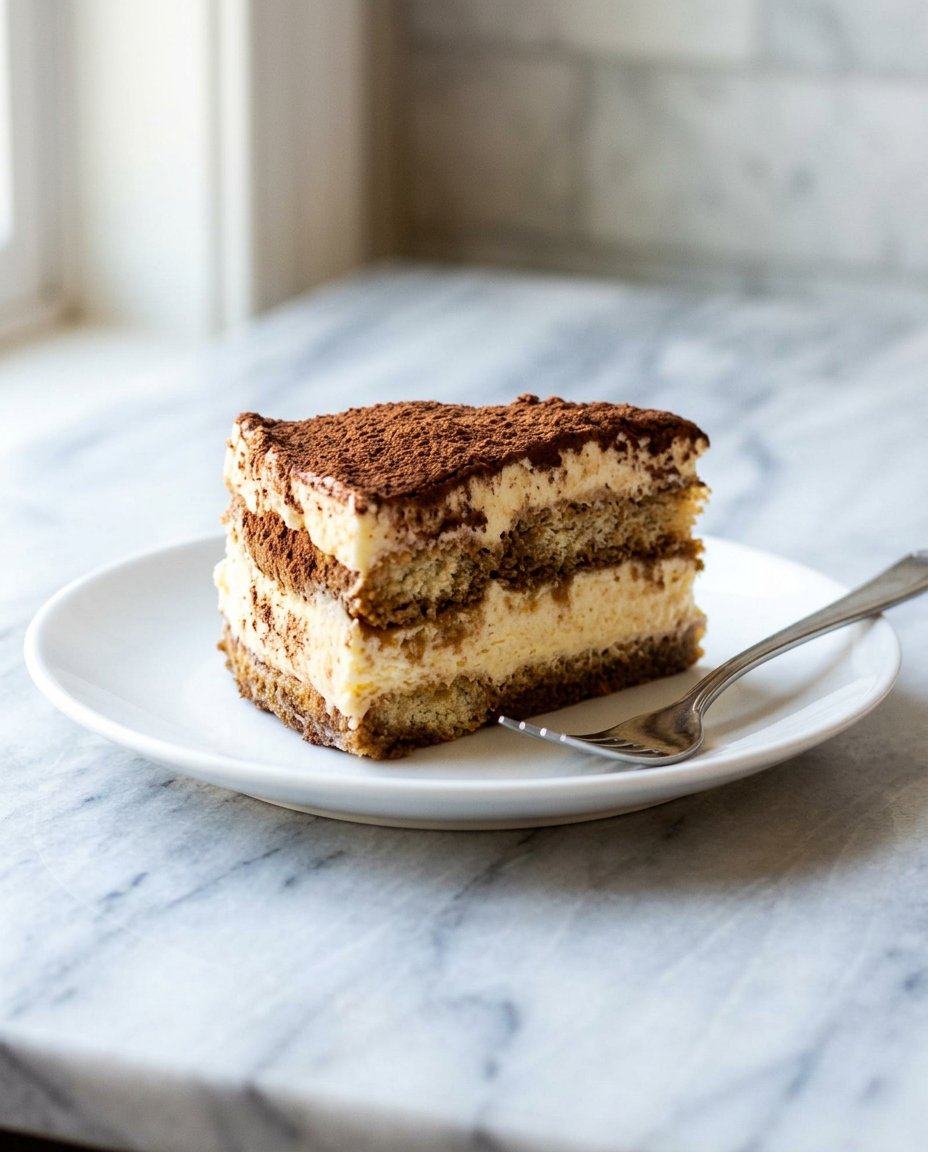
To achieve a result that rivals a professional patisserie, one must begin with the foundation of quality. Every component in this Tiramisu Cake plays a vital role in the final architecture of the dessert.
- Heavy Whipping Cream (360 ml): Choose a cream with at least 36% fat content. This is essential for creating the stiff peaks that provide the cake with its height and airy structure. Cold cream is non-negotiable, as the fat globules bond more effectively when chilled.
- Mascarpone Cheese (225 g): This Italian cream cheese should be at room temperature before you begin. If it is too cold, it will create lumps in your silky mixture; if it is over-worked, it can break and become grainy. It provides the characteristic buttery richness that defines the dish.
- Granulated Sugar (67 g): A modest amount is used to sweeten the cream without masking the natural tang of the mascarpone or the bitterness of the coffee.
- Pure Vanilla Extract (5 ml): A small addition that rounds out the flavors, providing a floral bridge between the cream and the cocoa.
- Cold Espresso (360 ml): The quality of your coffee will dictate the soul of the cake. Use a high-quality espresso or a very strong cold brew to ensure the coffee note is assertive enough to stand up to the rich dairy.
- Coffee Liqueur (45 ml): This is optional but highly recommended. It deepens the espresso profile and adds a subtle warmth. Options like Kahlua or a refined brandy are excellent choices.
- Savoiardi Ladyfingers (24 pieces): These must be the crisp, sugar-dusted Italian variety. Their dry, porous nature is designed specifically to absorb liquid while maintaining a cake-like structure.
- Cocoa Powder: A Dutch-processed cocoa will provide a darker color and a smoother, more mellow chocolate flavor for the final dusting.
The Methodical Assembly
Step 1: Achieving the Perfect Chantilly
Begin by pouring your chilled heavy whipping cream into a cold mixing bowl. Using a stand mixer or a hand-held electric whisk, start on a medium speed. As the cream begins to thicken and form soft trails, slowly rain in the granulated sugar and the vanilla extract. Increase the speed slightly and continue whisking until you reach stiff peaks. You are looking for a texture that is firm enough to hold its shape on the whisk but still looks smooth and glossy. Be careful not to over-whisk, as the cream can quickly turn to butter.
Step 2: Incorporating the Velvety Mascarpone
In a separate vessel, briefly stir your room-temperature mascarpone to ensure it is smooth. Gently add the mascarpone to your whipped cream. Using a large silicone spatula, use a folding motion—cutting through the center and lifting from the bottom—to combine the two. This technique preserves the air you have worked so hard to incorporate. Continue until the mixture is uniform and holds a thick, spreadable consistency.
Step 3: Preparing the Espresso Bath
Combine the cold espresso and the coffee liqueur in a shallow, wide-bottomed bowl. The width of the bowl is important, as it allows you to dip the ladyfingers horizontally without breaking them. Ensure the coffee is completely cold; warm liquid will dissolve the sugar coating on the ladyfingers too quickly, leading to a collapsed cake.
Step 4: The Art of the Quick Dip
One by one, take a ladyfinger and submerge it in the espresso mixture. This should be a swift motion—no more than one second per side. The goal is to moisten the exterior while leaving the very center of the cookie dry. As the cake rests, the moisture will migrate inward, creating a perfect, uniform texture. If you soak them until they are soft, the cake will leak liquid later.
Step 5: Constructing the Base Layer
Arrange the dipped ladyfingers in a single, tight layer at the bottom of an 8×8-inch pan. You may need to trim a few pieces to fit the corners perfectly. Think of this as the foundation of your building; it must be solid and even.
Step 6: Spreading the Mascarpone Crème
Transfer half of your mascarpone mixture onto the first layer of ladyfingers. Use an offset spatula to smooth it into an even layer, reaching all the way to the edges of the pan. This cream layer acts as the mortar that holds the ladyfingers in place.
Step 7: The Final Layering and Cocoa Veil
Repeat the dipping process with the remaining ladyfingers, placing them in a second layer over the cream. Top with the remaining mascarpone mixture, smoothing the surface with a steady hand for a professional finish. Using a fine-mesh sieve, generously dust the top with cocoa powder until the white cream is completely obscured. This creates a bitter-sweet barrier that protects the cream and adds a striking visual contrast.
Step 8: The Essential Resting Period
Cover the pan carefully and refrigerate for a minimum of four hours, though overnight is truly preferred. This time allows the flavors to meld and the ladyfingers to soften into a cake-like consistency. Precision in the kitchen must be followed by patience in the waiting.
Precision Secrets for the Perfect Crème
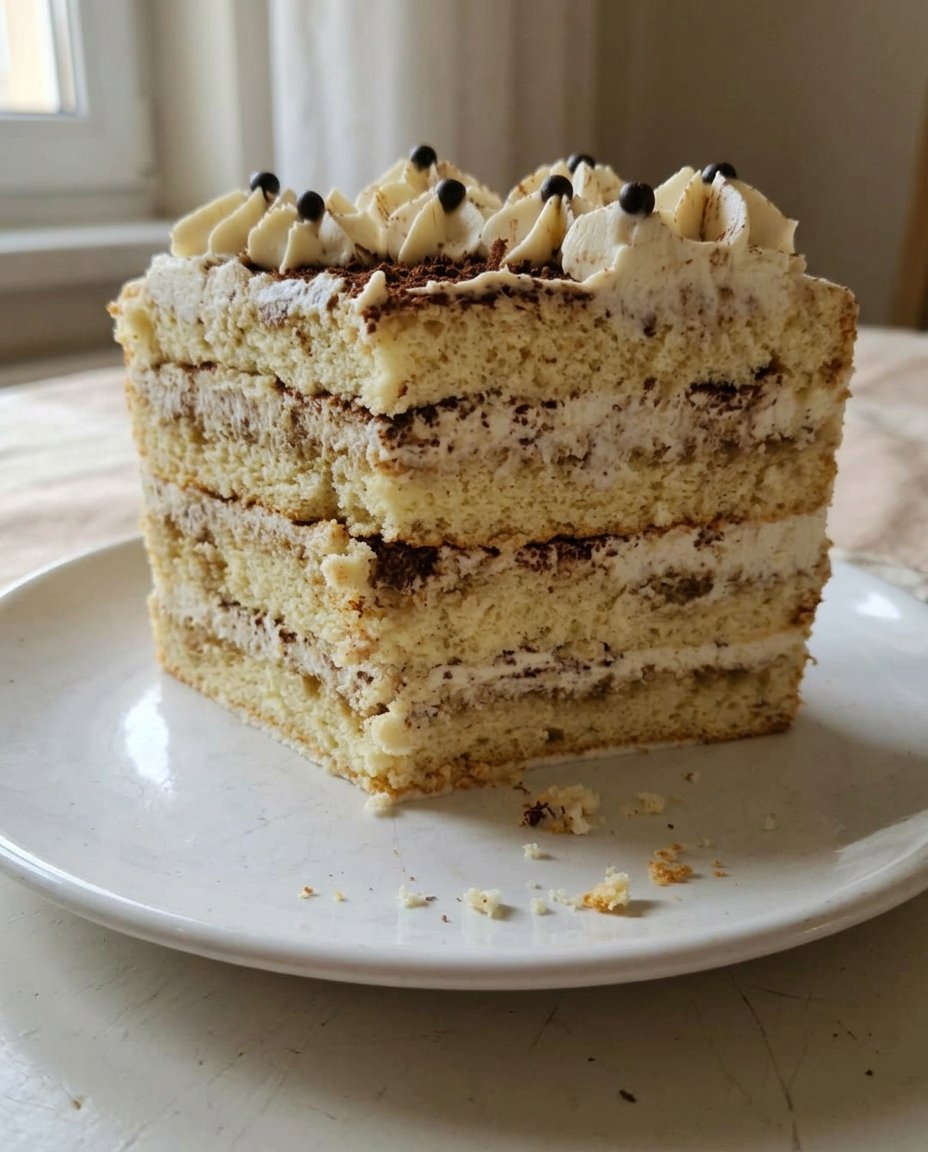
One of the most frequent mistakes in making a Tiramisu Cake is the temperature of the ingredients. Always make certain your mascarpone is truly at room temperature. If it is cold, it will not incorporate into the cream, leaving you with small, firm beads of cheese throughout your mousse. Conversely, your whipping cream must be as cold as possible to achieve the necessary volume. For a truly professional touch, chill your mixing bowl and whisk attachment in the freezer for ten minutes before you begin.
Another secret to a stable cake is the cocoa powder application. If you find that the cocoa becomes damp or ‘weepy’ after a few hours, try dusting a very thin layer of cocoa first, then a layer of powdered sugar, followed by a final heavy dusting of cocoa. This creates a moisture barrier. If you are interested in other structured desserts, you might find that mastering the stability of this cream helps when preparing a German Chocolate Cake with its own unique fillings. Always use a high-quality sieve to avoid clumps, as the visual appeal of a tiramisu is found in its pristine, velvet-like surface.
Refined Twists on a Timeless Tradition
While the classic espresso and cocoa combination is peerless, there are several ways to adapt this Tiramisu Cake to suit your specific taste. For a citrus-forward variation, replace the coffee liqueur with a splash of Grand Marnier and add finely grated orange zest to the mascarpone cream. The brightness of the orange cuts through the richness of the cheese beautifully. You could also lean into a nuttier profile by using Amaretto and folding crushed toasted hazelnuts into the middle layer for an unexpected crunch.
For those who prefer a fruit-based approach, a raspberry tiramisu is a stunning alternative. Briefly dip the ladyfingers in a light raspberry syrup instead of coffee and layer fresh berries between the cream and the cookies. This technique of fruit layering is also a hallmark of our Ferrero Rocher Cake, where texture and flavor layers are carefully considered. Regardless of the variation, maintain the ratio of cream to ladyfingers to keep the cake’s structural integrity intact.
Artful Presentation for the Table
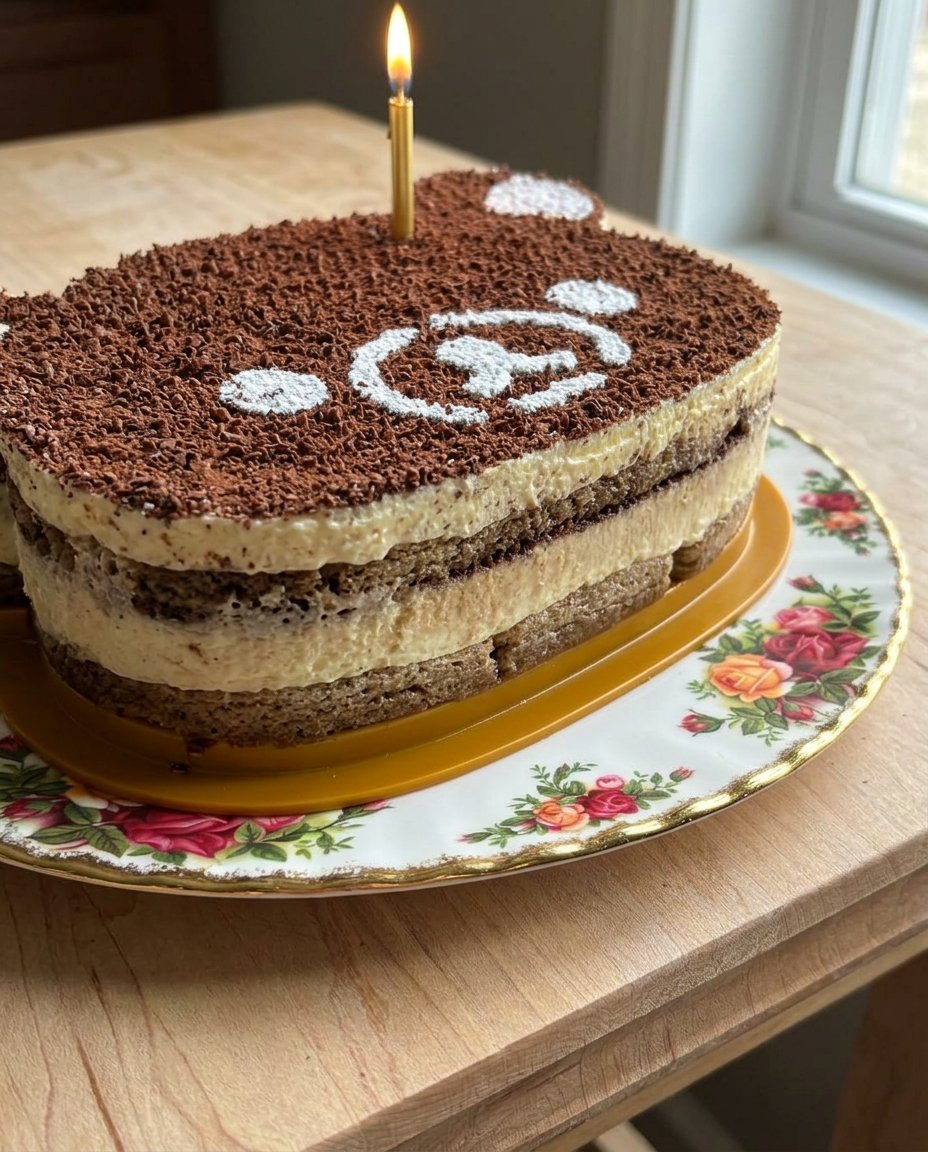
When it comes to serving this Tiramisu Cake, presentation is as important as the preparation. Use a sharp, thin-bladed knife dipped in hot water and wiped dry between each cut to ensure clean, sharp slices. This reveals the beautiful layers of cream and coffee-soaked biscuit. For a true French-inspired touch, serve each slice on a chilled porcelain plate with a small dollop of lightly sweetened whipped cream on the side.
A bitter accompaniment, such as a double shot of espresso or a dark roast coffee, is the traditional pairing. However, if you are serving this for a special afternoon tea, it pairs wonderfully with a floral Earl Grey. If you enjoy desserts that bridge the gap between fruit and cream, you might also appreciate the presentation of our Strawberry Tres Leches Cake, which also relies on the beauty of soaked layers. For an evening affair, a small glass of Vin Santo or a dark dessert wine provides a luxurious finish to the meal.
The Quiet Joy of Mastery
Mastering the Tiramisu Cake is a milestone for any home baker. It teaches you the importance of temperature, the nuance of the fold, and the beauty of high-quality ingredients. By taking the time to dip each ladyfinger with care and allowing the cake the necessary time to rest, you create a dessert that is far greater than the sum of its parts. This is the essence of small-batch baking—the ability to focus on every detail until it is perfect. If you have enjoyed this journey into layered desserts, I invite you to discover the delicate crumb of our Blueberry Coffee Cake. For more inspiration and to see these techniques in action, join our community on Pinterest or follow our latest bakes on Instagram. You can also find more traditional inspiration at Tastes Better From Scratch. Happy baking, and may your kitchen always be filled with the scent of fresh espresso.