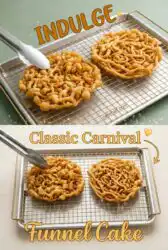
I still remember the sound of grease popping in my grandmother’s heavy cast iron skillet as she made us these golden webs of dough on humid summer evenings.

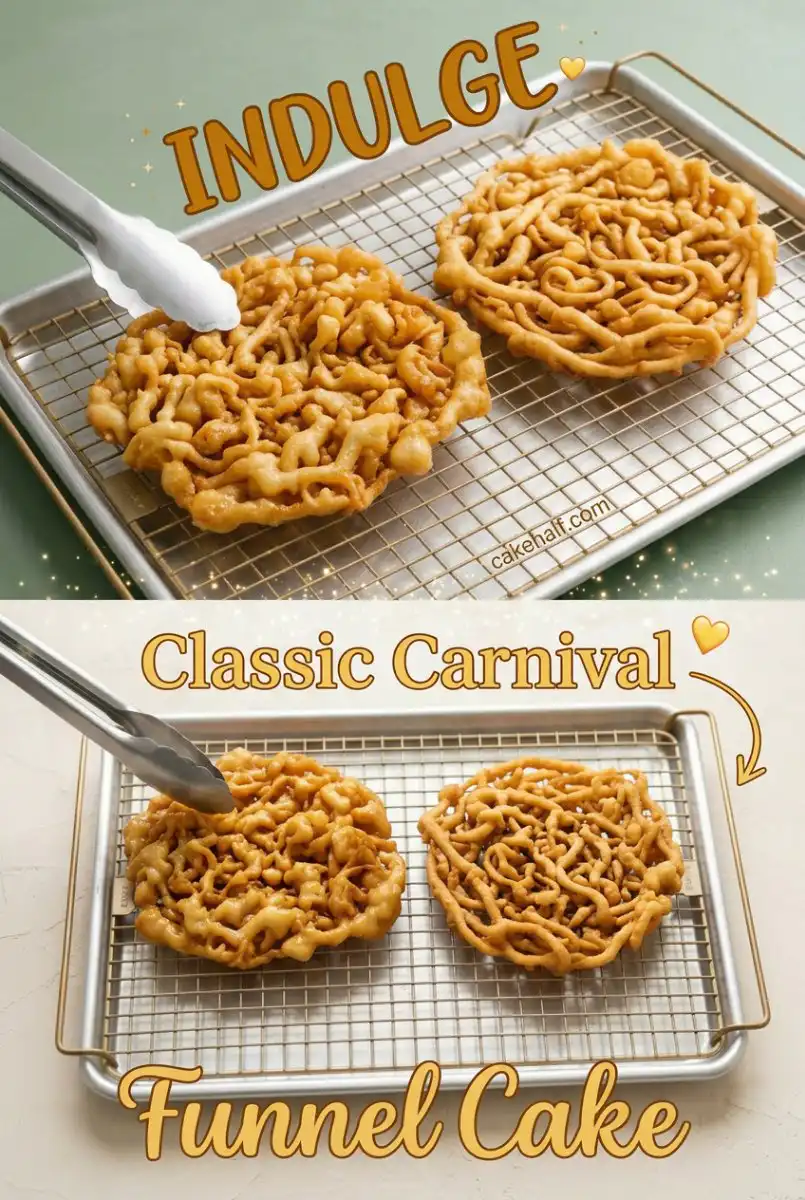
Bringing a Classic Carnival Funnel Cake to your kitchen is about more than making a dessert. It is about capturing a moment in time when the air smelled of fried dough and the world felt much smaller. This recipe uses pantry staples you likely have tucked away in your wooden cabinets right now. We take the time to whisk the batter by hand, honoring the rhythm of the old ways.
The Secret to This Classic Carnival Funnel Cake
Prep: 25 min · Serves: 4 · Difficulty: Medium
- Crispy edges with soft centers.
- Dusting of sweet powdered sugar.
- Simple ingredients from your pantry.
- Classic flavor for the family.
This recipe brings the joy of the county fair right into your own quiet kitchen. We often turn to these classic recipes when we want to remember the childhood summers spent under the bright lights of the fairground. There is a specific kind of magic in watching a thin stream of batter transform into a golden lattice in hot oil. It reminds us that the best things in life are often the most uncomplicated and shared with those we love.
Get The Full Cake Recipe
Print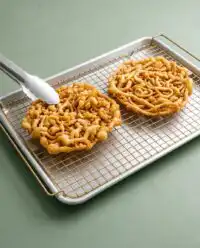
Classic Carnival Funnel Cake
- Total Time: 45 mins
- Yield: 4 servings
Description
Experience the nostalgic charm of a classic fairground favorite with these crispy, golden-fried funnel cakes. This simple, scratch-made recipe uses pantry staples to create a light and airy treat finished with a signature dusting of powdered sugar.
Ingredients
- 2 cups all-purpose flour
- 2 teaspoons baking powder
- 1/4 teaspoon salt
- 1/2 teaspoon ground cinnamon
- 1 large egg
- 1 cup whole milk
- 1/4 cup granulated sugar
- 1 teaspoon vanilla extract
- Vegetable or canola oil for frying
- Powdered sugar for dusting
Instructions
- Prepare the oil. Heat several inches of oil in a deep cast iron skillet or Dutch oven to 350°F, testing with a small drop of batter to ensure it sizzles immediately.
- Combine dry ingredients. Sift the flour, baking powder, salt, and ground cinnamon into a large mixing bowl until perfectly uniform.
- Whisk liquid ingredients. In a separate bowl, whisk together the egg, cold milk, granulated sugar, and vanilla extract until smooth.
- Form the batter. Create a well in the dry ingredients and gradually whisk in the liquid mixture until the batter reaches a smooth, pourable consistency like heavy cream.
- Fill the dispenser. Pour the batter into a squeeze bottle, ensuring no large lumps of cinnamon remain to clog the nozzle.
- Fry the cakes. Squeeze the batter into the hot oil in a circular, spiraling motion to create a web, frying for about 90 seconds until deep gold.
- Drain the cakes. Carefully flip the funnel cake with tongs, cook the second side until firm, then transfer to a paper towel-lined plate to drain excess oil.
- Apply the topping. Immediately dust the warm cake generously with powdered sugar using a fine-mesh sieve and serve while crisp.
Notes
- Keep the oil temperature steady at 350°F using a digital thermometer to prevent the dough from absorbing excess grease.
- Avoid overmixing the batter, as this develops excess gluten and can lead to a tough or dense texture.
- Use a neutral, high-smoke point oil like canola or vegetable oil to ensure a clean flavor profile.
- Press powdered sugar through a fine-mesh sieve before dusting to guarantee an even, lump-free coating.
- Batter can be stored in the refrigerator for up to 24 hours, but should be given a quick stir before frying.
- Prep Time: 25 mins
- Cook Time: 20 mins
- Category: Dessert
- Method: Deep Frying
- Cuisine: American
The Pantry Staples
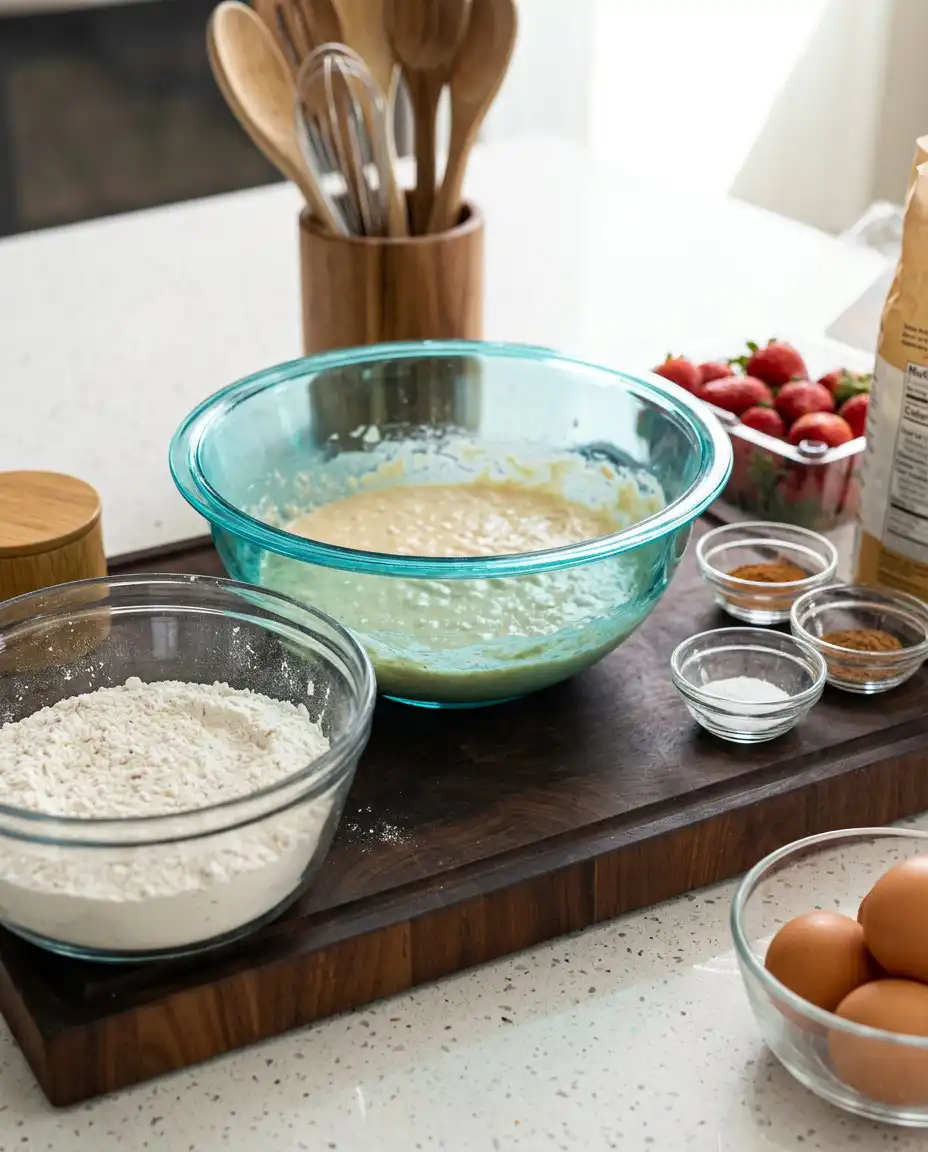
Gathering these simple items feels like a return to basics in a busy world. Most of these ingredients are already sitting in your tin canisters or cooling in the icebox, waiting to be transformed into something memorable. Using high-quality vanilla and fresh eggs makes a significant difference in the final depth of flavor.
- All-purpose flour: This provides the sturdy foundation for our batter, holding its shape as it hits the hot oil.
- Baking powder: A necessary lift that ensures our cake is airy and light rather than dense or heavy.
- Ground cinnamon: A small addition that offers a warm, woody scent that lingers in the kitchen air.
- Whole milk: We prefer the richness of whole milk to create a batter that is silky and substantial.
- Vanilla extract: This acts as the bridge between the savory notes of the oil and the sweetness of the sugar.
- Granulated sugar: Just enough sweetness is added to the batter to complement the heavy dusting of powdered sugar later.
| Ingredient | Why It Matters |
|---|---|
| Ground Cinnamon | Adds a warm, woody depth that cuts through the richness of the oil. |
| Baking Powder | Provides the necessary lift to keep the batter airy and light. |
| Whole Milk | Offers a richness that water or skim milk cannot replicate. |
| Vanilla Extract | Bridges the gap between the savory oil and the sweet sugar. |
| Large Eggs | Acts as the binder that holds the intricate web of dough together. |
The Baking Process
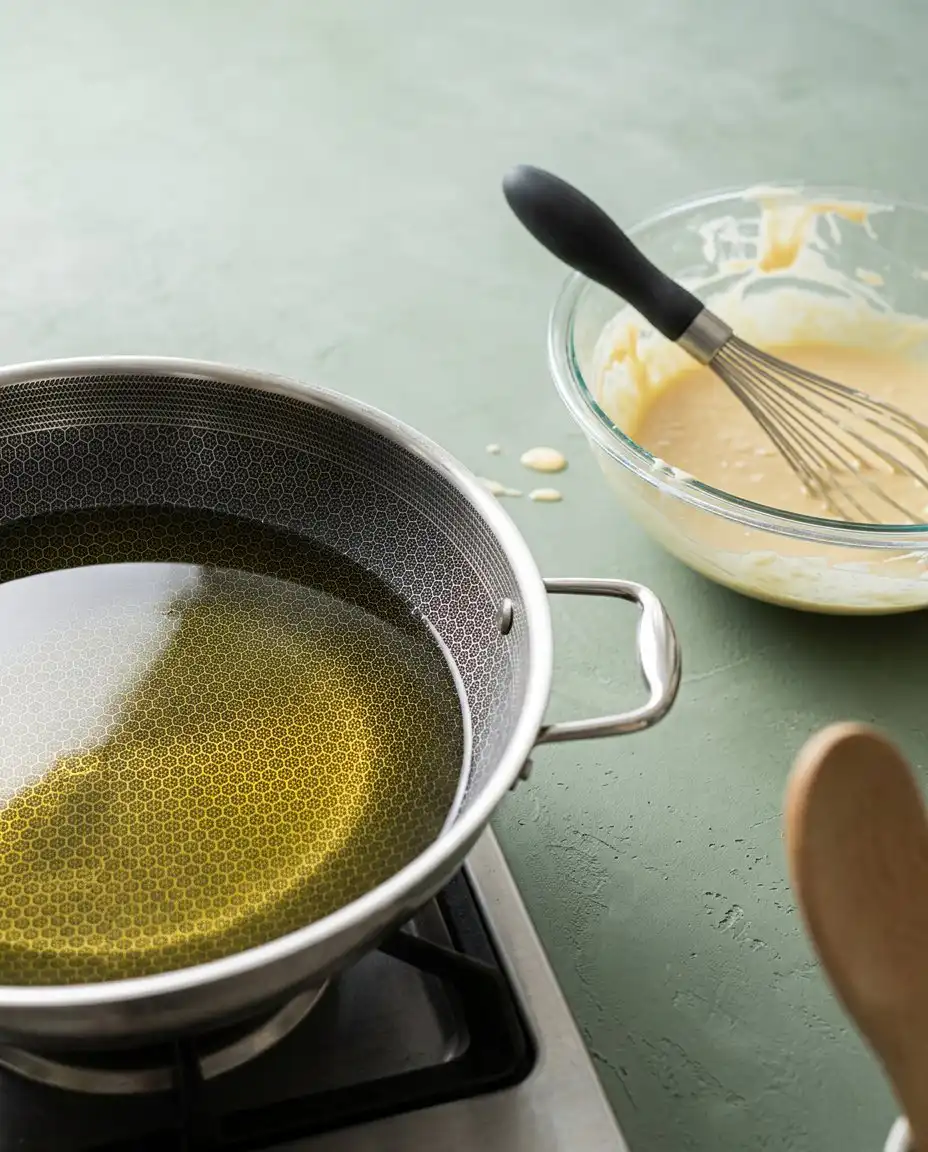
Step 1: Prepare the Sizzling Oil
Choose a heavy vessel for frying, such as a well-seasoned cast iron skillet or a deep Dutch oven. Pour in enough oil to allow the dough to float freely without touching the bottom of the pan. Place the vessel over a steady flame and monitor the temperature until it reaches exactly 350 degrees Fahrenheit. You will know the oil is ready when a small drop of batter sizzles and rises immediately to the surface with a gentle hiss.
Step 2: Combine the Dry Goods
Reach for your favorite glass mixing bowl and sift together the flour, baking powder, baking soda, and salt. Add the ground cinnamon and whisk these together until the mixture looks like fine, pale sand. Taking the time to sift prevents lumps and ensures the leavening agents are distributed evenly throughout the flour. The scent of the cinnamon will begin to rise as you work the whisk through the dry ingredients.
Step 3: Mix the Liquid Ingredients
In a separate smaller bowl, crack the eggs against the side and whisk them until the yolks and whites are one. Pour in the whole milk and the vanilla extract, then stir in the granulated sugar until it dissolves. The milk should be cold from the icebox to help the batter stay thick before it meets the heat of the pan. This step is about patience and ensuring the liquid is smooth and fragrant.
Step 4: Whisk the Classic Carnival Funnel Cake Batter
Create a small well in the center of your dry ingredients and slowly pour in the liquid mixture. Use a steady hand to whisk from the center outward, slowly pulling the flour into the milk and eggs. Continue until the batter is smooth and flows like heavy cream from the end of a wooden spoon. If you see small lumps, press them against the side of the bowl with a spatula until the texture is uniform.
Step 5: Transfer to the Squeeze Bottle
While Grandma might have used a tin funnel with her thumb over the hole, a modern squeeze bottle offers a bit more control for the home baker. Carefully pour your prepared batter into the bottle, leaving a little room at the top for air. Ensure the nozzle is wide enough for the batter to pass through without catching on the small grains of cinnamon. Wipe any drips from the side of the bottle with a clean kitchen towel.
Step 6: Create the Golden Spirals
Hold the bottle a few inches above the hot oil and begin pouring in a steady, circular motion. Start from the center and spiral outward, then crisscross back over the lines to create the signature web shape. The oil will bubble vigorously as the batter expands and sets into its intricate, lacy form. Watch as the edges begin to turn a deep, burnished gold, which usually takes about ninety seconds.
Step 7: Drain the Excess Oil
Use long tongs or a slotted metal spoon to gently flip the cake over to cook the second side. Once both sides are golden brown and the center feels firm, lift the cake from the oil and let the excess drip back into the pan. Place the finished cake onto a plate lined with thick paper towels or a clean brown paper bag. This allows the oil to be absorbed so the finished treat remains crisp rather than greasy.
Step 8: Apply the Final Dusting
While the cake is still radiating heat, grab your fine-mesh strainer and a scoop of powdered sugar. Shake the strainer over the cake until it looks like a fresh snowfall has landed on a winter field. The sugar will melt slightly into the crevices, creating a sweet crust that is the hallmark of this fairground tradition. Serve it immediately while the center is still steaming and the edges are at their most brittle.
Secrets from the Recipe Box
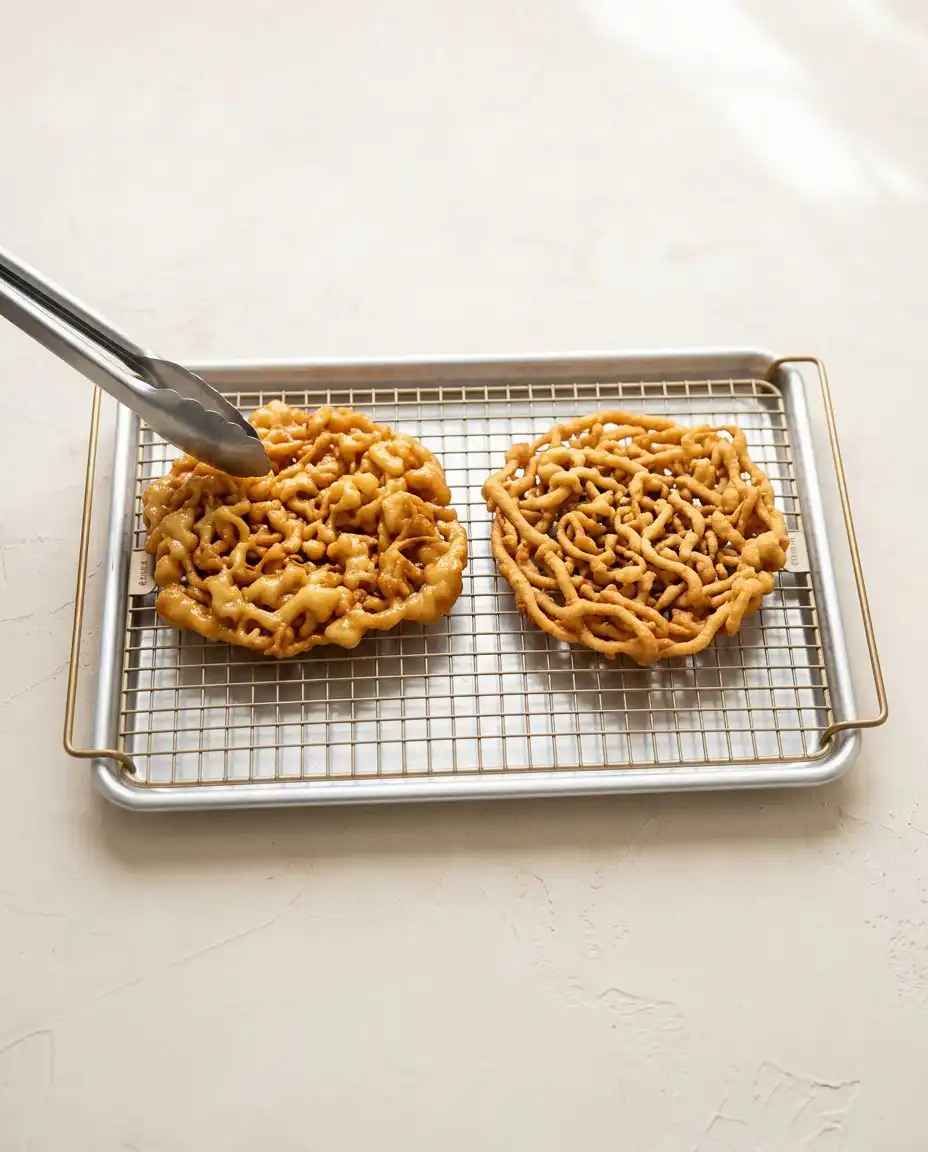
Maintaining a consistent oil temperature is the most vital part of achieving a crisp result. If the oil is too cold, the batter will soak up the grease and become heavy; if it is too hot, the outside will burn before the inside is cooked through. Use a thermometer and wait for the temperature to return to 350 degrees between each new cake you fry.
When you are learning this funnel cake recipe, try to keep your pouring motion fluid and continuous. Stopping and starting the pour creates breaks in the web, which can cause the cake to fall apart when you try to flip it. A steady hand and a calm mind are your best tools in this part of the process.
If your funnel cake is dense and heavy, here is why and how to fix it. This often happens if the batter was overmixed, which develops the gluten too much and makes the dough tough. To fix this, mix only until the flour disappears and let the batter rest for ten minutes before you begin frying to allow the gluten to relax.
Always use a neutral oil with a high smoke point, such as vegetable or canola oil, to avoid adding unwanted flavors to the dough. Butter or olive oil will smoke and burn at these temperatures, which would ruin the delicate vanilla and cinnamon notes of your cake. A clean oil ensures that the taste of the flour and sugar remains the star of the show.
Keep your powdered sugar in a tightly sealed tin to prevent it from clumping in a humid kitchen. If your sugar has lumps, always press it through a sieve before dusting it onto the warm cake. This ensures a fine, even coat that looks as beautiful as it tastes.
Store any leftover batter in the icebox for no more than twenty-four hours in a sealed container. Give it a gentle stir before using it again, as the flour may settle at the bottom over time. However, these cakes are always best when the batter is fresh and full of the air we whisked into it.
Frequently Asked Questions
What is the best way to store leftover funnel cake?
Fried dough is best enjoyed immediately while it is still warm and crisp. If you must store it, place the cooled cakes in an airtight container at room temperature for no more than one day. To regain some of the original texture, reheat them in a toaster oven for a few minutes until the edges sizzle again.
Can I make the batter ahead of time?
You can prepare the batter up to four hours in advance and keep it in the icebox. Any longer than that, and the baking powder may lose its potency, resulting in a cake that does not puff up correctly in the oil. Always give the batter a gentle stir before you begin the frying process to ensure it is smooth.
Why is my funnel cake soggy instead of crispy?
Soggy cakes are usually the result of oil that has dropped below the target temperature of 350 degrees. When the oil is not hot enough, the batter absorbs the grease rather than searing the outside instantly. Always check your thermometer between batches to ensure the oil has recovered its heat before pouring more batter.
What can I use if I do not have a squeeze bottle?
You can use a standard kitchen funnel by placing your finger over the bottom hole while you fill it with batter. Carefully move the funnel over the hot oil and release your finger to start the flow. A small measuring cup with a narrow spout can also work, though it requires a very steady hand to get the thin lines.
Is it possible to make this recipe dairy-free?
You can substitute the whole milk with a rich unsweetened almond or soy milk if needed. Keep in mind that the lack of dairy fat may slightly change the way the batter browns in the oil. The result will still be delicious, though it may have a slightly different flavor profile than the traditional version Grandma made.
How do I know when the cake is ready to flip?
Watch the edges of the batter where it meets the oil very closely as it cooks. Once the underside has reached a golden brown color and the top surface looks set and no longer liquid, it is time to flip. This usually happens within ninety seconds, but it depends entirely on the heat of your stove and the thickness of your lines.
Classic Variations
For those who want to experience the full fairground array, you can use this same base to make other fried delights. You might choose to dip chocolate sandwich cookies into the leftover batter to create a different kind of childhood memory. You can follow this guide on how to make deep fried oreos with funnel cake batter to expand your dessert table. This is a wonderful way to use up the last bit of batter in the bottle.
In the autumn months, I often add a pinch of nutmeg or ground cloves to the dry ingredients for a deeper spice profile. This makes the cake feel more substantial and warms the soul when the nights start to turn cold. It is a simple change that honors the changing seasons without losing the heart of the original recipe. We find that these small adjustments are what make our 3 ingredient dump cake and other recipes feel personal to our family.
Another beautiful way to serve this is by replacing the powdered sugar with a drizzle of warm strawberry jam or a bit of honey. Grandma would sometimes top hers with fresh berries from the garden during the height of summer. This adds a brightness that balances the richness of the fried dough. No matter how you choose to finish it, the goal is always the same: a shared moment of sweetness.
At the Table
Serving this treat is an occasion in itself, often bringing everyone to the counter before the sugar has even settled. I like to place the warm cakes on a large wooden board in the center of the table so everyone can pull off their own pieces. This communal way of eating reminds me of Sunday afternoons when the kitchen was full of laughter and the smell of baking. We often serve these alongside our celebration cakes during family reunions.
A tall glass of cold milk or a cup of hot black coffee provides the perfect contrast to the sweetness of the sugar. For a special evening, you might serve the funnel cake with a small scoop of vanilla bean ice cream on the side. The way the cold cream melts into the warm, crispy dough is a sensation that stays with you long after the meal is over. It is a simple way to make an ordinary night feel like a holiday.
When we sit down together, I often tell the children stories of the old wooden stool I used to stand on to reach Grandma’s counter. Sharing these memories is as much a part of the meal as the food itself. It is how we keep our history alive, passing down the love and the recipes from one generation to the next. These moments at the table are the ones that build the foundation of a home.
A Final Word
I hope this recipe brings a sense of peace and nostalgia to your home, much like it does to mine. Taking the time to fry dough by hand is a quiet rebellion against a world that is always in a hurry. When you look at the golden spirals on your plate, remember that you are part of a long tradition of home bakers who find joy in simple things. We invite you to explore more of our cake mix recipes for those days when you need a bit of help in the kitchen.
Baking is an act of love that extends beyond the walls of our own homes when we share it with others. I encourage you to make a double batch and bring some to a neighbor or a friend who needs a little sweetness in their day. The simple gesture of a warm, sugar-dusted treat can brighten a heavy heart in ways we may never fully understand. It is the old way of showing we care, one golden cake at a time.
Before you close the recipe box for the day, I would love to see how your cakes turned out in your own kitchen. Please share your photos and stories with our community so we can all celebrate the beauty of heritage baking together. Until next time, may your flour be fine and your kitchen always be warm.