Traditionalists spend hours measuring flour and sugar, whereas flavor rebels construct a towering raw masterpiece from dense melon slabs and sharp pineapple.

Most bakers assume a show-stopping centerpiece requires a scorching hot oven and layers of heavy buttercream, but this Watermelon and Pineapple Tropical Fruit Cake proves that nature already did the heavy lifting. We are carving away the excess to let clean geometric lines, structural contrast, and pure, hydrating flavors take center stage. This is small-batch logic applied directly to raw fruit, giving you a tall, elegant dessert that commands attention without weighing down your guests. Grab your sharpest chef’s knife and your kitchen scale, because we are about to treat fresh summer produce like fine architectural materials.
Why This Watermelon and Pineapple Tropical Fruit Cake Rules
Prep: 25 min · Serves: 6 · Difficulty: Medium
- Raw fruit architecture replaces heavy cloying frostings completely.
- Small structural footprint keeps every sliced tier remarkably stable.
- Intense melon hydration meets a sharp pineapple acid contrast.
- Zero oven heat means immediate relief during summer gatherings.
- Precise knife carvings create stunning colorful table drama.
This is the clean, structured masterpiece I assemble whenever summer heat demands a bold visual statement on the table. When you crave a refreshing alternative to traditional flour mixtures, constructing a beautiful cake with fruit is the ultimate way to satisfy your sweet tooth while keeping things remarkably crisp. Each bite delivers a crisp crunch followed by a wave of cold juice, cleansing your palate with natural sweetness. By skipping the heavy flour, you create space for the pure, unadulterated essence of the tropics to shine.
Get The Full Cake Recipe
Print
Watermelon and Pineapple Tropical Fruit Cake
- Total Time: 55 mins
- Yield: 6 servings
- Diet: Vegan, Gluten-Free, Paleo
Description
This stunning, raw fruit masterpiece uses carved watermelon and pineapple tiers to create an elegant, hydrating, and structural centerpiece without the need for flour or an oven. Perfect for summer gatherings, this architectural dessert offers a crisp, refreshing, and naturally sweet alternative to traditional heavy cakes.
Ingredients
- 1 large seedless watermelon
- 1 ripe pineapple
- 1 cup green grapes
- 2 kiwis, sliced into wheels
- 1 cup blueberries
- 1 cantaloupe
- 2–3 maltas (or small citrus)
Instructions
- Carve the foundation. Slice both ends off a large, symmetrical watermelon and peel the rind to create a stable, vertical six-inch cylinder.
- Prepare the crown. Trim a ripe pineapple into a four-inch diameter cylinder, ensuring the central core remains intact for structural support.
- Dry the fruit. Lay all carved fruit cylinders on paper towels for ten minutes, gently patting them dry to ensure surface moisture does not affect stability.
- Assemble the tiers. Place the watermelon base on a platter, insert three bamboo dowels vertically, and press the pineapple cylinder firmly onto the protruding skewers.
- Attach the accents. Use wooden toothpicks at upward angles to secure green grapes, kiwi slices, and citrus wheels around the sides of the fruit tiers.
- Design the mosaic. Top the pineapple tier with a heap of cantaloupe spheres and blueberries, tucking them into crevices to lock the crown into a dome shape.
- Chill before serving. Refrigerate the assembled tower for at least thirty minutes to firm up the fibers and bond the natural sugars before serving ice-cold.
Notes
- Select fruit that feels heavy for its size to ensure the highest density and structural integrity for stacking.
- Use a sharp, non-serrated kitchen knife to achieve clean, professional-looking edges on your melon and pineapple cylinders.
- If decorations begin to slip, lightly dust the toothpick entry points with a small amount of arrowroot or cornstarch to absorb excess moisture.
- Always keep the assembled cake chilled until the exact moment of serving to maintain its crisp, refreshing texture and prevent wilting.
- Prep Time: 25 mins
- Cook Time: 0 mins
- Category: Dessert
- Method: Carving and Assembly
- Cuisine: Tropical
The Lineup
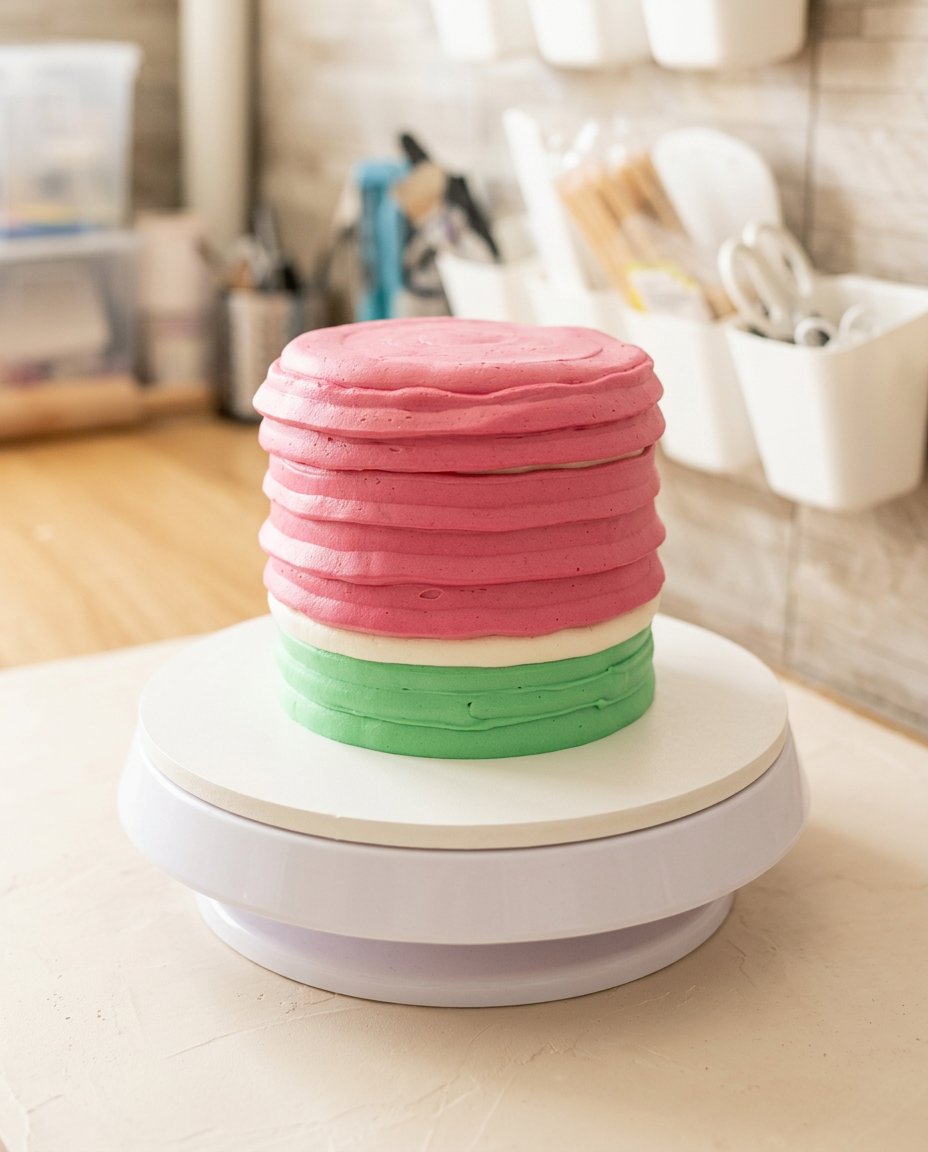
We do not hide behind flour, eggs, or refined sugars here. Every single ingredient in this build must stand on its own structural and flavor merit, which is why sourcing firm, peak-season produce is non-negotiable. If your fruit is soft, bruised, or overripe, your gorgeous tower will sag, weep, and lose its clean, modern lines before it even hits the serving platter. Take your time at the market selecting specimens that feel heavy for their size, signaling high water content and dense cellular structures that carve cleanly.
- Seedless Watermelon: This is your structural foundation, carved into dense, moisture-rich cylinders that mimic baked layers. It should have a dark, uniform pink color and a firm texture that does not yield to gentle thumb pressure.
- Fresh Pineapple: The acidic crown that sits on top, cutting through the mild sugar of the base melon with punchy enzymes. Look for a golden skin and fresh green leaves, which indicate peak sweetness and structural density.
- Green Grapes: Tiny structural anchors used to fill gaps, provide balance, and add a snappy, bite-sized texture contrast. They must be completely firm to avoid bursting when speared with toothpicks.
- Kiwi Slices: Emerald wheels that offer a striking visual border and a clean, tangy flavor profile. Slicing them to a uniform thickness is key to maintaining a balanced, symmetrical pattern.
- Blueberries: Concentrated pops of dark, sweet juice that settle into crevices and add rich color depth. These act as natural gap-fillers, locking larger fruits in place.
- Cantaloupe: Carved into spheres or thin ribbons to add warm, musky melon aromas and a contrasting orange hue. It bridges the gap between the sharpness of the pineapple and the sweetness of the watermelon.
- Maltas: These sweet, low-acid citrus wheels bring a rare, honeyed depth that bridges the gap between melon and pineapple. Their gorgeous segmented interiors look like stained glass against the watermelon base.
| Ingredient | Why It Matters |
|---|---|
| Seedless Watermelon | Provides a dense, hydrating foundation that supports the upper weight. |
| Fresh Pineapple | Delivers essential structural density and sharp, tropical acidity. |
| Green Grapes | Act as tiny, edible wedges to secure decorative fruit pieces. |
| Kiwi Slices | Provide a tangy flavor contrast and a gorgeous, seed-speckled aesthetic. |
Step by Step
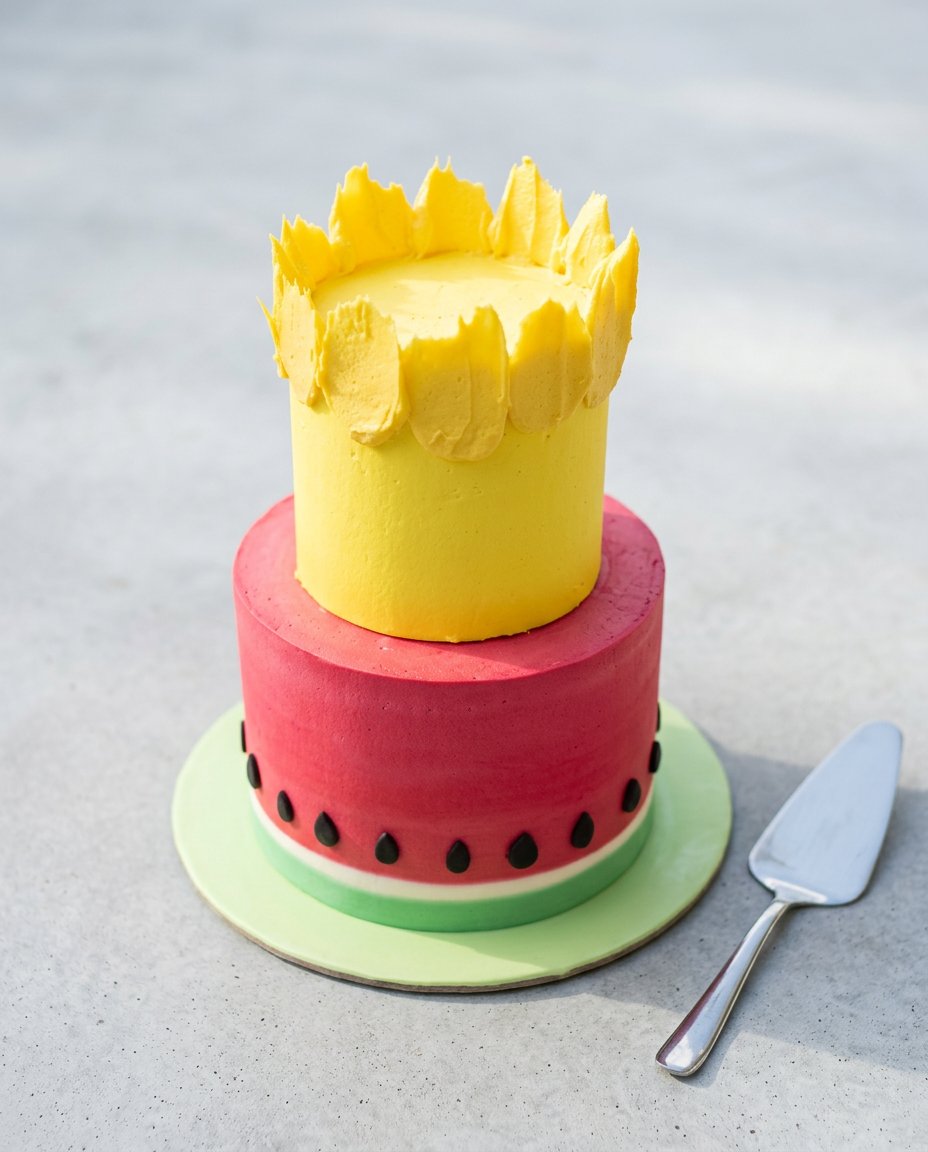
Step 1: Carving the Watermelon Foundation
Find a large, symmetrical watermelon and slice off both ends to create flat, parallel surfaces. Stand the melon upright on your cutting board and slowly slice away the rind, following the natural curve from top to bottom. Once the red flesh is exposed, use a sharp chef’s knife to carve a precise, six-inch cylinder with perfectly straight, vertical walls. Use a kitchen scale to check that your carved cylinder weighs enough to remain stable on your serving board.
Step 2: Preparing the Pineapple Crown
Cut the top and bottom off a fresh, ripe pineapple, then slice away the tough outer skin and dark eyes. Trim the fruit into a clean cylinder that is exactly four inches in diameter, ensuring it is slightly shorter than your watermelon base. Keep the central core intact during this step, as it provides the essential structural backbone needed to support the top fruit decorations. Wipe the outside of the pineapple cylinder with a clean paper towel to remove excess surface juice.
Step 3: Managing the Moisture Barrier
Watermelon is ninety-two percent water, which means surface moisture is the enemy of structural integrity. Lay both carved fruit cylinders on clean paper towels and let them drain for ten minutes. Gently press more towels against the sides to absorb any weeping juice, creating a dry surface where additional fruits can cling. This sensory check is vital because any residual water on the outer surfaces will dissolve the natural fruit sugars, making the sides slick and slippery.
Step 4: Assembling the Watermelon and Pineapple Tropical Fruit Cake Layers
Place your dry watermelon cylinder directly in the center of your display platter. Insert three sturdy wooden skewers or bamboo dowels vertically into the center of the watermelon, leaving two inches of the skewers protruding from the top. Carefully align your carved pineapple cylinder over these exposed skewers and press down firmly until the two fruit layers meet. The wooden supports will prevent the top tier from shifting or tilting during transport.
Step 5: Securing the Fruit Accents
Insert wooden toothpicks halfway into the sides of both fruit tiers at slight upward angles. Slide firm green grapes, maltas, and kiwi slices onto the exposed toothpicks, pressing them close to the melon walls to cover any bare spots. The upward angle of the toothpicks prevents gravity from pulling the decorative slices down, guaranteeing everything stays locked in place. Work from the bottom up, building a sturdy mosaic of colors that conceals the wooden pins completely.
Step 6: Designing the Mosaic Crown
Top the pineapple tier with a generous heap of cantaloupe spheres, blueberries, and halved grapes. Nestle the smaller berries into the gaps between the larger melon balls to lock the top decoration into a secure, domed shape. Let a few small grape clusters drape naturally over the edge of the pineapple crown to create a cascading visual effect. Press the pieces gently into the pineapple flesh to make sure they do not roll off when the cake is moved.
Step 7: The Chilled Rest
Place the assembled fruit tower into the refrigerator for at least thirty minutes before serving. The cold air firms up the fruit fibers and helps the natural sugars thicken, bonding the layers together slightly. Observe the cake after fifteen minutes to check for any dripping juice or shifting pieces, adjusting the toothpicks if necessary. Serve the cake ice-cold to maximize the refreshing contrast of the crisp fruits.
Notes from Testing
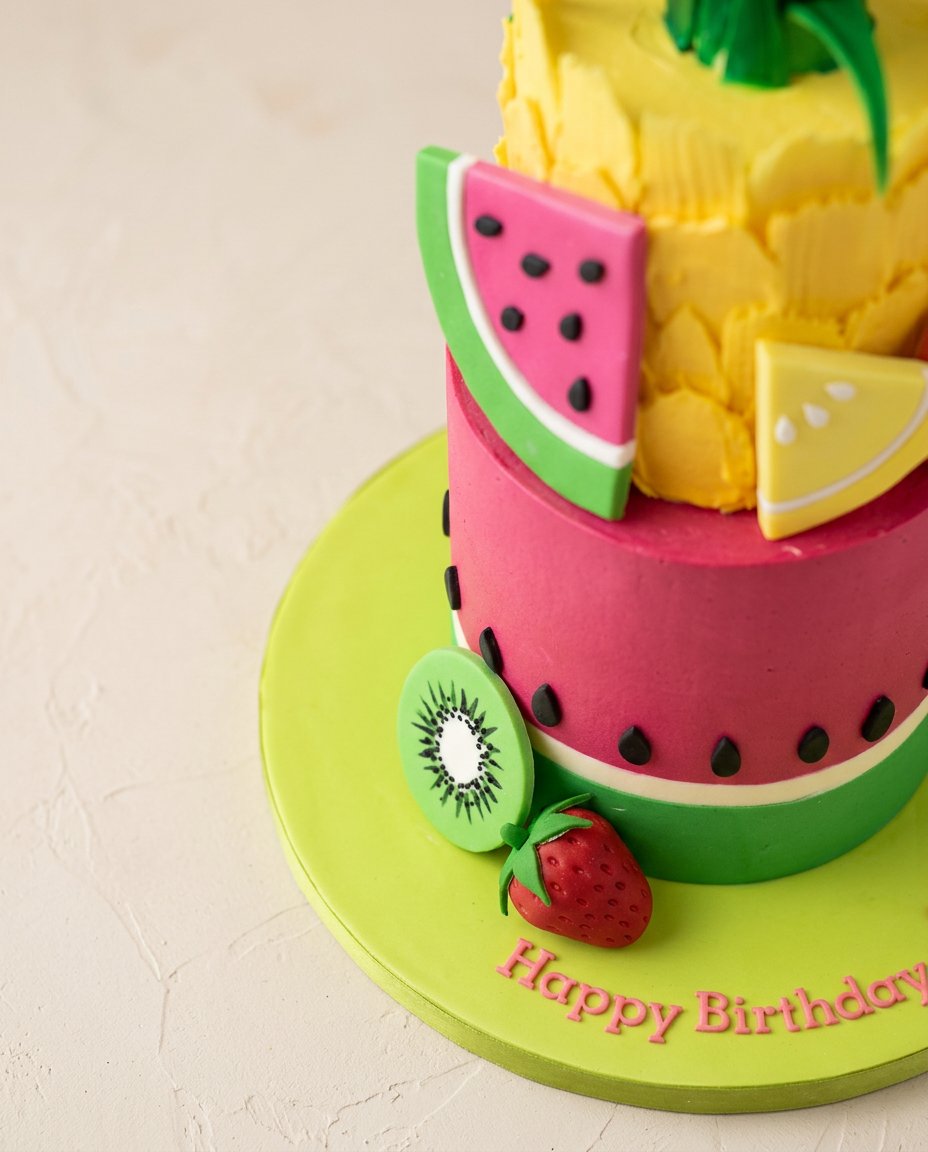
When working with raw fruit as a structural medium, your biggest challenge is managing gravity and excess juice. To stop your tiers from sliding, use a clean kitchen towel to dry the carved melon walls repeatedly before sticking on your kiwi or citrus slices. If you struggle with sliding decorations, dust a tiny pinch of cornstarch or potato starch onto the toothpick entry points to absorb moisture and create traction.
For an artisan look, try a fruit fresh bath on your sliced apples, pears, or bananas if you decide to introduce them to your topping selection. This prevents oxidization and keeps your colors looking bright and clean for hours. Never use overripe fruits for the base layers, as their softening cell walls cannot support the weight of a multi-tiered assembly.
If your fruit layers begin to tilt or list to one side, here is why and how to fix it. The central skewers were likely inserted at an angle rather than perfectly straight, or one of the melon tiers has an unevenly carved top. Gently lift the top pineapple tier off, trim the top of the watermelon base until it is completely level, and insert fresh skewers straight down before reassembling.
For more advanced structural tricks, you can study professional techniques in artisan fresh fruit cake assembly. They use specific carving angles that distribute weight evenly across the base melon, which is helpful if you want to scale this recipe up. Always cut your toothpicks with clean kitchen shears so they do not protrude past the thin fruit slices.
When cutting watermelon into cylinders, save the excess trim and rind. You can blend the leftover red flesh with a splash of fresh lime juice to make an incredibly refreshing cooler, or freeze the cubes for future smoothies. These off-cuts are the perfect chef’s treat to enjoy while you assemble the main tower, proving that zero waste is possible even when carving dramatic shapes.
For an ultra-clean presentation, use a small melon baller to scoop out perfect spheres of cantaloupe and watermelon for the crown. Spherizing your fruit not only looks highly professional, but it also allows the pieces to nestle together more tightly, which prevents rolling and improves the cake’s overall stability.
Frequently Asked Questions
How do you make a watermelon fruit cake?
You make a watermelon fruit cake by carving the outer rind off a whole melon and shaping the inner red flesh into flat-topped cylinders. These cylinders are then stacked using wooden skewers for internal support and decorated with smaller sliced fruits attached via toothpicks. It requires no baking and offers a highly refreshing, naturally sweet alternative to traditional flour cakes.
How do you attach the fruit to the watermelon?
The easiest way to attach smaller decorative fruits is by using sturdy wooden toothpicks inserted at a slight upward angle into the watermelon base. You then slide kiwi slices, grape halves, or citrus wheels onto the exposed ends of the toothpicks. The upward angle uses gravity to hold the decorative fruits firmly against the melon walls.
How do you make a multi-tiered fruit cake?
To make a multi-tiered fruit cake, carve your base melon tier wider than your upper tiers to guarantee a stable center of gravity. Insert wooden dowels or skewers vertically into the center of the base tier, leaving a few inches exposed to anchor the upper tiers. Stack the smaller carved fruits, like pineapples or cantaloupes, onto these skewers to lock them securely in place.
Can you make a watermelon cake the day before?
While you can carve the individual watermelon and pineapple tiers the day before, it is best to assemble and decorate the cake on the day of your event. Leaving an assembled fruit cake in the fridge overnight causes the fruits to weep excess water, which can loosen the toothpicks and cause decorations to slide. Keep the carved components wrapped in paper towels in airtight containers, then assemble them a few hours before serving.
Who is the fruit cake for?
This fruit cake is perfect for anyone seeking a refreshing, dairy-free, and gluten-free dessert option during hot summer days. It is especially popular for outdoor pool parties, children’s birthdays, or summer barbecues where traditional baked goods would quickly melt in the heat. It provides a beautiful, hydrating centerpiece that appeals to health-conscious guests and adventurous dessert lovers alike.
What specific fruits work best for decorating?
Firm fruits like grapes, kiwi, blueberries, and strawberries work best because they hold their shape well when skewered. Avoid soft, overly juicy fruits like ripe peaches, plums, or raspberries for structural work, as they will easily tear and slip off the toothpicks. If you have citrus fruits on hand, thin wheels of limes, lemons, or oranges add fantastic color and clean acidity.
How do you serve and store leftover fruit cake?
Leftover slices should be disassembled and stored in an airtight container in the refrigerator, where they will keep well for up to two days. Because the carved melon will continue to release moisture, it is best to enjoy the leftovers as a refreshing fruit salad rather than trying to preserve the tiered structure. You can also blend any leftover pieces with ice to create a delicious, hydrating tropical smoothie.
Rebel Swaps
If pineapple is too acidic for your taste buds, try replacing the top tier with a dense honeydew melon or a carved cantaloupe cylinder. This swap maintains the exact same structural weight while shifting the flavor profile toward a smoother, honey-like sweetness. You can also experiment with a strawberry vanilla cake citrus baking style by brushing a light vanilla-bean-infused simple syrup over the carved melon layers before assembly.
Another excellent variation involves swapping the green grapes for dark blackberries or raspberries to create a moody, deep-purple color palette. You can also carve the watermelon base into a hexagon or square instead of a circle, which creates sharp, modern angles that catch the light beautifully. If you want to make this for a festive winter gathering, replace the tropical fruits with thin pear slices, pomegranate arils, and a dusting of unsweetened shredded coconut to mimic fresh snow.
For a rich twist that mimics a traditional frosted cake, you can coat the entire watermelon cylinder in a thin layer of whipped coconut cream before applying the decorative fruit slices. The fat in the coconut cream acts as a natural moisture barrier and adhesive, holding the kiwi and berries in place without needing toothpicks. If you choose this route, make sure to chill the coconut cream thoroughly beforehand so it does not melt or slide down the wet melon walls.
Before You Slice
When presenting this raw masterpiece, place it on a chilled wooden board or a marble slab to help maintain its cool temperature. Keep a bowl of extra fresh berries and some mint leaves nearby to scatter around the base of the cake right before guests arrive, creating a lush, tropical garden look. For a fun, interactive serving experience, provide a small dish of lime wedges and chili-lime seasoning so guests can customize their slices.
To cut the cake cleanly, use a long, thin slicing knife rather than a heavy serrated bread knife, which can tear the delicate outer fruit layers. Slice straight down through both tiers to give each guest a beautiful cross-section of both watermelon and pineapple. If you want to see a step-by-step visual of how to handle the carving process, check out our fresh watermelon layer cake story for quick tips and trick angles.
For a truly dramatic presentation, serve this cake on a bed of crushed ice arranged inside a large, shallow rimmed platter. This setup not only looks wonderfully luxurious, but it also keeps the fruit ice-cold throughout an outdoor party or warm summer afternoon. You can tuck fresh mint sprigs and edible flowers into the ice around the base of the cake to complete the tropical garden aesthetic.
What You Just Proved
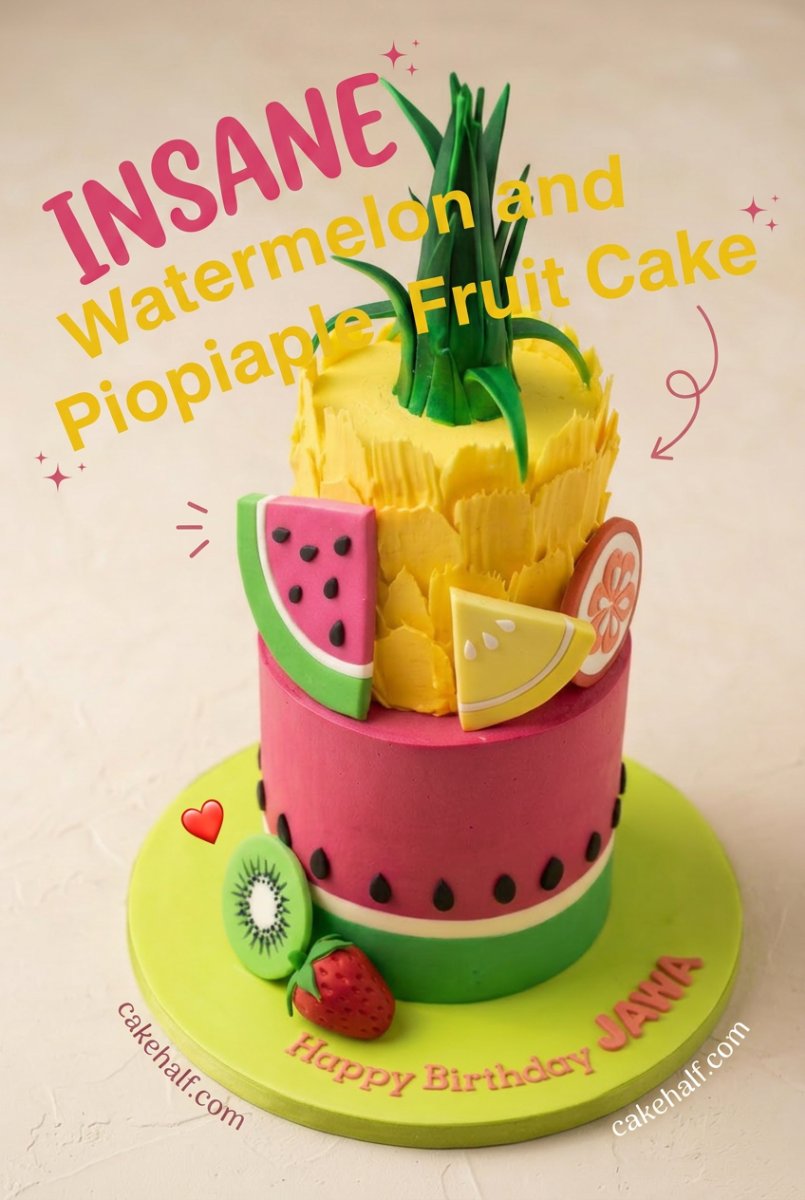
Building this raw tropical tower proves that you do not need flour, sugar, or a hot oven to create a show-stopping cake. By letting fresh, high-quality fruits take the lead, you have constructed a refreshing, modern masterpiece that looks just as good as it tastes. It is proof that simple, natural ingredients can be transformed into elegant art with just a little precision and structural planning.
Now, grab your chef’s knife, pick out the best melon in the market, and start carving your own delicious masterpiece. If you enjoyed playing with fresh tropical flavors, you might also want to try baking our classic, small-batch best pineapple cake for your next indoor celebration. It offers a completely different take on tropical fruit while maintaining that intense, sweet flavor profile.
Be sure to share your beautiful fruit creations with our baking community! Post your photos and tag us on Pinterest, Facebook, or TikTok so we can celebrate your gorgeous fruit designs. We love seeing how you customize the layers and make each recipe uniquely your own.