Making eighteen individual portions lets you control the thermal heat distribution in a way a massive triple-layer round pan never allows.

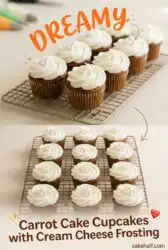
When you bake these Carrot Cake Cupcakes with Cream Cheese Frosting, you bypass the clumsy, uneven dome of giant bakery cakes. Every single well of your muffin pan receives identical heat, giving each individual crumb the same tender density and uniform lift. These small-batch beauties offer the ideal ratio of toasted spices, sweet grated root, and velvety creaminess in every single bite. This is small batch, full conviction baking.
Why Small-Batch Carrot Cake Cupcakes with Cream Cheese Frosting Work
Prep: 10 min · Serves: 18 · Difficulty: Medium
- Controlled baking guarantees a remarkably soft crumb structure.
- Grating fresh carrots yields maximum natural moisture release.
- Spices bloom beautifully within separate individual liners.
- Custom frosting portions balance rich cinnamon-spiced cake batter.
Baking eighteen cupcakes allows for immediate heat penetration into the center of each liner, avoiding the dense, under-baked core often found in large round cakes. By portioning the batter, you lock in the optimal moisture balance before the starches fully set. To understand the background of this flavor profile, take a look at our classic carrot cake cream cheese story to see how these elements evolved.
Get The Full Cake Recipe
Print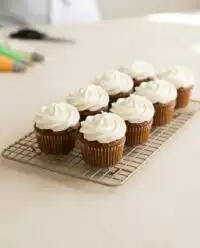
Carrot Cake Cupcakes with Cream Cheese Frosting
- Total Time: 30 mins
- Yield: 18 cupcakes
Description
These perfectly portioned carrot cake cupcakes offer a consistent crumb and uniform bake thanks to precise small-batch techniques. Topped with a velvety cream cheese frosting, they deliver a balanced blend of toasted spices and fresh root vegetables in every bite.
Ingredients
- All-purpose flour
- Granulated sugar
- Baking soda
- Baking powder
- Ground cinnamon
- Ground nutmeg
- Ground allspice
- Ground cloves
- Vegetable oil
- Eggs
- Applesauce
- Fresh carrots
- Pecans
- Golden raisins
- Cream cheese
- Butter
- Powdered sugar
Instructions
- Prepare the oven. Position an oven rack in the center, preheat to 350°F, and place paper liners into two muffin tins.
- Whisk dry ingredients. Combine flour, sugar, baking soda, baking powder, and spices in a large bowl, whisking until thoroughly blended.
- Emulsify the wet. In a separate container, whisk together vegetable oil, room-temperature eggs, and applesauce until the mixture becomes a smooth, opaque yellow emulsion.
- Fold in textures. Stir the wet mixture into the dry, then gently fold in the grated carrots, pecans, and golden raisins until just combined.
- Bake the cupcakes. Divide batter into eighteen prepared liners and bake for twenty minutes until a toothpick inserted in the center comes out clean.
- Frost the cupcakes. Whip softened cream cheese and butter with powdered sugar until smooth, then pipe onto the fully cooled cupcakes.
Notes
- Use a kitchen scale for flour to prevent dry, crumbly cupcakes.
- Ensure all dairy and eggs are at room temperature to prevent lumping and ensure proper emulsion.
- Grate carrots by hand using the fine holes of a box grater to ensure they melt into the batter.
- Always allow cupcakes to cool completely before applying frosting to prevent melting.
- Prep Time: 10 mins
- Cook Time: 20 mins
- Category: Dessert
- Method: Baking
- Cuisine: American
The Lineup
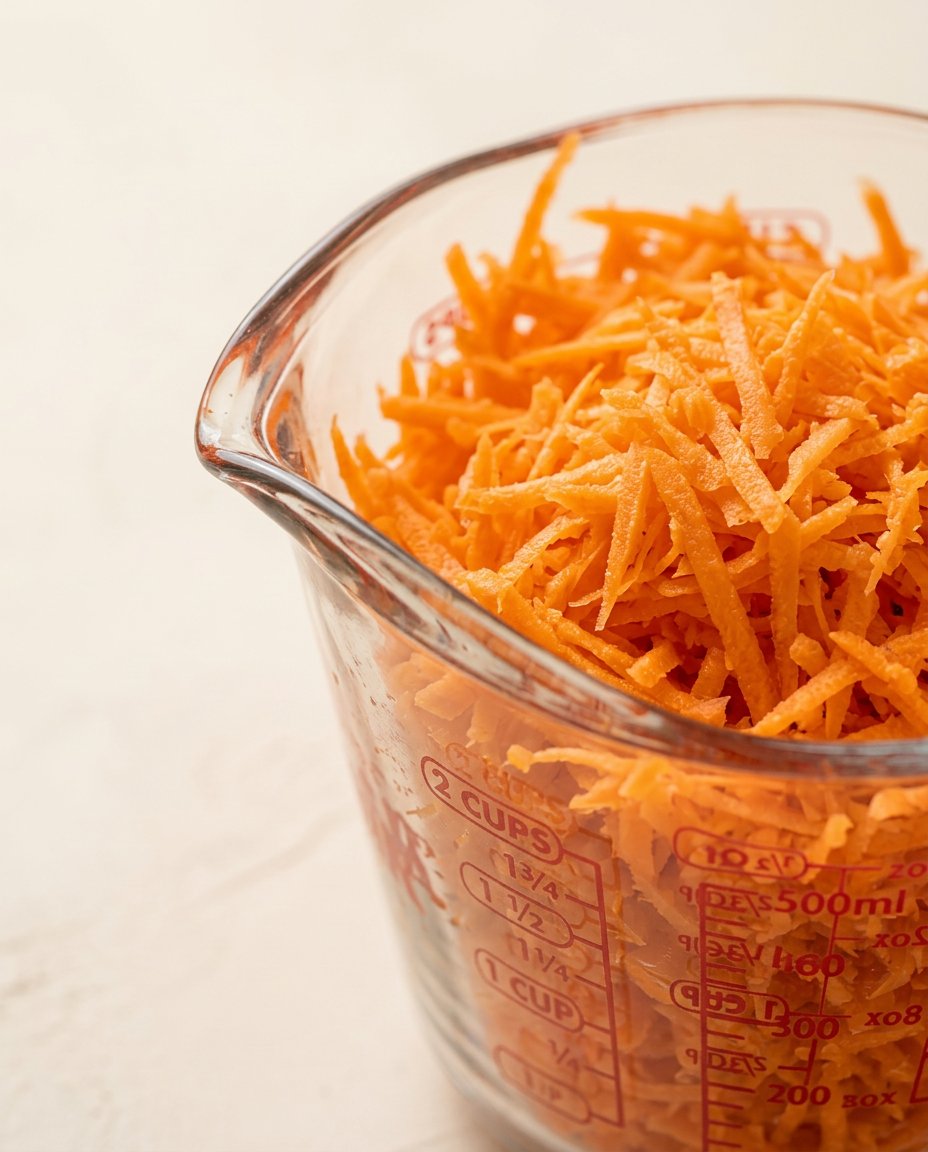
A flawless cupcake requires a balanced structural network of fat, moisture, and starch. We reject the standard approach of drowning the batter in oil, opting instead for a deliberate fruit-fat split. This guarantees a crumb that stays springy under a heavy mound of velvet frosting.
- All-purpose flour: This provides the gluten scaffolding necessary to suspend heavy grated carrots and nuts. Measuring by weight prevents dry, crumbly textures in the baked sponge, ensuring a sturdy yet tender foundation.
- Granulated sugar: Beyond sweetness, sugar tenderizes the crumb by interfering with gluten development and holding water. It preserves moisture long after the bake, keeping the cake fresh for days.
- Baking soda and powder: This dual leavening team reacts at different times to push the dense batter upward. They work together for optimal lift, balancing the acidity of the applesauce and carrots.
- Spices (Cinnamon, nutmeg, allspice, cloves): Ground spices bloom in hot oil, filling your kitchen with a rich bakery aroma. They add essential warmth and complexity, balancing the sweetness of the root vegetable.
- Vegetable oil: Liquid fat coats flour proteins, producing an exceptionally tender mouthfeel that remains soft when chilled. It guarantees that the crumb stays moist and doesn’t turn solid in the fridge.
- Applesauce: This rebel swap replaces half the oil to add natural pectin and moisture without leaving any greasiness. It lightens the crumb while keeping the cake incredibly soft.
- Fresh carrots: Finely grated carrots melt into the batter during baking, releasing natural sugars and structural water. They provide the classic texture and sweetness that defines this heritage bake.
- Pecans and golden raisins: These optional add-ins contribute crunch and jammy pockets of sweetness to break up the texture. They provide an excellent contrast to the smooth cream cheese frosting.
| Ingredient | Why It Matters |
|---|---|
| All-Purpose Flour | Establishes the structural gluten network to support carrots |
| Applesauce | Replaces heavy oil with clean, pectin-rich moisture |
| Fresh Carrots | Dissolve into the crumb for natural sweetness and hydration |
| Spices | Bloom during baking to create a deep aromatic base |
| Vegetable Oil | Keeps the crumb extremely soft even when refrigerated |
The Method
Step 1: Prep Your Space and Liners
Position your oven rack in the center to guarantee uniform hot air circulation. Heat the oven to 350°F and distribute paper liners into two metal muffin tins. Setting up your workstation early keeps you focused once the wet emulsion begins reacting.
Bring your eggs and frosting elements to room temperature before you begin. Cold ingredients break the batter emulsion and cause uneven baking. Using a kitchen scale at this stage lets you measure the ingredients precisely.
Step 2: Whisk Your Dry Particle Shield
In a spacious mixing bowl, combine the flour, sugar, baking soda, baking powder, and ground spices. Whisk these dry elements vigorously until the mixture is uniform in color. This mechanical blending prevents pockets of bitter leavening from ruining your finished treats.
A thorough whisking aerates the starch, making the final crumb lighter. Take your time to break up any tiny clumps in the flour. This creates a uniform dry barrier that will absorb the wet ingredients evenly.
Step 3: Emulsify Your Wet Base
Whisk the vegetable oil, room-temperature eggs, and applesauce in a separate vessel. Whisk until the eggs break down and the liquid becomes a cohesive, slightly thick yellow emulsion. Working with room-temperature eggs guarantees that the fat does not separate during the mix.
This step builds the hydration base that will keep the cake tender. Watch for the color shift from translucent yellow to opaque gold. This visual cue tells you the emulsion is complete and ready for the flour.
Step 4: Fold the Texture Elements
Pour the wet mixture into the dry bowl, stirring with a flexible spatula until only a few dry streaks remain. Scatter the grated carrots, pecans, and golden raisins over the top of the batter. Fold these additions in gently, stopping the moment the last speck of flour disappears.
Over-mixing at this stage will activate the gluten and make your cupcakes dense. Treat the batter with care to preserve the air pockets. That is not a mistake — that is data, showing you how gentle handling yields fluffier results.
Step 5: Bake Your Carrot Cake Cupcakes with Cream Cheese Frosting
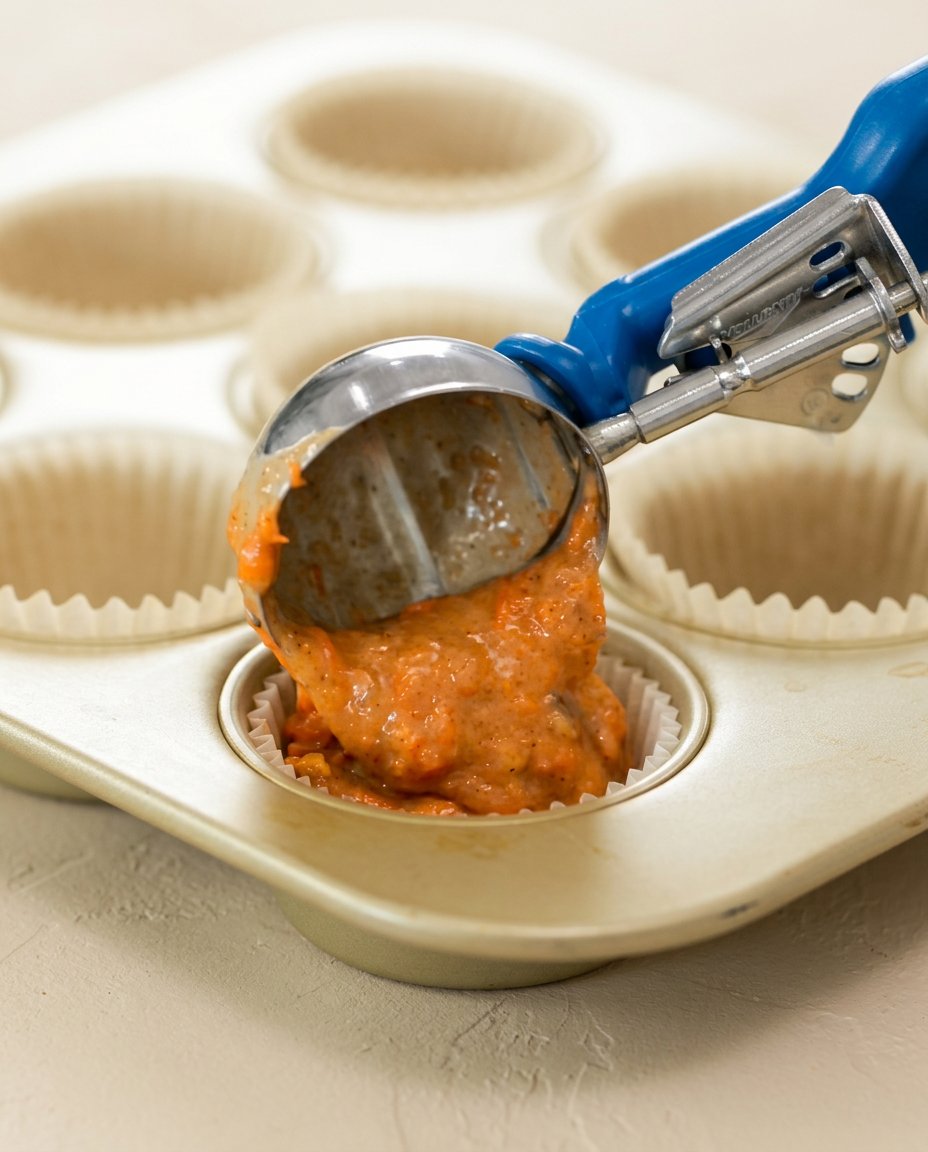
Divide the batter evenly among your eighteen prepared liners, filling each well about two-thirds full. Slide the tins into the hot oven and bake for twenty minutes. A toothpick inserted into the center should emerge clean with a few moist crumbs attached.
The tops of these Carrot Cake Cupcakes with Cream Cheese Frosting will spring back gently when pressed lightly with a finger. Let them rest in the pans for three minutes before moving them to wire racks. This short resting window lets the structure stabilize before cooling.
Step 6: Whip and Apply the Velvet Crown
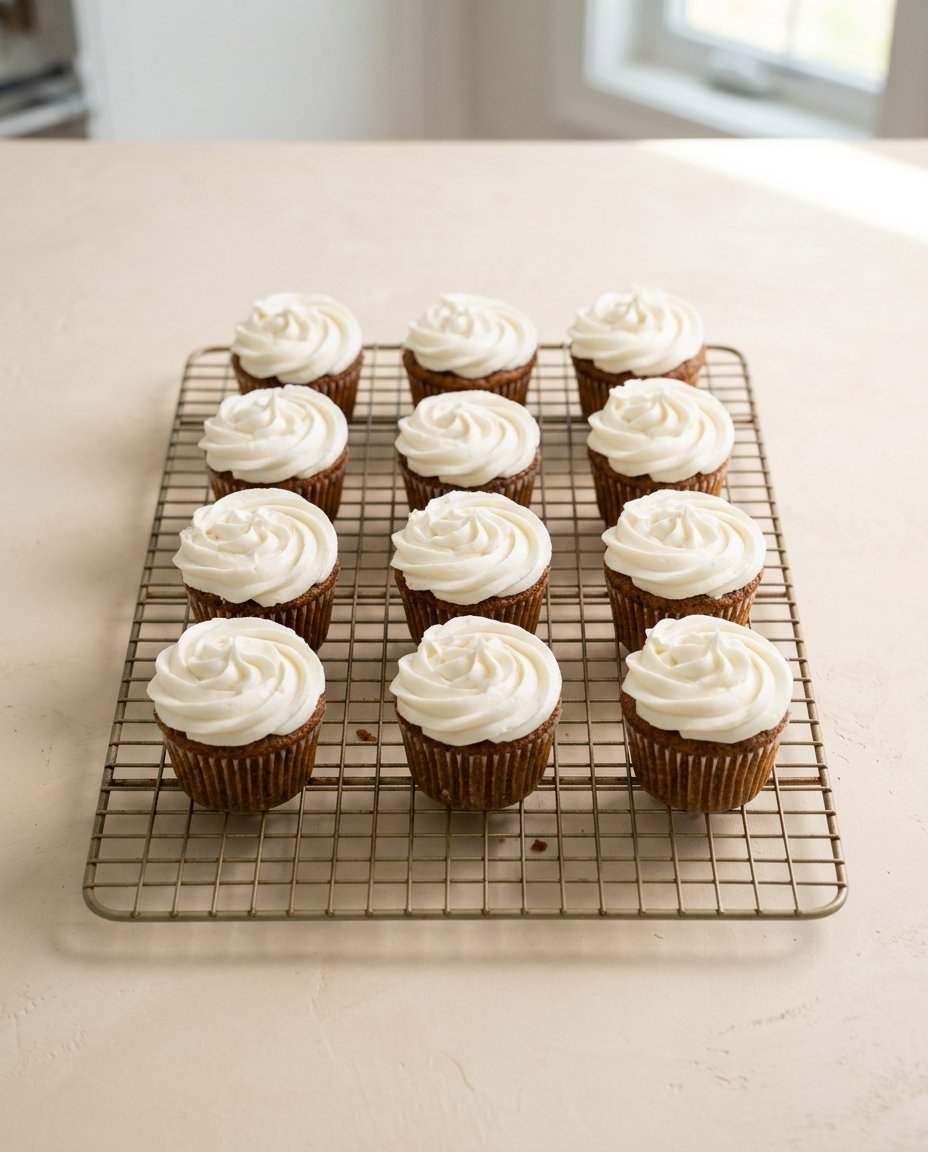
Cool the tins on a wire rack for five minutes before turning the cakes out to cool fully. While they cool, beat the softened cream cheese and butter until smooth, then sift in powdered sugar. Pipe the frosting in generous swirls over the completely cooled cakes.
Applying frosting to warm cakes will melt the fat and cause the swirls to slide off. Patience here guarantees a gorgeous, stable presentation. You can divide the frosting to dye small portions orange and green for decorative carrot designs.
The Details That Matter
The kitchen scale is your ultimate liberation device because volume measurements are inherently unreliable. Spooning flour into a measuring cup can result in thirty percent more starch than required, leading to dry domes. Weighing your dry ingredients in grams keeps the crumb soft and consistent every single time. It takes the guesswork out of baking and ensures success.
If your cupcakes turn out dense, here is why and how to fix it. Over-mixing your batter activates excess gluten, creating a tough, heavy crumb that traps moisture. Mix until the flour disappears, then immediately put down your spatula. Remember that gentle folding is the key to maintaining a light, tender structure.
For the frosting, never use cold cream cheese directly from the refrigerator. Cold fat will clump when whipped with sugar, leaving you with an uneven, lumpy texture. Leave the blocks on your counter for two hours prior to mixing for a silky result. This step is non-negotiable for a professional finish.
If your frosting gets runny, it is often due to over-whipping or using warm butter. You can learn more about ingredient stability in our guide on baking quick italian cream cake which details starch structures. Pop the frosting bowl in the refrigerator for fifteen minutes to firm up the fat before piping.
You must choose fresh carrots over pre-packaged shredded options from the grocery store. Pre-shredded carrots are treated with anti-moisture agents that dry them out, preventing them from melting into the batter. Hand-grating on the fine holes of a box grater releases the natural starches needed for structure. It is a sensory checkpoint that guarantees a moist result.
Adjusting your bake time based on your specific pan material is crucial. Dark metal pans absorb heat faster than light aluminum, which can over-bake cupcake bottoms. To master these adjustments, check the guide on professional cupcake baking temperatures and timing for exact pan physics. This reference will help you calibrate your oven perfectly.
Frequently Asked Questions
Why is my carrot cake cupcake dense?
This heavy texture usually happens when the flour is over-mixed, which overdevelops the gluten. It can also occur if the carrots are grated too coarsely, preventing them from melting into the crumb. Mix the batter gently until the dry ingredients are barely incorporated.
Can you make carrot cake cupcakes ahead of time?
You can bake the cupcake bases up to two days in advance and store them in an airtight container. Keep them at room temperature until you are ready to apply the frosting. Frosted cupcakes can also be frozen for up to one month.
How should you store these cupcakes with cream cheese frosting?
Because cream cheese contains dairy, these frosted treats must be refrigerated in an airtight container. Bring them to room temperature for twenty minutes before serving to restore the soft crumb. Unfrosted cupcakes can remain on the counter for two days.
Why did my cream cheese frosting get runny?
This thinning happens when the frosting is over-whipped or if the butter was melted instead of softened. High liquid content in low-fat cream cheese blocks can also break the emulsion. Use full-fat brick cream cheese and chill the frosting to restore texture.
What variations can I add to carrot cake cupcakes?
You can incorporate shredded coconut, crushed pineapple, or chopped walnuts to change the flavor profile. Be sure to drain any pineapple thoroughly to avoid adding excess liquid to the batter. A pinch of cardamom can also add a complex floral aroma.
Can you add nuts and raisins to these cupcakes?
Adding these textured ingredients is a traditional choice that works beautifully in this recipe. Briefly toss the chopped nuts and raisins with a spoonful of flour before folding them in. This prevents the heavy pieces from sinking to the bottom of the liners.
Rebel Swaps
You can swap the traditional spices for a bolder ginger-orange profile. Replace the ground cloves with grated orange zest and a teaspoon of ground ginger. This adjustment pairs beautifully with the sweet root base and cuts through the rich fat of the cream cheese. It is a simple twist that changes the entire character of the cupcake.
If you prefer a simpler bake, you can easily turn this batter into a rustic loaf cake. Pour the batter into a greased nine-by-five loaf pan and bake at 325°F for fifty-five minutes. This slow-bake method yields a tight, moist crumb similar to a classic carrot cake slice. It is perfect for afternoon tea or casual slicing.
Swap the pecans for toasted pumpkin seeds if you need a completely nut-free option. Toasting the seeds in a dry pan for three minutes releases their oils, creating a deeply savory crunch. This addition contrasts beautifully with the sweet golden raisins and spiced batter. It provides a modern texture that appeals to everyone.
Cutting, Plating, Presenting
Display these spiced treats on a clean marble slab or a vintage wooden pedestal to highlight the striking contrast of the white frosting. Space the cupcakes two inches apart to let the piped star swirls stand out as individual works of art. A light dusting of ground cinnamon over the frosting immediately before serving adds a professional touch that guests will notice.
Serve these cupcakes alongside a pot of hot black tea or a dark roast coffee. The bitter, roasty notes of the coffee cut through the sweet, dense crumb of the cake. For a wider dessert table spread, pair them with elements from our vanilla cake recipe to offer your guests a classic flavor alternative that balances the spice.
Keep the cupcakes in a cool room until the moment of presentation. If the room is too warm, the cream cheese frosting will soften and lose its sharp piped lines. A cool room guarantees the structural integrity of the frosting stays excellent for hours, keeping your display looking pristine.
The Takeaway
Mastering these spiced treats proves that baking in small batches yields superior results compared to mass-produced bakery cakes. By focusing on ingredient weight and proper folding techniques, you create an incredibly soft crumb that holds its shape. Every batch is an opportunity to trust your senses and tweak the process to match your taste.
If you want to practice your sponge technique further, try baking a classic vanilla layer cake to test your crumb control. The skills you build on these small bakes will transfer to every future project in your kitchen. Remember that a recipe is only a starting point, and you are the variable that makes it work.
Share your baking results with us and tell us how your texture elements turned out. We love seeing how home bakers adapt these formulas to make them unique. Connect with us on Pinterest, follow our updates on Facebook, or watch our technique videos on TikTok.