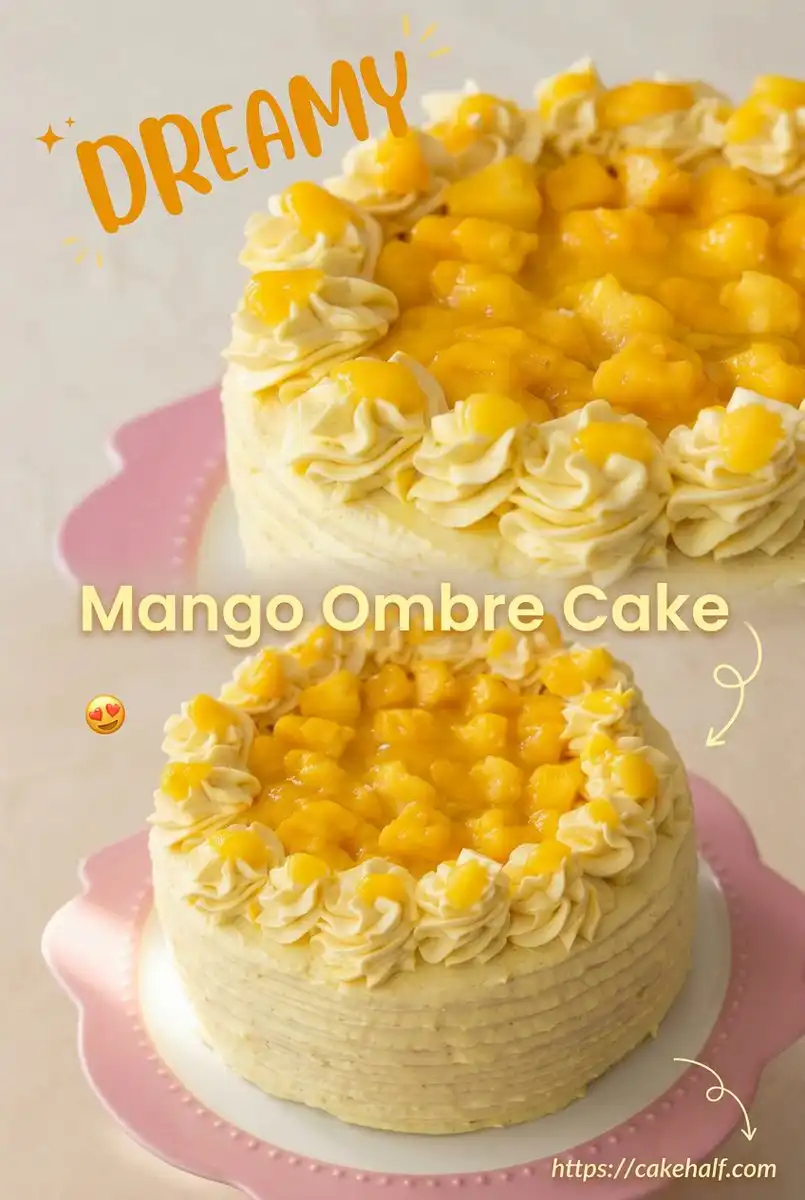
Acidifying whole milk with white vinegar while folding raw mango puree directly into the batter replaces standard buttermilk, creating an acidic environment that activates our rising agent.

Baking is often treated as a set of rigid instructions, but this small-batch Mango Ombre Cake proves that breaking the rules yields far better results. By using vinegar to sour our milk and folding real fruit puree straight into the batter, we bypass artificial flavorings entirely. The recipe is a starting point. You are the variable. The result is a cake with a crumb so tender it almost melts on your tongue, balanced by a lightly sweetened mango whipped cream.
The Case for Making This Mango Ombre Cake\n\nPrep: 45 min · Serves: 8 · Difficulty: Medium\n\n* Small-batch logic yields superior structural integrity.\n* Real mango puree replaces artificial fruit flavorings.\n* Vinegar-soured milk guarantees an ultra-tender crumb.\n* Two-layer design simplifies assembly and leveling.\n* Stabilized fruit cream provides clean, distinct slices.\n\nThis is the recipe you pull out when you want to prove that fruit cakes do not have to be heavy, dense, or cloyingly sweet. If you appreciate the bright, tropical profile of our best pineapple cake, this layered creation will quickly become your new standard for warm-weather baking.
Get The Full Cake Recipe
Print
Mango Ombre Cake
- Total Time: 1 hour 25 mins
- Yield: 8 servings
- Diet: Vegetarian
Description
A beautiful, small-batch Mango Ombre Cake made with real mango puree and fresh cubed fruit. The vinegar-soured milk guarantees a tender crumb, layered with a pastel mango whipped cream.
Ingredients
- ¾ cup milk
- ⅓ cup vegetable oil
- ½ teaspoon vanilla extract
- 1 egg
- 1 tablespoon white vinegar
- ½ cup mango puree
- 1 ¾ cup AP flour
- 1 teaspoon baking soda
- ½ teaspoon salt
- ¾ cup sugar
- 2 cups heavy cream
- ¼ cup mango puree
- 2 ripe mangos, cubed
Instructions
- Prep: Preheat your oven to 350°F (180°C) and line two 6-inch pans with parchment paper.
- Wet Mix: To a bowl, add the milk, vegetable oil, egg, vanilla extract, vinegar, and ½ cup mango puree. Whisk to combine.
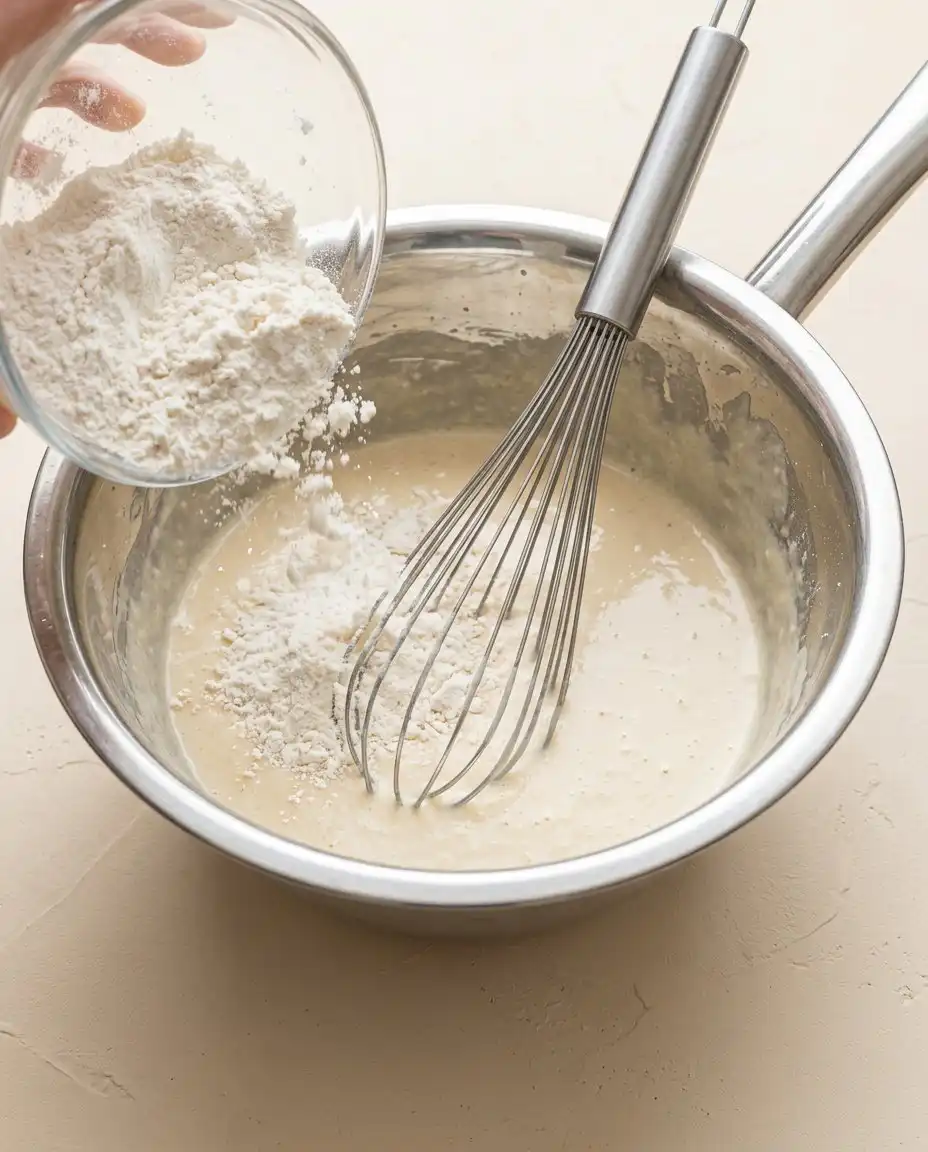
- Dry Mix: In another bowl, sift the flour, baking soda, and salt. Add the sugar and whisk to combine.
- Combine: Add the wet ingredients to the dry and whisk until the batter is smooth.
- Bake: Divide the batter into the 2 pans and transfer to the oven. Bake for 20-25 minutes or until an inserted toothpick comes out clean.
- Cool: Set the pans aside on the counter to cool for 10 minutes, then transfer the cakes to a wire rack.
- Whip Cream: While the cakes are baking, pour cold heavy cream into a bowl and beat until light and fluffy. Fold in ¼ cup of mango puree.
- Level: Cut the tops of the cakes using a serrated knife so that they are leveled.
- Assemble: Place one cake on a plate, spread 1 to 1 ½ cups of mango cream on top, and place the second cake on top.
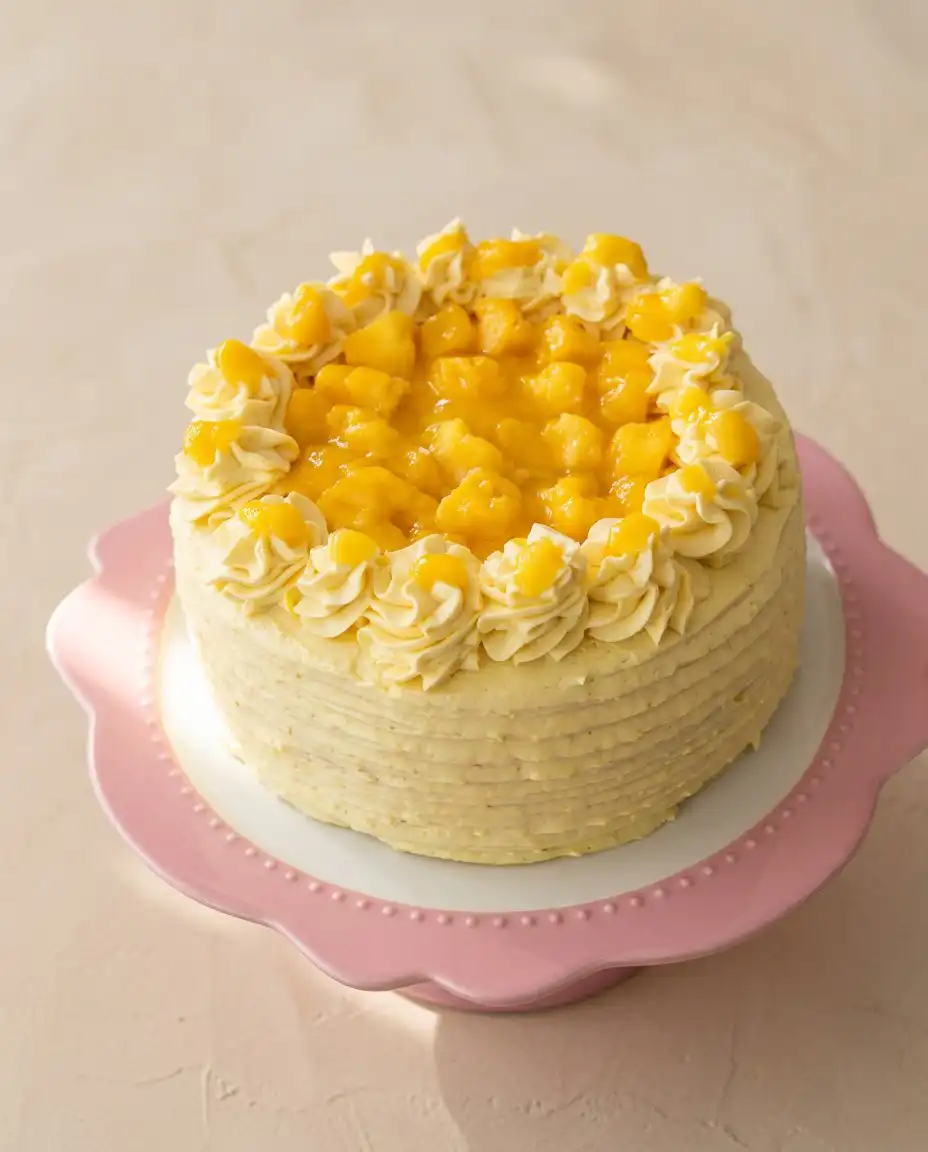
- Frost: Add more cream to the sides and top, smoothing with a spatula. Pipe a decorative border using a star tip.
- Garnish & Chill: Add cubed mangos inside the border. Chill the cake in the fridge for 4-8 hours before serving.
Notes
- Measure precisely: Use a kitchen scale for the flour and mango puree to ensure the batter’s moisture balance is correct.
- Keep it cold: Chill your mixing bowl and beaters before whipping the heavy cream to achieve the most stable frosting possible.
- Do not overmix: Whisk the dry and wet ingredients just until combined to keep the cake crumb light and tender.
- Level carefully: Use a sharp serrated knife in a horizontal sawing motion to level the cake layers without tearing them.
- Prep Time: 45 mins
- Cook Time: 40 mins
- Category: Cake
- Method: Baking
- Cuisine: American
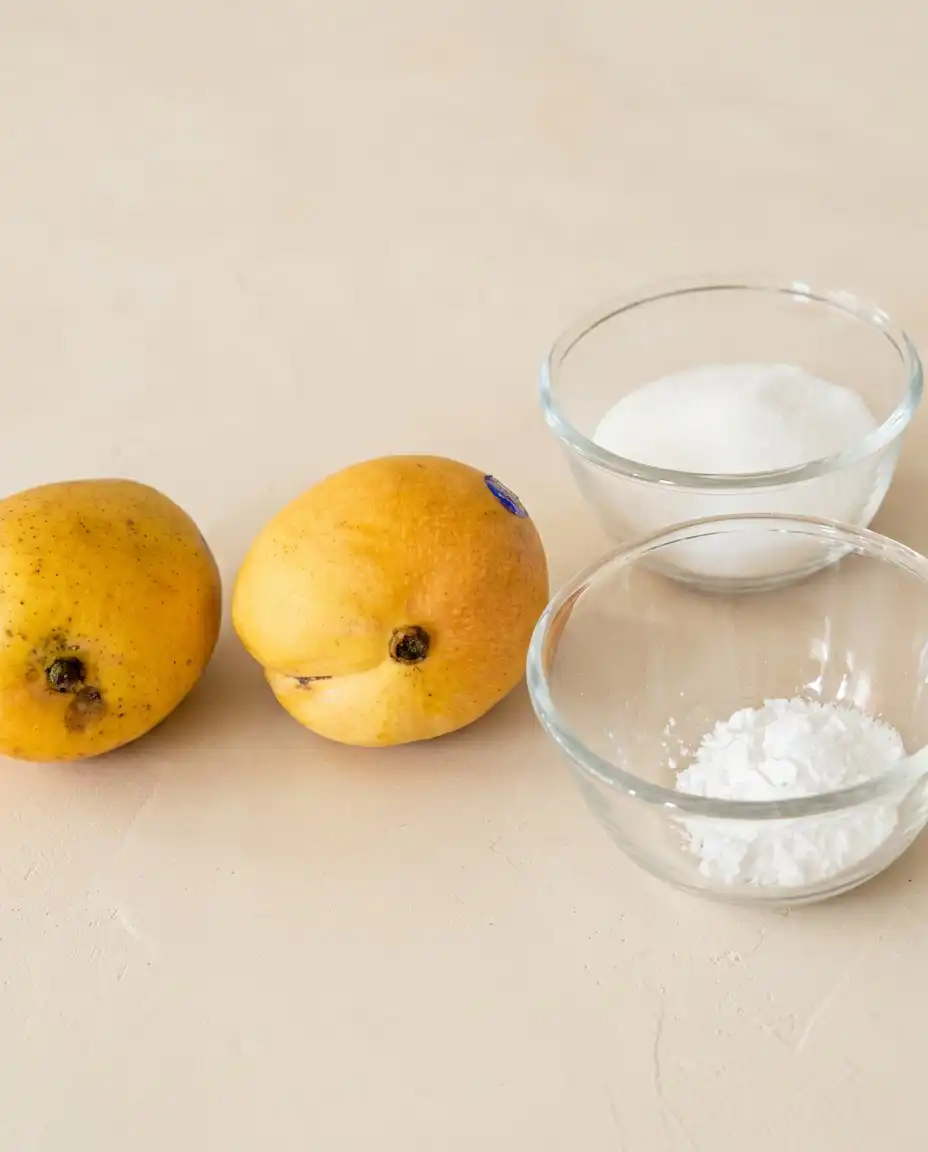
Build Your Mise en Place\n\nBefore we turn on the oven, we need to gather our components and understand how they interact. Baking is chemistry, and every gram of flour or milliliter of acid serves a distinct structural purpose in our batter. Skipping or swapping ingredients without knowing their function is how cakes turn flat, dense, or dry.\n\n* Mango Puree: This is our primary flavor driver, used in both the cake layers and the whipped cream frosting.\n* White Vinegar: The secret acidifier that reacts with our baking soda to create a light, airy rise.\n* Vegetable Oil: Unlike butter, oil remains liquid at room temperature, keeping the cake crumb incredibly soft.\n* Heavy Cream: High-fat cream serves as our canvas, holding the mango puree in a stable, fluffy cloud.\n* Ripe Mangos: Fresh, cubed fruit adds essential texture and a clean visual contrast against the smooth cream.\n* All-Purpose Flour: Provides the gluten structure required to support the heavy fruit puree without collapsing.\n\n| Ingredient | Why It Matters |\n| :— | :— |\n| Mango Puree | Adds natural acidity, moisture, and intense tropical flavor to the batter and frosting. |\n| White Vinegar | Sours the milk instantly, triggering the baking soda for a superior rise. |\n| Vegetable Oil | Keeps the crumb tender and prevents the cake from drying out in the fridge. |\n| Heavy Cream | Whipped to stiff peaks to create a light, spreadable frosting that holds its shape. |
The Method\n\n### Step 1: Prep Your Pans and Preheat\nPreheat your oven to 350°F (180°C) and line two 6-inch round cake pans with parchment paper. Spray the sides lightly with cooking spray, but do not over-grease, as the batter needs traction to climb the pan walls. You will know your pans are ready when the parchment sits completely flat against the bottom without any air bubbles.\n\n### Step 2: Whisk the Wet Ingredients\nCombine the milk, vegetable oil, egg, vanilla extract, white vinegar, and one-half cup of the mango puree in a medium mixing bowl. Whisk these liquid ingredients vigorously until the oil emulsifies into the milk and the mixture turns a uniform, pale orange hue. The smell of sweet mango and sharp vinegar will merge, signaling that the acid is ready to do its work.\n\n### Step 3: Sift and Combine the Dry Ingredients\nSift the all-purpose flour, baking soda, and salt into a separate large bowl, then whisk in the granulated sugar. Sifting is non-negotiable here because it breaks up clumps of baking soda, guaranteeing an even rise across both cake layers. The dry mixture should look light, powdery, and completely uniform before you introduce any liquids.\n\n### Step 4: Mix the Batter Smooth\nPour the wet ingredients directly into the dry ingredients and whisk gently until the batter is smooth and free of large flour pockets. Stop mixing the second the last streak of flour disappears; over-mixing activates the gluten, which leads to a tough, bready texture. The batter should flow like thick ribbon when you lift the whisk, showing a glossy, light apricot color.\n\n### Step 5: Bake the Mango Ombre Cake Layers\nDivide the batter evenly between your two prepared 6-inch pans and transfer them to the center rack of your preheated oven. Bake for 20 to 25 minutes, keeping an eye on the oven window rather than relying solely on the kitchen timer. You will know they are done when the edges pull away slightly from the sides and a toothpick inserted into the center comes out clean.\n\n### Step 6: Cool the Cakes Completely\nCool the pans on a wire rack for exactly 10 minutes before attempting to turn the cakes out. Run a thin offset spatula around the edges, invert the pans, peel off the parchment paper, and let the layers cool completely to room temperature. Touching or cutting warm cake layers will ruin their delicate structure and melt your frosting instantly.\n\n### Step 7: Whip the Mango Cream\nPour the cold heavy cream into a chilled glass bowl and beat with a hand mixer until it reaches stiff peaks. Gently fold in the remaining one-quarter cup of mango puree using a rubber spatula until the color is a soft, pastel peach. The cream should hold its shape firmly on the spatula, smelling fresh, clean, and intensely tropical.\n\n### Step 8: Level and Stack the Layers\nLevel the tops of your cooled cakes using a sharp serrated knife, slicing off any domed tops to create flat surfaces. Place the first cake layer on your serving plate, spread one to one-and-a-half cups of mango cream evenly to the edges, and top with the second layer cut-side down. Press down very gently to secure the layers without squeezing the cream out of the sides.\n\n### Step 9: Frost and Decorate\nSpread a thin layer of cream over the top and sides of the cake to lock in crumbs, then apply the remaining frosting smoothly. Transfer any leftover mango cream to a pastry bag fitted with a star tip and pipe a decorative border around the top edge. The piped stars should look sharp and defined, ready to hold our fresh fruit topping.\n\n### Step 10: Garnish and Chill\nFill the center of your piped border with the fresh, cubed mango pieces, pressing them lightly into the cream. Transfer the assembled cake to the refrigerator to chill for four to eight hours before slicing. This resting period allows the cake layers to absorb moisture from the cream, setting the structure for clean, beautiful slices.
The Details That Matter\n\nGetting a small-batch cake right requires paying attention to the small physical transformations happening in your mixing bowl. If your whipped cream begins to separate or curdle while you fold in the mango puree, here is why and how to fix it: the puree was likely too warm or too acidic, causing the dairy fat to break. To rescue a split cream, gently whisk in one or two tablespoons of cold, unwhipped heavy cream to help re-emulsify the mixture.\n\nAlways use a kitchen scale to measure your flour and mango puree rather than relying on volume cups. A cup of flour can vary by up to thirty grams depending on how tightly packed it is, which can easily ruin the balance of your batter. Precision is your best friend when working with wet fruit purees that add extra weight to the crumb.\n\nKeep your heavy cream, mixing bowl, and beaters as cold as possible before you begin whipping. Cold fat globules in the cream hold air much more efficiently, resulting in a stable frosting that won’t weep or slide off your cake. If your kitchen is warm, pop your bowl and beaters in the freezer for ten minutes before using them.\n\nWhen leveling your cake layers, keep your serrated knife completely horizontal and use a gentle sawing motion. Do not force the blade through the cake; let the teeth of the knife do the work to prevent tearing the delicate crumb. These off-cuts are your reward—taste them to check the texture and flavor balance before assembly.\n\nIf you find yourself wanting to expand your baking repertoire with more complex dairy-based fillings, check out our guide on creating a velvety limoncello mascarpone cake. The structural lessons you learn there will make handling fruit-infused creams much easier.
Frequently Asked Questions
What is an ombré mango cake?
An ombré mango cake features layers or frosting that transition smoothly from a deep, saturated mango orange to a pale, creamy peach or white. In this small-batch version, we achieve this visual gradient by folding real mango puree directly into our whipped cream frosting, creating a soft, natural pastel tone that contrasts beautifully with the bright, golden-orange fresh mango cubes piled on top.
How do you achieve the ombré effect on a cake?
To create a distinct ombré effect on the outside of your cake, divide your whipped cream into three separate bowls. Leave one bowl plain white, fold a small amount of mango puree into the second bowl for a pastel peach, and add more puree to the third bowl for a deeper orange. Pipe or spread the darkest shade at the bottom, the medium shade in the middle, and the white on top, then smooth them together with a bench scraper.
Does a mango ombré cake taste like real mango?
Yes, because this recipe relies entirely on real mango puree and fresh cubed fruit rather than synthetic extracts or flavorings. The cake batter incorporates a half-cup of puree, while the frosting is infused with another quarter-cup, guaranteeing that every single bite carries a clean, authentic tropical flavor.
What frosting pairs best with a mango cake?
A light, stabilized whipped cream or a tangy cream cheese frosting pairs best with mango because they balance the natural sweetness of the fruit without overpowering it. Heavy American buttercream can often be too sweet and dense, masking the delicate, bright notes of the fresh mango.
How do I prevent my mango cake from turning out dense?
To keep your cake light and airy, make sure your baking soda is fresh and do not over-mix the batter once the wet and dry ingredients are combined. Over-mixing develops too much gluten, which traps the heavy fruit puree and results in a rubbery, dense texture instead of a soft, tender crumb.
Can I use canned mango pulp instead of fresh mangoes?
Yes, canned mango pulp works beautifully for both the cake batter and the whipped cream frosting. However, make sure to choose a high-quality pulp without added sugar, as excess sugar will alter the chemistry of your batter and cause the cakes to brown too quickly in the oven.
How do you keep a mango cake moist?
Using vegetable oil instead of butter keeps the cake crumb incredibly moist, even after it has been refrigerated. Additionally, letting the assembled cake chill in the fridge for several hours allows the sponge layers to absorb moisture from the mango cream frosting, locking in hydration.
Does a mango ombré cake need to be refrigerated?
Yes, because the frosting is made with real heavy cream and fresh fruit, the cake must be kept in the refrigerator. Store it in an airtight cake carrier or cover any exposed slices with plastic wrap to prevent the cake from absorbing other refrigerator odors.
Where to Deviate\n\nWhile this recipe is optimized for fresh, ripe mangoes, you can easily adapt the flavor profile to suit what you have on hand. If fresh mangoes are out of season, you can use high-quality canned mango pulp for the batter and frosting. Make sure to buy unsweetened pulp, or reduce the sugar in the cake batter by two tablespoons to prevent the cake from becoming cloyingly sweet. For a deeper understanding of how different fruits behave in baked batters, you can read our comparison of fruit-based cakes on our recipe index.\n\nYou can also introduce a warm, spiced element to this tropical cake by adding a pinch of ground cardamom or ginger to the dry ingredients. Cardamom pairs beautifully with mango, cutting through the sweetness with a subtle, citrusy warmth. If you want to learn more about how fruit and spice ratios work in traditional baking, check out this classic mango cake recipe for additional inspiration.\n\nFor a completely different texture, you can turn this recipe into a toasted coconut hybrid. Fold a half-cup of sweetened, shredded coconut into the dry ingredients before mixing, and use coconut extract in place of the vanilla. Garnish the frosted cake with toasted coconut flakes alongside the fresh mango cubes to add a satisfying crunch to every bite.
Cutting, Plating, Presenting\n\nWhen it comes to presenting this small-batch beauty, clean cuts are everything. Because we are dealing with soft, fresh mango cubes and a delicate whipped cream frosting, you need a sharp, thin-bladed knife to slice through the layers cleanly. Dip your knife in a tall container of hot water and wipe it dry with a clean towel before making each slice. This melts the fat in the cream slightly, allowing the blade to glide through without dragging the frosting or squishing the fresh fruit.\n\nFor a truly spectacular presentation, serve each slice alongside a scoop of coconut sorbet or a light drizzle of passionfruit coulis. The tartness of passionfruit cuts through the rich heavy cream, highlighting the natural sweetness of the mango. If you enjoy experimenting with unique textures and layered fruit presentations, you might also love our delicate crepe cake, which offers a completely different mouthfeel using similar dairy-based fillings.\n\nThis cake is best enjoyed within twenty-four hours of assembly, when the cream is at its fluffiest and the cake layers have absorbed enough moisture to be incredibly tender. Serve it on chilled dessert plates to keep the whipped cream from melting too quickly if you are hosting an outdoor summer gathering. A crisp, cold glass of sparkling white wine or a hot cup of jasmine green tea makes the ideal beverage pairing to round out the tropical flavors.