During my early training in the heart of Paris, I spent countless mornings mastering the quiet art of the seasoned crepe pan. The crepe cake is a celebration of that discipline, turning a simple stack of delicate pancakes into a structural masterpiece of patisserie. It is a dessert that asks for your patience and rewards you with a texture so refined it almost defies description.

This chocolate mille crêpes—literally a ‘thousand crepes’—balances whisper-thin layers with a cloud-like cocoa cream. By focusing on precision and technique, we transform basic pantry staples into a show-stopping centerpiece that is as beautiful to slice as it is to eat. Each layer represents a moment of care, culminating in a cake that is the very essence of French elegance.
The Sublime Architecture of the Mille Crêpe
There is a profound satisfaction in creating something so complex from elements so humble. This recipe is not merely about making dessert; it is about the mastery of the crepe itself. While a single crepe is a delight, forty layers stacked with surgical precision create a texture that is both creamy and subtly structured. It is the contrast between the tender, golden edges of the crepe and the silky chocolate filling that makes this cake a true treasure of the baking world.
You will find that the process of making this cake is almost meditative. In our small-batch approach, every crepe receives your full attention, allowing for a level of quality that large-scale production simply cannot match. The flavor is a sophisticated balance of rich cocoa and subtle butter notes, designed for those who appreciate the finer details of French pastry. It is a graceful addition to any table, proving that with time and technique, the simplest ingredients can achieve greatness.
Print
Crepe Cake
- Total Time: 6 hours
- Yield: 12 servings
- Diet: Vegetarian
Description
A sophisticated French-inspired chocolate mille crêpes cake featuring dozens of whisper-thin layers stacked with a light cocoa-infused cream. This elegant dessert is finished with a glossy dark chocolate ganache for a truly indulgent centerpiece.
Ingredients
- 800 ml Full-Fat Milk
- 4 Large Eggs
- 305 g Plain Flour
- 80 g Granulated Sugar
- 25 g Melted Butter
- 1 pinch Salt
- 875 ml Double Cream
- 60 g Cocoa Powder
- 80 g Icing Sugar
- 150 g Dark Chocolate (70% cocoa)
Instructions
- Combine eggs, milk, sugar, flour, salt, and melted butter in a blender and process for 30 seconds until smooth.
- Transfer the batter to a bowl and let it rest in the refrigerator for at least one hour or overnight.
- Heat a non-stick frying pan over medium-low heat and lightly brush with melted butter.
- Pour 1/4 cup of batter into the pan, tilting quickly to coat the bottom in a thin, even layer.
- Cook for 2 minutes until the edges are golden, then flip and cook the other side for 30 seconds.
- In a chilled bowl, whisk the double cream, icing sugar, and cocoa powder until soft, spreadable peaks form.
- Assemble the cake by stacking crepes on a plate, spreading 2-3 tablespoons of cocoa cream between each layer.
- Make a ganache by pouring heated cream over chopped chocolate, stirring until smooth, then pour over the chilled cake.
Notes
For the cleanest presentation, chill the assembled cake for at least four hours before slicing; this allows the layers to set firmly. To achieve perfectly uniform slices, use a long thin knife dipped in hot water and wiped dry between each cut.
- Prep Time: 20 mins
- Cook Time: 1 hour
- Category: Dessert
- Method: Stovetop
- Cuisine: French
The Foundation of French Patisserie
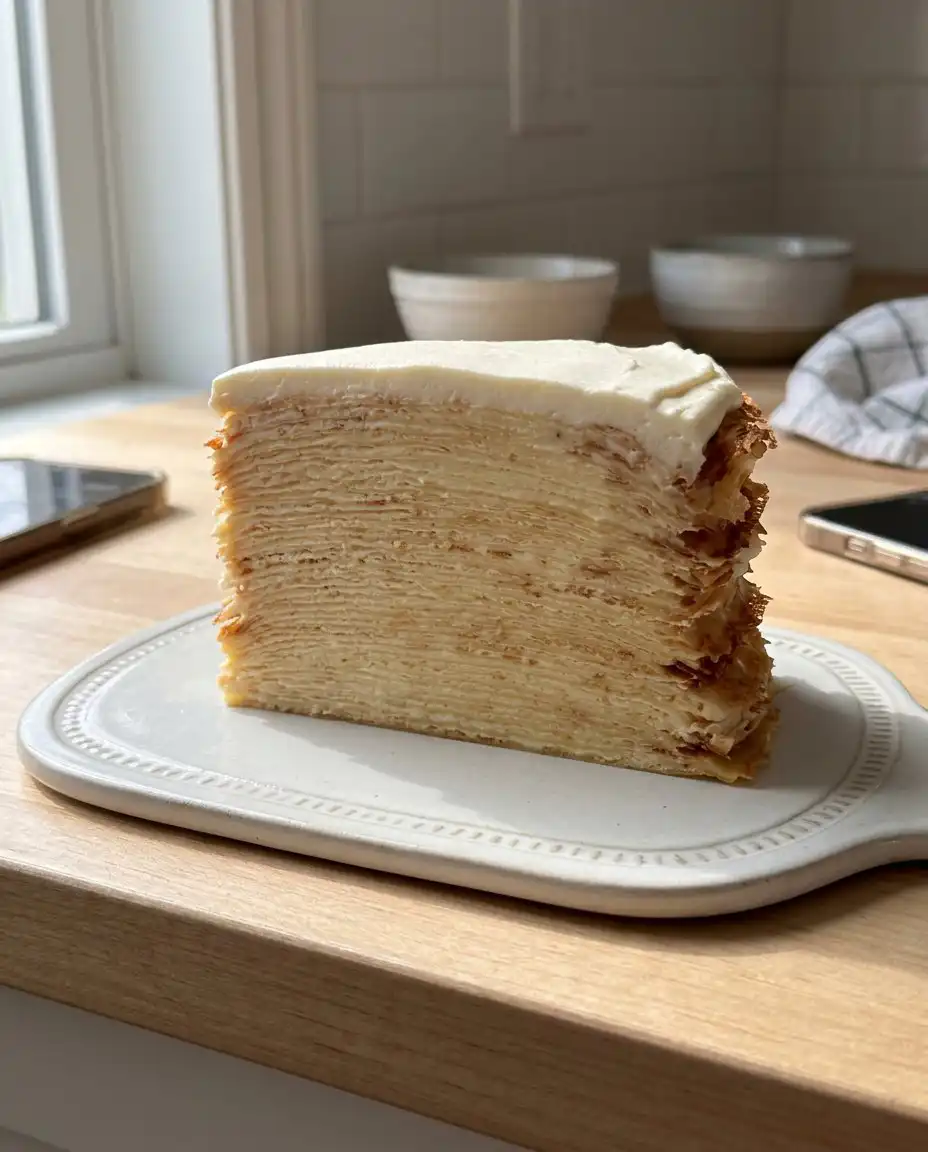
The secret to a perfect cake lies in the quality and temperature of your ingredients. Each component plays a specific role in achieving the light, tender crumb we desire.
- Full-Fat Milk (800 ml): Provides the necessary richness and hydration for a silky batter. Ensure it is at room temperature to help the fat and proteins emulsify correctly.
- Large Eggs (4): These act as the structural binding agent. The protein in the eggs allows the crepes to be thin yet strong enough to be flipped without tearing.
- Plain Flour (305 g): Sifted carefully to prevent any lumps, this provides the delicate structure. We use all-purpose to maintain a tender bite.
- Granulated Sugar (80 g): A light touch of sweetness that also aids in the browning of the crepes through the Maillard reaction.
- Melted Butter (25 g): Adds flavor and prevents sticking. Using high-quality European butter will yield a more fragrant result.
- Cocoa and Dark Chocolate (70%): For the cream and ganache, we choose chocolate with high cocoa solids for a deep, sophisticated bitterness that balances the sugar.
- Double Cream (875 ml total): This is the soul of the filling. Its high fat content allows it to hold air and create a stable, airy mousse-like layer.
The Method of the Disciplined Baker
Step 1: Prepare the Batter
In a kitchen blender, combine the eggs, milk, sugar, flour, salt, and melted butter. Blend on high for 30 seconds until the mixture is perfectly smooth and resembles heavy cream. If you prefer the traditional method, whisk the dry ingredients and slowly pour in the wet, whisking from the center to avoid lumps. This ‘appareil’ must be flawless.
Step 2: The Essential Rest
Transfer the batter to a bowl and let it rest for at least one hour at room temperature, or ideally, overnight in the refrigerator. This period allows the starch granules in the flour to fully hydrate and the gluten to relax. A rested batter produces crepes that are significantly more tender and less likely to shrink in the pan.
Step 3: Tempering the Pan
Place a non-stick frying pan (8 or 9 inches) over medium-low heat. Brush the surface lightly with melted butter using a pastry brush. The pan is ready when a drop of water sizzles and dances across the surface. Precision in heat management is what prevents the crepes from becoming rubbery or overly greasy.
Step 4: The Art of the Pour and Tilt
Using a 1/4 cup measure, pour the batter into the center of the pan. Immediately tilt and rotate the pan in a circular motion so the batter coats the entire bottom in a thin, even layer. Aim to keep the batter off the sides of the pan to maintain uniform thickness. This movement should be fluid and swift.
Step 5: The Golden Flip
Cook the crepe for about 2 minutes. Watch for the edges to turn lacy and golden brown. Use a thin spatula or a wooden skewer to lift the edge, then flip the crepe with confidence. Cook the second side for only 30 seconds. It should be lightly spotted but still pale. Slide it onto a cooling rack or a large plate.
Step 6: Creating the Chocolate Cream
In a chilled bowl, combine the double cream, icing sugar, and cocoa powder. Whisk until you reach soft peaks. Be careful not to over-whisk; the cream should be spreadable and light, not grainy. The cocoa acts as a natural stabilizer, helping the layers stay in place once stacked.
Step 7: The Assembly Process
Place one crepe in the center of your serving plate. Spread a thin, even layer of the chocolate cream (about 2-3 tablespoons) over the surface, leaving a tiny margin at the very edge. Place the next crepe on top and repeat. Press down very gently with your palm every few layers to confirm the stack is level and air bubbles are removed.
Step 8: The Final Ganache
For the topping, finely chop the dark chocolate. Heat the double cream until it just begins to simmer, then pour it over the chocolate. Let it sit for one minute before stirring gently from the center outward to create a glossy, dark emulsion. Pour this over the top of the chilled cake, letting it drip naturally down the sides.
Precision Secrets for Flawless Results
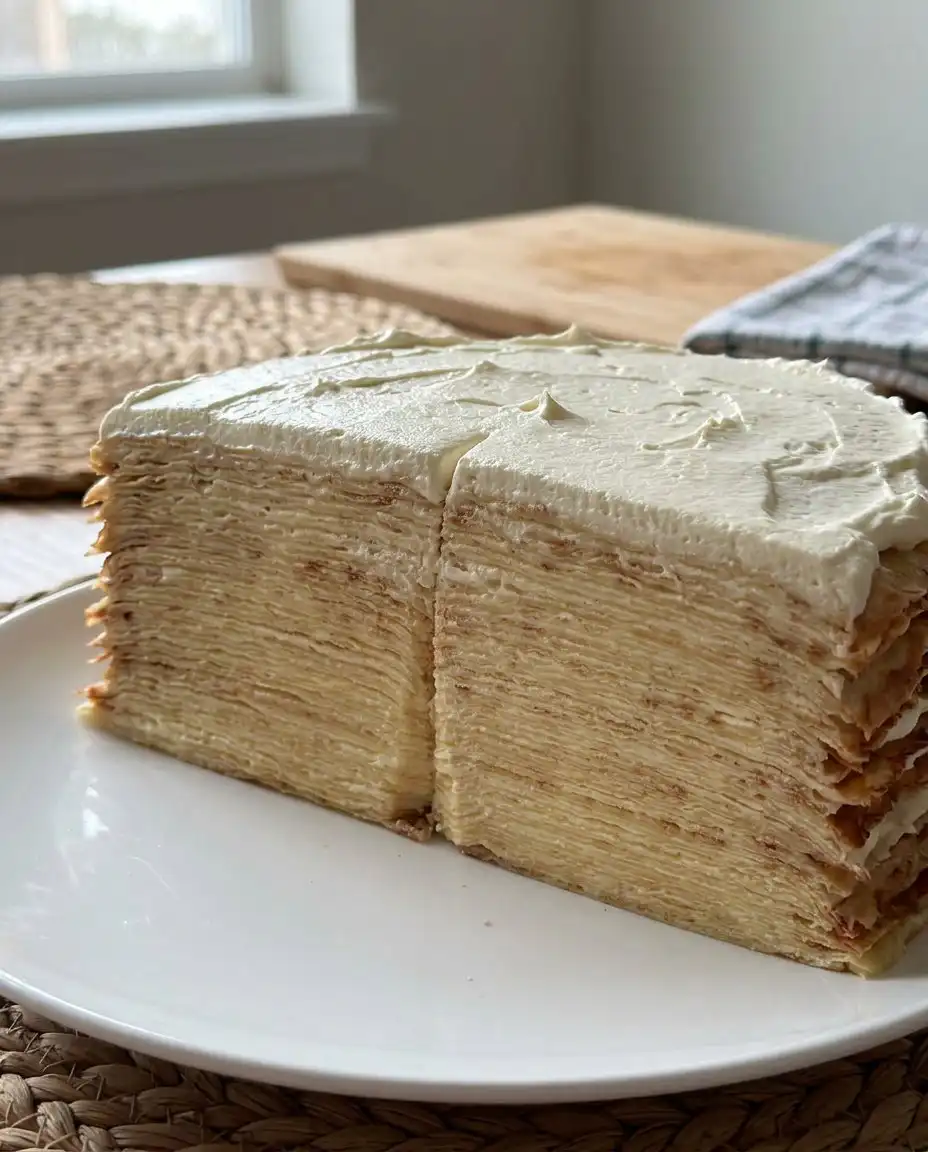
One of the most common challenges is maintaining a consistent temperature. If your pan becomes too hot, the batter will set before you can spread it thinly; if too cool, the crepe will be pale and limp. I suggest wiping the pan with a fresh buttered cloth every three or four crepes to maintain a pristine surface. For those looking to master more fundamental techniques, visiting my guide on classic recipes will provide the necessary foundation for all your pastry endeavors.
Always allow your crepes to cool completely before assembly. If they are even slightly warm, they will melt the chocolate cream, causing your beautiful stack to slide. If you find your crepes are uneven, you can use a cake ring to trim the edges for a perfectly cylindrical look. For more inspiration on flavor profiles, you can examine these chocolate crepe cake variations to see how different cocoa percentages change the final outcome.
Building Upon a Classic Foundation
Once you have mastered the chocolate version, the possibilities for refinement are endless. You might consider adding the zest of two organic oranges to the batter to create a ‘Crepe Suzette’ inspired cake. The bright citrus notes cut through the richness of the chocolate beautifully. For a different textural experience, a layer of finely crushed toasted hazelnuts between the cream can add a delightful crunch.
If your palate leans toward something lighter and fruitier, you might find inspiration in the delicate assembly of our raspberry white chocolate cake. Substituting the cocoa in the cream for a concentrated raspberry coulis creates a vibrant pink filling that is both tart and sweet, offering a stunning visual contrast against the golden crepes.
The Final Flourish and Presentation
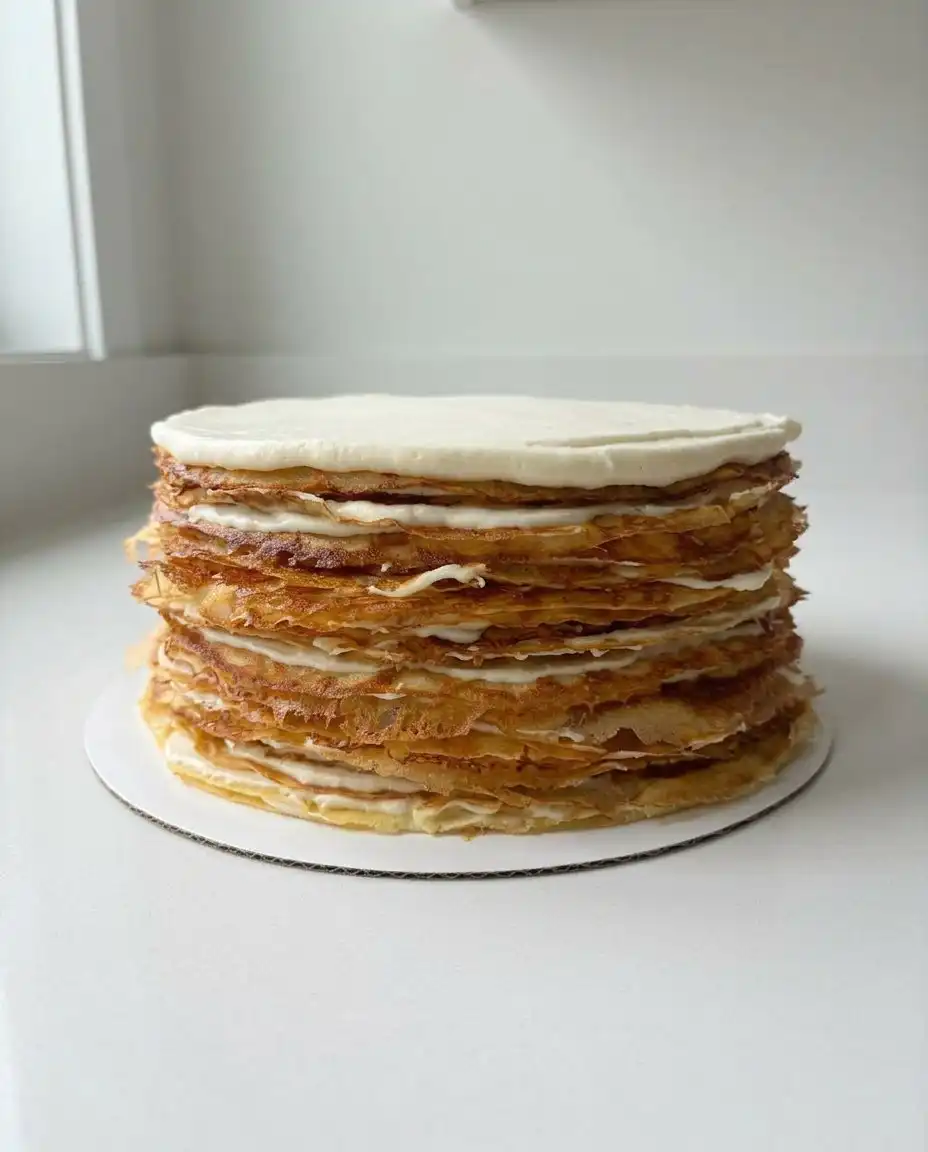
Presentation is the final act of the baker’s labor. I recommend chilling the assembled cake for at least four hours, or even overnight, before serving. This allows the layers to bond and the cream to set, making it much easier to achieve a clean, sharp slice. Use a long, thin knife dipped in hot water and wiped dry between each cut to preserve the integrity of the layers.
To serve, a simple dusting of cocoa powder or a few fresh raspberries is often enough. For a grander dessert spread, you might pair a slice of this cake with a light strawberry tres leches cake to provide a variety of textures and flavors. A glass of chilled champagne or a dark, roasted espresso provides the perfect bitter-sweet conclusion to the meal.
Continuing Your Journey in Pastry
Mastering the crepe cake is a significant milestone for any home baker. It teaches the value of repetition, the importance of temperature, and the beauty of simple ingredients handled with grace. As you slice into your creation and see those dozens of uniform layers, remember that each one was a step toward pastry mastery. I invite you to continue your education by exploring more of our celebration cakes to find your next challenge.
I would love to see your beautiful stacks and hear about your progress in the kitchen. Please share your results with our community on Instagram, Pinterest, and Facebook. There is no greater joy than seeing a technique perfected and a beautiful dessert shared with those you love.