A sudden, sharp tang of lemon zest hits the warm, sweet room-temperature butter, turning the pale cream into a fragrant, golden paste before the first blueberry even touches the bowl.

This Blueberry Buttermilk Breakfast Cake is the ultimate antidote to dry, forgettable morning pastries. By balancing the acidity of cultured milk against the intense sweetness of pockets of fruit, we create a texture that stays remarkably soft. It is an uncomplicated bake designed to make less mean more, letting the fruit do the heavy lifting while a crisp sugar crust guards the top.
What Makes This Blueberry Buttermilk Breakfast Cake Different
Prep: 15 min · Serves: 12 · Difficulty: Easy
- Crisp golden sugar crust on top.
- Tender crumb from cultured buttermilk.
- Blueberries scattered evenly through every slice.
- Quick prep using basic kitchen scales.
- Ideal companion for strong morning espresso.
This is the recipe that teaches you how precision brings complete freedom. When you want a cake that performs beautifully without fuss, look to this blueberry coffee cake cousin for inspiration.
Get The Full Cake Recipe
Print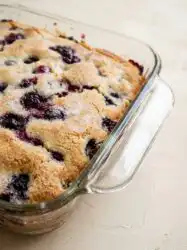
Blueberry Buttermilk Breakfast Cake
- Total Time: 60 mins
- Yield: 12 servings
- Diet: Vegetarian
Description
This tender blueberry buttermilk cake features a bright hint of lemon zest and a signature crackling sugar crust. It is a perfectly balanced, small-batch breakfast treat that stays moist and soft for days.
Ingredients
- 113g (1/2 cup) unsalted butter, softened
- 214g (1 cup) granulated sugar, divided
- 1 teaspoon lemon zest
- 1 large egg, room temperature
- 1 teaspoon pure vanilla extract
- 256g (2 cups) all-purpose flour
- 1 1/4 teaspoons kosher salt
- 1 1/2 teaspoons baking powder
- 120ml (1/2 cup) buttermilk, room temperature
- 150g fresh blueberries
Instructions
- Cream butter and sugar. Fit your stand mixer with a paddle attachment and beat the butter, lemon zest, and all but one tablespoon of sugar until the mixture is pale and light, approximately five minutes.
- Incorporate wet ingredients. Add the room-temperature egg and vanilla extract, beating on medium-low until the batter is uniform and glossy.
- Prepare dry ingredients. Whisk together the flour, salt, and baking powder, then toss a quarter-cup of this mixture with the blueberries in a separate bowl to prevent sinking.
- Combine the batter. Alternately fold in half the dry ingredients, the buttermilk, and the remaining flour until just combined, then gently fold in the floured blueberries.
- Top and bake. Scrape the batter into a parchment-lined eight-inch square pan, sprinkle with the reserved tablespoon of sugar, and bake at 350ºF for forty to forty-five minutes until golden.
- Cool the cake. Allow the cake to set in the pan for fifteen minutes before lifting it out to finish cooling on a wire rack to ensure clean slices.
Notes
- Always measure your flour using a digital scale to prevent the cake from becoming dense or dry.
- Use room-temperature dairy and eggs to ensure a stable emulsion and a perfectly consistent cake texture.
- Tossing blueberries in a small amount of flour before adding them to the batter keeps the fruit evenly distributed.
- Wait the full fifteen minutes before slicing to allow the crumb structure to set properly.
- Prep Time: 15 mins
- Cook Time: 45 mins
- Category: Breakfast
- Method: Baking
- Cuisine: American
The Lineup
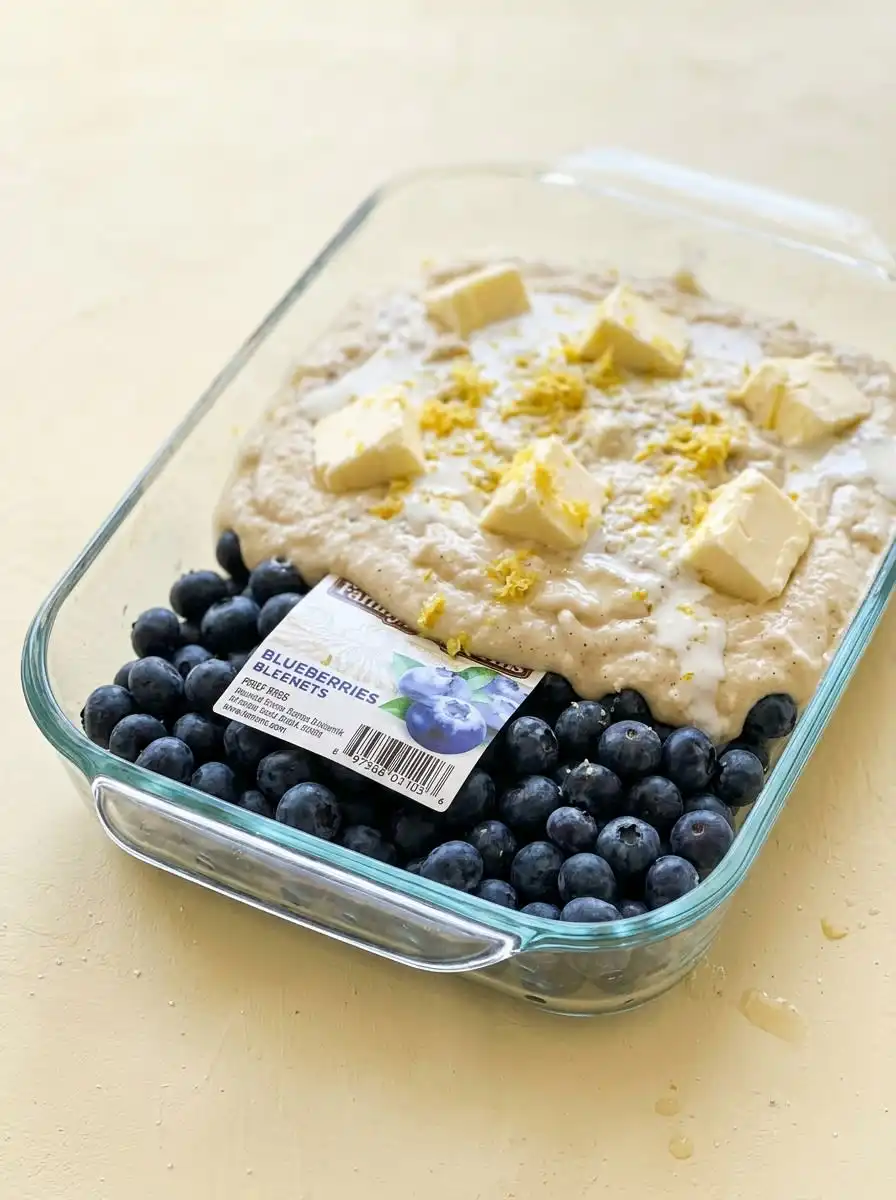
Gathering your elements before mixing is not a tedious chore; it is the moment you take control of your kitchen. Working with room-temperature fats and precise weights prevents the typical disasters of clumpy batters and sunken fruit. This cake relies on simple items working together in structural harmony.
- Unsalted Butter: Crucial for a tender crumb, it must be soft enough to hold air when creamed. It provides the necessary fat matrix to coat flour proteins and prevent tough gluten networks from forming.
- Buttermilk: The acidic champion that breaks down gluten bonds to produce a melt-in-your-mouth texture. This cultured milk reacts with your leavening agents to create an airy, light lift during the initial baking phase.
- Fresh Blueberries: These sweet, juicy pockets provide high-contrast flavor pops against the rich cake. Tossing them in dry starch before folding prevents them from sinking into a single heavy layer at the bottom.
- Lemon Zest: This ingredient cuts through the dairy richness, introducing a bright essential oil aroma. Grating it directly into the warm butter releases these fragrant oils far better than stirring them in late.
- Granulated Sugar: Beyond sweetening, it creates the crackling sugar crust when sprinkled on top. It also retains moisture during the bake, keeping your crumb soft for days.
- Kosher Salt: Salt is the quiet amplifier that prevents sweet cakes from tasting flat and boring. I prefer using one and a quarter teaspoons of kosher salt to really make the dairy and berry flavors stand out.
| Ingredient | Weight / Measure | Why It Matters |
|---|---|---|
| Butter | 113g (1/2 cup) | Provides the rich, soft fat base |
| Buttermilk | 120ml (1/2 cup) | Activates the leavening and tenderizes |
| All-Purpose Flour | 256g (2 cups) | Structure, with a portion coating the berries |
| Sugar | 214g (1 cup) | Sweetens the base and builds the top crust |
The Method
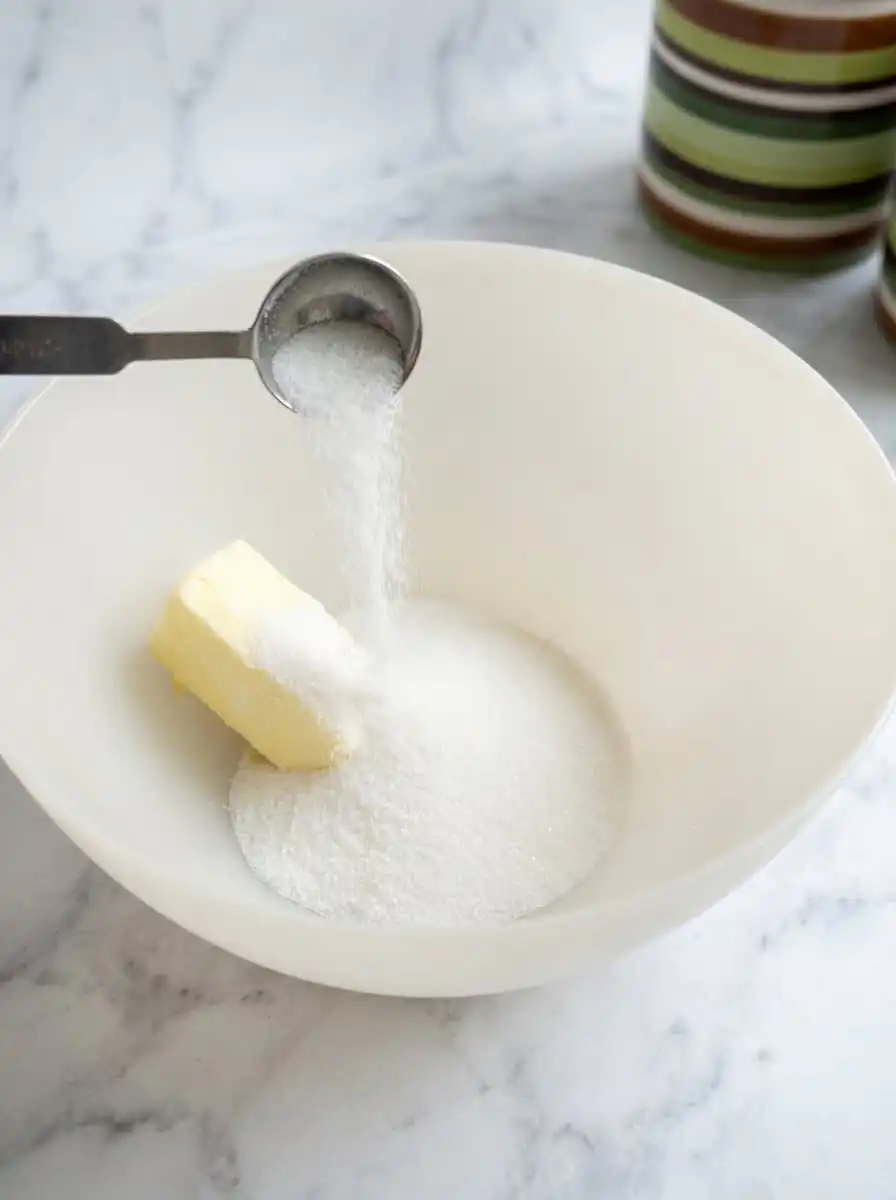
Step 1: Cream the Fat and Sugar
Fit your stand mixer with the paddle attachment and drop in the softened butter, lemon zest, and all but one tablespoon of the sugar. Turn the machine to medium speed and let it run until the mixture transitions from a gritty yellow paste into a pale, light cloud. This friction is essential, as the sugar crystals carve microscopic air pockets into the fat that will later expand in the hot oven. It usually takes about five full minutes to reach this stage, so do not rush it.
Step 2: Incorporate the Wet Emulsion
Crack the room-temperature egg into the bowl and pour in the pure vanilla extract. Beat the mixture on medium-low until the liquid is fully incorporated and the batter looks uniform and glossy. If your egg is too cold, the emulsion will break, causing the butter to seize and look curdled; if this happens, keep mixing until it stabilizes. A warm, emulsified base is what keeps the cake crumb uniform and prevents heavy streaks.
Step 3: Coat the Berries and Combine Dry Bases
Measure out your flour, salt, and baking powder into a medium bowl, whisking them vigorously to distribute the leavening agent evenly. Take a quarter-cup of this flour blend and toss it with your clean, dry blueberries in a separate bowl. This flour coating acts as a physical barrier, helping the berries grip the batter so they do not sink to the bottom during the bake. It is a quick step that saves you from a soggy bottom crust.
Step 4: Fold the Blueberry Buttermilk Breakfast Cake Batter
Add half of the dry ingredients to your creamed butter and fold gently with a flexible spatula until barely combined. Pour in the thick, tangy buttermilk, stirring twice, then dump in the remaining flour mixture and fold until no dry pockets remain. Scatter the floured blueberries into the thick batter and fold them in with two or three sweeps, leaving any excess flour from the berry bowl behind. You want a thick, heavy batter that can support the weight of the fruit.
Step 5: Spread and Top with Sugar
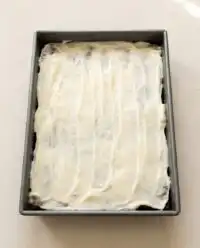
Scrape the dense, heavy batter into a parchment-lined eight-inch square baking pan, using an offset spatula to smooth it into the corners. Take the reserved tablespoon of sugar and make sure every square inch gets a dusting. This simple topping will melt and recrystallize during baking, forming a crackly, sugary shell that contrasts beautifully with the tender cake underneath. It is the signature finish that makes this bake memorable.
Step 6: Bake and Cool the Cake
Slide the pan onto the center rack of your oven preheated to 350ºF and bake for forty to forty-five minutes. You will know it is ready when the top is deep golden brown and a wooden skewer inserted into the center comes out clean or with a few moist crumbs. Let the cake cool in its pan for fifteen minutes before lifting it out, as the hot structure needs time to set before you slice it. Patience here is rewarded with clean slices that hold their shape.
The Details That Matter
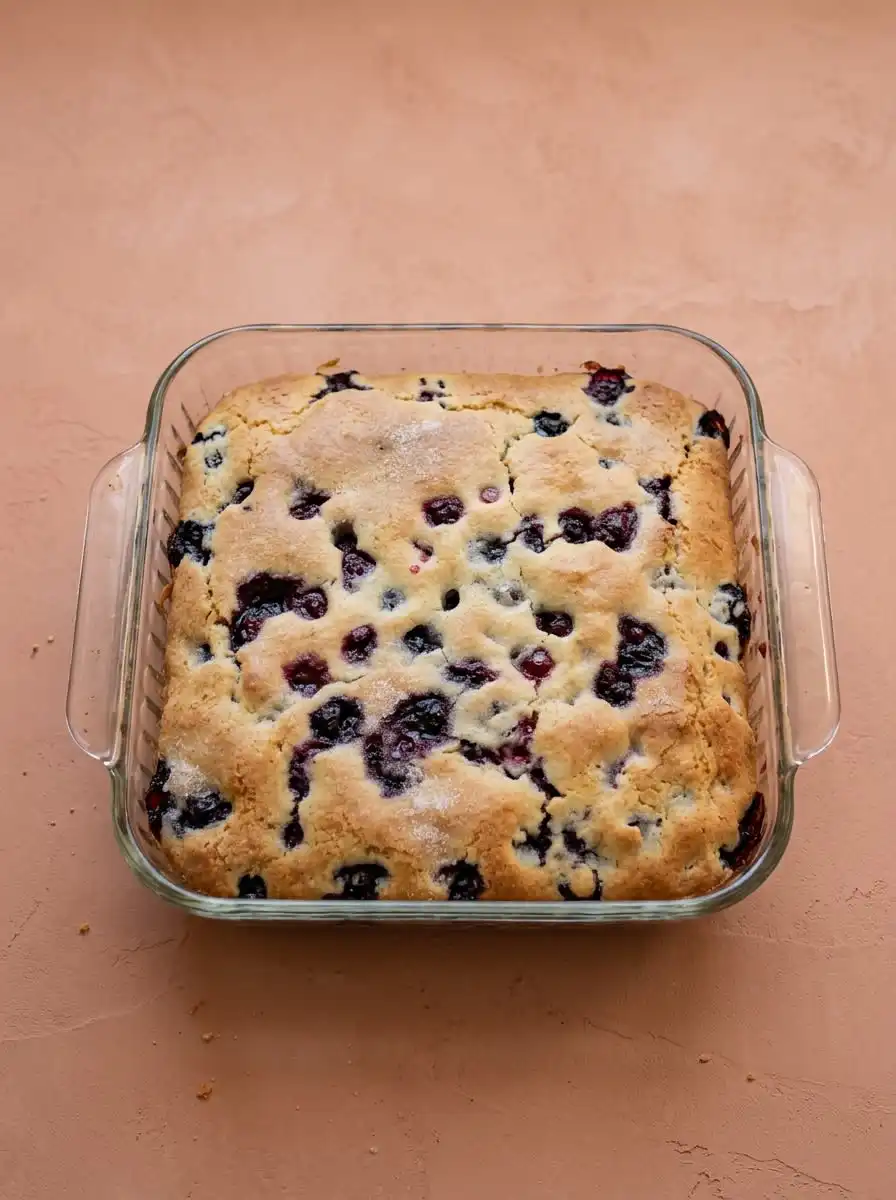
Precision with your kitchen scale is your best ally when working with flour. Scooping flour directly from the bag with a measuring cup packs it down, adding up to thirty percent more starch than required. This extra weight results in a dry, heavy bake instead of a light, delicate pastry. Use a digital scale to measure exactly two hundred and fifty-six grams of all-purpose flour for consistent success.
If your cake is dense and dry, here is why and how to fix it next time. You likely overmixed the batter after adding the flour, which overdeveloped the gluten matrix into a tough web. Stop folding the second the last streak of flour disappears to keep the crumb tender. A few minor lumps are fine and will disappear in the oven.
When using frozen fruit, do not thaw them beforehand because they will bleed excess moisture into the batter. Toss them in their flour coating while still frozen and work quickly to fold them in so the cold batter does not seize your creamed butter. This keeps your cake’s crumb clean and prevents the batter from turning a dull grey color.
Always use room-temperature eggs and buttermilk to maintain a stable emulsion. Cold dairy will instantly chill the creamed butter, causing it to clump and separate, which leads to an uneven rise. Learn more about structural success in our classic blueberry layer cake story which highlights these temperature mechanics. Keeping ingredients at the same temperature is the easiest way to prevent a broken batter.
To see how this technique translates to other bakes, check out the original buttermilk blueberry breakfast cake recipe that inspired this small-batch version. Comparing recipes helps you understand how slight variations in hydration affect the final crumb texture. It is a great habit for developing your baking intuition.
Frequently Asked Questions
Can I use regular milk instead of buttermilk?
Yes, but you must add an acid to replicate the tenderizing power of buttermilk. Mix a half-cup of regular milk with one teaspoon of lemon juice or white vinegar and let it sit for five minutes before using. This curdled mixture mimics the acidity needed to activate the baking powder.
Can I use frozen blueberries instead of fresh?
Absolutely, and you do not need to thaw them first. Thawing causes them to release excess juice, which streaks the batter grey. Keep them in the freezer until the exact moment you fold them into the flour coat.
Why are my blueberries sinking to the bottom?
This usually happens because the batter is too thin or the berries were not coated in flour. Tossing the berries in flour gives them a rough surface that grips the thick cake batter. Additionally, make sure your butter is creamed correctly so the batter retains its thick structure.
How do I make a breakfast cake?
A breakfast cake is made by creaming butter and sugar, emulsifying with eggs, and folding in flour alternately with a tenderizing dairy liquid like buttermilk. The key difference from a standard dessert cake is its lower sugar content and a rustic, crisp top crust. This creates a pastry that is light enough for the morning hours.
Can I make this cake in advance or freeze it?
Yes, you can mix the batter, spread it into the pan, and refrigerate it overnight. In the morning, let it sit on the counter for thirty minutes, top with sugar, and bake. You can also freeze the baked, cooled cake wrapped in plastic for up to three months.
Can I double the recipe for a larger pan?
To double this recipe, double all ingredient weights and bake in a standard nine-by-thirteen-inch pan. Keep the oven temperature at 350ºF but begin checking for doneness at thirty-five minutes. The thicker volume may require a slightly longer total bake time.
How do I know when the cake is fully baked?
Look for a deep golden crust that springs back slightly when lightly pressed in the center. A toothpick inserted into the middle should come out clean or with a few moist crumbs, but no wet batter. If you see wet batter, return the pan to the oven for five more minutes.
What is the best way to store blueberry breakfast cake?
Store the cooled cake at room temperature in an airtight container for up to twenty-four hours to preserve the crisp sugar top. If you need to keep it longer, wrap it tightly and store it in the refrigerator for up to three days. Warm it slightly in a toaster oven before serving to restore its soft texture.
Rebel Swaps
If you want to deviate from the classic berry profile, swap the lemon zest for fresh orange zest and replace the blueberries with fresh cranberries. This festive twist offers a tart, seasonal alternative that cuts beautifully through the rich, buttery cake base. It is an excellent choice for chilly winter mornings when you want a punch of bright color.
Another excellent route is to replace half of the buttermilk with sour cream or Greek yogurt for an even thicker, richer crumb. This swap creates a denser, more custard-like texture that pairs beautifully with a warm cardamom glaze drizzled over the top. It adds a pleasant tanginess that balances the sweetness of the fruit.
For a summer twist, try incorporating a touch of stone fruit alongside the berries. You can find more fruit inspiration in our guide to lemon blueberry cake 2 where we analyze how acid balances sweet stone fruits. Peaches or nectarines sliced thin make a wonderful addition when layered on top before the final sugar dusting.
Cutting, Plating, Presenting
Letting this bake cool for at least fifteen minutes is essential before you attempt to slice it. Slicing too early releases steam that should instead be trapped inside to finish setting the delicate crumb. Use a long, sharp chef’s knife and wipe the blade clean between cuts to show off clean, beautiful berry cross-sections. This small detail makes sure your plates look professional and appealing.
Serve this warm alongside a robust, unsweetened espresso or a cup of dark roast coffee to balance the sweet crust. A small dollop of lightly whipped unsweetened cream or a spoonful of cold creme fraiche on the side adds a luxurious contrast to the warm cake. If you enjoy cool, creamy pairings, you can read our guide on making a no bake lemon blueberry dessert for more ideas. These simple additions make a casual breakfast feel like a special event.
This pastry shines brightest at a relaxed weekend brunch, served directly from its rustic baking pan. Place it in the center of the table and let guests cut their own pieces, ensuring everyone gets a bit of the coveted edge crust. It is a casual, confident way to share a morning treat without the fuss of elaborate plating. Your guests will appreciate the laid-back, welcoming vibe.
The Takeaway
Baking this cake is a masterclass in how simple ingredients can transcend their humble origins when treated with precision. It proves that you do not need complex steps or fancy equipment to create a breakfast pastry that commands attention. Trust your kitchen scale, watch for the visual cues during the creaming step, and let the buttermilk work its tenderizing magic. Remember: the recipe is a starting point. You are the variable.
If you enjoy this style of structured, flavor-forward breakfast baking, try your hand at our banana coffee cake next. Both bakes embrace the small-batch philosophy where every single bite is packed with deliberate flavor and texture. It is the perfect way to build your confidence in the kitchen.
Share your baking triumphs with us on Pinterest, join the conversation on Facebook, and catch our latest technique videos on TikTok. We love seeing how you make these recipes your own and hearing about your flavor twists.