True mastery in the kitchen often requires us to pause before the oven even preheats, specifically during the quiet, fragrant task of massaging lemon zest into granules of sugar.

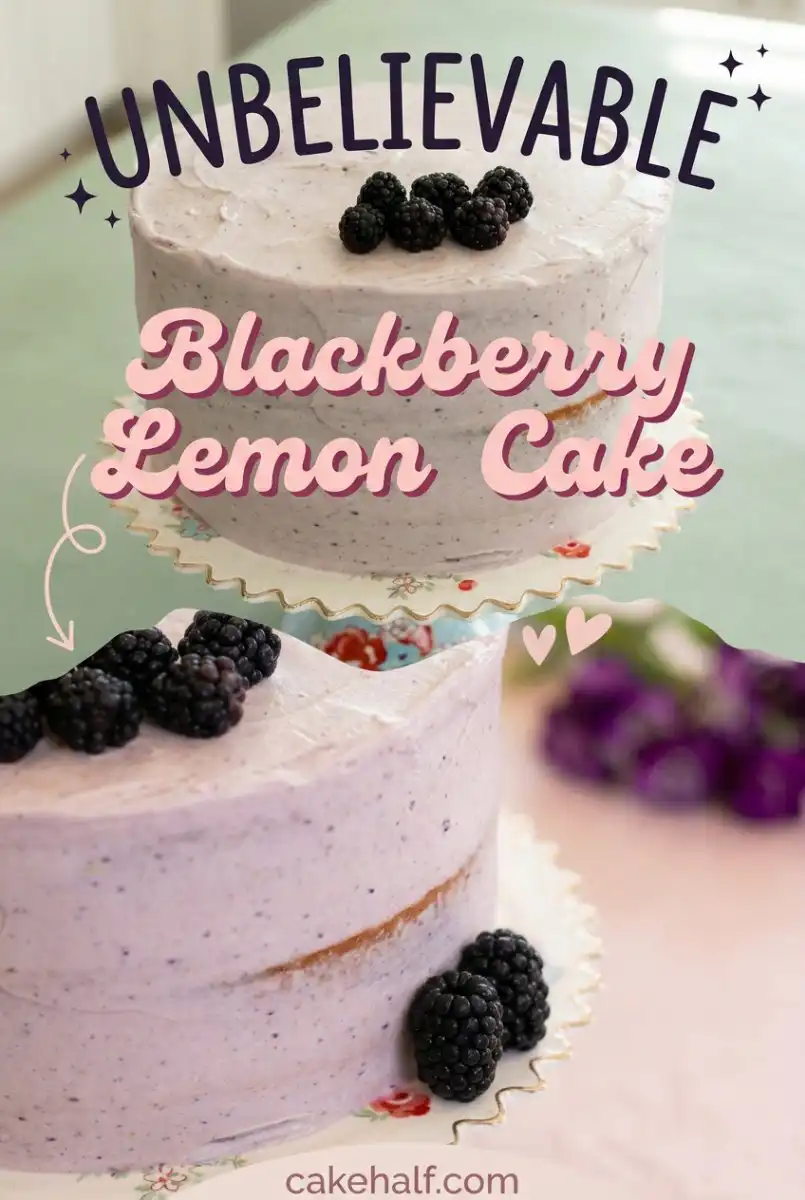
The appeal of this Blackberry Lemon Cake lies in its intentional balance of sharp citrus and deep, jammy fruit. You will find that the tender crumb relies on the careful emulsion of fats and acids, creating a foundation that supports the weight of fresh berries without collapsing. This composition is designed for the baker who finds satisfaction in the quiet discipline of a well-executed crumb coat.
Why This Blackberry Lemon Cake Rewards Attention
Prep: 60 min · Serves: 16 · Difficulty: Advanced
- Superior crumb structure from sour cream acidity.
- Deeply infused citrus flavor via essential oils.
- Stabilized cream cheese frosting for clean layering.
- Artisanal presentation with fresh seasonal berries.
This refined lemon cake 3 is the specific recipe I return to when a celebration demands both precision and grace.
Get The Full Cake Recipe
Print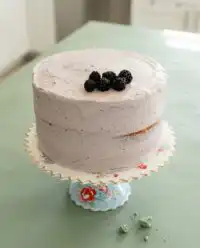
Blackberry Lemon Cake
- Total Time: 1 hour 24 mins
- Yield: 16 servings
- Diet: Vegetarian
Description
This refined Blackberry Lemon Cake balances sharp, zesty citrus with jammy fruit through a careful emulsion of high-quality fats. Perfect for bakers seeking precision, this cake features a tender crumb and a stable cream cheese frosting that beautifully showcases fresh, seasonal berries.
Ingredients
- 2 cups unsalted butter, softened
- 2 cups granulated sugar
- 4 large eggs, room temperature
- 1 cup sour cream
- 1/2 cup fresh lemon juice
- 2 tablespoons lemon zest
- 3 cups all-purpose flour
- 1 tablespoon baking powder
- 1/2 teaspoon baking soda
- 1 teaspoon sea salt
- 16 ounces cream cheese, softened
- 1 cup heavy whipping cream
- 1/2 cup seedless blackberry preserves
- 2 cups fresh blackberries
- 1 teaspoon vanilla extract
Instructions
- Preheat and prep. Preheat oven to 350°F and line three 8-inch cake pans with parchment paper.
- Infuse citrus sugar. Rub lemon zest into granulated sugar with fingertips until fragrant and damp.
- Whisk liquid base. Emulsify butter, lemon juice, sour cream, eggs, and vanilla into the sugar until uniform.
- Incorporate dry ingredients. Sift flour, baking powder, baking soda, and salt, then fold into the wet mixture until just combined.
- Divide and smooth. Distribute batter evenly into prepared pans and smooth surfaces with an offset spatula.
- Bake the layers. Bake for 22 to 24 minutes until golden and set, then cool on a wire rack.
- Prepare cream base. Beat cream cheese with sugar, zest, and salt until silky and glossy.
- Aerate the cream. Slowly whip in chilled heavy cream until the frosting reaches stiff, stable peaks.
- Fold in preserves. Gently swirl blackberry preserves into the frosting to create an elegant marbled effect.
- Assemble and finish. Layer cakes with frosting and fresh berries, finishing with a final decorative coating.
Notes
- Ensure all dairy ingredients are at room temperature to prevent the batter from curdling during emulsification.
- Rubbing zest into sugar is a vital step that releases essential oils for a more potent lemon flavor.
- Avoid overmixing the batter once the flour is added to ensure a soft and tender cake crumb.
- Use a serrated knife dipped in hot water to achieve clean, professional slices without tearing the layers.
- Keep heavy cream well-chilled to ensure the frosting achieves a stable, stiff peak that holds up under fruit.
- Prep Time: 60 mins
- Cook Time: 24 mins
- Category: Dessert
- Method: Baking
- Cuisine: Modern American
What This Recipe Requires
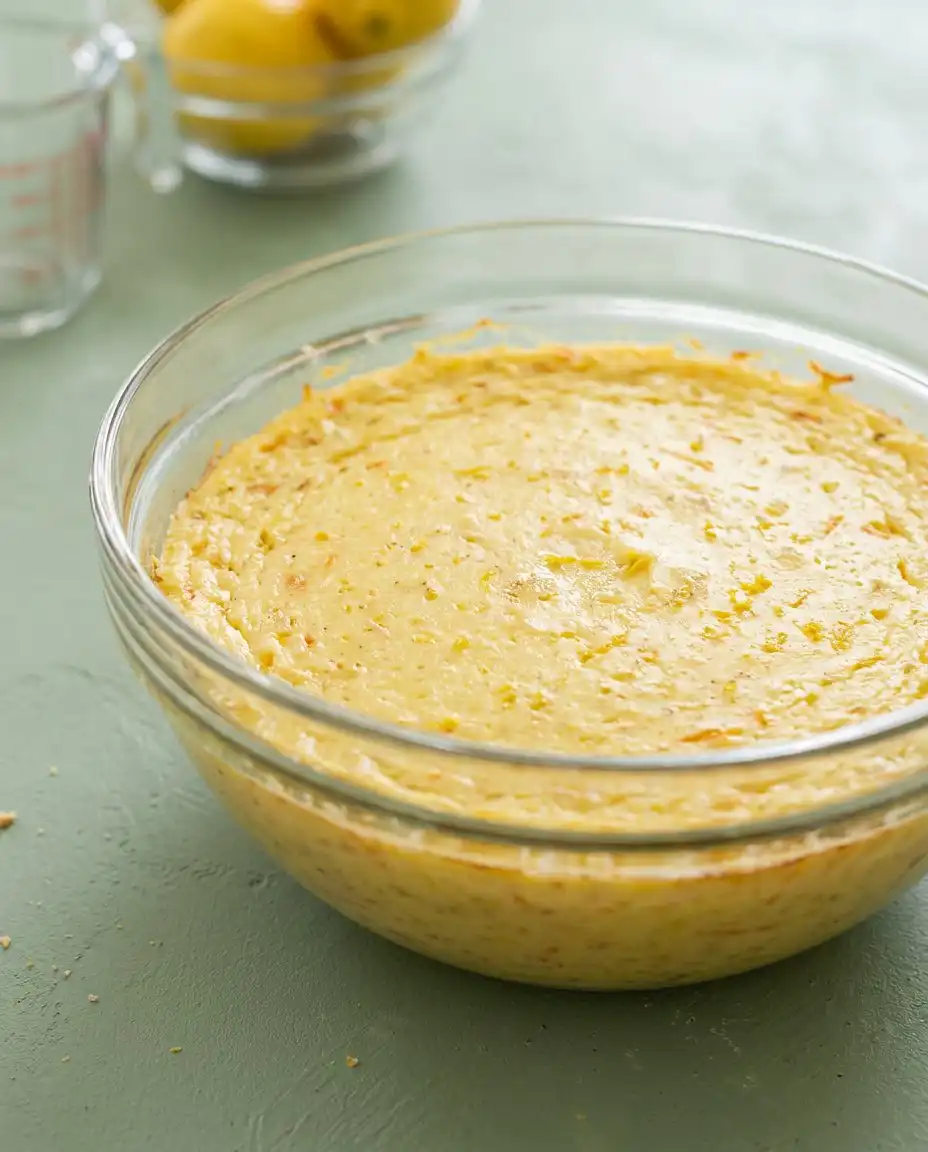
Successful execution of this cake depends upon the quality of your fats and the freshness of your fruit. You must prioritize high-fat European-style butter and ensure your heavy cream is kept at a constant chill until the very moment of aeration.
- Unsalted Butter: Using high-quality butter provides the necessary fat content to coat flour proteins, resulting in a melt-on-the-tongue texture.
- Sour Cream: This ingredient introduces a specific thickness to the batter that regulates the rise and adds a subtle, professional tang.
- Fresh Blackberries: Their high pectin content and structural integrity allow them to remain whole during the assembly process.
- Lemon Zest: The vacuoles in the zest hold the aromatic oils that provide a far more complex flavor than juice alone.
- Cream Cheese: A full-fat block is required to achieve the density needed for a reliable, spreadable frosting.
- Heavy Whipping Cream: This provides the volume and lightness that prevents the cream cheese from becoming too heavy on the palate.
| Ingredient | Why It Matters |
|---|---|
| Sour Cream | Regulates gluten development for a tender crumb |
| Lemon Juice | Reacts with leavening agents for an airy lift |
| Blackberry Preserves | Concentrates the fruit profile within the frosting layers |
| Sea Salt | Sharpens the contrast between citrus and sugar |
| Large Eggs | Provides the protein structure that holds the cake together |
The Technique Laid Out
Step 1: Preparing the Mise en Place
Begin by preheating your oven to 350°F (175°C) and lining three 8-inch pans with parchment paper. This preparation prevents the delicate lemon batter from adhering to the metal, ensuring a clean release later. Weigh all dry ingredients and ensure your eggs have reached true room temperature to allow for proper emulsification.
Step 2: Infusing the Citrus Sugar
Place your granulated sugar in a large bowl and zest the lemons directly onto the crystals. Use your fingertips to rub the zest into the sugar until it feels like damp sand and smells intensely of citrus. This physical action ruptures the oil sacs in the zest, distributing the flavor more effectively than simple stirring would ever achieve.
Step 3: Emulsifying the Liquid Base
Add your melted butter, lemon juice, sour cream, eggs, and vanilla to the sugar mixture. Whisk these elements with a steady hand until the mixture is completely uniform and a pale yellow color emerges. You are looking for a smooth, cohesive liquid that shows no signs of separation between the fat and the acid.
Step 4: Sifting and Incorporating Dry Goods
In a separate vessel, whisk together the flour, baking powder, baking soda, and salt. Sift these powders directly over your wet ingredients to remove any stubborn clumps and to aerate the flour. Use a spatula to fold the batter on a low speed only until the last streak of white disappears, as overworking the dough at this stage will toughen the final crumb.
Step 5: Dividing the Blackberry Lemon Cake Batter
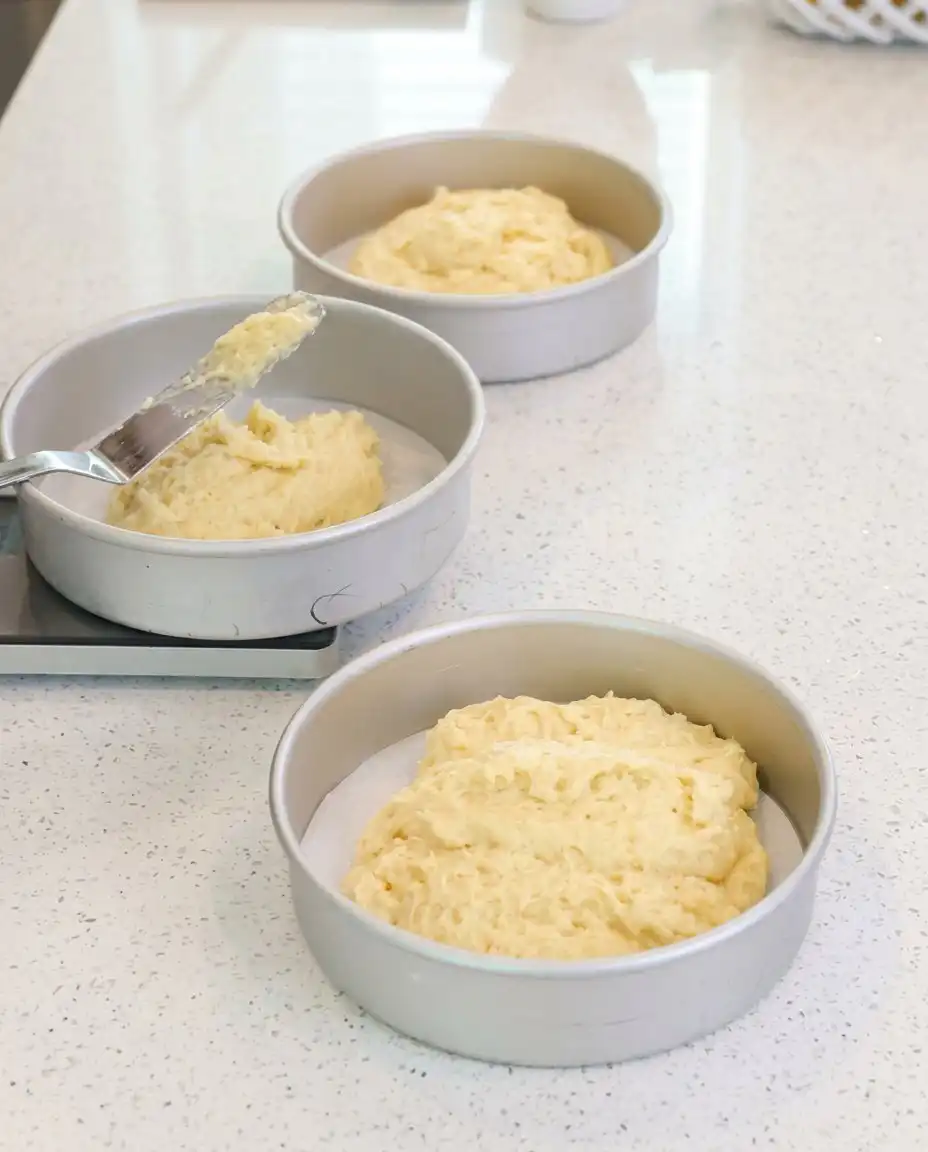
Distribute the batter evenly between your prepared pans, preferably using a digital scale for exactness. Smooth the surface with an offset spatula to encourage an even rise across the diameter of the cake. This discipline ensures that your layers will be of equal height, which is essential for a professional vertical cross-section.
Step 6: Baking to a Clean Crumb
Bake for 22 to 24 minutes, observing the cakes until they are a light golden hue and a tester comes out clean. The cake should slightly pull away from the edges of the pan, signaling that the structure is set. Transfer the pans to a wire rack for ten minutes before inverting them to cool completely, as heat trapped in the pan can lead to overbaking.
Step 7: Crafting the Stabilized Frosting
Beat your softened cream cheese until it is silky and devoid of any lumps, which usually requires three to four minutes of active mixing. Add the powdered sugar, zest, and salt, continuing to whisk until the mixture looks like a thick, glossy cream. This base must be stable before the introduction of the liquid cream.
Step 8: Aerating the Heavy Cream
Slowly pour the well-chilled heavy cream into the mixer while running at a medium speed. Gradually increase the velocity until the frosting holds stiff, defiant peaks that do not slouch when the whisk is lifted. This aeration provides the structural support needed to hold the weight of the fresh blackberries between the layers.
Step 9: The Berry Swirl Technique
Using a wide silicone spatula, gently fold the seedless blackberry preserves into the finished frosting. Do not over-mix; you want to see elegant ribbons of purple throughout the white cream rather than a monochromatic lilac hue. This visual detail confirms the handmade nature of the cake to your guests.
Step 10: Assembly and Final Decoration
Level your cooled layers with a serrated knife and apply a light soak of cream to each surface. Spread the frosting and arrange the fresh berries in a concentric pattern, filling the gaps with additional cream to prevent air pockets. Finish with a thin crumb coat, chill for thirty minutes, and then apply the final decorative layer for a polished appearance.
Technical Notes
Temperature is the most critical variable when working with this specific batter; if your eggs are cold, they will cause the melted butter to seize, resulting in a broken emulsion. You will know your emulsion is successful when the batter looks like a thick, glossy ribbon rather than a curdled liquid.
If your frosting appears soupy or fails to hold a peak, it is likely that your cream cheese was too warm or your heavy cream was not sufficiently chilled. To fix this, place the entire mixing bowl in the refrigerator for twenty minutes before attempting to whisk it again on a high speed.
When zesting your lemons, be careful to avoid the white pith, which introduces an unrefined bitterness that the sugar cannot mask. Only the outermost yellow layer contains the aromatic oils required for this moist blueberry lemon angel food cake story.
For the cleanest slices, use a sharp serrated knife and dip it in hot water, wiping it dry between every single cut. This prevents the blackberry juices from smearing across the bright yellow cake layers during the serving process.
Always sift your powdered sugar before adding it to the cream cheese to prevent tiny white granules from ruining the silkiness of your frosting. Even the highest quality sugars can clump in humid environments, and sifting is a small discipline that yields a significant difference.
To ensure your berries do not sink to the bottom of the frosting layers, ensure you have achieved a true stiff peak with your cream. The structural integrity of the fat globules in the cream is what supports the fruit and prevents the cake from sliding.
Frequently Asked Questions
Can I use frozen blackberries instead of fresh ones?
While fresh berries are preferred for their structural integrity, frozen berries can be used if they are kept frozen until the moment of assembly. Do not thaw them first, as the excess moisture will bleed into the frosting and cause it to become unstable. Be aware that the color may bleed more significantly than with fresh fruit.
Why did my lemon cake layers turn out dense and heavy?
A dense crumb often indicates that the flour was overworked after it was added to the wet ingredients. When you mix flour, gluten begins to develop; too much mixing creates a bread-like texture rather than a light cake crumb. Always stop mixing the moment the last traces of flour are incorporated.
How long can I store this cake in the refrigerator?
This cake maintains its best texture and flavor for up to three days when stored in an airtight container or covered with plastic wrap. Because it contains fresh fruit and cream cheese, it must be kept chilled at all times. Allow slices to sit at room temperature for fifteen minutes before serving for the best flavor profile.
Can I make the cake layers in advance?
Yes, you can bake the layers up to two days in advance, provided they are wrapped tightly in plastic wrap and stored at room temperature. For longer storage, you may freeze the wrapped layers for up to a month. Thaw them in the refrigerator before assembling with the fresh frosting.
My frosting is too thin to stack. What went wrong?
If the frosting is thin, either the cream cheese was over-beaten until it became liquid, or the heavy cream was not cold enough to whip. You can try to rescue it by adding a few more tablespoons of sifted powdered sugar and chilling it. In the future, ensure your cream is as cold as possible before starting.
Is it possible to use Greek yogurt instead of sour cream?
Full-fat Greek yogurt is an excellent substitute for sour cream and will provide a similar level of acidity and moisture. Avoid using non-fat or low-fat versions, as the fat content is necessary to produce the specific tender crumb that defines this recipe. Ensure the yogurt is at room temperature before mixing.
Thoughtful Alternatives
You may choose to substitute the blackberries with raspberries or marionberries if the season dictates a change in fruit availability. The acidity levels remain similar enough that the structural chemistry of the lemon drizzle cake 2 will not be compromised by this swap.
For a more floral profile, you might consider infusing the granulated sugar with a teaspoon of dried culinary lavender alongside the lemon zest. This addition complements the deep berry notes and provides a sophisticated aroma that is particularly suited for afternoon tea service.
If you prefer a taller, more dramatic presentation, this recipe can be baked in four 6-inch pans instead of three 8-inch ones. You must increase the baking time by approximately five minutes and monitor the centers closely with a toothpick to ensure the deeper layers are fully set. For further inspiration on fruit-based cake structures, you may reference how to stabilize fruit in layered cakes.
The Final Preparations
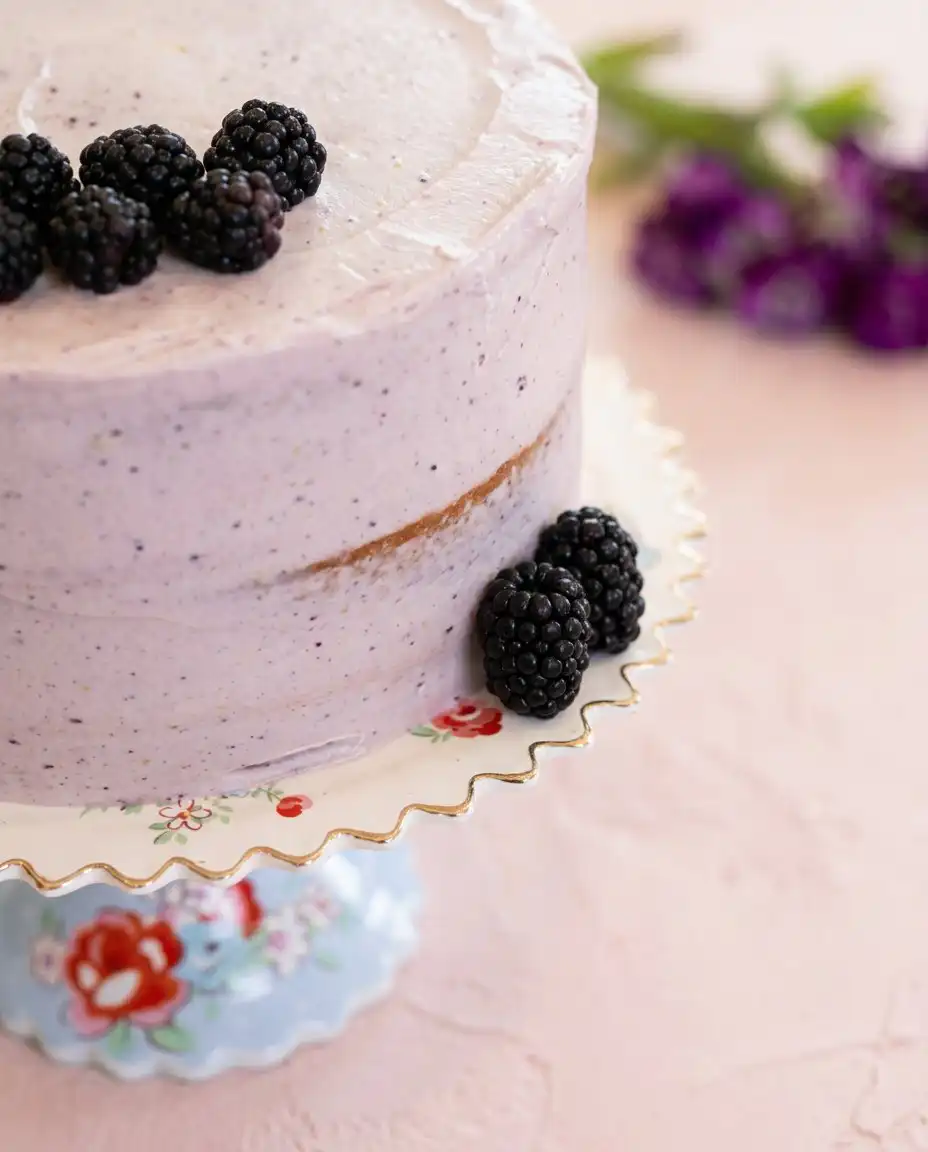
Presentation of this cake should reflect the precision of its assembly, using a clean, minimalist aesthetic that allows the berries to speak for themselves. Place the cake on a chilled ceramic pedestal to help maintain the temperature of the cream cheese frosting during the duration of your event. If you are serving this at a garden brunch, a few sprigs of fresh mint or edible pansies can provide a delicate touch of color that mirrors the strawberry lemon yogurt cake presentation style.
When it comes time to slice the cake, ensure you have a tall vessel of hot water nearby. A warm blade will move through the stabilized frosting and the fresh berries without tearing the delicate crumb of the lemon layers. This step is the final discipline of the baker, ensuring that each guest receives a portion that looks as intentional as it tastes.
The Result of Your Care
You have now completed the demanding process of building a cake that honors the intersection of bright citrus and deep fruit. The time you spent rubbing the zest into the sugar and carefully monitoring the aeration of your cream will be evident in every bite. It is through these small, unremarkable disciplines that we achieve a result worth sharing with those we value most.
I invite you to share your results and your progress with our community of dedicated bakers. Mastering a lemon blueberry cake 2 or this blackberry version is a significant step in your journey toward pastry proficiency. Please connect with us and show us your creations on Pinterest, Facebook, or TikTok.