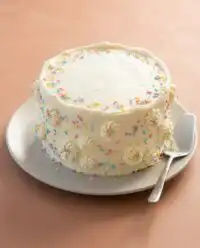
A summer afternoon in Provence often ends with stone fruits and chilled cream. This Peaches and Cream Layer Cake captures that fleeting seasonal grace in a refined, small-batch format.

Achieving the perfect balance between a tender crumb and juicy fruit requires a gentle hand. This recipe focuses on precision and the natural sweetness of ripe peaches for a truly graceful result.
Mastering the Classic Summer Cake
There is a quiet joy in working with seasonal fruit. This Peaches and Cream Layer Cake is not just a dessert; it is a study in texture and restraint. Unlike heavy buttercream cakes, this version relies on the airy lightness of a vanilla bean whipped cream and the macerated depth of fresh peaches.
Working in small batches allows us to focus on the fine details that often get lost in larger bakes. You will find that the cake flour provides a soft, delicate structure that supports the fruit without overwhelming it. It is a sophisticated choice for those who appreciate the subtler side of pastry. When we bake with such intention, every ingredient has a purpose, creating a harmony of flavor that feels both classic and fresh.
Print
Peaches and Cream Layer Cake
- Total Time: 1 hour 53 mins
- Yield: 1 cake (serves 8)
Description
This elegant small-batch layer cake features tender vanilla sponge, macerated fresh peaches, and a luscious vanilla bean whipped cream. It is a refined summer dessert that highlights the delicate, natural sweetness of stone fruit in every bite.
Ingredients
- 1/2 cup plus 2 tablespoons unsalted butter, softened
- 1 1/2 cups granulated sugar
- 3 large eggs, room temperature
- 1 1/2 tablespoons vanilla bean paste
- 1 cup buttermilk
- 2 1/4 cups cake flour
- 1/2 teaspoon salt
- 1 1/2 teaspoons baking powder
- 1/4 teaspoon baking soda
- 3 cups fresh peaches, thinly sliced
- 1/4 cup plus 2 tablespoons granulated sugar (for maceration)
- 1 1/2 cups heavy whipping cream
- 3/4 cup powdered sugar
Instructions
- Preheat oven to 350 degrees F and prepare three 6-inch cake pans with grease and parchment.
- Cream butter and sugar until pale and aerated.
- Add eggs one at a time, mixing well, then stir in the vanilla bean paste.
- Stir in the buttermilk.
- Sift together flour, salt, baking powder, and soda, then fold into wet ingredients just until combined.
- Divide batter among pans and bake for 35-38 minutes until a toothpick comes out clean; cool completely.
- Toss sliced peaches with sugar and let macerate for 30 minutes.
- Whip heavy cream, powdered sugar, and remaining vanilla bean paste until stiff peaks form.
- Level cake layers, brush with peach syrup, and assemble with alternating layers of cream and peaches.
Notes
For the best results, ensure all dairy and egg components are at room temperature before you begin mixing to prevent the batter from curdling. If you find your whipped cream is not holding its shape well, pop your mixing bowl in the freezer for ten minutes before whipping. Always slice your peaches uniformly to ensure they macerate evenly and provide a balanced layer in your cake structure.
- Prep Time: 45 mins
- Cook Time: 38 mins
- Category: Dessert
- Method: Baking
- Cuisine: French-inspired
The Foundation of Quality
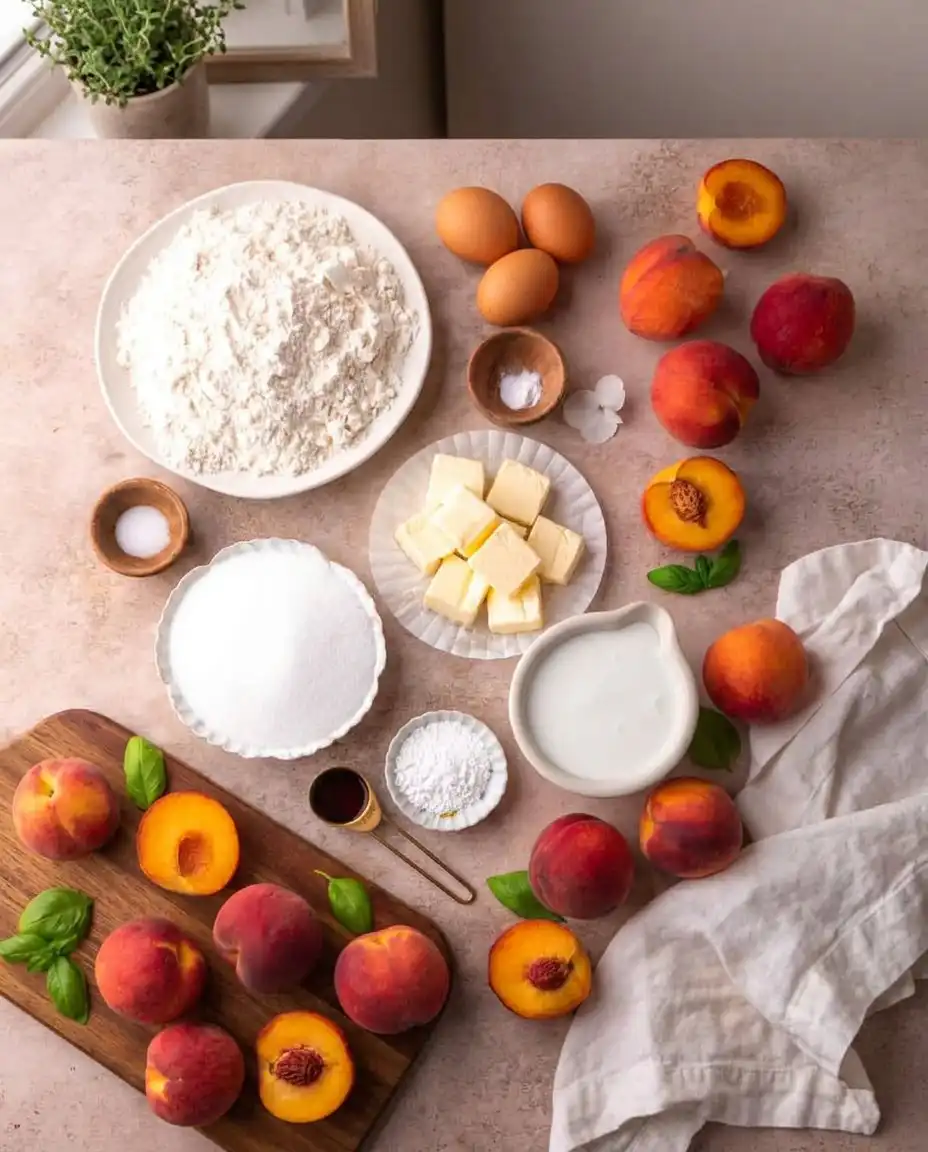
To create a masterpiece, one must start with exceptional components. For this Peaches and Cream Layer Cake, the quality of your dairy and fruit dictates the final success.
- Cake Flour: This is essential for a tender, fine-crumbed texture. Standard all-purpose flour contains too much protein, which can lead to a tough sponge.
- Vanilla Bean Paste: I prefer the paste over extract for those beautiful black specks and a more profound, aromatic depth that permeates the entire cake.
- Buttermilk: This provides a slight tang and moisture that keeps the sponge supple. The acidity also reacts with the leavening agents for a perfect rise.
- Fresh Peaches: Choose fruit that is fragrant and yields slightly to pressure. The natural oils in the skin provide incredible flavor during the maceration process.
- Heavy Whipping Cream: Look for a high fat content to provide the stability needed for a structured layer cake. Cold cream is non-negotiable for achieving stiff, stable peaks.
The Method
Step 1: Creaming the Butter and Sugar
Preheat your oven to 350 degrees Fahrenheit. In a large mixing bowl, combine 1/2 cup plus 2 tablespoons of softened, unsalted butter with 1 1/2 cups of granulated sugar. Use a whisk or electric mixer to cream them together until the mixture is pale and aerated. This process incorporates tiny air bubbles that will expand in the oven, giving your cake its lightness.
Step 2: Emulsifying the Wet Ingredients
Add 3 large, room-temperature eggs one at a time. It is vital to mix well after each addition to create a stable emulsion. Follow this with 1 1/2 tablespoons of vanilla bean paste. The eggs provide structure and richness, while the vanilla adds that essential floral aroma.
How do you assemble a peaches and cream layer cake?
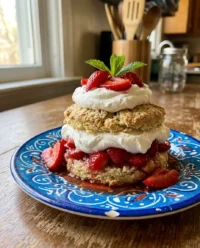
To assemble this cake, start by leveling your sponge layers. Brush each layer with the syrup produced from macerating the peaches. Layer the fruit first, then the whipped cream, to provide a stable base for the next sponge. Repeat this process, finishing with a generous amount of cream and fresh fruit on top.
Can you use canned peaches instead of fresh?
Yes, you can use canned peaches if fresh are out of season. However, make sure to drain them thoroughly and pat them dry. They are often softer than fresh fruit, so the texture of the cake will be slightly different. Fresh peaches provide a brighter acidity that balances the cream.
Should a Peaches and Cream Cake be refrigerated?
Yes, because this cake uses fresh whipped cream and fresh fruit, it must be kept in the refrigerator. The cream is stabilized with powdered sugar, but it will still soften at room temperature. For the best flavor, remove it from the fridge 10 minutes before serving.
How do you make the cake layers moist?
The secret to moisture lies in three areas: using buttermilk in the batter, avoiding over-baking by checking the internal temperature, and using the peach syrup soak during assembly. The syrup migrates into the crumb, keeping it supple even after refrigeration.
Step 3: Incorporating the Buttermilk
Pour in 1 cup of buttermilk and stir gently. Do not worry if the batter looks slightly curdled at this stage; adding the dry ingredients will bring everything back into a smooth, cohesive state. The buttermilk is key to a moist crumb.
Step 4: Sifting and Folding the Dry Components
In a separate medium bowl, sift together 2 1/4 cups of cake flour, 1/2 teaspoon of salt, 1 1/2 teaspoons of baking powder, and 1/4 teaspoon of baking soda. Sifting removes lumps and further aerates the flour. Gradually add these dry ingredients to your wet batter, mixing just until no streaks of flour remain. Over-mixing will develop the gluten and result in a heavy cake.
Step 5: The Baking Process
Divide the batter evenly between three 6-inch greased cake pans. I recommend using parchment rounds for a clean release. Bake at 350 degrees for 35-38 minutes. You will know they are ready when a toothpick inserted into the center comes out clean. Let them cool in the pans for five minutes before transferring to a wire rack to cool completely.
Step 6: Macerating the Peaches
Thinly slice 3 cups of fresh peaches and place them in a bowl. Sprinkle with 1/4 cup plus 2 tablespoons of sugar. Stir gently to coat. Cover and let sit for 30 minutes. This process, called maceration, draws out the juices to create a natural peach syrup that we will use to soak the cake layers.
Step 7: Crafting the Vanilla Bean Whipped Cream
In a chilled bowl, whip 1 1/2 cups of heavy whipping cream on high speed until stiff peaks form. Sift in 3/4 cup of powdered sugar and 1 1/2 teaspoons of vanilla bean paste. Fold together gently. The cream should be thick and hold its shape perfectly without being over-beaten into butter.
Step 8: Assembling the Layers
Level the cooled cake layers by removing any domed tops with a sharp knife. Place the first layer on your stand and brush with 2-3 tablespoons of the peach syrup. Arrange a layer of peaches, followed by 1/3 of the whipped cream. Repeat with the second layer. Finish with the final cake layer, top with the remaining cream and peaches, and a final drizzle of syrup.
Precision Secrets
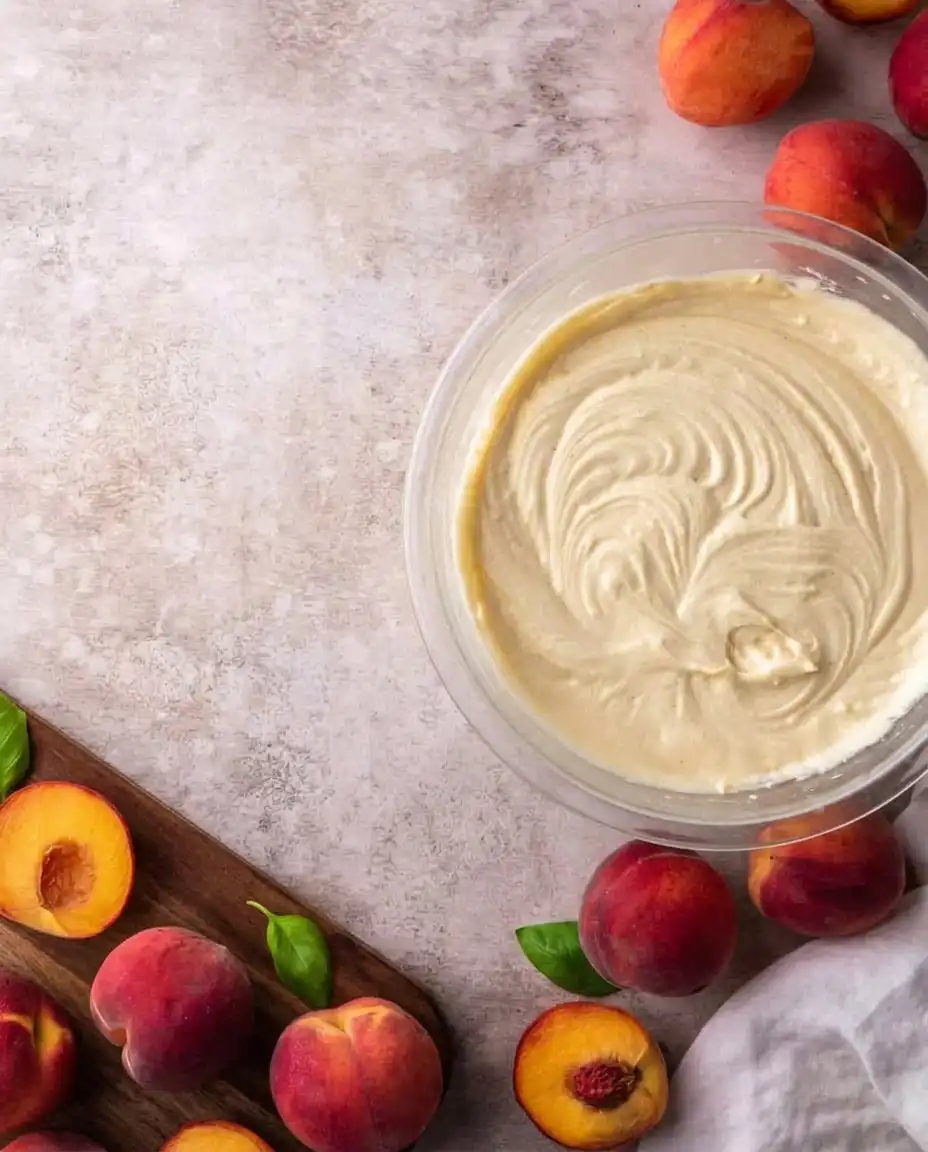
Temperature is your most important tool in the kitchen. For a cohesive batter that does not break, your butter, eggs, and buttermilk must be at a consistent room temperature. If the butter is too cold, it will not trap the air needed for a light sponge; if the eggs are cold, they will curdle the fat.
When preparing the fruit, give the sugar time to draw out the juices. This creates a natural syrup that acts as a soak for the cake layers. For more stone fruit inspiration, our peach upside down cake illustrates how heat transforms these sugars beautifully. Always weigh your pans on a digital scale to achieve perfectly even layers. This makes sure that each slice is identical and bakes at the same rate.
Refined Twists
While the purity of peach is divine, you may wish to introduce subtle aromatics. Adding a teaspoon of finely chopped fresh thyme or lavender to the macerating peaches creates a modern, botanical profile that is very popular in Parisian boutiques.
If you find yourself with an abundance of fruit, you might consider a peach cake which leans into a more rustic, single-layer presentation. For a celebratory touch, brush the cake layers with a light peach schnapps or a splash of elderflower liqueur before adding the cream. This adds a sophisticated floral note that lingers on the palate and complements the stone fruit perfectly.
Presentation and The Final Touch
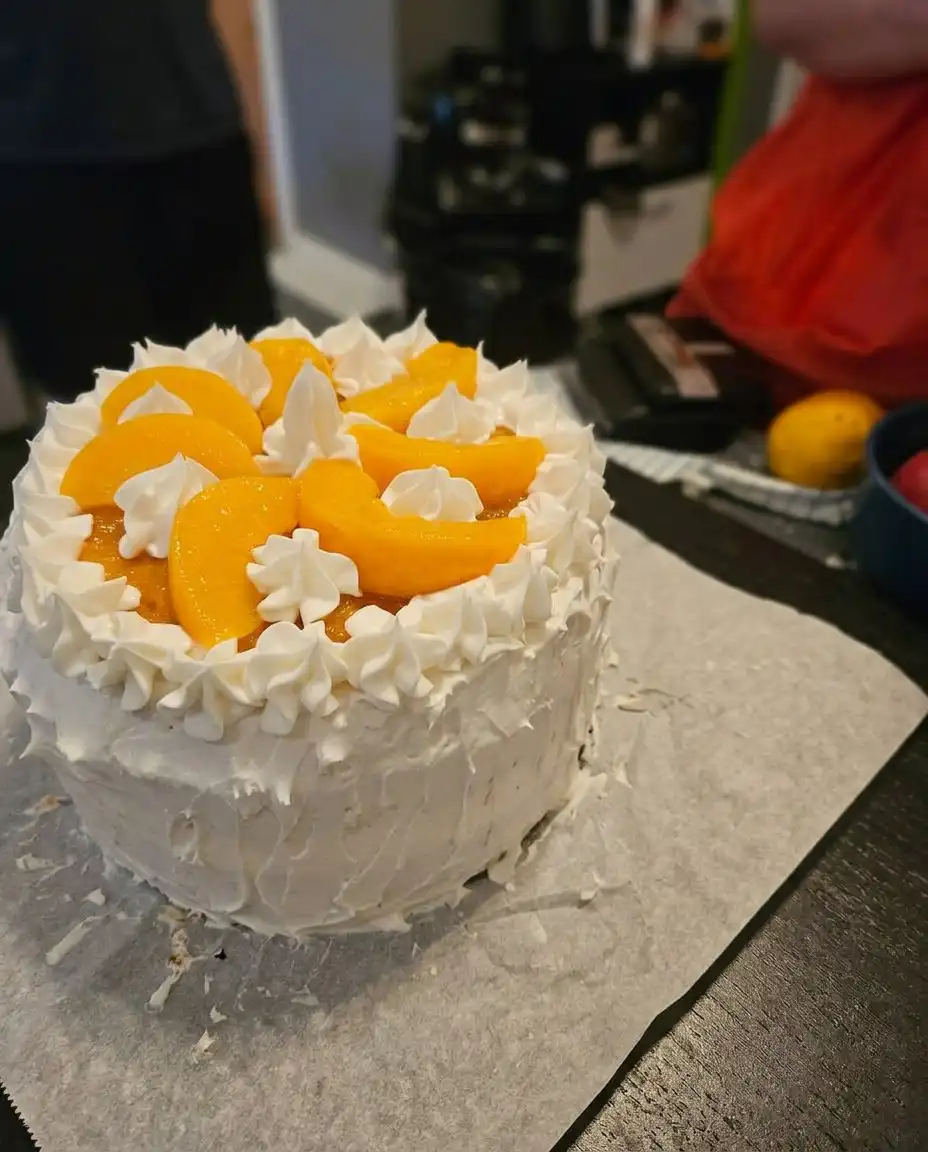
Serving a Peaches and Cream Layer Cake is an act of hospitality. I recommend slicing it while chilled to maintain the clean lines of the layers, but allowing the slices to sit for ten minutes before eating to let the flavors bloom. A warm cake can cause the whipped cream to melt, so patience is a virtue here.
A chilled glass of white tea or a light Oolong pairs beautifully with the stone fruit. If you enjoy this flavor profile in other forms, you must try our peach tiramisu for a similarly airy dessert experience. Arrange a few fresh mint leaves on the platter for a pop of color that signals freshness and elegance.
The Art of Small Batches
Mastering the Peaches and Cream Layer Cake is a testament to your growth as a baker. It requires patience to wait for the peaches to macerate and precision to whip the cream to the perfect peak, but the result is a dessert of unmatched grace. If you seek further mastery of sponges, our classic vanilla layer cake provides an excellent foundation for any filling.
Share your beautiful bakes with us and continue your journey into the world of fine pastry. You can find more inspiration on our Pinterest, Instagram, and Facebook. For more techniques on stone fruit cakes, visit In Bloom Bakery.