In Paris, we often paired deep cocoa with nutty creams. This Peanut Butter Fudge Cake reflects that perfect balance of dark chocolate and savory silkiness.

This composition features a moist Dutch-processed sponge, salted peanut butter Swiss meringue buttercream, and firm chocolate ganache. It is a masterclass in texture and precision for the home baker.
Mastering the Balance of Salt and Sweet
The beauty of this Peanut Butter Fudge Cake lies in the sophisticated interplay between the bitter notes of Dutch-processed cocoa and the salty richness of a Swiss-style buttercream. Unlike traditional American frostings that can be cloyingly sweet, this version uses a cooked meringue base to achieve a silky, buttery finish that melts on the tongue. Small-batch baking allows us to focus on the nuances of this emulsion, making certain every bite is balanced.
You will appreciate the structural integrity of the ganache, which acts as a foundational barrier between the layers. This technique prevents the moisture of the cake from softening the airy buttercream too quickly. By choosing high-quality salted butter and premium cocoa, you transform simple ingredients into a professional-grade patisserie creation. It is a treasure for those who find joy in the process of building layers with grace and patience.
Print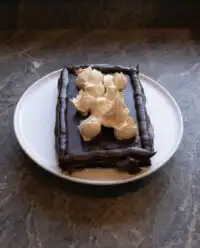
Peanut Butter Fudge Cake
- Total Time: 2 hours 45 mins
- Yield: 16 servings
Description
This sophisticated layer cake achieves a perfect balance between bitter, dark chocolate sponge and rich, salty peanut butter Swiss meringue buttercream. Constructed with precision, the layers are sealed with a structural chocolate ganache, creating a masterclass in texture and flavor for the home baker.
Ingredients
- all-purpose flour
- granulated sugar
- Dutch-processed cocoa powder
- baking soda
- baking powder
- salt
- eggs
- vanilla extract
- buttermilk
- oil (vegetable or neutral)
- hot coffee
- dark chocolate
- butter
- heavy cream
- egg whites
- creamy peanut butter (smooth)
Instructions
- Whisk the all-purpose flour, granulated sugar, Dutch-processed cocoa, baking soda, baking powder, and salt in a large basin until thoroughly combined.
- In a separate vessel, whisk the eggs, vanilla extract, buttermilk, and oil until the mixture is uniform.
- Gradually introduce the wet ingredients into the dry, stirring until the batter is smooth.
- Pour in the hot coffee and stir quickly until the mixture is fluid and fragrant.
- Pour batter into a prepared 16”x10” sheet pan that has been greased and floured.
- Bake at 350°F (175°C) for approximately 15 to 20 minutes, or until a wooden skewer inserted into the center emerges clean.
- Allow the cake to cool completely in the pan.
- Combine the chocolate, butter, salt, and vanilla in a heat-proof bowl for the ganache.
- In a small saucepan, heat the heavy cream and sugar until it reaches a gentle simmer.
- Pour the hot cream over the chocolate mixture and let it rest for sixty seconds.
- Stir with a rubber spatula in small concentric circles until a glossy, dark emulsion forms.
- Place the ganache in the refrigerator for 30 to 60 minutes until it is firm enough to hold its shape.
- Prepare a double boiler and place your mixer bowl over the steam (making certain the bottom does not touch the water).
- Add the sugar, egg whites, and salt to the bowl, whisking constantly until the sugar has fully dissolved and the mixture reaches 120°F (49°C).
- Move the bowl to your stand mixer and whisk on high speed until stiff, glossy peaks form and the bowl feels cool to the touch.
- Reduce the speed and add the softened butter one tablespoon at a time.
- Once the butter is fully incorporated and the frosting is silky, fold in the creamy peanut butter at low speed until perfectly blended.
- Divide the cooled sheet cake into three equal rectangles.
- Place the first layer on your serving board and spread a thin, even layer of the firm ganache across the surface.
- Spread half of your peanut butter buttercream over the ganache, smoothing it to the edges.
- Repeat with the second cake layer, more ganache, and the remaining buttercream.
- Top with the final cake layer and a final thin coating of ganache.
- Trim the edges with a sharp, warm knife to reveal the pristine, sharp lines of the layers.
Notes
When incorporating the hot coffee into the cake batter, work quickly to avoid over-activating the leavening agents prematurely. For the Swiss meringue, ensure all your mixing bowls and whisks are scrupulously clean and grease-free, as any trace of fat can prevent the egg whites from whipping correctly. The cooling time for the cake is crucial; rushing this step can cause the layers to tear when dividing them for assembly.
- Prep Time: 35 mins
- Cook Time: 20 mins
- Category: Dessert
- Method: Baking and Layering
- Cuisine: French-Inspired American
The Foundation of Flavor and Texture
To achieve the delicate crumb of this Peanut Butter Fudge Cake, one must understand the role of each component. Quality ingredients are the cornerstone of French-inspired baking, where we value the chemistry of the kitchen.
- Dutch-Processed Cocoa: This cocoa is treated with alkali to reduce acidity, resulting in a darker color and a smoother, more mellow chocolate profile that pairs beautifully with peanut butter.
- Buttermilk and Hot Coffee: The buttermilk provides a tender crumb through its acidic reaction with leavening agents, while the hot coffee “blooms” the cocoa powder, releasing its deepest aromatic compounds.
- Salted Butter and Egg Whites: For the Swiss meringue buttercream, the egg whites provide the structure for a stable foam, while the salted butter adds the necessary fat for a luxurious mouthfeel.
- Creamy Peanut Butter: Using a smooth, stable peanut butter makes certain the buttercream remains cohesive and does not break during the final mixing stage.
The Method of Precision
Step 1: Preparing the Chocolate Base
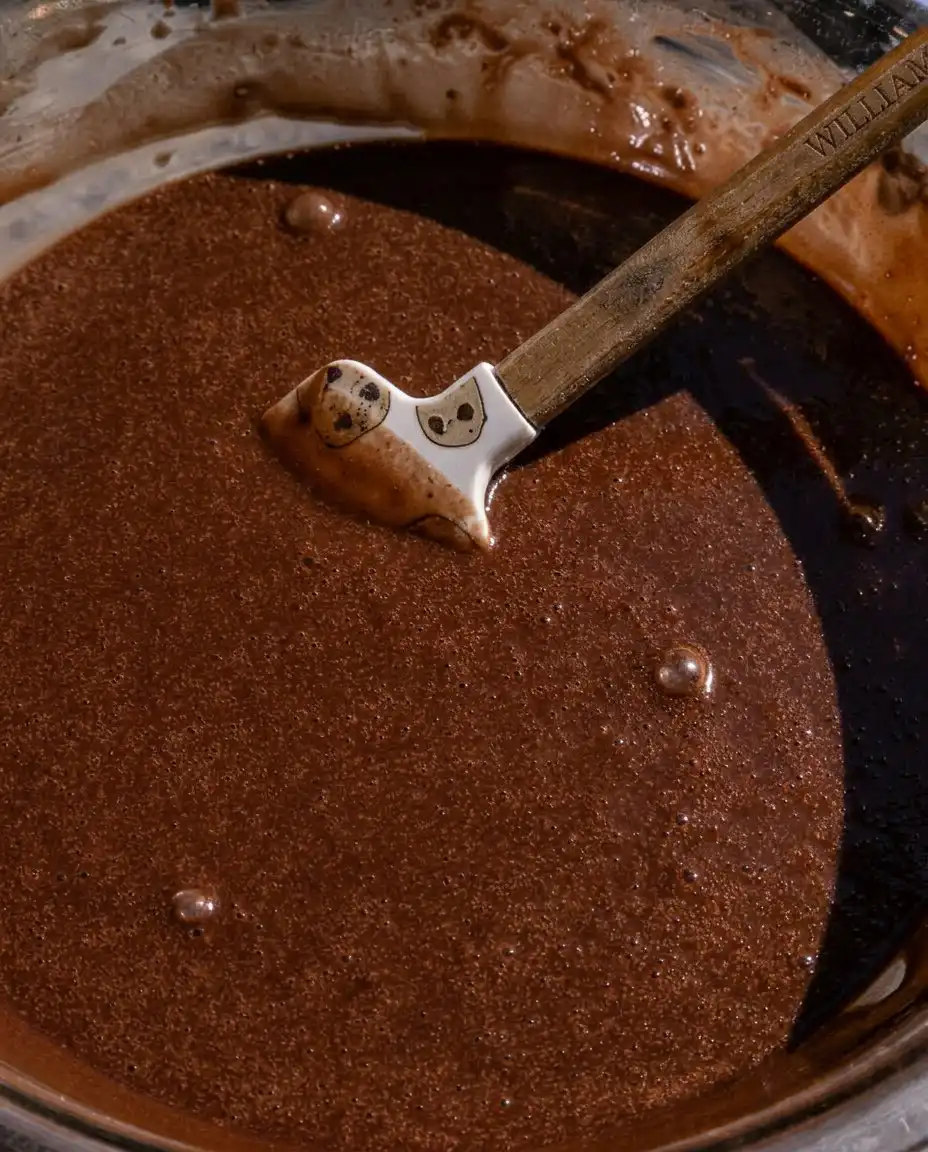
Begin by whisking the all-purpose flour, granulated sugar, Dutch-processed cocoa, baking soda, baking powder, and salt in a large basin. It is vital to whisk thoroughly to remove any lumps and distribute the leavening agents evenly. In a separate vessel, whisk the eggs, vanilla extract, buttermilk, and oil until the mixture is uniform. Gradually introduce the wet ingredients into the dry, stirring until the batter is smooth. Finally, pour in the hot coffee and stir quickly; the heat will thin the batter and activate the cocoa, creating a fragrant, fluid mixture.
Step 2: The Controlled Bake
Pour your batter into a prepared 16”x10” sheet pan that has been greased and floured with care. Bake at 350°F (175°C) for approximately 15 to 20 minutes. The cake is ready when a wooden skewer inserted into the center emerges clean. Allow the cake to cool completely in the pan to maintain its delicate structure before attempting to handle the layers.
Step 3: Emulsifying the Chocolate Ganache
Combine the chocolate, butter, salt, and vanilla in a heat-proof bowl. In a small saucepan, heat the heavy cream and sugar over a medium flame until it reaches a gentle simmer, just before the boiling point. Pour the hot cream over the chocolate mixture and let it rest for sixty seconds to soften the solids. Stir with a rubber spatula in small concentric circles until a glossy, dark emulsion forms. Place this in the refrigerator for 30 to 60 minutes until it is firm enough to hold its shape.
Step 4: Crafting the Swiss Meringue Buttercream
Prepare a double boiler by simmering two inches of water in a saucepan. Place your mixer bowl over the steam, making certain the bottom does not touch the water. Add the sugar, egg whites, and salt, whisking constantly until the sugar has fully dissolved and the mixture reaches 120°F (49°C). Move the bowl to your stand mixer and whisk on high speed until stiff, glossy peaks form and the bowl feels cool to the touch. Reduce the speed and add the softened butter one tablespoon at a time. Once the butter is fully incorporated and the frosting is silky, fold in the creamy peanut butter at low speed until perfectly blended.
Step 5: The Architectural Assembly
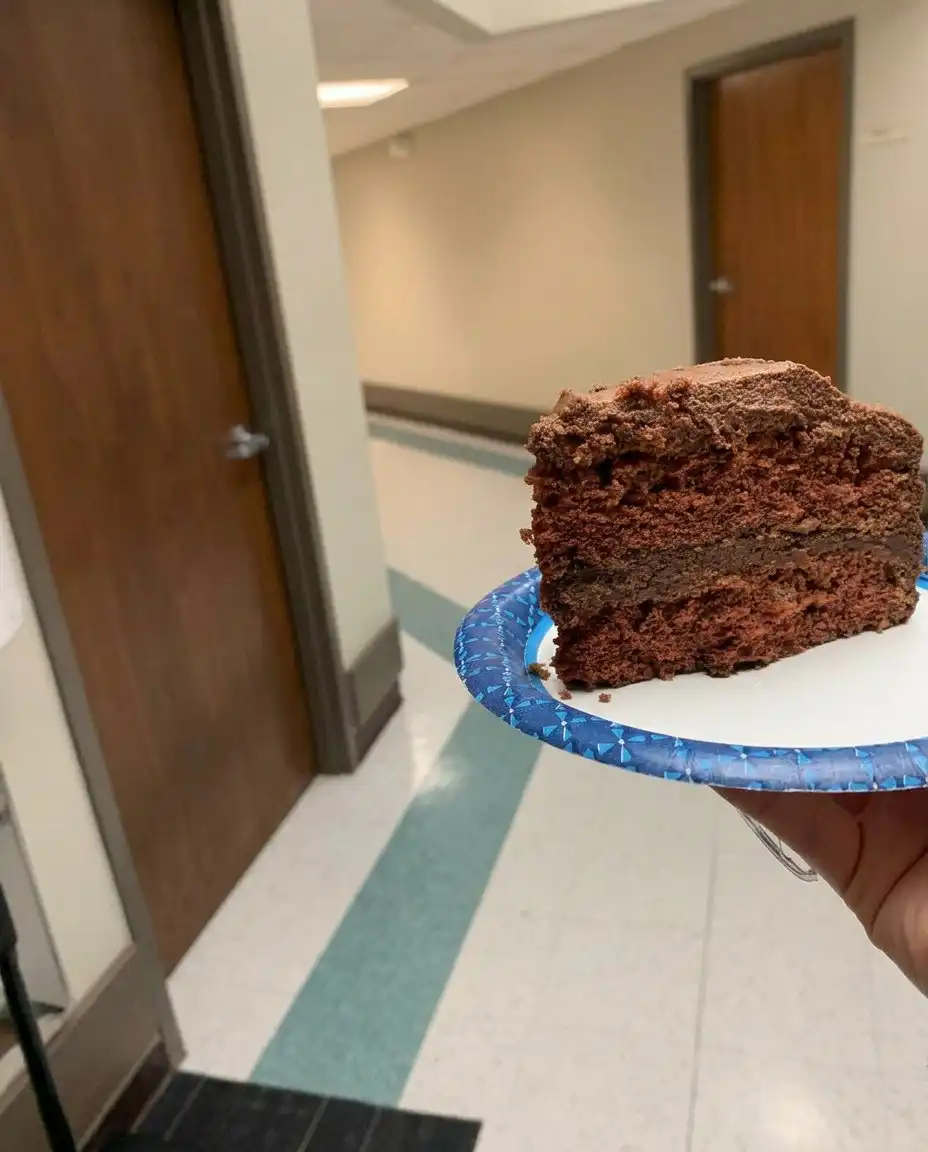
Divide the cooled sheet cake into three equal rectangles. Place the first layer on your serving board and spread a thin, even layer of the firm ganache across the surface. This acts as a moisture barrier. Follow this with half of your peanut butter buttercream, smoothing it to the edges. Repeat with the second cake layer, more ganache, and the remaining buttercream. Top with the final cake layer and a final thin coating of ganache. Trim the edges with a sharp, warm knife to reveal the pristine, sharp lines of the layers.
Precision Secrets for the Perfect Crumb
Temperature is your most important tool when constructing the Peanut Butter Fudge Cake. The butter for your Swiss meringue must be soft but not greasy; if it is too cold, the buttercream will appear curdled, and if too warm, it will become soup-like. If the mixture breaks, simply chill the bowl for ten minutes and whisk again until it regains its glossy texture. For those who appreciate deep cocoa, our chocolate fudge cake provides another perspective on moisture and density in small-batch baking. Always use a digital thermometer to check your egg whites; reaching the correct temperature makes certain the sugar is dissolved and the proteins are ready to hold air. When trimming the finished cake, wipe your knife clean after every single cut to maintain the professional, sharp appearance of the exposed sides.
Refined Twists for the Discerning Palate
While the classic Peanut Butter Fudge Cake is a masterpiece of balance, you may wish to add a personal touch to the profile. Substituting the hot coffee with a strong espresso will deepen the roasted notes of the chocolate. If you prefer a simpler bake for a weekday treat, consider our old-fashioned peanut butter cake which offers a more rustic texture. For a floral complexity, a tiny pinch of fleur de sel on top of the final ganache layer will accentuate the peanut butter. You might also consider folding finely chopped dark chocolate into the buttercream for a subtle crunch that contrasts with the silky Swiss meringue.
The Final Touch: Presentation and Pairing
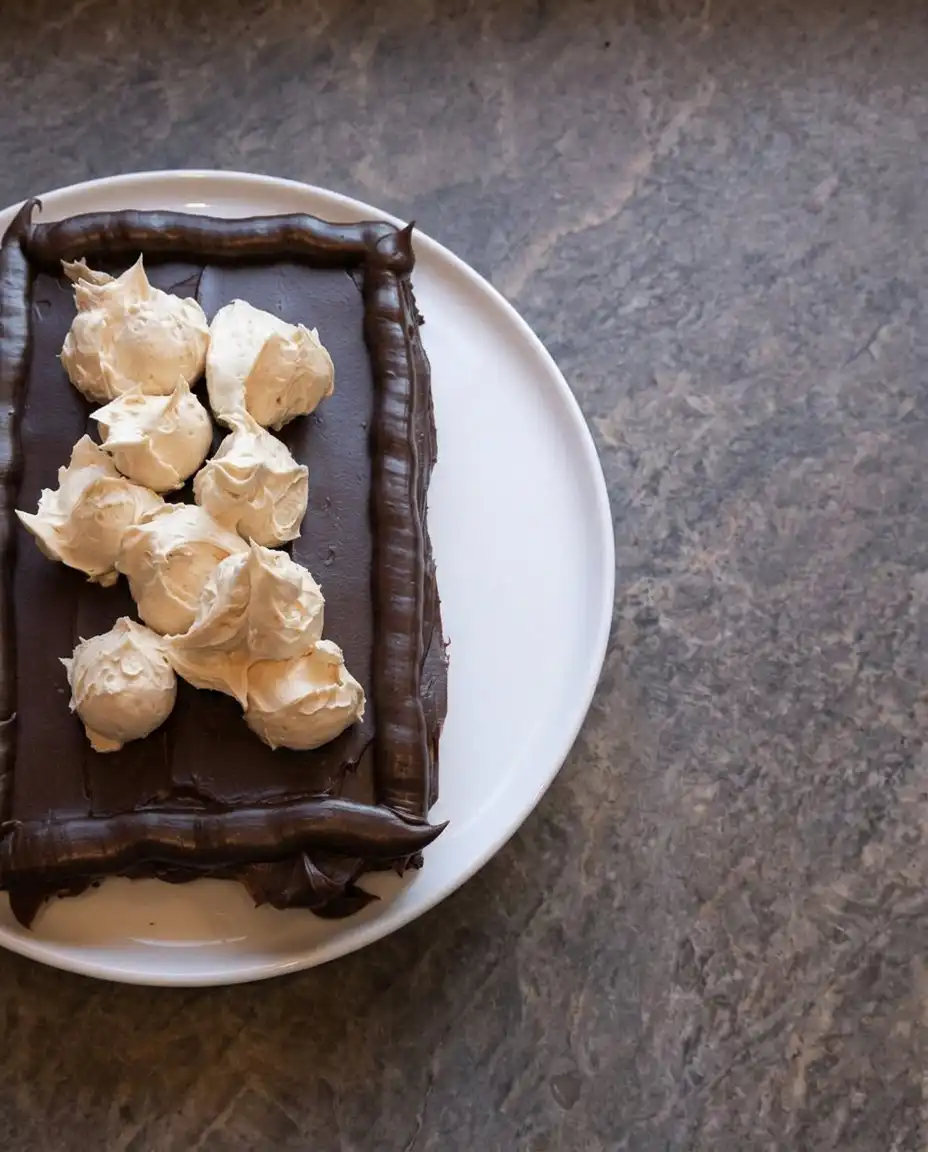
To honor the effort put into the Peanut Butter Fudge Cake, serve it on chilled porcelain plates. The clean lines of the rectangular slices are best showcased when the cake is served slightly cool but allowed to soften on the plate for ten minutes. For a more intense experience, pair this with our chocolate indulgence platter if you are hosting a larger gathering. A glass of cold milk is a nostalgic choice, but a dark roast coffee or a glass of Tawny Port will complement the savory notes of the peanut butter and the bitterness of the Dutch cocoa beautifully. Presentation is the final act of mastery in the kitchen.
The Art of Small Batches
Mastering the Peanut Butter Fudge Cake is a testament to your growth as a baker. By focusing on the details of the Swiss meringue and the blooming of the cocoa, you have created something far superior to a standard dessert. You might also enjoy the ease of a reeses peanut butter cup poke cake for more casual occasions. For further technical guidance, you can refer to this fudgy chocolate peanut butter cake guide. Continue your journey by sharing your creations with us on Pinterest or Instagram. We look forward to seeing your beautiful results.