A pale, delicate ribbon of batter falling in unbroken folds from the whisk signals that your eggs and sugar have achieved the structural integrity required to carry a dense crumb.

The true measure of a refined bake lies in its ability to balance humble ingredients with flawless technique. Our Zucchini Spice Cake demonstrates this principle beautifully, transforming simple garden squash into a crumb of exceptional tenderness. Through precise temperature control and structured mixing, we lift this rustic classic into a patisserie-worthy centerpiece. Patience here is not a virtue — it is an instruction. As you begin this process, you will discover how minor adjustments in your method yield major differences in your finished dessert.
Why This Zucchini Spice Cake Rewards Attention
Prep: 25 min · Serves: 12 · Difficulty: Medium
- Achieving the ribbon stage guarantees structure.
- Grated squash yields an exceptionally tender crumb.
- Warm spices distribute evenly through the fat.
- Cold cream cheese produces a stable frosting.
This is the recipe that teaches the quiet value of patient assembly, echoing the discipline of our apple spice cake method. By mastering these fundamental ratios, you build the confidence required for more intricate bakes.
Get The Full Cake Recipe
Print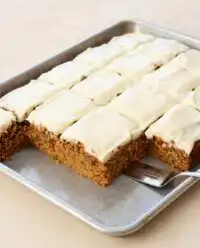
Zucchini Spice Cake
- Total Time: 50 mins
- Yield: 12 servings
- Diet: Vegetarian
Description
This refined Zucchini Spice Cake pairs a moist, tender crumb with a luxurious cream cheese frosting. It balances subtle warm spices and garden-fresh squash for a sophisticated, patisserie-quality dessert.
Ingredients
- 2 cups all-purpose flour
- 1/4 cup cornstarch
- 1 tsp baking soda
- 1 tsp baking powder
- 1/2 tsp salt
- 1.5 tsp ground cinnamon
- 1/2 tsp ground nutmeg
- 1 1/2 cups light brown sugar
- 3 large eggs, room temperature
- 1/2 cup whole milk, room temperature
- 3/4 cup canola oil
- 1 tsp vanilla extract
- 2 cups finely grated zucchini
- 1/2 cup chopped walnuts
- 8 oz block cream cheese, cold
- 1/2 cup unsalted butter, softened
- 2 cups powdered sugar
- 1 tsp lemon juice
Instructions
- Prepare the oven. Preheat your oven to 180°C (350°F) and prepare a 9×13-inch baking pan with grease and parchment paper.
- Sift dry ingredients. Combine flour, cornstarch, baking soda, baking powder, salt, cinnamon, and nutmeg in a bowl and whisk thoroughly.
- Emulsify wet base. Whisk brown sugar, eggs, milk, oil, vanilla, and grated zucchini in a large bowl until a stable emulsion forms.
- Fold the batter. Incorporate dry ingredients into the wet mixture using a spatula, mixing only until just combined to prevent gluten development.
- Incorporate the nuts. Gently fold in the chopped walnuts until they are evenly distributed throughout the thick batter.
- Bake the cake. Pour the batter into the prepared pan and bake for 25 minutes or until a skewer inserted in the center comes out clean.
- Cool the cake. Allow the cake to rest in the pan for 20 minutes before inverting it onto a wire rack to cool completely.
- Beat butter base. Whip the softened butter in a stand mixer until pale and airy, then gradually add powdered sugar.
- Add cheese and acid. Mix in the cold cream cheese, vanilla, and lemon juice until the frosting is smooth and holds a firm peak.
- Frost and finish. Apply the frosting to the cooled cake with an offset spatula and let it stabilize for ten minutes before slicing.
Notes
- Ensure all dairy and egg components are at room temperature to achieve a perfect emulsion.
- Use a box grater for the zucchini to maintain structural integrity and prevent excess liquid.
- Wipe your knife with a warm, damp cloth between cuts to ensure professional-looking, clean slices.
- Chill the frosting briefly if it becomes too soft during application to ensure sharp, decorative swirls.
- Prep Time: 25 mins
- Cook Time: 25 mins
- Category: Dessert
- Method: Baking
- Cuisine: American
What This Recipe Requires
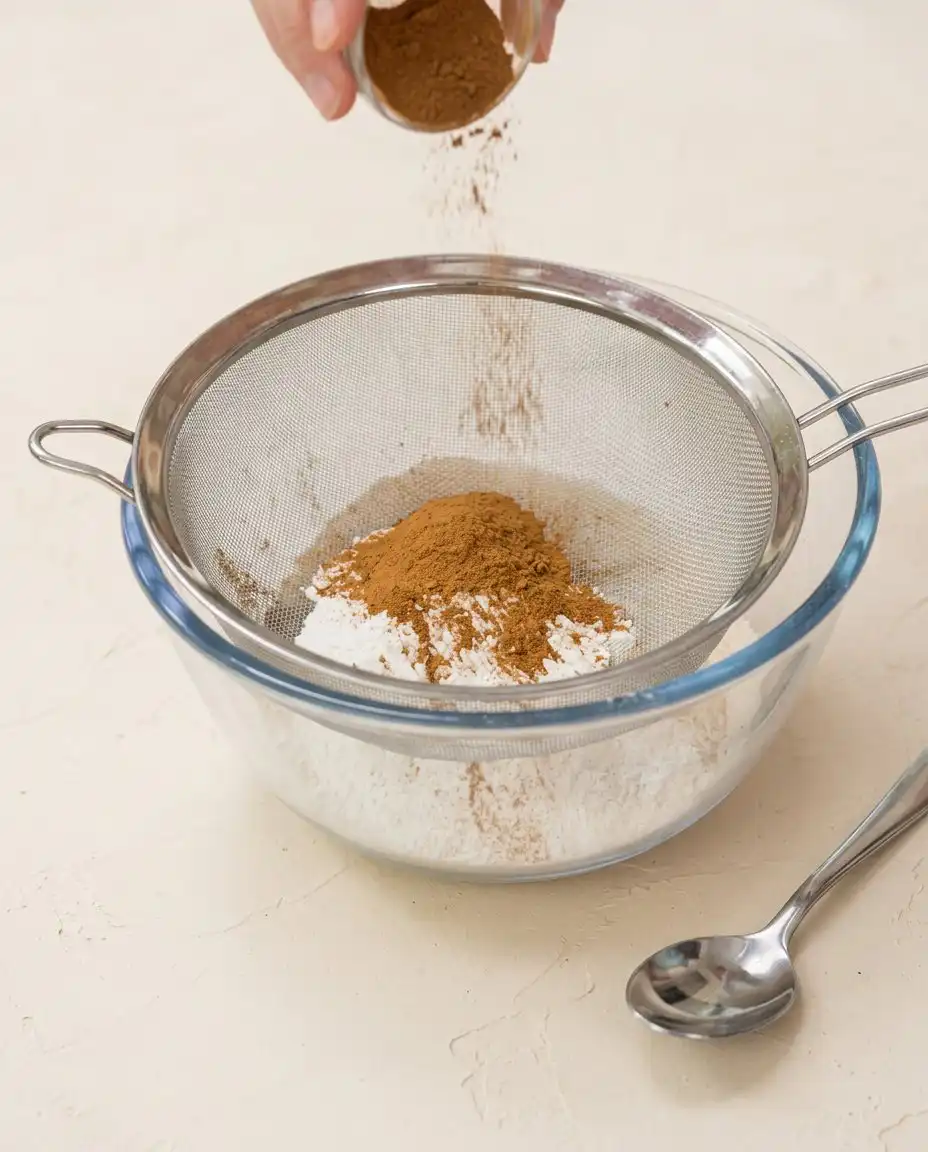
Before you begin, weigh every component precisely to guarantee the success of your bake. This method relies on the exact interactions of fat, moisture, and starch to build its signature texture. The French principle of mise en place is paramount here: everything must be weighed, tempered, and positioned before a single step begins. Cold ingredients will break your emulsions, while inaccurate measurements will compromise the delicate crumb we seek to construct.
- All-purpose flour: This provides the gluten skeleton, which we soften with cornstarch to simulate fine cake flour and prevent a tough texture.
- Shredded zucchini: It supplies slow-release moisture without weighting down the delicate structure of the crumb, acting as a natural hydration source.
- Canola oil: This liquid fat keeps the crumb tender and soft, even when the cake is stored in cold conditions, preventing dryness.
- Light brown sugar: The molasses content adds deep moisture and caramel notes that complement our spices while assisting with chemical leavening.
- Unsalted butter: As the foundation of our cream cheese topping, it must be beaten until pale to build lightness and air stability.
- Firm block cream cheese: Cold and dense, this ingredient provides the necessary stability for clean frosting layers and decorative piping work.
| Ingredient | Why It Matters |
|---|---|
| All-Purpose Flour | Establishes the delicate structural skeleton and carries the crumb |
| Shredded Zucchini | Introduces hydration slowly without collapsing the baked structure |
| Canola Oil | Preserves moisture and guarantees a soft crumb under refrigeration |
| Light Brown Sugar | Contributes deep sweetness, subtle caramel acidity, and soft moisture |
| Cream Cheese | Offers a dense, tangy contrast to the warm spices and sugar |
How to Proceed
Step 1: Prep and Mise en Place
Position your oven rack in the center and preheat to 180°C (350°F) for a conventional oven, or 160°C (320°F) if using a convection setting with a fan. Lightly coat your 9×13-inch pan with a precise layer of grease and line the long axis with parchment paper to ensure a clean release. Having your baking pan prepared beforehand prevents the mixed batter from sitting idle and losing its leavening power, which can lead to a heavy, dense bake. This preparation reflects the apprentice’s first lesson: order in the kitchen leads to success on the plate.
Step 2: Sifting the Dry Components
Sift together the flour, cornstarch, baking soda, baking powder, salt, ground cinnamon, and ground nutmeg into a wide bowl. Whisk these dry ingredients for a minimum of thirty seconds to distribute the chemical leaveners uniformly. This small discipline prevents pockets of bitter soda from forming in your baked cake and guarantees that the spices are suspended evenly throughout the starch grid. You will notice the color of the flour soften into a warm, uniform cream hue.
Step 3: Emulsifying the Wet Base
In a spacious mixing bowl, combine your brown sugar, room-temperature eggs, whole milk, canola oil, vanilla extract, and grated zucchini. Whisk with steady, rhythmic strokes until the mixture is uniform and the sugar crystals begin to dissolve into the liquid. You will observe the oil dispersing into tiny, suspended droplets, creating a stable emulsion that holds the shredded vegetable in place. This suspension is critical for a uniform bake, as it prevents the squash from settling to the bottom.
Step 4: Folding the Batter
Scatter the sifted dry ingredients over your wet mixture and use a flexible silicone spatula to fold them together gently. Work in a circular pattern, lifting batter from the bottom of the bowl and folding it over the top. Stop mixing the moment the last streak of flour disappears to prevent gluten development, which would make the cake tough. The batter should appear thick, textured, and fall from the spatula in slow, heavy layers.
Step 5: Incorporating the Nuts
Distribute the chopped walnuts or pecans across the surface of your folded batter with a light, uniform hand. Gently fold these nuts twice or three times, only until they are distributed throughout the mixture. This brief action keeps the nuts suspended in the thick batter rather than allowing them to sink to the bottom of the pan during baking. The batter should look balanced and full of texture, ready for the oven.
Step 6: Baking the Zucchini Spice Cake
Pour the finished batter into your prepared pan and tap it twice on the counter to release any trapped air bubbles. Bake for 25 minutes, keeping the oven door closed to preserve a stable thermal environment. Your Zucchini Spice Cake is complete when a wooden skewer inserted into the center comes out clean or with a few small, moist crumbs. You will smell the rich aroma of toasted nuts and cinnamon filling your kitchen.
Step 7: Cooling and Tempering
Allow the baked cake to rest undisturbed in its pan on a wire cooling rack for exactly twenty minutes. This pause allows the delicate starch structure to set, preventing the cake from tearing as you turn it out. After this interval, gently invert the cake onto the rack to cool completely to room temperature before attempting to apply any frosting. A warm cake will melt the butter in your frosting, destroying the beautiful texture you worked to build.
Step 8: Preparing the Butter Base
Place your room-temperature butter into the bowl of a stand mixer fitted with the paddle attachment. Beat on medium-high speed for three minutes until the butter becomes pale, airy, and clings to the sides of the bowl. Add your powdered sugar in two distinct batches, mixing on low speed to prevent a cloud of sugar from escaping. This step builds the stable fat network that will carry the weight of the cheese.
Step 9: Adding the Cheese and Acid
Introduce the cold, firm block cream cheese, vanilla extract, and fresh lemon juice to your whipped butter base. Mix on medium speed for only sixty seconds, stopping the mixer as soon as the frosting is smooth and uniform. Over-mixing at this stage will liquefy the fats, rendering your frosting unstable, runny, and impossible to pipe or spread cleanly. The frosting should hold a firm, sharp peak when lifted on the paddle.
Step 10: Frosting and Finishing
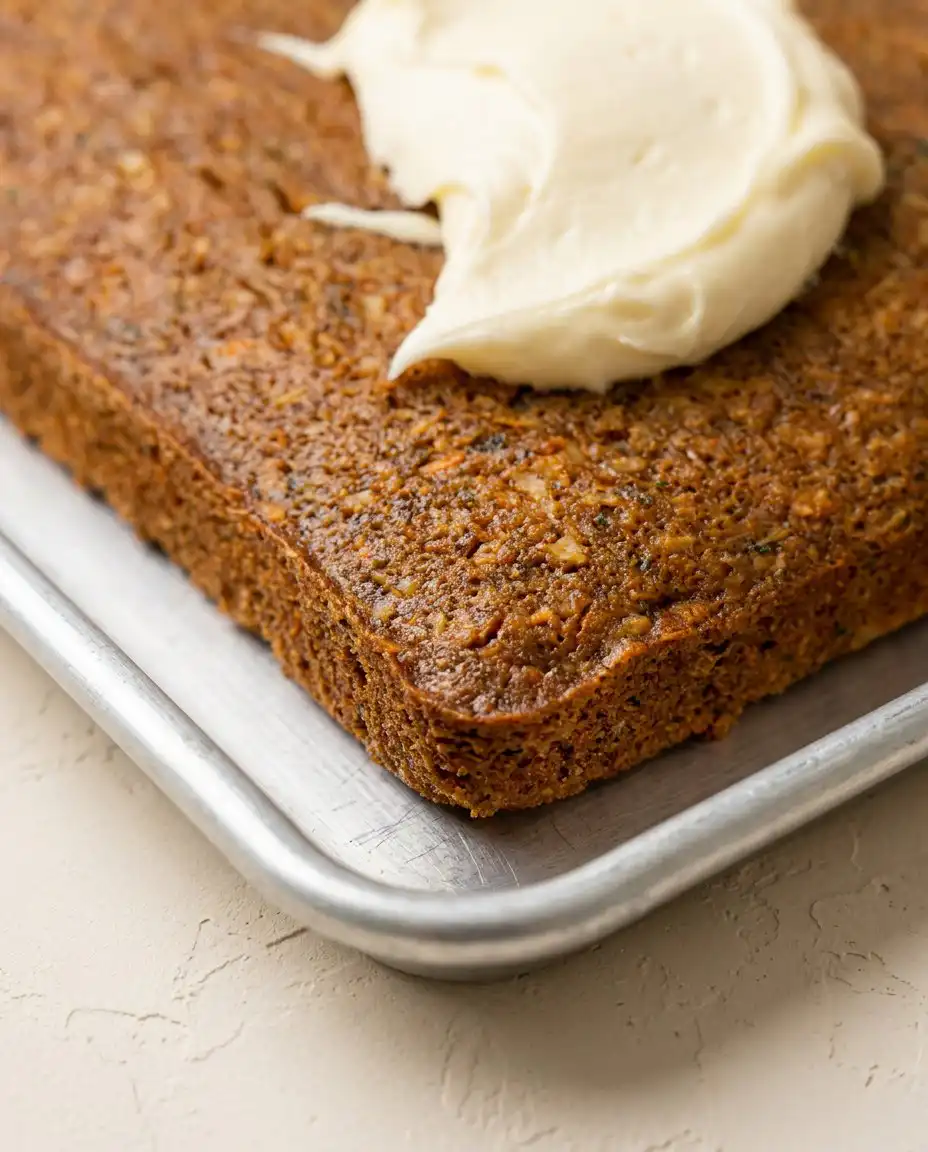
Spread the chilled cream cheese frosting evenly over the top of your completely cooled cake using an offset spatula. Use gentle, sweeping motions to create decorative swoops that catch the light beautifully and showcase the thick texture. Let the cake rest for ten minutes before cutting to allow the frosting to stabilize. This quiet moment is the final step before you slice into your creation.
Where Precision Makes the Difference
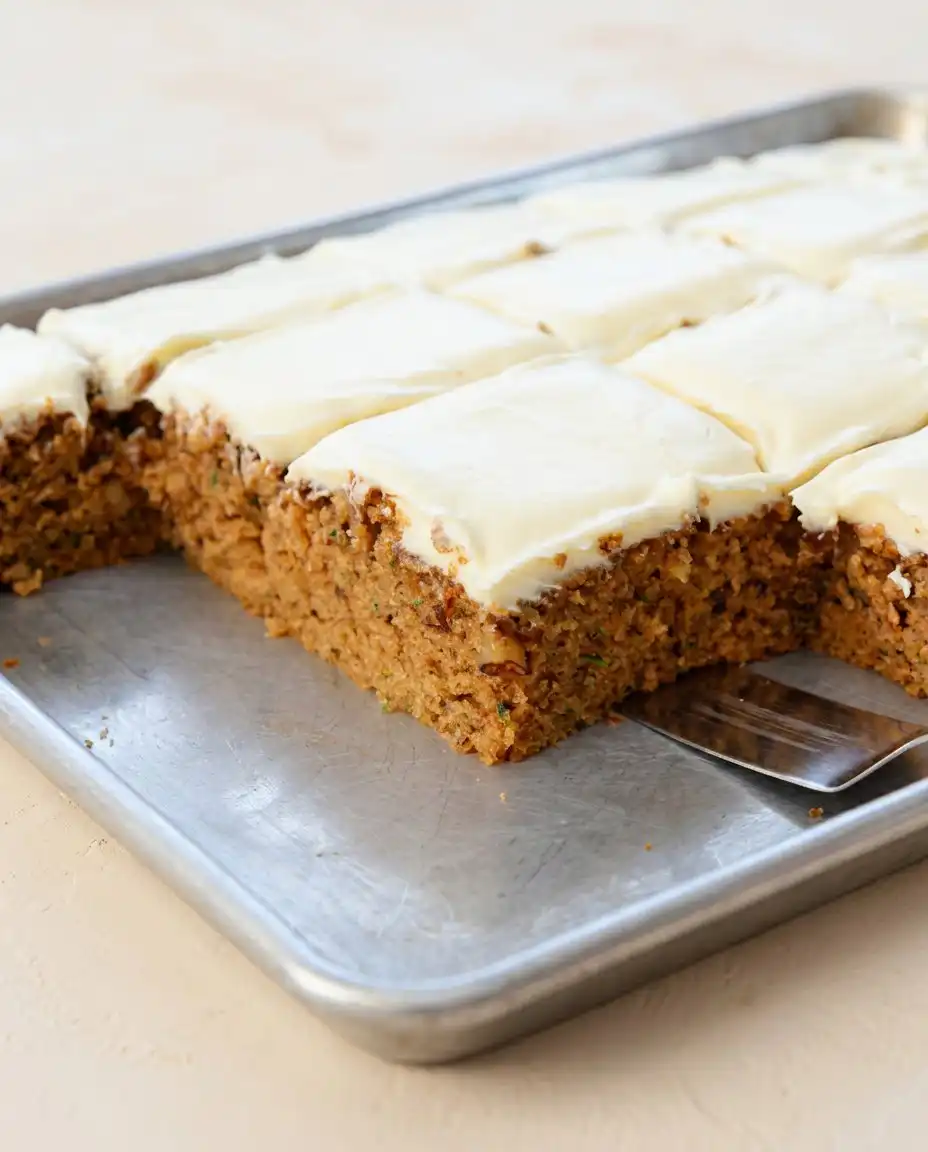
To secure a clean slice, always use a sharp chef’s knife dipped in warm water and wiped dry between each cut. The heat of the blade glides through the dense cream cheese layer without tearing the delicate crumb below. This simple technique showcases the clean, sharp margins of your cross-section, revealing a beautiful interior. It is the visual proof of your precise mixing and baking technique.
If your cream cheese frosting becomes soupy, the fats have warm-softened too much from over-whipping or room heat. Place the entire bowl of frosting in the refrigerator for thirty minutes to restore firmness, then beat it briefly on low speed. This rest stabilizes the emulsions without requiring additional powdered sugar, which would make the frosting overly sweet. You can find more storage and preparation guidance in our moist zucchini cake recipe story to master your timing.
Grating your zucchini requires a medium box grater rather than a food processor. A food processor tears the vegetable fibers too aggressively, releasing excess liquid that can make your cake soggy. The medium holes of a hand grater yield structured shreds that melt into the crumb during baking, leaving no stringy residue. This ensures that the moisture is locked within the crumb itself.
Always verify that your eggs and milk have reached room temperature before combining them with the oil and sugar. Cold liquids will cause the oil to separate and the butter to seize, preventing a proper emulsion from forming. Your ingredients already know what to do; give them the conditions to do it. This thermal harmony is the secret to a uniform, fine crumb that does not crumble when sliced.
Weighing your ingredients on a digital scale is the only way to repeat this success in your home kitchen. Volumetric cups are notoriously inaccurate, often packing too much flour into the batter and making the cake dry. A deviation of even twenty grams can compromise the delicate balance of starch and moisture. Precision is not a constraint; it is the freedom to repeat success.
Do not peel the zucchini before grating, as the skin contains essential structural fibers that help keep the crumb intact. The skin also provides beautiful green flecks that offer a classic contrast to the golden-brown spice cake. Simply wash the squash and dry it thoroughly before grating to avoid adding surface moisture to the bowl.
Frequently Asked Questions
Why do people put zucchini in cake?
Zucchini behaves as a moisture reservoir in baked goods without adding a strong flavor. The fine shreds break down during baking, releasing hydration that keeps the crumb tender and soft for days. This allows you to achieve a moist texture while using less fat than a traditional cake demands. It is an excellent way to balance the density of whole grains or nuts.
Do I need to peel the zucchini before grating?
Peeling is unnecessary and removes the beautiful green flecks that distinguish this style of bake. The skin of a young zucchini is tender and melts completely into the batter as it cooks. Wash the squash thoroughly and trim the stem before grating on a medium box grater. This adds a visual indicator of the cake’s key ingredient.
How do you keep a zucchini cake from getting soggy?
Avoid pressing or squeezing the moisture out of the grated zucchini unless a recipe specifically directs you to do so. Our formula balances the natural liquid content of the squash with the exact weights of flour and oil. If you squeeze the squash, you will dry out the finished cake. Additionally, verify your baking powder is fresh to secure a proper rise.
What spices are best in a zucchini spice cake?
A precise combination of cinnamon and fresh nutmeg provides the ideal aromatic background. Cinnamon offers warm, sweet notes, while nutmeg adds a complex, slightly woody depth that cuts through the sweetness. Avoid using heavy cloves or ginger, which can easily overpower the delicate vegetable base and mask the flavor of the nuts.
What is the best frosting for zucchini spice cake?
A classic cream cheese frosting provides the necessary tangy contrast to the warm spices and rich brown sugar. The acidity of the cheese cuts through the fat of the cake, cleansing the palate with every bite. Verify that your cream cheese is cold and firm to preserve its structure. Soft, spreadable cream cheese in a tub contains too much water and will make your frosting runny.
Can you freeze zucchini cake?
The unfrosted cake layers freeze beautifully when wrapped tightly in two layers of plastic film and aluminum foil. Store the layers for up to three months, then thaw them completely at room temperature before frosting. We do not recommend freezing the decorated cake, as the cream cheese frosting can weep and separate upon thawing.
How should I store this cake once it is frosted?
Because of the cream cheese frosting, this cake must be stored in the refrigerator in an airtight container. It will remain moist and delicious for up to five days when protected from drafts. Bring individual slices to room temperature for twenty minutes before serving to soften the butter within the crumb.
Thoughtful Alternatives
For a winter variation, you can replace the walnuts with dried cranberries that have been plumped in warm water for ten minutes. The tartness of the fruit cuts through the rich cream cheese, mirroring the seasonal balance of a traditional carrot cake formulation. Always dry the fruit thoroughly between paper towels before folding it into your batter to prevent excess water from thinning the mix. This addition introduces a festive color and a chewy contrast that elevates the rustic cake.
If you prefer a deeper, warm flavor profile, swap half of the light brown sugar for dark muscovado sugar. The higher molasses content introduces notes of burnt caramel and toffee, which align beautifully with the ground nutmeg. Be sure to sift the dark sugar to break up any stubborn clumps before mixing, as these clumps can create wet sugar pockets during baking. This swap intensifies the color of the crumb, giving it a rich mahogany hue.
To adapt this cake for a formal presentation, bake the batter in two round eight-inch cake pans for twenty minutes. This adaptation produces elegant layers that can be stacked with a double portion of frosting. Consult a thorough zucchini cake tutorial to adjust your oven temperature and baking times for shallow round pans. Stacking layers requires a firmer frosting, so chill your frosted cake for thirty minutes before slicing.
Before You Serve
Serve slices of this cake at cool room temperature to allow the spices and fats to express their full flavor. If the cake has been refrigerated, let it sit on the counter for twenty minutes before presenting it to your guests. This brief warming period restores the tender quality of the crumb, ensuring that every bite melts beautifully on the tongue. Cold cake can feel dense and mask the subtle notes of nutmeg and butter.
A cup of lightly roasted black tea or a clean espresso provides the ideal pairing for this rich dessert. The bitter notes of the coffee complement the sweet, caramelized sugars of the cake. For an elegant touch, review our classic carrot cake cream cheese story for inspiration on beautiful pastry presentation and knife-cutting techniques. The contrast between hot beverage and cool cake creates a delightful sensory experience.
When presenting this cake at a formal gathering, dust the margins of the serving plate with a whisper of ground cinnamon. This subtle visual cue prepares your guests for the warm aromatic profile of the dessert. A clean, white ceramic plate offers the best contrast to showcase the golden hues of the cake and the pristine white layers of frosting. Keep the presentation simple and uncluttered to let the craft of the bake speak for itself.

The Result of Your Care
Baking is an exercise in small, deliberate choices that culminate in a shared moment of satisfaction. By respecting the temperature of your ingredients and folding your batter with a gentle hand, you have created a cake of quiet excellence. Your patience has rewarded you with a dessert that is both rustic and deeply refined. This is the patisserie apprentice’s first lesson: a beautiful result is the sum of unremarkable-looking small disciplines done without deviation.
We invite you to share this bake with those who appreciate the details of fine pastry work, much like our classic purple carrot cake creation. Share your kitchen successes and join our baking community on Pinterest or find more refined tutorials on Facebook and TikTok. We look forward to seeing your clean slices and beautiful cream cheese swirls.