Ceylon cinnamon, with its delicate warmth and woody complexity, is the quiet architect of flavor that defines a truly remarkable breakfast pastry.

When you bake a batch of Classic Coffee Cake Muffins, you are not merely preparing breakfast; you are engaging in a precise ritual of temperature and texture. The goal is a crumb that feels tender yet structured, paired with a crown of crisp, buttery streusel that refuses to sink. By respecting the humble chemistry of fat, flour, and patience, you can recreate the atmosphere of an authentic French morning in your own kitchen.
The gentle aroma of Ceylon cinnamon drifting through a warm kitchen is one of the greatest pleasures of the baker’s craft. When done correctly, these individual cakes offer a clean, dry crumb that melts pleasantly on the tongue. Let us look at how small, deliberate steps transform these humble ingredients into something singular.
What Careful Baking Produces Here: Classic Coffee Cake Muffins
Prep: 10 min · Serves: 12 · Difficulty: Medium
- A tender crumb with structural integrity.
- Buttery streusel that stays crisp on top.
- Balanced spice warmth throughout each bite.
- Delicate sweet glaze to finish the crown.
- Reliable results achieved through simple techniques.
This thoughtful recipe honors the timeless harmony of cinnamon and butter with every single bake. If you appreciate the beauty of a larger slice, you might also enjoy our classic blueberry coffee cake on a quiet Sunday morning.
Get The Full Cake Recipe
Print
Classic Coffee Cake Muffins
- Total Time: 28 mins
- Yield: 12 muffins
- Diet: Vegetarian
Description
These Classic Coffee Cake Muffins feature a tender, spiced crumb topped with a crisp, buttery streusel and a sweet, delicate glaze. Perfect for breakfast or brunch, they rely on precise mixing techniques to deliver a professional, bakery-quality result at home.
Ingredients
- All-purpose flour
- Light brown sugar
- Granulated sugar
- Ground Ceylon cinnamon
- Unsalted butter, melted and cooled
- Room temperature milk
- Large eggs
- Vanilla extract
- Baking powder
- Baking soda
- Salt
- Confectioners’ sugar
Instructions
- Prepare the streusel. Combine flour, sugars, and cinnamon; toss with melted butter until crumbly, then refrigerate until needed.
- Whisk dry ingredients. Sift and mix flour, brown sugar, baking powder, baking soda, cinnamon, and salt in a large bowl.
- Emulsify wet ingredients. Vigorously whisk milk, eggs, melted butter, and vanilla in a separate bowl until completely unified.
- Combine the batters. Make a well in the dry ingredients, add the wet mixture, and fold gently until just combined.
- Scoop into tin. Portion the batter into a lined twelve-cup muffin tin, filling each cup approximately three-quarters full.
- Apply chilled streusel. Sprinkle the cold crumble generously over each muffin, pressing lightly to ensure adhesion.
- Bake the muffins. Bake at 375°F for eighteen minutes until a skewer inserted in the center comes out clean.
- Drizzle with glaze. Whisk confectioners’ sugar and milk until smooth, then drizzle over the warm muffins before serving.
Notes
- Ensure all dairy ingredients are at room temperature to prevent the melted butter from solidifying into lumps.
- Use a digital scale to weigh your flour rather than scooping, as this prevents an overly dry or dense crumb.
- Do not overmix the batter; a few remaining streaks of flour are normal and will disappear during baking.
- Chilling the streusel topping before adding it to the muffins is essential for maintaining the desired crumb texture.
- Prep Time: 10 mins
- Cook Time: 18 mins
- Category: Breakfast
- Method: Baking
- Cuisine: French-inspired
The Mise en Place
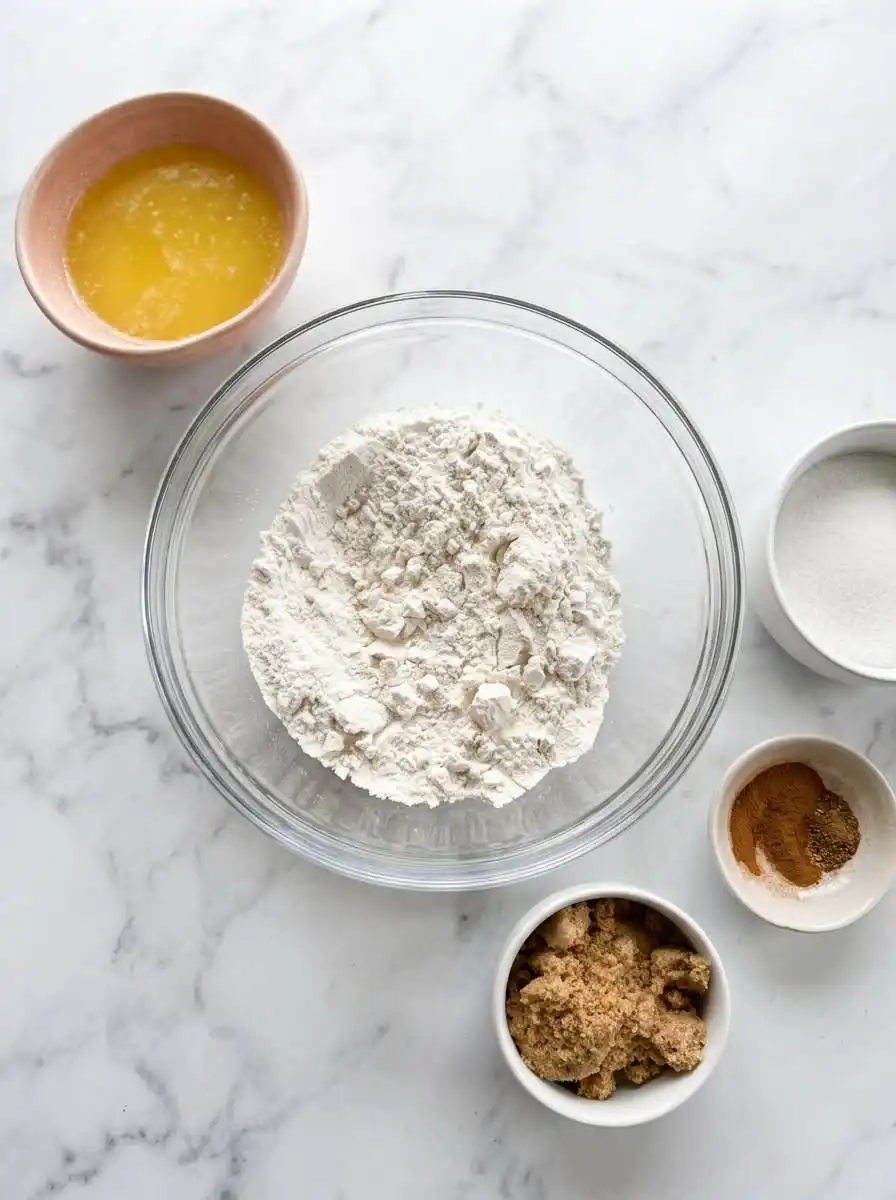
Before lighting the oven, you must assemble and weigh your elements to guarantee exquisite harmony during the bake. Each component is chosen for its specific chemical contribution to the structure and flavor of the crumb. The French principle of mise en place is not a mere suggestion; it is the foundation upon which all successful baking rests.
- All-purpose flour: This provides the moderate gluten network required to support the weight of the streusel without becoming tough or bread-like. By weighing this ingredient carefully, you avoid a dry, heavy structure that collapses under its own weight.
- Unsalted butter: Its high fat content coats the flour proteins, preventing excessive gluten development and yielding a tender, delicate texture. Using quality butter as a non-negotiable standard guarantees a rich flavor profile that margarine cannot replicate.
- Light brown sugar: The natural molasses content adds essential moisture and a deep caramel note that plain sugar cannot achieve. It also interacts with the baking soda to assist with the initial rise.
- Ceylon cinnamon: A refined spice that infuses both the batter and the topping with a warm, complex, and comforting aroma. Unlike common cassia cinnamon, Ceylon offers a subtle woody sweetness that does not overwhelm the delicate dairy notes.
- Room temperature milk: This prevents the melted butter from seizing when mixed, safeguarding the emulsion of your wet ingredients. Cold milk would cause the butter to solidify into tiny wax-like particles, disrupting the uniform distribution of fat.
- Baking powder and soda: These leaveners work in tandem to create the initial lift that sets the airy structure before the flour proteins solidify. The baking soda reacts instantly with the acidic molasses in the brown sugar, while the baking powder provides a secondary rise.
| Ingredient | Why It Matters |
|---|---|
| Unsalted butter | Creates a soft crumb by coating the flour proteins. |
| Brown sugar | Retains moisture and yields a caramel flavor. |
| Ceylon cinnamon | Establishes the classic spiced aromatic profile. |
| Room temperature milk | Safeguards the emulsion of the wet batter. |
The Method, Step by Step
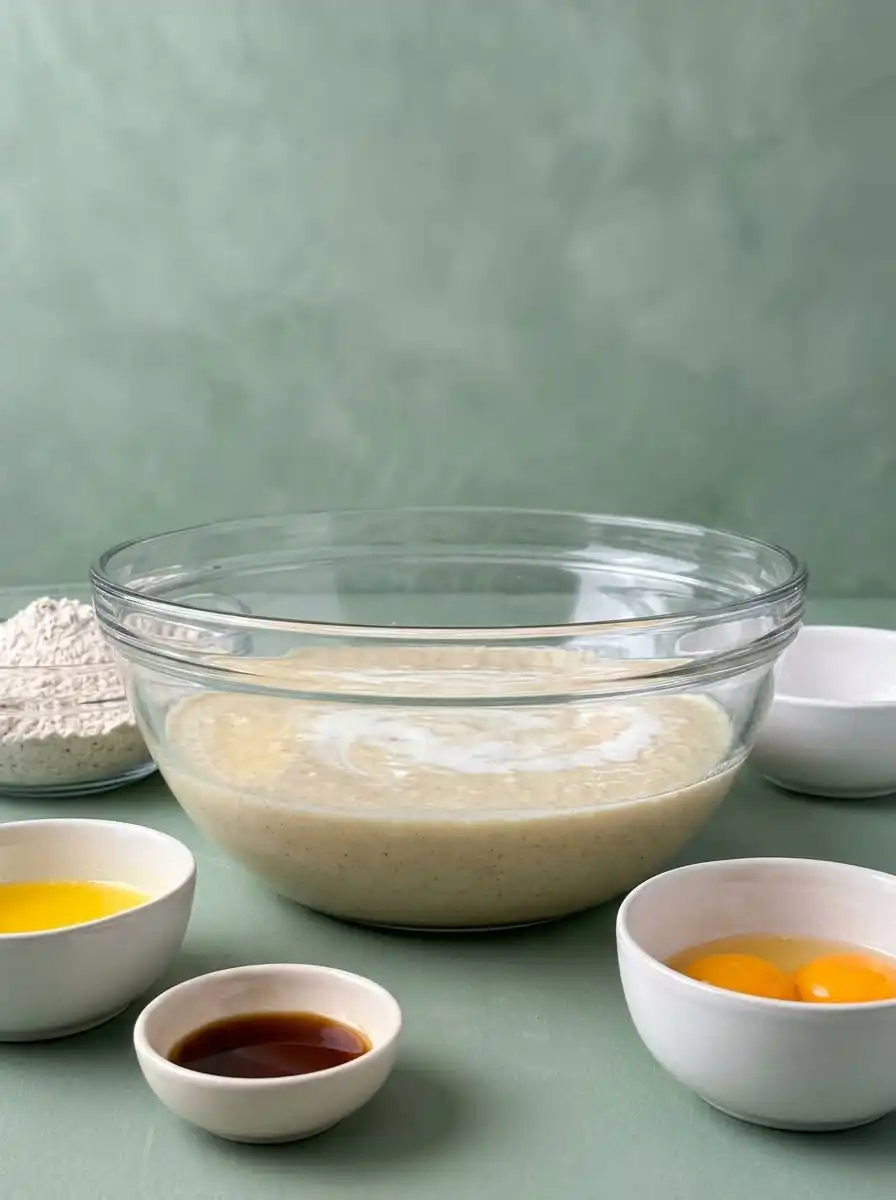
Step 1: Prepare the Streusel Topping
In a small mixing bowl, combine the all-purpose flour, light brown sugar, granulated sugar, and ground cinnamon with a fork until uniform. Gently pour in the melted, slightly cooled unsalted butter, tossing the mixture carefully until medium-sized, distinct clumps begin to form. Avoid over-stirring at this stage, as too much agitation can turn the streusel into a dense, pasty dough rather than light, separate crumbs. Place this bowl into the refrigerator immediately to allow the butter to solidify, which is a crucial step to prevent the topping from melting flat during the bake.
Step 2: Sift and Whisk the Dry Elements
Measure your flour, brown sugar, baking powder, baking soda, ground cinnamon, and salt into a large mixing bowl. Whisk these components thoroughly to distribute the leavening agents evenly and to break up any stubborn clumps of brown sugar. This makes certain that the rise is entirely uniform across all twelve muffins, preventing unsightly peaks or uneven pockets in the final bake. You are preparing a dry nest that will soon welcome the liquid ingredients, so take your time to make certain the blend is completely homogeneous.
Step 3: Emulsify the Wet Ingredients
In a separate medium bowl, vigorously whisk the room temperature milk, eggs, melted butter, and vanilla extract until completely unified. The eggs and milk must be at room temperature to prevent the melted butter from turning into solid flecks upon contact. A smooth, properly emulsified liquid is the key to achieving a cohesive batter with a delicate, even crumb structure. Watch for a uniform pale yellow color with no visible separation of fat or liquid before you stop whisking.
Step 4: Combine the Wet and Dry Batters
Make a well in the center of your dry ingredients and pour in the liquid emulsion all at once. Using a rubber spatula, fold the ingredients together with gentle, sweeping motions, stopping the moment the last trace of dry flour disappears. Overmixing at this juncture will develop the gluten network too much, turning what should be a tender pastry into a tough, rubbery crumb. The resulting batter should look slightly lumpy and thick, which is precisely the texture required to support the heavy streusel.
Step 5: Scoop the Classic Coffee Cake Muffins Batter
Line a standard twelve-cup muffin tin with high-quality paper liners to secure clean release after baking. Using a spring-loaded ice cream scoop, portion the batter evenly among the twelve cups, filling each approximately three-quarters full. Working with an ice cream scoop guarantees equal distribution, which is essential so that every single muffin bakes at the exact same rate. This clean, efficient method keeps the edges of your muffin pan pristine, preventing burnt sugar spots during baking.
Step 6: Apply the Chilled Streusel
Retrieve your chilled streusel from the refrigerator and break up any overly large clumps with your fingertips. Generously sprinkle the cold crumble over the top of each portion of batter, pressing it very gently so it adheres without sinking. The cold butter in the streusel will resist the initial heat of the oven, allowing the muffin to rise before the topping begins to melt. Divide the streusel evenly so that every cup receives a thick, protective blanket of cinnamon-spiced sugar.
Step 7: Bake to a Golden Finish
Slide the muffin tin onto the center rack of your preheated oven at 375°F (190°C) and bake for exactly eighteen minutes. You will know they are finished when a wooden skewer inserted into the center comes out with only a few dry crumbs attached. Let the muffins rest in the hot pan for three minutes before transferring them to a wire cooling rack to prevent moisture buildup on the bottoms. This short pause allows the delicate crumb to set slightly so the muffins do not break apart when handled.
Step 8: Prepare and Drizzle the Icing
While the pastries cool, whisk the sifted confectioners’ sugar and room temperature milk together until a smooth, thick glaze forms. Once the muffins are barely warm to the touch, use a spoon to drape elegant ribbons of icing across the streusel crowns. Allow the glaze to set for ten minutes before serving, which creates a delightful crackling texture with every bite. The final cross-section will reveal a beautiful contrast between the snowy white drizzle and the deep amber crumble.
Where Precision Makes the Difference
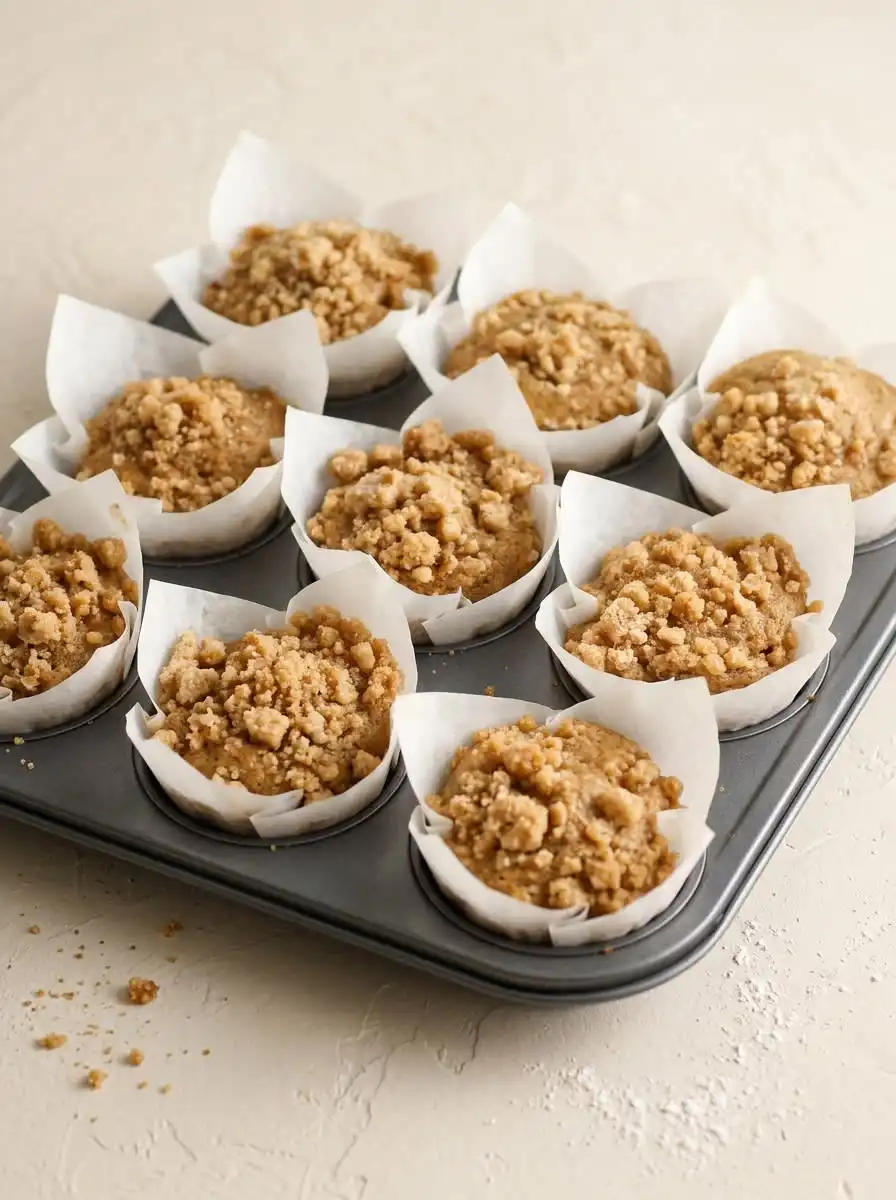
If your streusel melts into a flat, greasy puddle during the bake, it is highly likely that your butter was too hot when mixed, or the crumble was not chilled long enough. Always guarantee the melted butter cools to a lukewarm state before adding it to the dry streusel ingredients, and do not skip the refrigeration step. Chilling the fat allows it to hold its structural integrity while the batter underneath sets, giving you those coveted bakery-style mounds.
Make certain your oven temperature is accurate by using a calibrated independent thermometer hung on the center rack rather than relying on the dial. A few degrees too low will cause the muffins to rise too slowly, resulting in a dense crumb, while a hot oven will scorch the cinnamon before the interior is fully baked.
Always weigh your dry ingredients using a digital kitchen scale for absolute consistency. Scooping flour directly from the bag compresses it, adding up to twenty percent more starch than required, which dries out the crumb and ruins the delicate balance of moisture.
I treat room temperature as an instruction, not a suggestion, because cold dairy will instantly solidify melted butter. This causes the fat to clump together unevenly, preventing it from coating the flour proteins properly and resulting in a coarse, dry muffin texture.
If you find yourself with leftover batter or wish to adapt this technique for different fruits, try baking our peach cobbler muffins for a wonderful variation that uses similar dry-to-wet blending ratios.
To check if your batter is mixed correctly, look for small pockets of flour that are scarcely absorbed. Do not chase a completely smooth batter; a lumpy batter is your friend when baking muffins, as it guarantees a soft, cake-like texture once baked.
For those interested in historical adaptations, you may review this original bakery-style muffin recipe to compare how home baking practices have evolved over time.
Frequently Asked Questions
What is the difference between coffee cake and a coffee cake muffin?
While both share the signature cinnamon-sugar crumble, a traditional coffee cake is baked as a single large cake in a springform or square pan, requiring a longer bake time to set the center. A coffee cake muffin portions this rich batter into individual cups, allowing for rapid heat penetration that yields a higher ratio of crispy exterior to soft interior. This individual format also makes certain that every single serving enjoys an abundant portion of streusel.
How do you keep the streusel/crumble topping from sinking?
Chilling the streusel before baking is the absolute key to keeping it suspended on top of the batter. Additionally, make certain your muffin batter is thick enough to support the weight of the crumble; overmixing can make the batter too fluid, causing the heavy streusel to plunge into the center during the rise. Always sprinkle the crumble gently onto the wet batter rather than pressing it down firmly.
Why is sour cream used in coffee cake muffins?
Though this specific recipe utilizes whole milk, many traditional recipes call for sour cream to introduce both fat and acid. The acid breaks down gluten strands for a tender texture, while the high fat content adds a rich mouthfeel. If you choose to substitute sour cream here, make certain it is full-fat, at room temperature, and used in equal measure to the milk.
How do you make a cinnamon swirl?
To introduce a beautiful spice ribbon, fill each muffin cup halfway with batter, sprinkle a teaspoon of cinnamon-sugar mixture in the center, and cover with the remaining batter. You can then use a wooden toothpick to gently swirl the layers together before adding the streusel topping. This creates an elegant marbled appearance when the muffin is sliced in half.
What is the best baking temperature for muffins?
Baking at 375°F (190°C) is ideal because it provides enough initial heat to rapidly activate the baking powder and soda, creating a dramatic rise. This temperature also guarantees that the exterior turns a beautiful golden brown without drying out the interior of the pastry. Lower temperatures can cause the muffins to bake flat and dry out before they fully rise.
How do you store them so they stay moist?
Store the completely cooled muffins in an airtight container at room temperature with a sheet of paper towel placed on top. The paper towel absorbs any excess humidity that escapes, preventing the crisp streusel topping from turning soft and soggy over the next five days. Avoid refrigerating them, as the cold environment of a refrigerator accelerates starch retrogradation, making the crumb stale much faster.
Considered Variations
For a warm, comforting twist during the autumn months, you may replace half of the ground cinnamon in the batter with a blend of freshly grated nutmeg and ginger. This subtle alteration shifts the aromatic profile toward a cozy spice-cabinet flavor without altering the delicate chemistry of the underlying muffin structure. The ginger provides a sharp brightness that contrasts beautifully with the sweet brown sugar glaze.
If you prefer a richer, more cake-like crumb, you can replace the milk with an equal volume of full-fat buttermilk or sour cream. This increases the acidity of the batter, which softens the gluten network even further, resulting in an incredibly tender crumb similar to our classic banana coffee cake. The increased acidity also activates the baking soda more vigorously, creating a slightly higher rise.
For an elegant aesthetic, you can substitute the simple milk glaze with a rich brown butter icing. Gently toast your butter in a saucepan until it smells nutty and displays small amber flecks, then whisk it into the confectioners’ sugar with a splash of cream to create a deeply complex finish. This introduces a caramelized depth that transforms the classic cinnamon profile into something truly extraordinary.
Finishing and Presenting
These delicate morning pastries are best presented while still slightly warm from the oven, allowing the sweet glaze to catch the light. Arrange them on a footed ceramic cake stand or a clean linen-lined wooden board to emphasize their rustic, handcrafted beauty. Pair each serving with a strong, dark roast coffee or a pot of loose-leaf black tea to balance the sweet cinnamon notes. The heat from the warm muffin will gently release the oils in the cinnamon, filling your breakfast room with a comforting aroma.
For an elegant breakfast or brunch spread, serve them alongside a bowl of fresh, tart berries and whipped crème fraîche. The acidity of the berries cuts through the buttery richness of the crumb, creating a balanced and refined tasting experience. If you are preparing a larger brunch menu, you can read our sour cream peach coffee cake story for inspiration on how to elegantly present spiced bakes to your guests. This adds a beautiful narrative element to your morning hosting duties.
If serving later in the day, you may gently warm each muffin in a 300°F (150°C) oven for five minutes to restore the crispness of the streusel. Slice them vertically with a sharp, serrated knife and spread a thin layer of salted cultured butter across the crumb. The contrast of the cold, salty butter melting into the warm, sweet cinnamon interior is an uncomplicated yet transcendent pleasure.
The Result of Your Care
By approaching these straightforward muffins with the precision of a classic pastry chef, you transform a humble breakfast treat into a truly memorable baking experience. The delicate balance of a tender, spiced crumb and a crisp, buttery topping is the reward of patience and proper technique. Every step, from chilling your streusel to guaranteeing your ingredients are at room temperature, plays a vital role in this success. You will find that these small, deliberate practices yield a muffin far superior to any bakery version.
As you slice through the crisp, glazed crown to reveal the soft crumb within, you will taste the difference that careful baking produces. For more seasonal baking inspiration and classical techniques, feel free to visit our lemon zucchini coffee cake story and see how vegetables can transform batter. It is a wonderful way to expand your repertoire and practice the fundamental principles of cake chemistry.
We would love to see your beautiful bakes and hear about your progress at the kitchen bench. Please share your creations with us on Pinterest and follow our journey on Facebook. Let us continue to build our baking skills together, one precise step at a time.