The aroma of cinnamon-slicked peaches hitting hot butter is the sound of a Southern kitchen waking up, signaling a heavy, golden cake is nearly ready.

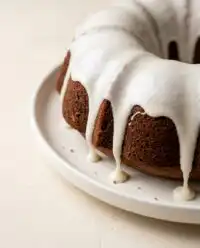
This Old-Fashioned Peach Cobbler Pound Cake Recipe represents the ultimate union between a dense, velvet-crumbed cake and the gooey, spice-laden heart of a classic cobbler. We are discarding the idea that a pound cake must be plain or that a cobbler must be messy, merging them into a single, structurally sound masterpiece. By using a heavy Bundt pan, we create a caramelized crust that protects the juicy fruit pockets hidden within the batter. You are not choosing between two desserts here; you are choosing the specific brilliance of both, engineered for a small-batch mindset that values depth over volume.
The Case for Making This Old-Fashioned Peach Cobbler Pound Cake Recipe
Prep: 25 min · Serves: 4 · Difficulty: Medium
- Dense crumb meets gooey caramelized peach layers.
- Cream cheese base provides unmatched structural integrity.
- Cinnamon butter glaze creates a built-in sauce.
- Bundt format ensures maximum golden exterior surface.
- Small-batch logic yields more flavor per bite.
Tradition noted. Proceeding anyway because this peach cake evolution outshines every standard recipe in the family archives.
Get The Full Cake Recipe
Print
Old-Fashioned Peach Cobbler Pound Cake Recipe
- Total Time: 115 mins
- Yield: 12 servings
Description
This decadent pound cake combines a dense, buttery cream cheese crumb with a hidden layer of caramelized peaches and cinnamon glaze. It is the perfect fusion of a classic Southern cobbler and an elegant, structurally sound Bundt cake.
Ingredients
- 2 cups cake flour
- 1 cup unsalted butter, softened
- 8 oz cream cheese, softened
- 1 1/2 cups granulated sugar
- 1/2 cup sour cream
- 1 tsp vanilla extract
- 4 large eggs
- 2 cups canned peaches, diced
- 2 tbsp brown sugar
- 1 tsp ground cinnamon
- 2 tbsp melted butter
- 2 tsp baking powder
- 1/2 tsp salt
Instructions
- Prepare the pan. Preheat your oven to 325°F (163°C) and thoroughly grease a 12-cup Bundt pan, arranging peach wedges in the base.
- Create cinnamon glaze. Mix melted butter, brown sugar, and cinnamon in a small bowl, then drizzle this mixture over the peach wedges.
- Cream the fats. Beat the softened butter for two minutes, add cream cheese for one minute, then beat in sugar for one minute until light and fluffy.
- Emulsify wet ingredients. Beat in the sour cream and vanilla extract until the mixture is glossy and uniform.
- Add the eggs. Incorporate eggs one at a time, beating thoroughly after each addition and scraping down the sides of the bowl.
- Fold in peaches. Stir in the diced peaches by hand or on the lowest mixer speed until evenly distributed throughout the batter.
- Combine dry elements. Whisk together cake flour, baking powder, and salt, then mix into the batter on low speed until just combined.
- Bake the cake. Pour the batter into the prepared pan, tap to release air, and bake for 80-90 minutes until golden and a toothpick comes out clean.
Notes
- Use a digital kitchen scale to measure your flour accurately to ensure the cake remains light and tender.
- Ensure all cold ingredients like eggs and cream cheese are at room temperature to achieve a stable emulsion.
- Drain canned peaches thoroughly on paper towels to prevent excess moisture from creating soggy pockets.
- Invert the cake onto a cooling rack or platter while slightly warm for the best release from the Bundt pan.
- Prep Time: 25 mins
- Cook Time: 90 mins
- Category: Dessert
- Method: Baking
- Cuisine: Southern
The Lineup
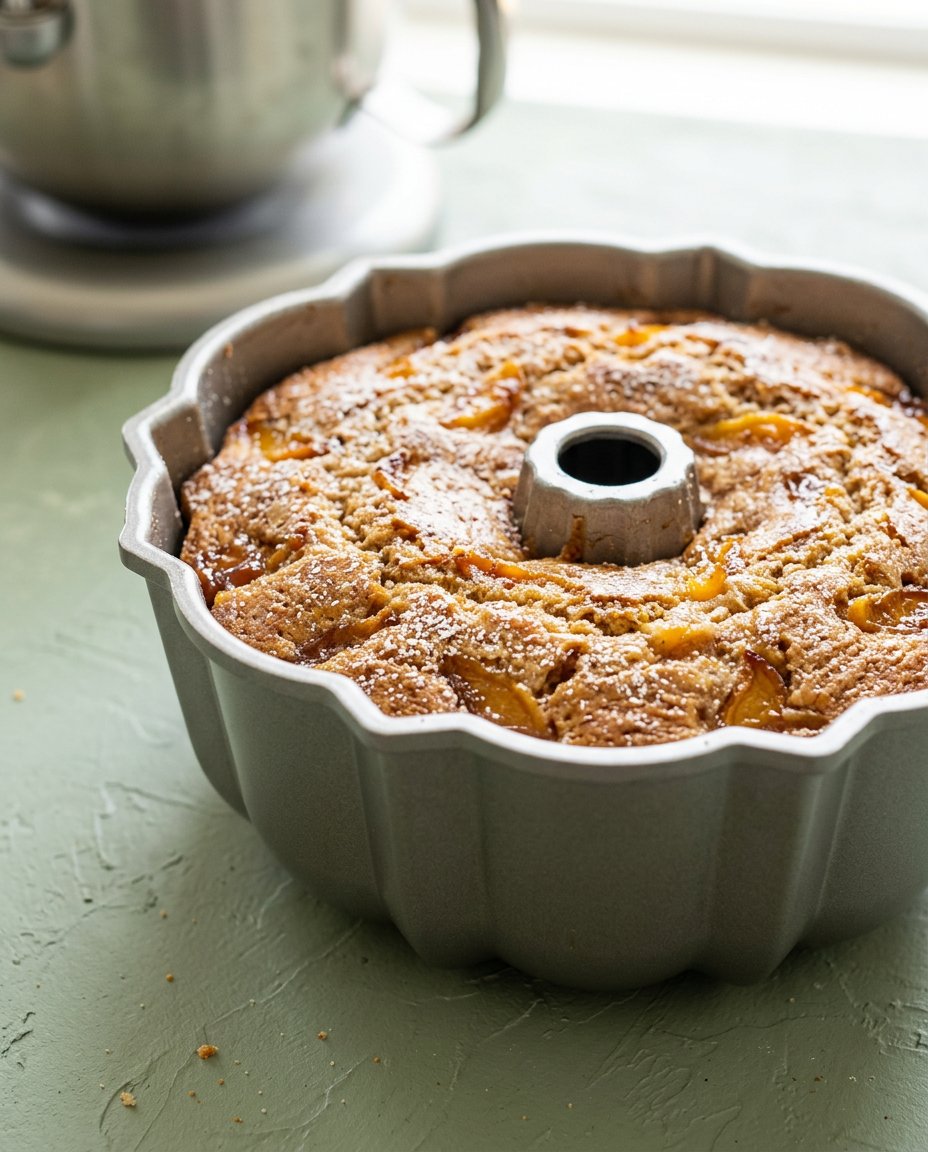
Baking is physics disguised as art, and the specific chemistry of these ingredients determines whether your cake sings or sinks. We use cream cheese for its acidic tang and fat content, which interferes with gluten development to keep the crumb tight and tender. Each component in this lineup serves a structural purpose that goes far beyond mere flavor.
- Cake Flour: Lower protein content than all-purpose flour means less gluten and a much softer, more delicate interior.
- Cream Cheese: This is our secret weapon for a moisture-rich crumb that remains stable even with the addition of fresh fruit.
- Canned Peaches: We use these for consistency in moisture, allowing for a predictable result regardless of the season.
- Sour Cream: The extra acidity tenderizes the batter and adds a subtle sharpness that cuts through the heavy sugar.
- Granulated Sugar: This does more than sweeten; it aerates the butter during the creaming process for a better rise.
- Butter: Always use unsalted to control the seasoning, and ensure it is softened to room temperature for proper emulsification.
| Ingredient | Why It Matters |
|---|---|
| Cake Flour | Creates a fine, tender crumb structure |
| Cream Cheese | Adds density and moisture without weight |
| Sour Cream | Tenderizes gluten and balances sweetness |
| Eggs | Provides the primary lift and structure |
| Cinnamon | Adds warmth to the fruit layers |
The Method
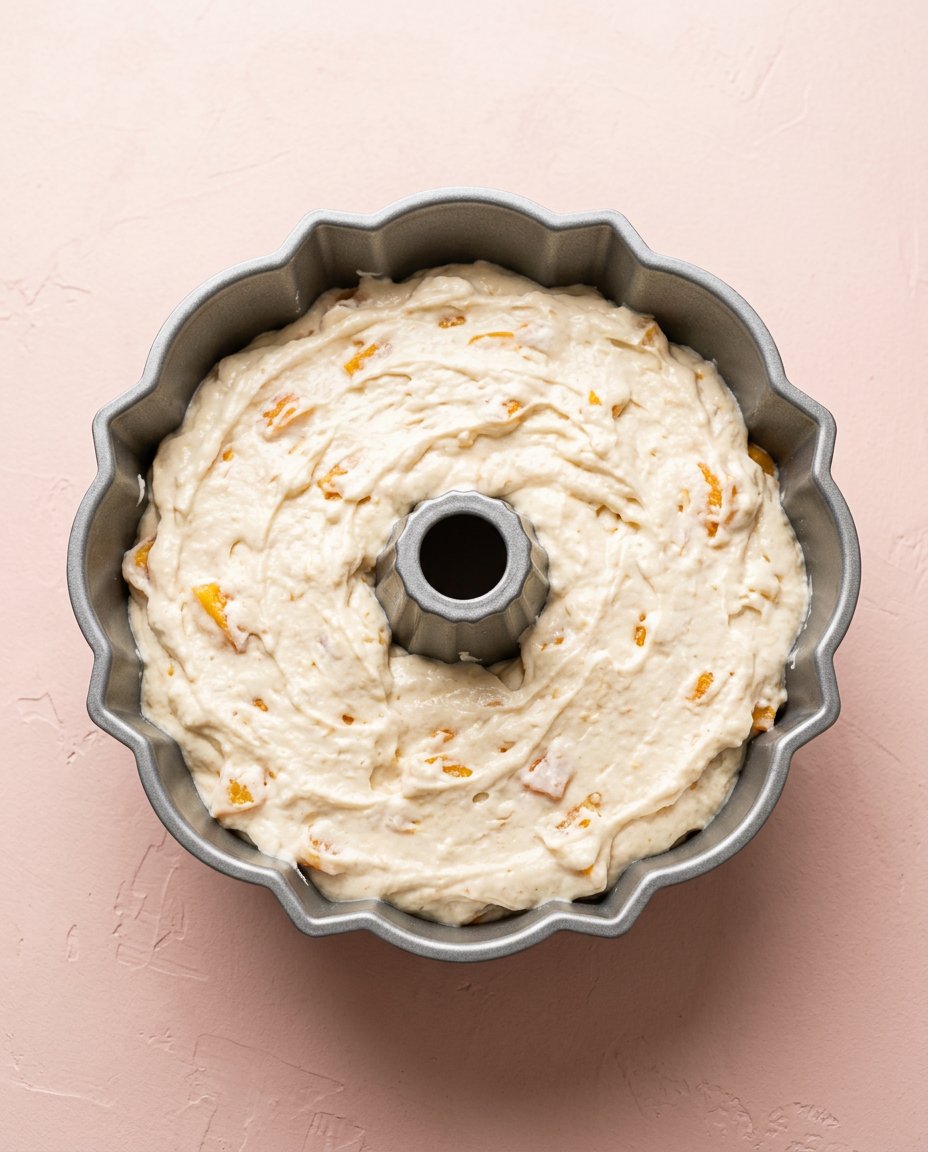
Step 1: Prep the Pan and Peach Base
Start by preheating your oven to 325°F (163°C) to ensure a steady, slow bake that won’t scorch the sugars. You must spray your 12-cup Bundt pan thoroughly, reaching every crevice of the design to prevent sticking. Place the peach wedges in the bottom of the pan in an even circle, creating the visual foundation for your finished cake.
Step 2: Create the Cinnamon Glaze
In a small bowl, combine the melted butter, brown sugar, and ground cinnamon until it looks like liquid gold. Drizzle this mixture directly over the peach wedges in the pan, ensuring they are well-coated. This layer will caramelize in the oven, forming a sticky, cobbler-style topping once the cake is inverted.
Step 3: Cream the Butter and Fats
In your large mixing bowl, beat the softened butter on high speed for exactly two minutes until it turns a pale ivory color. Add the cream cheese and beat for another minute to integrate the two fats into a smooth, aerated base. Follow with the granulated sugar, beating for one more minute to create a light, fluffy texture that feels like soft clouds.
Step 4: Emulsify the Wet Ingredients
Incorporate the sour cream and vanilla extract into the butter mixture, beating until the batter looks glossy and completely uniform. This step builds the moisture profile of the Old-Fashioned Peach Cobbler Pound Cake Recipe. You should notice the aroma shift as the vanilla hits the fats, signaling a well-mixed base.
Step 5: Incorporate the Eggs Individually
Add the eggs one at a time, beating after each addition until the yellow streak disappears entirely into the batter. Scrape down the sides of the bowl frequently to ensure no unincorporated fat remains at the bottom. This process creates a stable emulsion that supports the heavy fruit pieces we will add later.
Step 6: Fold in the Diced Peaches
Add your cubed peaches to the wet mixture and stir them in by hand or on the lowest mixer setting. You want the fruit distributed evenly so every slice of the finished cake contains a burst of peach flavor. The batter will become slightly more fluid as the peaches release a small amount of juice.
Step 7: Combine the Dry Elements
Whisk the cake flour, baking powder, and salt together before adding them to the wet batter. Mix on low speed until the white streaks of flour are barely gone, being careful not to overwork the gluten. Overmixing at this stage leads to a tough, bready texture instead of a tender pound cake crumb.
Step 8: Bake to Golden Perfection
Pour the batter into the prepared pan over the peaches and tap it firmly on the counter to release trapped air. Bake for 80-90 minutes, watching for the edges to pull away slightly from the pan and a toothpick to come out clean. The top should be a deep golden brown, and the kitchen will smell like toasted cinnamon and cooked fruit.
Notes from Testing
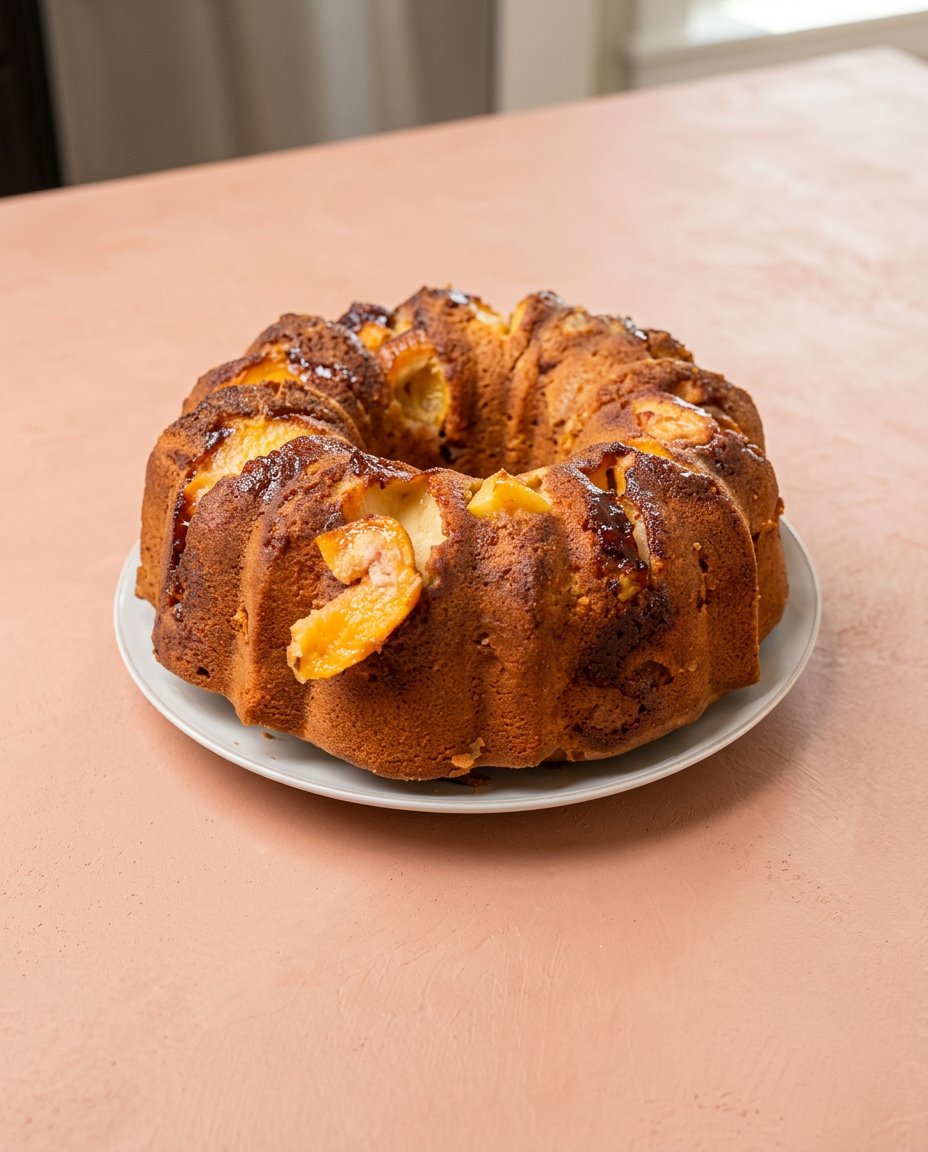
Precision is your best friend when working with a dense batter that contains high-moisture fruit like peaches. Always weigh your cake flour using a digital scale to avoid packing too much into a measuring cup, which leads to a dry result. If your cake feels too dense or doesn’t rise, your butter and eggs were likely too cold, preventing a proper emulsion during the creaming phase.
Make less, mean more by paying attention to the temperature of your ingredients before you even turn on the mixer. Room temperature ingredients bond more effectively, creating a smoother batter that holds air bubbles much better than cold ingredients. If the cake sticks to the pan during inversion, it usually means the pan was not greased well enough or the cake cooled for too long, causing the sugars to harden.
For a deeper flavor profile, consider browning your butter until it smells like toasted hazelnuts before letting it solidify again for creaming. This adds a nutty complexity that complements the sweetness of the peaches and the warmth of the cinnamon. You can find more details on this technique in our guide for an old fashioned oven baked peach cobbler which uses a similar flavor base.
When using canned peaches, drain them thoroughly and pat them dry with a paper towel before cubing. Excessive moisture from the canning liquid can create soggy pockets in the batter, which may cause the cake to fall apart when sliced. For more information on maintaining fruit integrity in baked goods, you can consult professional fruit preparation techniques to ensure your cake structure remains sound.
If your cake develops a large crack on the top, do not worry; that is data telling you the oven was venting steam correctly. In a Bundt pan, the bottom becomes the top, so any surface imperfections will be hidden once you flip the cake onto a serving platter. The internal temperature of a perfectly baked pound cake should hover around 210°F (99°C) for the best balance of moisture and set structure.
Frequently Asked Questions
Can I use fresh peaches instead of canned for this recipe?
Yes, you can use fresh peaches, but ensure they are peeled and fully ripe for the best flavor. Since fresh peaches vary in moisture content, you may need to toss them in a tablespoon of flour before adding them to the batter to prevent them from sinking. Blanching them quickly in boiling water makes the peeling process much faster and cleaner.
Why did my pound cake turn out heavy and gummy?
A gummy texture usually results from overmixing the batter after the flour has been added, which develops too much gluten. It can also happen if your baking powder is expired or if the oven temperature was too low, preventing the cake from rising properly. Ensure you mix only until the flour is just incorporated to maintain a tender crumb.
How should I store this peach cobbler pound cake?
Store the cake in an airtight container at room temperature for up to two days, or in the refrigerator for up to five days. Because of the high fruit and cream cheese content, refrigeration is often safer to prevent spoilage in humid environments. Always let the cake come back to room temperature before serving to restore its soft texture.
Can I freeze this cake for later use?
This cake freezes beautifully if wrapped tightly in plastic wrap and then a layer of aluminum foil. It will stay fresh in the freezer for up to three months. Thaw it overnight in the refrigerator and then let it sit on the counter for an hour before slicing to ensure the fats have softened correctly.
What if my Bundt pan is smaller than 12 cups?
If using a smaller pan, do not fill it more than two-thirds full, or the batter will overflow and create a mess in your oven. You can bake the remaining batter in a small loaf pan or as muffins. Adjust the baking time downward for smaller vessels, checking for doneness at the 25-minute mark for muffins or 45 minutes for a loaf.
How do I prevent the peaches from sticking to the bottom of the pan?
The combination of generous nonstick spray and the butter-sugar glaze usually prevents sticking. However, you must let the cake cool in the pan for exactly one hour before inverting it. If you try to flip it too soon, the cake is too fragile; if you wait too long, the sugar glaze will act like glue and lock the peaches to the metal.
Rebel Swaps
While the classic cinnamon and peach combination is hard to beat, you can easily adapt this recipe to suit the seasons. Try swapping the peaches for fresh nectarines or even plums for a sharper, more tart flavor profile that cuts through the richness of the cream cheese. If you prefer a warmer spice profile, replace half the cinnamon with ground ginger or a pinch of cardamom to provide a sophisticated edge.
For those who enjoy a slower process, you might look into a slow cooker peach cobbler adaptation if you want the fruit to break down even further. You could also swap the vanilla extract for almond extract, which emphasizes the stone fruit flavors and adds a professional pastry shop aroma to the kitchen.
If you find yourself without cake flour, you can create a substitute by removing two tablespoons of all-purpose flour from every cup and replacing them with cornstarch. This lowers the protein content and helps mimic the tender crumb of the original recipe. Small batch, full conviction means experimenting with what you have on hand to find the version that works for your specific palate.
The Final Call
Serving this peach cobbler pound cake is all about highlighting the contrast between the dense cake and the soft, jammy fruit. A dollop of unsweetened whipped cream provides a light, airy counterpoint to the richness of the butter and cream cheese. For a more indulgent presentation, drizzle warm caramel sauce over each slice just before serving to lean into the cobbler theme.
This cake is exceptional when served slightly warm, which softens the fats and makes the crumb feel even more luxurious. If you are serving it for a brunch or a formal gathering, a side of fresh raspberries can add a pop of color and a necessary hit of acid. The visual drama of the cross-section cut is what truly reveals your judgment as a baker, showing off those beautiful orange fruit pockets against the golden crumb.
What You Just Proved
You have just demonstrated that classic Southern flavors can be refined into a sophisticated, structurally sound dessert without losing their soul. This recipe is a starting point, and you are the variable that brings it to life with your own touch. Whether you serve it at a backyard gathering or keep it as a private kitchen experiment, the results speak for themselves in every dense, buttery bite.
If you enjoyed this fusion of styles, you might want to try the legendary paula deen peach cobbler to see how a different ratio of ingredients changes the final experience. Baking is a constant journey of discovery, and every cake you pull from the oven is a new piece of data in your archive. Share your results and let us know how your rebel swaps turned out.