We are told that cakes require ovens, flour, and sugar to exist, but that traditional baking boundary collapses the second you bring a chef knife to a cold summer melon.

Slicing into a heavy, butter-laden cake during a July heatwave feels less like a tactical victory and more like an outright error. This Classic Watermelon Fruit Cake throws out the standard baking playbook in favor of pure, hydrating drama. We are building a multi-tiered architectural wonder entirely out of raw fruit, structural precision, and zero flour. It is cold, sharp, and structurally sound enough to command any dessert table without making anyone feel weighed down.
The Case for Making This Classic Watermelon Fruit Cake
Prep: 25 min · Serves: 10 · Difficulty: Easy
- Zero oven time required for hot summer days
- Stunning multi-tiered centerpiece that surprises every guest
- Naturally gluten-free dessert option without expensive substitutions
- Hydrating and light alternative to heavy holiday pastries
- Endless structural customization with seasonal fresh berries
Baking in the peak of summer requires a strategic retreat from the oven. This raw alternative provides a refreshing solution while preserving the ceremonial grandeur of a tiered centerpiece. It challenges the idea that celebration requires flour and buttercream, proving that natural ingredients can perform just as beautifully.
Designing a Classic Watermelon Fruit Cake allows you to showcase the raw beauty of ripe produce without any artificial colorings. If you want a stunning cake with fruit that actually cools you down, this tiered masterpiece is your optimal summer project. It demands zero baking but delivers maximum visual impact on a warm afternoon.
Tradition noted. Proceeding anyway. This is the recipe that shifts how your guests view summer entertaining forever.
Get The Full Cake Recipe
Print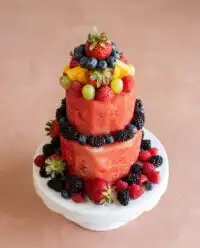
Classic Watermelon Fruit Cake
- Total Time: 2 hours 25 mins
- Yield: 10 servings
- Diet: Gluten-Free, Vegan, Raw
Description
Create a stunning, architectural dessert using only fresh, chilled fruit that serves as the perfect centerpiece for hot summer days. This flourless, tiered watermelon creation offers a crisp and hydrating alternative to traditional baked cakes.
Ingredients
- 2 large seedless watermelons
- 2 pints fresh strawberries
- 1 pint blueberries
- 1 pint blackberries
- 3 large kiwis
- 1 bunch fresh mint leaves
Instructions
- Stabilize your melons. Slice off the top and bottom ends of the watermelons to create flat, parallel surfaces, ensuring they sit firmly on your cutting board.
- Carve the layers. Stand the melons upright and slice away the rind following the curve of the fruit, then smooth the sides until you have clean, ruby-red cylinders.
- Secure the structure. Stack the smaller cylinder onto the larger base and insert three wooden dowels or skewers through the center to lock the tiers together.
- Prepare the fruit. Wash and thoroughly dry the berries and kiwi, then slice the strawberries into halves and the kiwi into thin, symmetrical discs.
- Decorate the exterior. Press the strawberry halves around the seam between tiers, then arrange the remaining berries and kiwi slices across the surface using toothpicks for secure placement.
- Chill and serve. Refrigerate the cake for at least two hours, then garnish with fresh mint leaves and slice into wedges using a hot knife.
Notes
- Ensure the watermelon is bone-dry after carving to help the fruit garnishes adhere properly.
- Use a hot knife when slicing the final cake to ensure clean, professional-looking wedges.
- Select heavy watermelons with a prominent yellow field spot to guarantee optimal ripeness and density.
- Place heavier fruit garnishes with cut-in-half toothpicks to prevent them from sliding off vertical surfaces.
- Prep Time: 25 mins
- Cook Time: 0 mins
- Category: Dessert
- Method: Raw Assembly
- Cuisine: Modern Summer
What You Actually Need
Selecting the right fruit is not just a routine shopping trip; it is an engineering mission. The success of this design depends on the structural integrity of your fruit bases and the contrasting colors of your decorative toppings. We want heavy, dense produce that can withstand carving without weeping excessive juices.
- Seedless Watermelon: The structural foundation of our tiered design; select heavy melons with a prominent yellow field spot.
- Fresh Strawberries: Excellent for creating bright borders and hiding structural seams between the tiers.
- Blueberries and Blackberries: These dark, spherical fruits provide contrasting shadows and rich depth to our surface patterns.
- Fresh Kiwi: Sliced thin, these green discs offer a tart contrast to the sweetness of the melon.
- Fresh Mint Leaves: The final herbaceous touch that mimics delicate pastry scrollwork while adding a cooling aroma.
| Ingredient | Why It Matters |
|---|---|
| Seedless Watermelon | Offers structural integrity and clean carving lines for the tiered base. |
| Mixed Berries | Fill negative space and add diverse colors to the carved surfaces. |
| Kiwi Slices | Provide geometric contrast and a sour pop that balances the sweet melon. |
| Fresh Mint | Delivers visual texture and a refreshing aroma that complements the raw fruit. |
The density of your watermelon determines how clean your cuts will be when carving the tiers. Seedless varieties are preferred here because they lack the hollow seed pockets that can weaken the structure under pressure. When buying, tap the melon; a deep, hollow sound indicates a crisp interior, while a dull thud warns of soft flesh that will weep juice rapidly.
Selecting your accent berries requires a similar eye for firmness. Avoid overripe berries that easily bruise or leak juice onto your clean melon canvas. We are looking for bright, firm strawberries and plump blueberries that act as solid decorative elements rather than wet paints.
Let’s Bake
Step 1: Selecting and Stabilizing Your Melons
Place your first watermelon flat on a sturdy cutting board. Feel its weight and look for the flat side that naturally rests on the table without rocking. Use a sharp chef knife to slice off both the top and the bottom ends, revealing the deep red flesh inside. This creates two flat, parallel surfaces that will keep your base rock-solid on the platter.
A dull knife is your biggest enemy when working with thick melon rinds. Keep your non-dominant hand curled in a protective claw grip while guiding the blade through the tough green skin. If the melon is wobbling, trim another millimeter off the bottom until it sits completely still on the wood.
Step 2: Carving the Classic Watermelon Fruit Cake Layers
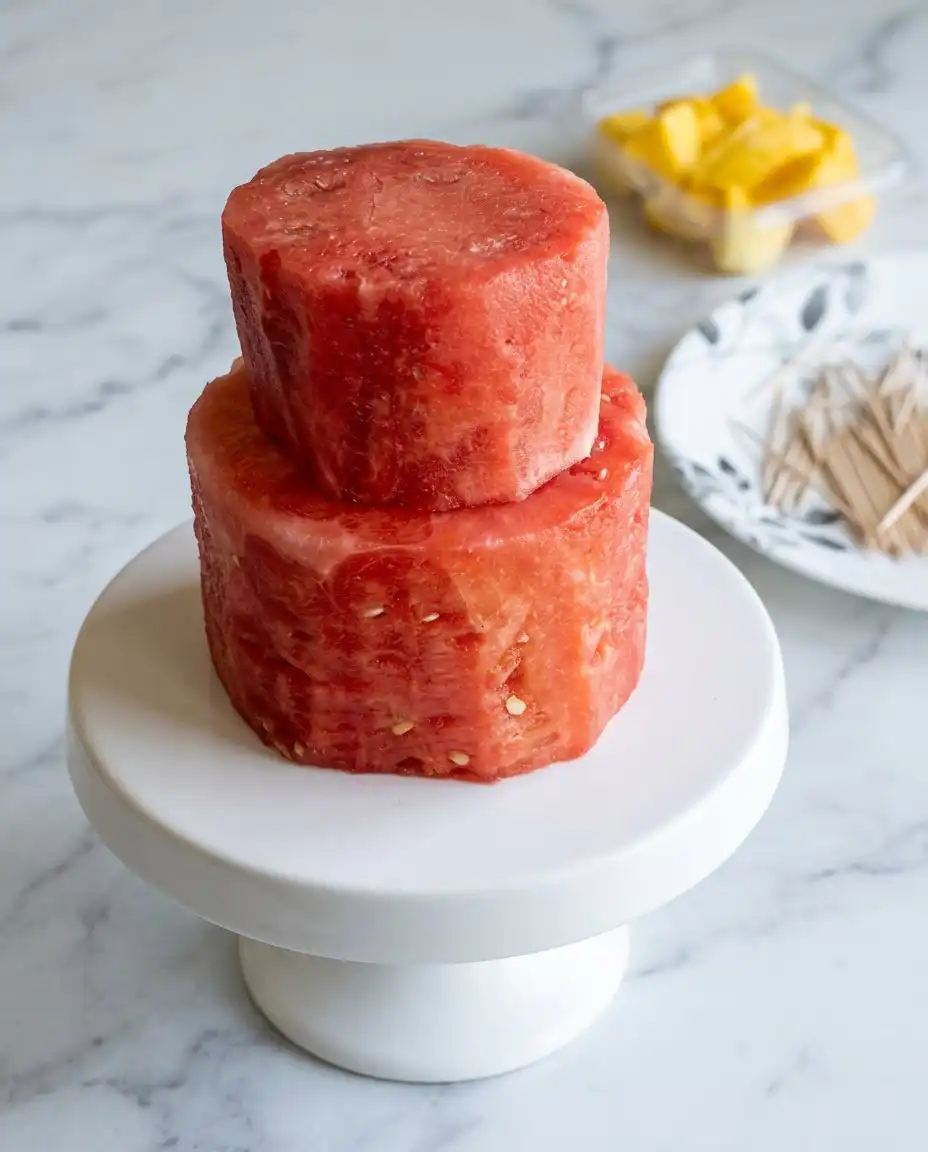
Stand the watermelon upright on one of its freshly sliced flat ends. Position your knife at the boundary where the white pith meets the red flesh, and glide it downward following the curve of the fruit. Repeat this around the entire circumference until you have a clean, rindless cylinder. Use smooth, shallow strokes to polish the sides, removing any remaining white spots until you see a uniform ruby surface.
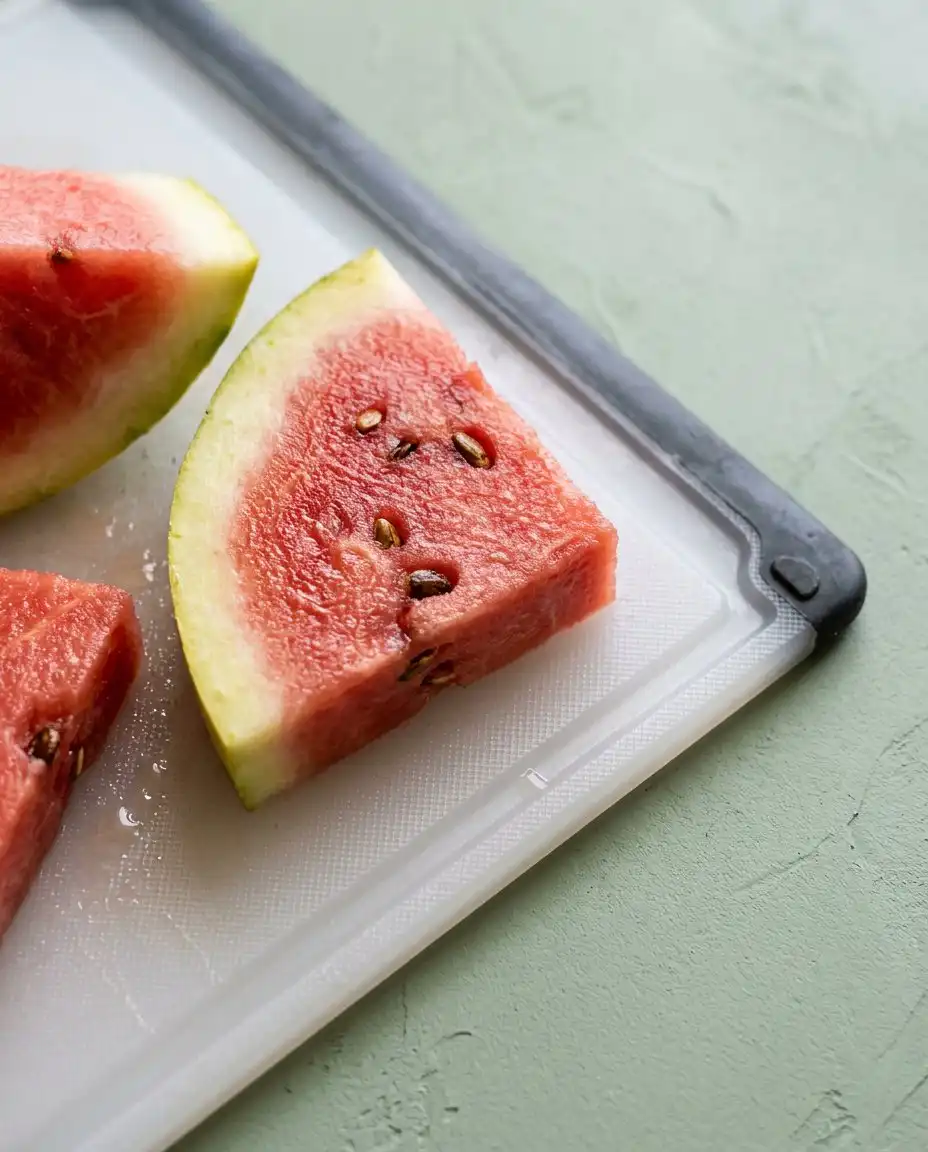
This carving stage is where you discover the visual drama of a cross-section cut. Watch for the color transition from pale white rind to deep pink flesh; this boundary tells you exactly where your knife needs to travel. Take your time to shave away any uneven ridges, smoothing the exterior so your tiers look like polished marble.
Step 3: Aligning and Securing the Tiered Structure
Repeat the carving process with your second, smaller watermelon, making sure this cylinder is two to three inches narrower than the base layer. Place your larger watermelon cylinder on your serving platter, then center the smaller cylinder directly on top. Insert three wooden dowels or thick skewers through both tiers from the top down, cutting them flush with the surface to prevent the top tier from shifting.
Assemble your Classic Watermelon Fruit Cake with structural balance in mind. Ideally, your top tier should weigh no more than half of your bottom base to prevent structural collapse. Press the skewers down firmly until they bite into the bottom board, locking the two pieces into a single, unyielding unit.
Step 4: Prepping the Fruit Accents
Wash your assorted berries and kiwi in cold water, then dry them completely on clean paper towels. Slice the strawberries into even halves, appreciating the bright white core contrasting with the red outer flesh. Peel the kiwi and cut it into thin, symmetrical discs, noticing how the black seeds form a natural radial pattern. Make sure all fruit is bone dry before assembly, as water drops will prevent them from adhering nicely to the melon base.
The tactile feedback of dry fruit is essential for the next step. If your berries are wet, they will slide off the slick melon walls like melting ice. Let them sit on dry towels while you prepare the remaining toppings, making sure every berry is fully primed for adhesion.
Step 5: Applying the Top and Border Decorations
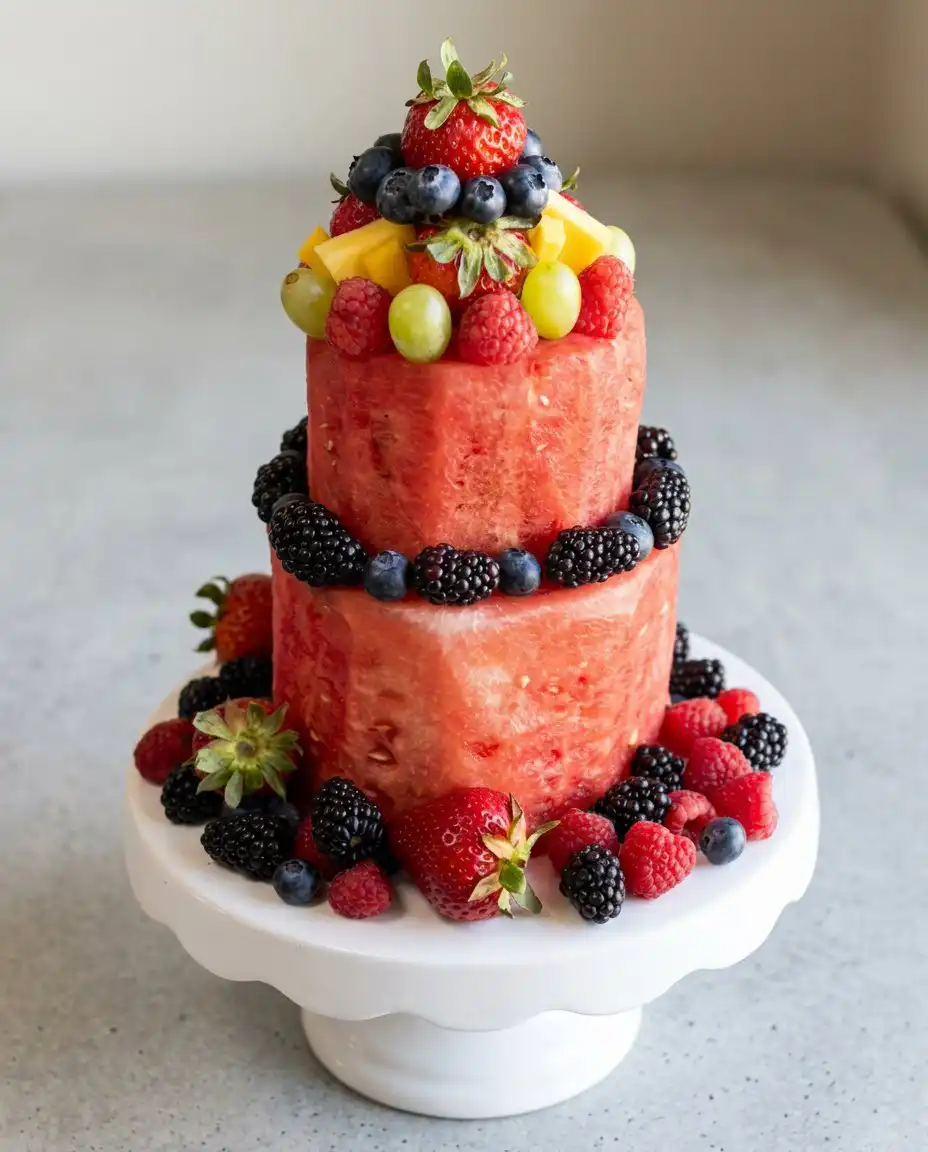
Press your strawberry halves, cut-side down, around the seam where the upper tier meets the lower base to hide the transition line. Arrange the remaining blackberries, blueberries, and kiwi slices across the top surface, starting from the center and working outward in concentric rings. Use wooden toothpicks to pin heavier fruit pieces to the vertical sides of the cake if you want a cascading garland effect.
As you press the berries into the flesh, pay attention to the colors and textures. Place dark blackberries next to bright green kiwi slices to create contrast that catches the light. This is not random stacking; it is a deliberate mosaic where each piece has a structural and visual role.
Step 6: Chilling and Final Presentation
Slip the completed masterpiece into the refrigerator for at least two hours before your guests arrive. As the cold air chills the melon, the fruit will firm up slightly and the natural sugars will concentrate, making the flavors pop. Shortly before carrying it to the table, tuck fresh mint leaves into the crevices between the berries to add visual depth and a sharp, herbaceous aroma.
When you finally slice into the cake, you want clean, distinct layers. A long, thin slicing knife dipped in hot water is the secret tool for cutting clean wedges without squishing the berries. Serve each cold slice immediately on chilled plates to keep the refreshing temperature intact.
The Details That Matter
If your melon tiers leak an excessive amount of juice and pool on the serving platter, here is why and how to fix it. Watermelon is over ninety percent water, which naturally drains when the cellular walls are cut. To solve this, let your carved melon cylinders drain on a wire rack for fifteen minutes, then pat them completely dry with paper towels before stacking and decorating.
Standard toothpicks are your secret structural weapon when adding heavy fruits to the vertical sides. Instead of trying to balance heavy berries on a slick vertical surface, snap round toothpicks in half and use them as hidden pegs. Slide the berry onto the exposed tip, leaving the wood completely hidden while making sure your design stays intact during transport.
Do not guess when buying your watermelons; look for concrete physical indicators of ripeness. A heavy weight relative to its size indicates a high water content, which means sweet, crisp flesh. Avoid melons with soft spots or dull, pale skins, as these are signs of overripeness that will result in a mushy cake base.
Keep your banana or apple accent slices from turning brown by applying a light coating of citric acid. Using fruit fresh on your sliced garnishes makes sure that your colors remain vivid throughout the entire party. This simple step prevents oxidation, keeping your tiered presentation looking freshly assembled even after hours on display.
Always use a long, sharp chef knife rather than a small utility knife for the primary carving. A long blade allows you to make single, continuous cuts from top to bottom, resulting in smoother sides and fewer jagged ridges. Keep your blade perpendicular to the cutting board at all times to prevent your tiers from leaning.
For additional carving techniques and standard dimensions, you can reference the official watermelon carving and preparation standards. This resource provides excellent visual guidance for managing large melons safely. Clean the blade after each pass to maintain a flawless presentation on every single plate.
Frequently Asked Questions
Can I carve and assemble this melon cake a day in advance?
It is best to carve the melon bases up to twenty-four hours ahead, but store them separately wrapped in paper towels to absorb excess juice. Assemble and decorate the tiers with berries no more than four hours before serving. This prevents the delicate topping fruits from sliding off or getting soggy from the leaking melon juice.
What is the best way to keep the tiers from sliding off each other?
Insert three wooden dowels or thick bamboo skewers straight down through the center of the stacked tiers. Cut the skewers flush with the top surface so they remain invisible to your guests. These wooden pegs lock the layers together, providing structural stability during transport and slicing.
What can I do with all the leftover watermelon scraps from carving?
Save all the leftover watermelon flesh and rind pieces for other summer recipes. You can blend the red scraps into refreshing summer drinks, freeze them for smoothies, or chop them into a simple fruit salad. The white rinds can even be pickled with vinegar, sugar, and spices for a traditional Southern treat.
Can I freeze this watermelon cake to make it last longer?
Freezing is not recommended for this style of raw fruit cake. Watermelon has a high water content, and freezing destroys its cellular structure, turning the crisp flesh into mush when thawed. For the best texture, always store leftovers in the refrigerator and consume them within three days.
Is there a way to attach fruit to the sides without using toothpicks?
You can use a thick spread like coconut whipped cream or greek yogurt as a natural edible glue. Smear a small dollop on the back of each berry before pressing it onto the carved melon surface. This method works well for light berries, though heavier fruit slices will still require the physical support of wooden pegs.
Do I really need two separate watermelons for this recipe?
You need two melons to get two tiers with different diameters while maintaining a tall, proportional look. Trying to cut two distinct tiers from a single watermelon usually results in very short, stubby layers. Buying two medium-sized melons gives you plenty of height and leaves you with delicious scraps for blending.
How can I make sure I am buying a sweet and ripe watermelon?
Look for a large, creamy yellow spot on the bottom of the melon, which indicates where it rested on the ground while ripening in the sun. If the spot is white or pale green, the melon was picked too early and will lack sweetness. Additionally, choose a melon that feels unusually heavy for its size, indicating a high water content.
Rebel Swaps
If you want to trick your guests into thinking they are eating a traditional baked dessert, coat the entire exterior in a thick layer of coconut whipped cream. Once frosted, the melon is completely concealed, creating a spectacular surprise when the first slice is cut. You can find more inspiration for this style by reading the fresh watermelon layer cake story which details how to handle wet bases under heavy frosting.
For those who prefer a sharp contrast to the sweet melon, dust the finished cake with a mixture of fine sea salt, chili powder, and lime zest. This Mexican-inspired variation cuts through the high sugar content of the fruit, offering a savory kick that pairs beautifully with cold mint. The recipe is a starting point. You are the variable.
If you want a glossy, pastry-chef finish on your berries, brush them with a warm honey and lime juice reduction. This glaze seals the cut surfaces of the berries, preventing them from drying out in the refrigerator while adding a brilliant shine. Apply it gently with a pastry brush immediately before serving to avoid dislodging your delicate fruit patterns.
Cutting, Plating, Presenting
Presenting this tiered masterwork requires an equally impressive serving platter that can handle a bit of moisture. Choose a wide, lip-rimmed plate to catch any natural juices that pool at the base of the cake during your event. Surround the bottom edge with extra mint leaves and remaining kiwi slices to create a fluid transition from the platter to the fruit.
When it is time to serve, use a long, thin serrated knife to cut clean, wedge-shaped slices. Guide the blade slowly from the top tier down through the base, making sure each guest gets an ideal portion of both layers. If you are throwing a children’s party, you can read the smash cake made watermelon story to see how toddlers interact with this texturally unique style of raw dessert.
Pair each slice with a scoop of lime sherbet or a dollop of lightly sweetened coconut cream to round out the plate. The tartness of the sherbet cuts through the sweet, watery melon, offering a sophisticated contrast of textures and temperatures. Serve immediately on chilled plates to keep the entire experience crisp, clean, and incredibly refreshing.
What You Just Proved
By carving and assembling this tiered marvel, you have proved that baking is not defined by flour, yeast, or hot ovens. You have transformed raw summer produce into a structured, elegant dessert that challenges traditional pastry boundaries. It is a bold, refreshing statement that proves sophisticated design can exist in the simplest of ingredients.
If you find yourself missing the warmth of a traditional oven after this raw experiment, you can always pivot back to our oven-baked classics. Consider trying our fresh strawberry sheet cake for your next gathering, which delivers a tender crumb alongside that same bright, berry-centric flavor profile. Whichever path you choose, remember that recipes are mere blueprints, and your kitchen is the ultimate testing ground.
Share your gorgeous tiered fruit creations with our global baking community online. Tag us on Pinterest, share your carving victories on Facebook, or upload your assembly videos to TikTok so we can see your designs. Let us keep rewriting the rules of dessert together, one slice at a time.