Before you cream your butter, pause and understand that rushing the creaming process will deny your mango cake the precise, lofty rise it deserves.

The Mango Fresh Fruit Topped Cake is a masterclass in the delicate balance of moisture and structural integrity. Home bakes often suffer from dense, soggy crumb structures when fresh fruit is integrated directly into the batter. This recipe resolves that challenge by balancing pureed mango with a sturdy yet tender pound cake crumb.
To achieve this, we rely on precise emulsion techniques that prevent the fat and fruit acids from separating. When bakes are executed with care, the fruit elements lift the cake rather than weighting it down. This is not a casual cake to be thrown together in haste, but a refined project for the patient hand.
Every slice reveals a clean, golden crumb beneath a radiant crown of fresh, glistening mango slices. The contrast between the rich, buttery crumb and the clean acidity of the fruit is exceptionally satisfying. It represents the quiet reward of bakes done with complete intention and poise.
Why Technique Matters for This Mango Fresh Fruit Topped Cake
Prep: 15 min · Serves: 8 · Difficulty: Easy
- Establishes a light, velvety, beautifully balanced crumb.
- Showcases the pure brilliance of fresh mangoes.
- Employs classical emulsion techniques for lasting moisture.
- Creates a striking, refined table centerpiece effortlessly.
- Supports delicate fruit without becoming overly dense.
Achieving a flawless result in pastry requires us to look beyond the basic list of ingredients to the physics of the bake itself. By understanding how fat wraps around sugar crystals, we gain the ability to host moist fruit puree without compromising height. This recipe guides you through that essential transition from simple mixing to true emulsion mastery.
When you understand these principles, you can confidently prepare any cake with fruit with consistent success. This approach transforms a simple weekend project into a reliable blueprint for all your future bakes. It is the steady hand, not the rapid pace, that guarantees an ideal crumb.
This precise cake will change how you approach fruit-based batters forever.
Get The Full Cake Recipe
Print
Mango Fresh Fruit Topped Cake
- Total Time: 2 hours 45 mins
- Yield: 8 servings
Description
This refined mango pound cake balances a rich, buttery crumb with the bright, tropical acidity of fresh Alfonso mango puree. Master the art of emulsion to create a lofty, moist masterpiece perfect for a centerpiece dessert.
Ingredients
- Non-fibrous mangoes (Alfonso or Kesar)
- Unsalted butter, softened to 68°F
- Granulated sugar
- Large eggs, room temperature
- Coconut milk
- Canola oil
- Coconut extract
- All-purpose flour
- Fine salt
- Baking powder
- Baking soda
Instructions
- Prepare the oven. Preheat your oven to 325°F and grease a seven-inch round baking pan, dusting it lightly with flour.
- Puree the mangoes. Peel and process fresh mangoes into a smooth, lump-free puree, adding a little water if necessary to reach a pancake-batter consistency.
- Cream butter and sugar. Beat softened butter and sugar in a stand mixer for five minutes until pale, aerated, and smooth.
- Emulsify wet ingredients. Add eggs one at a time, then incorporate coconut milk, oil, extract, and half the mango puree while mixing on medium speed.
- Sift dry ingredients. Combine flour, salt, baking powder, and baking soda in a separate bowl to ensure even aeration and distribution.
- Fold batter gently. Alternately fold the dry ingredients and remaining mango puree into the wet mixture using a spatula until just combined.
- Bake the cake. Transfer to the prepared pan and bake at 325°F for 65 to 70 minutes until a skewer inserted in the center emerges clean.
- Cool the cake. Allow the cake to rest in the pan for five minutes before releasing onto a wire rack to cool completely for two hours.
Notes
- Ensure all ingredients are at room temperature to prevent the butter emulsion from breaking during mixing.
- Use a food processor rather than a high-speed blender to keep the mango puree consistent without incorporating too much air.
- Avoid over-mixing once the flour is added to maintain a light, tender crumb structure.
- Resting the cake overnight before serving allows the moisture from the mango puree to distribute evenly for the best texture.
- Prep Time: 15 mins
- Cook Time: 70 mins
- Category: Dessert
- Method: Baking
- Cuisine: Tropical Fusion
The Mise en Place
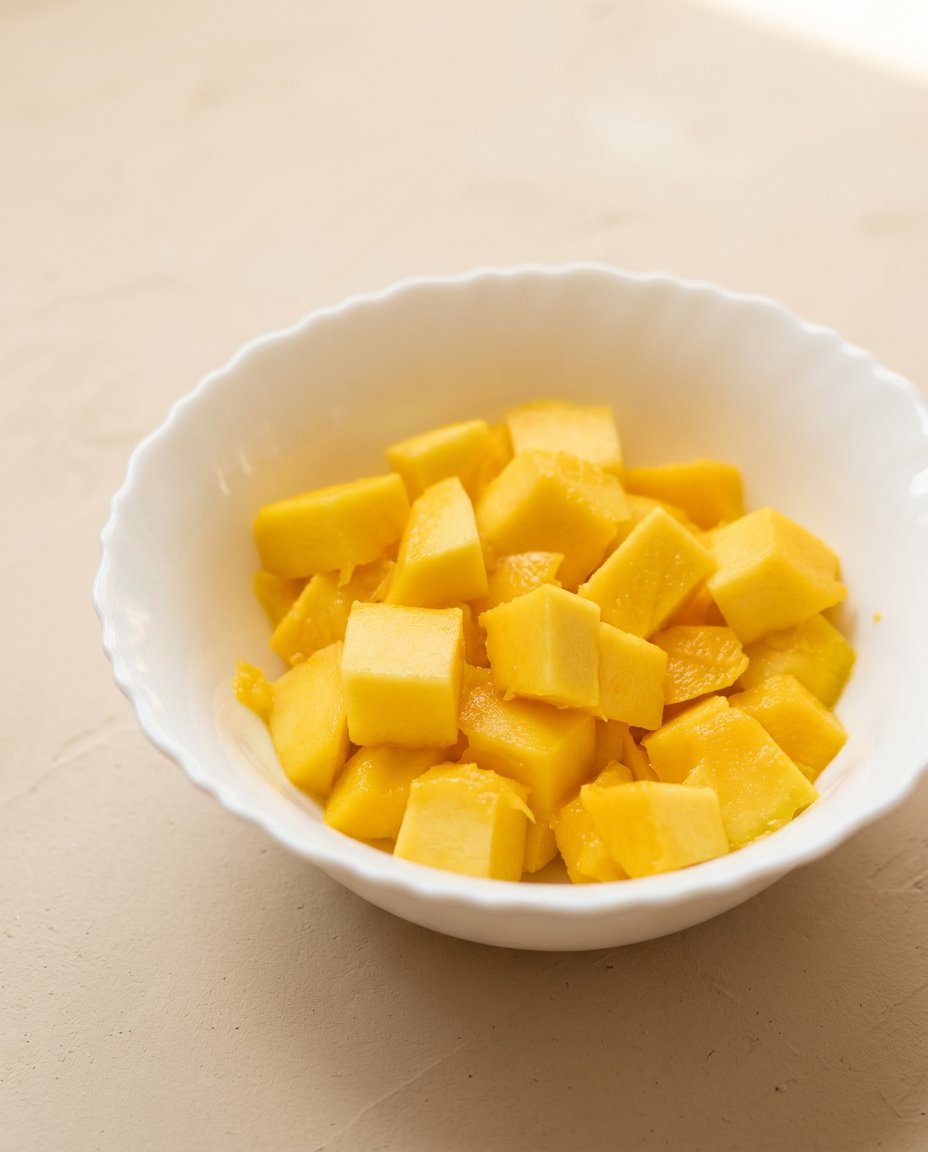
A beautiful bake is always built on a foundation of meticulously prepared, room-temperature ingredients. Having your mise en place fully organized prevents errors and allows you to focus entirely on the physical cues of the batter. Every element in this recipe has been selected for its specific chemical contribution to the final structure.
- Alfonso or Kesar Mangoes: These specific varieties offer a deep, perfume-like sweetness and a completely smooth pulp free from fibrous threads.
- Unsalted Butter: High-fat European butter creates a tender crumb and establishes the core air pockets during creaming.
- Coconut Milk: The fat in coconut milk brings delicate fat structure and a subtle complementary flavor.
- Large Eggs: Kept at room temperature to prevent the butter emulsion from curdling during creaming.
- Canola Oil: Adds reliable liquid fat that keeps the crumb soft over several days.
- Baking Powder and Baking Soda: Dual leaveners lift the heavy, fruit-laden batter to a beautiful rise.
| Ingredient | Why It Matters |
|---|---|
| Mango Puree | Adds natural sweetness, bright acidity, and dense moisture directly to the batter. |
| Unsalted Butter | Forms the essential air pockets during the creaming stage for a light texture. |
| Room Temp Eggs | Act as a binder while maintaining the delicate emulsion of fats and liquids. |
| Coconut Milk | Introduces subtle richness and keeps the crumb from drying during the long bake. |
| Canola Oil | Keeps the finished cake exceptionally tender even after refrigeration. |
The choice of mango is the single most critical decision you will make before lighting your oven. Standard supermarket mangoes are often highly fibrous, which introduces a woody, unpleasant texture to both the batter and the topping. Seeking out non-fibrous varieties like Kesar or Alfonso guarantees a velvety puree that integrates smoothly into the fat.
Butter serves as the structural scaffolding of our pound cake, holding the tiny air pockets created during creaming. When butter is too cold, it will not trap air; when it is too warm, it melts and collapses the batter. We require it to be exactly sixty-eight degrees Fahrenheit to achieve the ideal plasticity.
Liquid fats like canola oil work in tandem with the butter to keep the starch molecules pliable. While butter provides structure and unmatched flavor, oil remains liquid at room temperature, preventing the cake from drying out. This combination is what allows the cake to remain moist for days after baking.
Coconut milk introduces a gentle acidity that activates the baking soda, resulting in an even, fine-pored rise. This acidity also tenderizes the gluten strands in the flour, preventing the cake from becoming tough or bread-like. It is a quiet partner that raises the tropical profile without dominating the palate.
Working Through the Recipe
Step 1: Prepare the Oven and Baking Pan
Begin by preheating your oven to exactly 325 degrees Fahrenheit to guarantee an even, gentle bake. Prepare a seven-inch round baking pan by greasing the interior thoroughly with a thin layer of softened butter. Dust the greased surface with all-purpose flour, tapping out the excess to leave a flawless, paper-thin barrier. This meticulous step guarantees a clean release, preserving the pristine edges of your cake.
Step 2: Puree the Fresh Mangoes
Peel your non-fibrous mangoes carefully, cutting the sweet flesh away from the flat inner stone. Process the fruit in a food processor until it forms an exceptionally smooth, uniform puree with no visible lumps. If the puree appears overly thick or dry, add one to two tablespoons of pure water to achieve a pancake-batter consistency. Measure exactly three-quarters of a cup of this brilliant puree and set it aside for the batter.
Step 3: Cream the Butter and Sugar
Place your tempered butter and granulated sugar into the bowl of a stand mixer fitted with the paddle attachment. Beat on medium speed for a full five minutes until the mixture turns pale yellow and expands in volume. Rub a small amount of the creamed butter between your fingertips to verify that the sugar crystals have completely dissolved. This process builds the essential air bubbles that will lift your cake during the baking process.
Step 4: Emulsify the Wet Ingredients
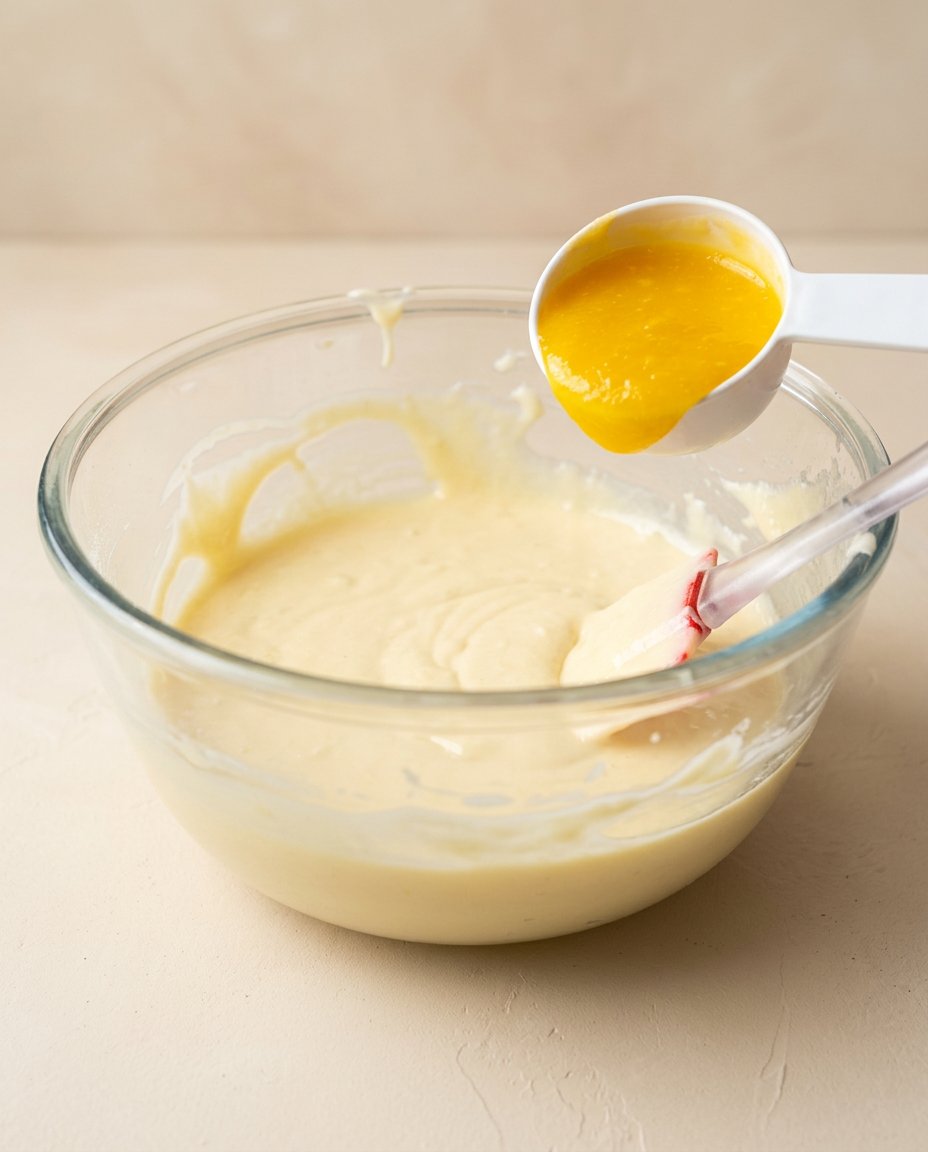
With the mixer running on low speed, add your room-temperature eggs one at a time, allowing each to incorporate fully. Slowly pour in the coconut milk, canola oil, coconut extract, and exactly half a cup of your mango puree. Continue mixing on medium speed for four minutes to encourage a stable emulsion with excellent volume. The mixture should appear smooth, creamy, and uniform, indicating that the fats and liquids have bonded.
Step 5: Sift the Dry Ingredients
Sift the all-purpose flour, fine salt, baking powder, and baking soda together into a separate clean bowl. This mechanical sifting aerates the heavy flour while distributing the rising agents evenly throughout the mixture. It prevents clumps of baking soda from creating bitter pockets or uneven holes in the finished crumb. Treat this step as an essential discipline rather than an optional shortcut for a flawless bake.
Step 6: Fold the Dry Flour Gently
Add your sifted dry ingredients to the emulsified wet mixture in two separate batches, alternating with the remaining mango puree. Use a large rubber spatula to fold the ingredients together, using sweeping, gentle motions from the bottom of the bowl. Stop folding the very moment the dry patches of flour are moistened to avoid over-working the batter. Over-mixing will develop the gluten, resulting in a dense, dry, and heavy crumb structure.
Step 7: Bake the Mango Fresh Fruit Topped Cake
Transfer the finished batter into your prepared seven-inch pan, smoothing the surface with an offset spatula. Bake at 325 degrees Fahrenheit for sixty-five to seventy minutes without opening the oven door prematurely. The cake is baked when the top is golden brown and a wooden skewer inserted in the center emerges clean. This gentle temperature allows the dense, moist fruit batter to cook thoroughly without scorching the exterior.
Step 8: Initial Cool and Release
Remove the cake from the oven and place the pan on a wire cooling rack for exactly five minutes. This brief resting period allows the delicate starches and proteins to set, preventing the cake from breaking. Run a thin, flexible knife carefully around the inside perimeter of the pan to loosen any sticking points. Invert the pan gently to release the cake, then turn it upright on the rack to cool.
Step 9: Cool Completely Before Slicing
Let the cake cool completely at room temperature for at least two hours before attempting to slice or decorate. Slicing a warm cake will cause the delicate crumb to tear and release its moisture prematurely. The cooling process allows the internal crumb structure to settle and lock in its rich, buttery texture. A patient baker is rewarded with clean, sharp slices that showcase the internal beauty of the bake.
What Experience Teaches Here
If your batter appears curdled or broken during the egg addition, here is why and how to fix it. This common issue occurs when cold eggs shock the creamed butter, causing the fat to separate from the liquid. To correct this, place your mixing bowl over a pan of warm water for thirty seconds while whisking gently. The heat will melt the seized fat slightly, allowing the emulsion to reform into a smooth state.
The temperature of your kitchen plays a significant role in how your butter behaves during creaming. If your room is too cold, the butter will remain too firm to trap air, leading to a heavy cake. Aim to keep your ingredients and workspace at a stable seventy degrees Fahrenheit for optimal volume. This small detail is what separates a professional bake from a dense home effort.
To keep your beautiful fruit garnishes looking pristine and radiant on top, prepare them with a light coating. Using a technique described in our guide on fruit fresh prevents the sliced mango from oxidizing and drying out when exposed to air. This simple step preserves the bakery-quality presentation for hours.
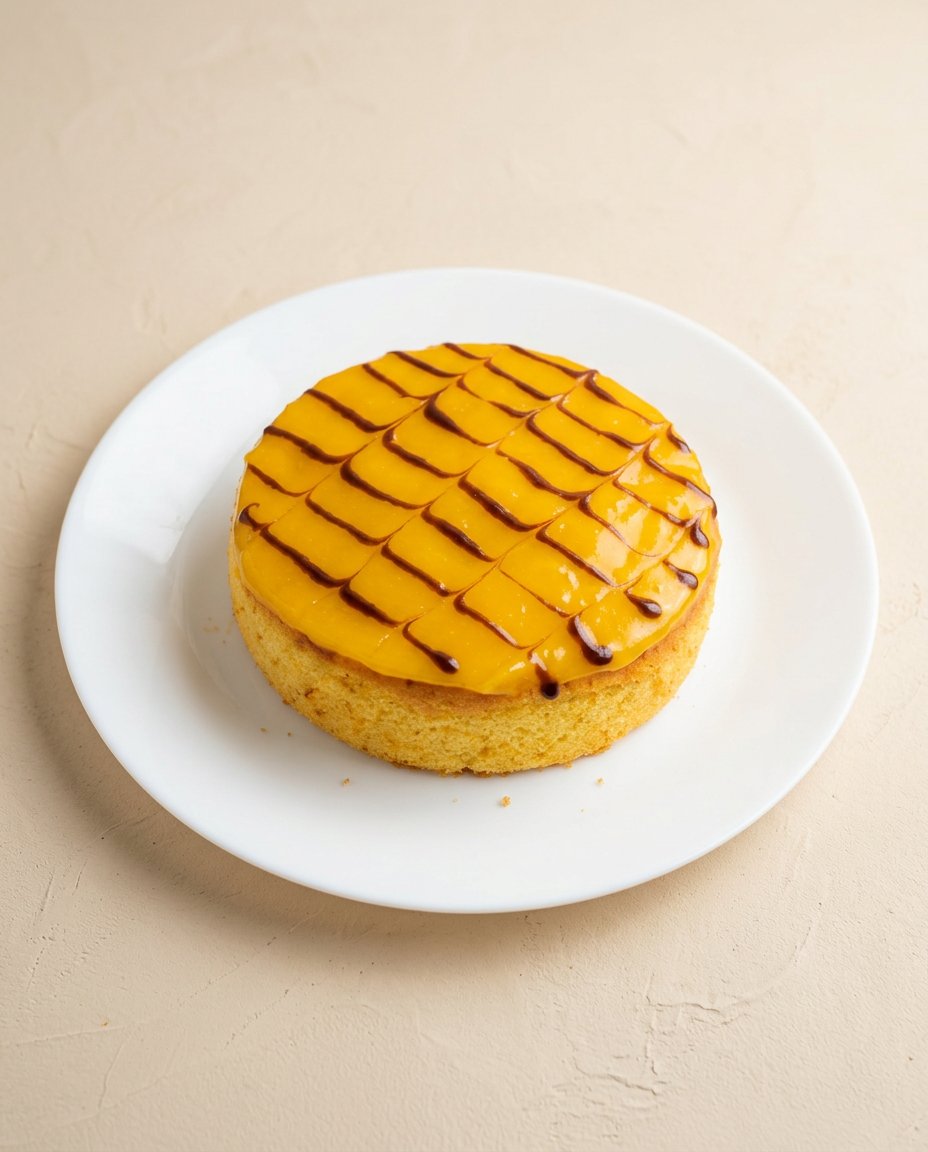
Applying a subtle sugar syrup glaze to the cooled cake before adding the fruit toppings creates a moisture barrier. This thin layer prevents the juices from the fresh mango from seeping into the tender crumb below. It preserves the clean, dry cross-section of your slices even if the cake sits for several hours. This classical technique is a secret shared by classical patissiers to maintain textural integrity.
When preparing your fresh mango puree, make sure you do not use a high-speed blender for too long. Over-processing can incorporate excess air into the puree, which can cause large, erratic bubbles in your baking batter. A simple food processor run on medium speed is sufficient to achieve the desired pancake-batter consistency. You can find more details on refining your crumb in this classical moist mango pound cake technique that highlights structural balance.
Patience here is not a virtue — it is an instruction. Letting the cooled cake rest wrap-sealed overnight before slicing allows the moisture from the mango puree to distribute evenly through the crumb. This quiet interval produces a cake that slices cleanly without crumbling under a sharp knife.
Frequently Asked Questions
Which mango cake flavour is the most popular?
The combination of ripe mango with subtle coconut or light vanilla is widely considered the most popular profile. This pairing balances the tropical sweetness of the fruit with a creamy, rich undertone. Our cake honors this traditional pairing by using full-fat coconut milk to soften the crumb. It provides a balanced sweetness that appeals to modern palates.
How do I prevent fresh mango on top from browning and drying out?
Brushing the fruit with a simple glaze made of apricot jam warmed with a splash of water works beautifully. Alternatively, a light dusting of neutral gelatin or fruit preservative will keep the slices glistening. This protective barrier seals in the moisture and stops oxidation from dimming the bright color. It guarantees your presentation remains bakery-fresh for several hours.
What is the best frosting for a mango fruit cake?
A lightly sweetened whipped cream frosting or a cooked Swiss meringue buttercream pairs best because they do not overpower the delicate fruit. Heavy American buttercreams often mask the clean mango flavor with excessive sweetness. A stabilized whipped cream offers a classical, elegant finish. Always chill your cake slightly before applying these soft frostings to ensure stability.
How long does a fresh mango cake stay fresh?
When stored in an airtight container in the refrigerator, this cake remains in pristine condition for up to three days. The canola oil in the batter keeps the crumb tender even at cold temperatures. Always bring slices to room temperature for fifteen minutes before serving to restore the butter’s texture. This simple step ensures the cake melts delightfully on the tongue.
Can I use frozen or canned mangoes instead of fresh?
Canned mango pulp is acceptable if it contains no added sugars and has been strained of excess liquid. Frozen mangoes may be used for the puree if thawed completely and drained thoroughly before processing. However, only fresh, firm mangoes should be used for the decorative topping to avoid a soggy presentation. This maintains the visual and textural contrast we strive for.
Do fresh mangoes make the cake layers soggy?
This cake is formulated as a sturdy pound cake to prevent the moisture of the pureed fruit from breaking down the crumb. Because the fresh fruit is placed strictly on top of the baked cake, there is no risk of the layers becoming soggy. The tight crumb structure acts as a reliable foundation. This structural strength is why we avoid light, airy sponge layers for this specific style.
Can I make this cake ahead of time?
You may bake the base cake one day in advance, wrapping it tightly in plastic wrap once fully cooled. This step actually helps the crumb structure settle, making it easier to slice. Wait to add the fresh mango toppings until the day you plan to serve it to ensure peak freshness. This discipline preserves both the texture of the cake and the beauty of the fruit.
What is the best knife to use for slicing this cake?
A long, thin, sharp chef’s knife or a utility knife is best for clean portions. Dip the blade in hot water and wipe it dry before making each slice through the mango topping. This prevents the fresh fruit from dragging and tearing the delicate crumb below. It guarantees a pristine cross-section that shows off your baking technique.
Thoughtful Alternatives
If you wish to highlight the tropical notes of this bake, consider substituting the coconut extract with a high-quality vanilla bean paste. The dark specks of vanilla add a beautiful visual element to the golden crumb while tempering the sweet mango flavor. You can read about similar flavor balances in our mango butter cake story which highlights classic pairing options. This simple adjustment keeps the core structure intact while offering a sophisticated flavor profile.
Another elegant variation is to bake this batter in a classic fluted bundt pan for a dramatic table presentation. Because of the deeper pan, you will need to extend the baking time by approximately ten to fifteen minutes at 325 degrees Fahrenheit. Once cooled, fill the center well with freshly diced mango and dust the edges with powdered sugar. This format allows for beautiful portioning while keeping the fresh fruit as the star of the plate.
For a festive autumn twist, you may swap the fresh mango puree for an equal volume of spiced pear compote. See that the compote is processed to a smooth consistency and drained of any excess liquid to maintain the batter’s hydration level. Add a pinch of ground ginger and fresh nutmeg to the dry ingredients to complement the pear’s natural sweetness. This adaptation preserves the structural integrity of the cake while welcoming the warmth of autumn spices.
Presentation and Service
To present this cake with professional elegance, slice it using a clean, sharp knife dipped in warm water and wiped dry before each cut. This precise discipline guarantees that each cross-section displays a clean, dry crumb beneath the glistening fresh mango toppings. For a special celebration, you might study the step-by-step decorating techniques featured in our mango birthday layer cake story to inspire your display. It highlights how to arrange fruit to achieve a stunning, professional aesthetic.
Accompany each slice with a dollop of unsweetened Chantilly cream or a small spoonful of mango coulis. The slight acidity of the coulis highlights the sweetness of the fresh fruit, while the cold cream cuts through the rich butter. This simple contrast transforms a home bake into an elegant, restaurant-quality dessert course. Always serve the accompaniments on the side to preserve the cake’s structural boundaries.
This dessert pairs beautifully with a glass of lightly sparkling Moscato d’Asti or a hot cup of jasmine green tea. The floral notes of the tea complement the tropical aroma of the mango, while the wine’s acidity cuts through the buttery crumb. Serve it during a late afternoon gathering on fine china to honor the care you put into the bake. It is a quiet, elegant ritual that celebrates classical pastry techniques.
A Word Before You Slice
Approaching this bake with patience and precision reveals the beauty of bakes made with exceptional care. By giving each step the time it requires, you create a dessert that is far greater than the sum of its basic ingredients. If you wish to continue developing your pastry skills, read our classic mango mousse cake story for more inspiring ideas. It offers a deeper look into the world of professional fruit cakes.
We invite you to share your beautiful creations with our community of dedicated bakers. Show us your elegant decoration ideas by tagging us or visiting our social channels on Pinterest, Facebook, or TikTok. Your feedback is a vital part of our shared pursuit of baking excellence. Let each slice be a celebration of precise technique and beautiful seasonal flavors.
The patisserie apprentice’s first lesson is that a beautiful result is the sum of unremarkable-looking small disciplines done without deviation. By weighing your ingredients, monitoring temperatures, and folding with care, you honor that tradition. We hope this cake brings a sense of quiet accomplishment to your kitchen. Enjoy the slow, rewarding process of crafting something truly beautiful from scratch.