Swapping out dense flour and baked sponge for a crisp, carved core of raw watermelon is the ultimate rebellion against sugary baby smash cakes.

When planning your little one’s milestone celebration, a traditional sugar-bomb cake can feel like a heavy risk. That is why Baby’s First Watermelon Yogurt Cake offers such an elegant, refreshing alternative. By combining crisp, cold fruit with a velvety, low-sugar Greek yogurt frosting, you get all the visual drama of a tiered masterpiece without the inevitable sugar crash. It is a clean, modern take on milestone baking that lets babies experience real texture and pure flavor.
Why Baby’s First Watermelon Yogurt Cake Deserves the Spotlight
Prep: 30 min · Serves: 8 · Difficulty: Medium
- Offers a nutrient-dense alternative to processed sugar.
- Dries beautifully to keep the frosting intact.
- Keeps little hands clean with easy cleanup.
- Builds impressive tiers without complex baking science.
- Introduces safe solids at six months old.
This is the striking, guilt-free masterpiece that proves you do not need an oven to make something truly memorable. By reading our smash cake made watermelon story, you can see how this concept converts skeptical parents into watermelon believers.
Get The Full Cake Recipe
Print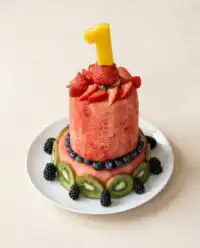
Baby’s First Watermelon Yogurt Cake
- Total Time: 2 hours 30 mins
- Yield: 8 servings
- Diet: Gluten-Free, Vegetarian
Description
A refreshing, sugar-free alternative to traditional cakes, this tiered watermelon tower uses stabilized Greek yogurt frosting to create a visually stunning and healthy treat for little ones. It is a perfect, clean-eating masterpiece for milestone celebrations that prioritizes fresh fruit and sensory discovery.
Ingredients
- Seedless watermelon
- Greek yogurt
- Instant pudding mix
- Cool Whip or whipped cream
- Fresh strawberries
- Fresh blueberries
- Sliced kiwi fruit
Instructions
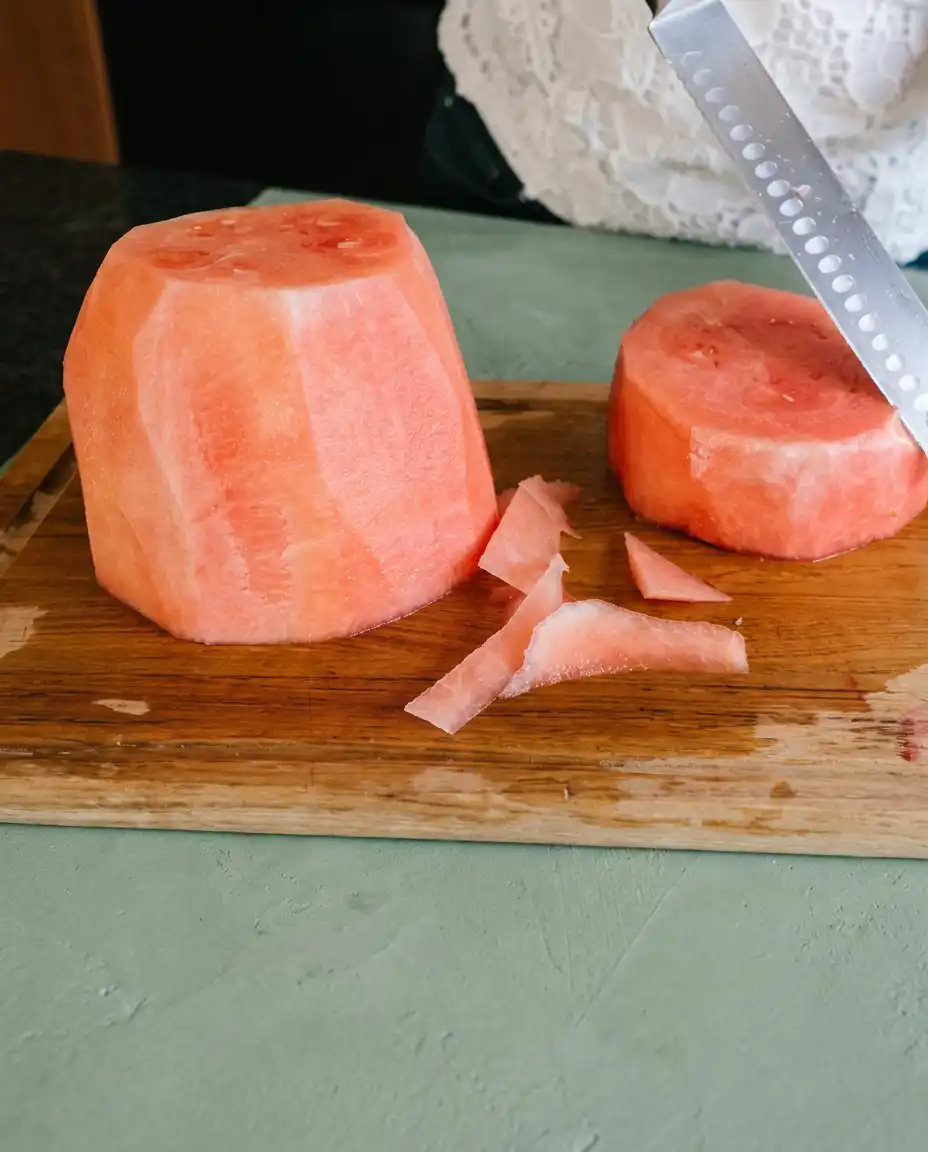
- Slice and anchor. Trim a thin slice from the bottom of the watermelon to create a flat base, then peel away the green rind and white pith to reveal the flesh.
- Carve the tiers. Cut the melon into three horizontal discs of varying sizes, using round templates to ensure clean, vertical edges for stability.
- Extract excess moisture. Place carved rounds between layers of paper towels and refrigerate for at least two hours to remove surface liquid.
- Prepare the frosting. Whisk together whipped cream, Greek yogurt, and instant pudding mix until the texture is thick, glossy, and pipeable.
- Assemble the cake. Layer the watermelon discs from largest to smallest, spreading a thin layer of frosting between each to act as culinary glue.
- Decorate and garnish. Pipe stars of frosting onto the tiers and press fresh strawberries, blueberries, and kiwi slices into the cream to finish.
Notes
- Keep all mixing equipment and ingredients thoroughly chilled to ensure the yogurt frosting sets with a firm, stable structure.
- Always dry the carved watermelon thoroughly with paper towels before frosting to prevent the cream from sliding off the fruit.
- Use a kitchen scale to ensure your watermelon tiers are weighted properly, placing the heaviest disc at the base for a secure foundation.
- Wipe your knife with a damp cloth between each cut to maintain clean, professional-looking layers when serving.
- Prep Time: 30 mins
- Cook Time: 0 mins
- Category: Dessert
- Method: No-Bake
- Cuisine: Modern Fusion
The Lineup
Creating a raw fruit masterpiece requires understanding how moisture and fat interact on a physical level. Because watermelon is mostly water, your icing must contain stabilizers that prevent it from sliding off the slick melon flesh. We use a smart combination of cold whipped cream, Greek yogurt, and instant pudding mix to establish a firm, spreadable mousse that grips the carved fruit layers.
- Seedless watermelon: The structural foundation of our cake, providing a crisp, juicy bite that holds its shape under pressure.
- Sour cream or Greek yogurt: Adds a pleasant, tangy contrast that cuts through the sweetness of the fruit and stabilized cream.
- Instant pudding mix: The secret starch-based thickener that prevents the frosting from weeping when in contact with moisture.
- Fresh strawberries and blueberries: Provides natural acidity and color contrast to create a gorgeous visual display.
- Sliced kiwi fruits: Offers a tropical flair and a soft texture that is easy for young gums to chew.
- Cool Whip or whipped cream: Introduces air and lightness to the frosting, keeping the texture fluffy and piping-friendly.
| Ingredient | Why It Matters |
|---|---|
| Watermelon | Provides the solid, tiered structure without the need for baking or flour. |
| Greek Yogurt | Delivers creaminess and a tangy flavor profile that balances the sweet melon. |
| Pudding Mix | Functions as a crucial stabilizer to keep the frosting thick and stable. |
| Mixed Berries | Act as gorgeous, nutrient-dense decorations that babies can easily grasp. |
| Sliced Kiwi | Adds structural color contrast and soft, gum-friendly textures for easy eating. |
Let’s Bake
Step 1: Slice and Anchor the Melon Base
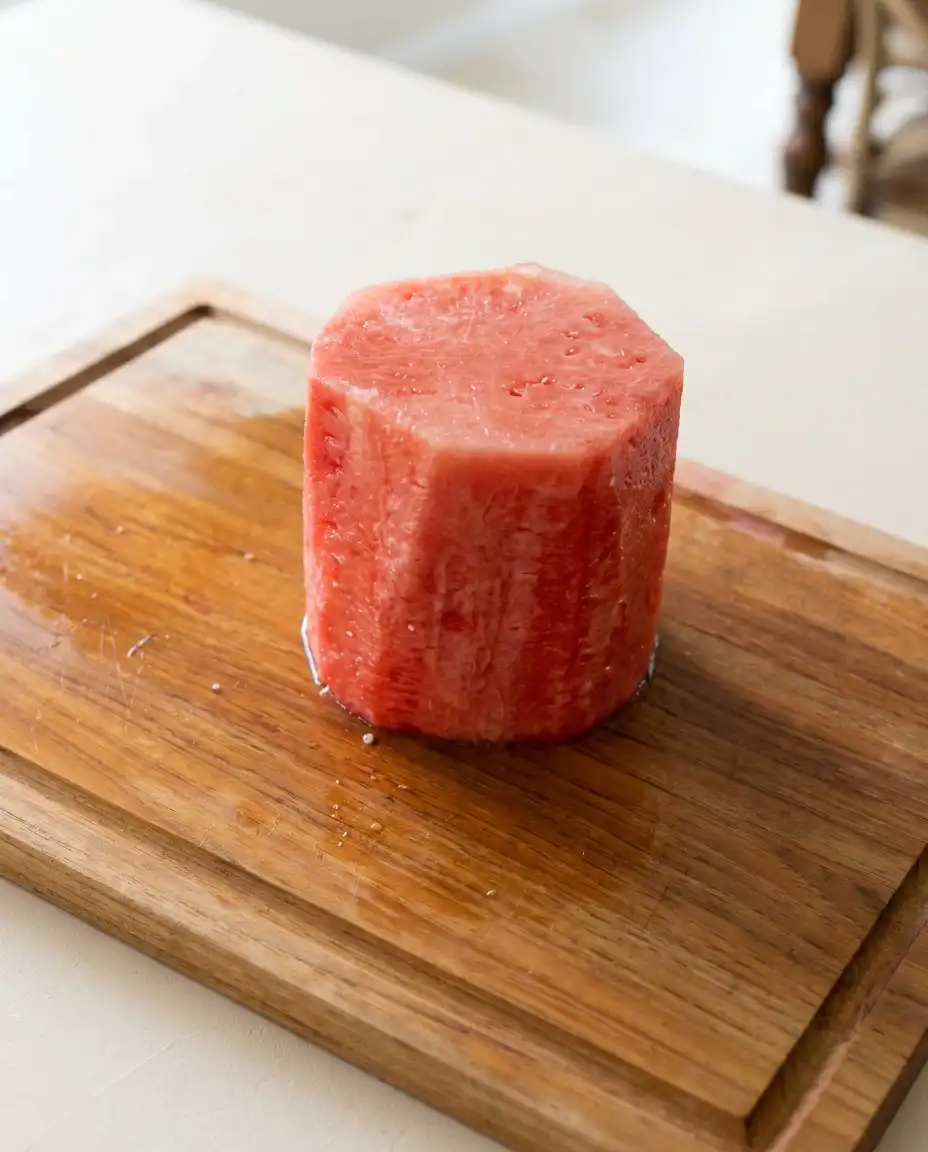
Position your seedless watermelon on a heavy, stable cutting board after trimming a thin slice from the bottom to create a flat, secure surface. Standing the melon upright allows you to shave off the outer green rind and tough white pith with a sharp chef’s knife, following the natural curve from top to bottom. Take your time to remove all traces of white pith, exposing the pure, dark pink flesh beneath. This creates a clean canvas that guarantees your frosting will adhere smoothly to the fruit structure later.
Step 2: Carve the Structural Tiers
Slice the stripped watermelon into three thick, horizontal discs, aiming for a thickness of about two inches per slice. To achieve uniform circles, place three different-sized round templates, such as cake pans or plates, on each disc and cut around the perimeter with a small paring knife. A nine-inch, six-inch, and four-inch guide will give you the ideal proportions for a dramatic, towering look. Keep your knife completely vertical during this process to prevent the tiers from leaning when stacked.
Step 3: Extract Excess Moisture
Line a large baking sheet with several layers of heavy-duty paper towels and lay each carved round flat on the surface. Cover the tops of the rounds with additional paper towels, pressing down gently to begin drawing out the surface moisture. Place the sheet in the refrigerator for at least two hours, or even overnight, to allow the melon to drain and dry out. This moisture extraction step is vital because any surface liquid will dissolve your frosting and cause it to slide right off.
Step 4: Prepare the Stabilized Frosting
Combine the whipped cream, Greek yogurt, and two heaping tablespoons of instant pudding mix in a chilled glass mixing bowl. Whisk the mixture continuously for about two minutes using a hand mixer or a balloon whisk until it visibly thickens into a glossy, pipeable mousse. The starches in the pudding mix will absorb the moisture from the yogurt, creating a structured frosting that holds its shape. Transfer this smooth mixture into a large piping bag fitted with a medium star tip for precision.
Step 5: Assemble Your Baby’s First Watermelon Yogurt Cake
Place the largest nine-inch watermelon disc directly in the center of your serving platter to establish a sturdy foundation. Spread a thin, even layer of the stabilized yogurt frosting over the top surface before centering the middle six-inch disc on top. Repeat this process with the smallest four-inch disc, pressing down very gently to secure the tiered stack without crushing the fruit. Spreading frosting between the layers acts as a culinary glue, preventing the individual tiers from shifting during transit.
Step 6: Decorate and Garnish
Pipe uniform stars of the stabilized frosting around the borders of each tier, creating clean, decorative bands that highlight the cake’s structure. Press your halved strawberries, whole blueberries, and thin kiwi slices firmly into the piped frosting, using the cream as an anchor. Work from the bottom tier upward to distribute the fruit weight evenly and prevent any sliding. Keep the completed cake refrigerated until the exact moment you intend to present and slice it.
The Details That Matter
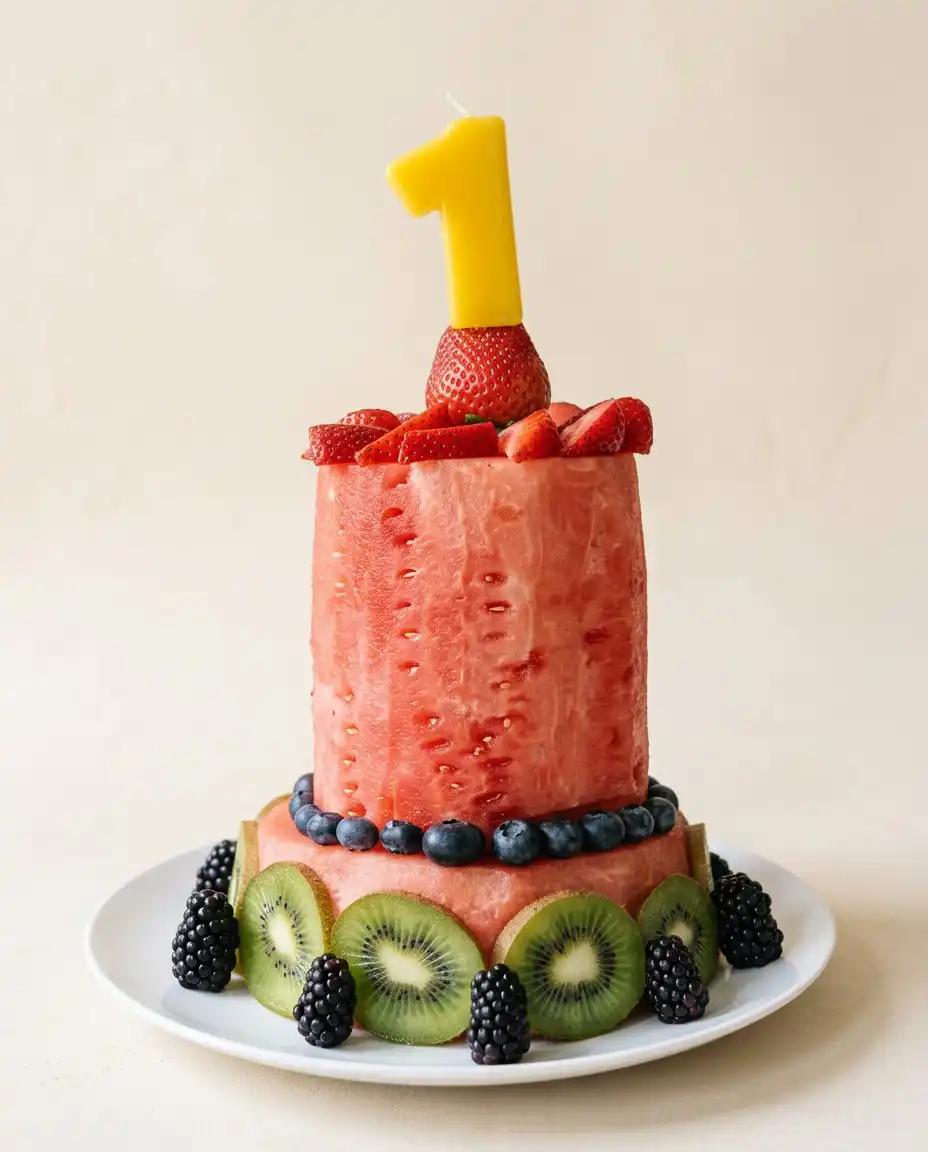
Carving a raw melon cake presents unique structural challenges that traditional sponge baking never encounters. To make sure your creation stands tall, you must treat moisture management as a non-negotiable chemical process. When selecting your fruit, choose a heavy melon with a uniform shape; a lopsided melon will yield uneven tiers that lean and slide. Your kitchen scale is a liberation device here, allowing you to weigh individual tiers and place the heaviest pieces precisely at the bottom of your cake tower.
If your frosting becomes soupy and starts weeping during assembly, here is why and how to fix it immediately. This failure mode happens when the yogurt has too much whey or the melon was not dried sufficiently before frosting. To fix it, gently scrape off the running frosting, pat the melon completely dry with fresh towels, and whisk another tablespoon of pudding powder into your frosting mix to absorb the excess liquid. Never attempt to frost a wet melon, as water and fat will naturally repel each other, leaving you with a sliding mess.
Temperature control is your greatest ally when working with dairy-based stabilizers and raw fruit. Keep all mixing bowls, beaters, and ingredients icy cold before you begin whipping the stabilized frosting. Cold fat molecules trap air much more efficiently, resulting in a tighter, more resilient cream structure. If you are preparing this for a warm outdoor summer event, keep the cake in the coldest part of your refrigerator until the very second it needs to be served.
Precision with your knife cuts will save you from a structural collapse during transport or display. When trimming the rind, keep your blade parallel to the cutting board to create flawlessly flat surfaces on both the top and bottom of each disc. Any slight angle in your cuts will amplify as you stack the tiers, leading to an unstable structure that easily slides. Refer to our guide on creating a solid foundation with a smash cake to master these layering principles.
For a completely professional finish, consider using the naked watermelon assembly method to highlight the gorgeous pink color of the melon flesh underneath. This technique leaves the sides of the watermelon exposed while focusing the frosting and fresh berries purely on the borders and top surfaces. It looks exceptionally clean, modern, and keeps the overall dairy content lighter for sensitive baby tummies.
Frequently Asked Questions
What is the history of watermelon cake?
The concept of a raw watermelon cake originated as a refreshing, grain-free alternative to traditional baked cakes, gaining popularity in the early 2010s. Healthy food bloggers and raw food enthusiasts sought creative ways to celebrate summer milestones without heating up the kitchen. Over time, it became a beloved staple for infant first birthdays and smash cake photo shoots due to its colorful appearance, allergen-friendly nature, and low sugar content.
How to make a watermelon cake for a baby?
To make a watermelon cake for a baby safely, select a ripe, seedless watermelon and carve it into thick, flat discs with all rind removed. Dry the melon thoroughly with paper towels to ensure the frosting adheres, then stack the layers with a low-sugar yogurt or whipped cream mixture. Garnish only with soft, age-appropriate fruits like strawberries, blueberries, and kiwi, avoiding hard or choking-hazardous toppings.
What are 10 facts about watermelon?
Watermelon is a fascinating fruit that is actually classified as both a fruit and a vegetable, belonging to the Cucurbitaceae family alongside cucumbers and pumpkins. It is composed of roughly ninety-two percent water, making it incredibly hydrating and refreshing. The entire plant, including the rind and seeds, is completely edible and highly nutritious. Lycopene, a powerful antioxidant, gives the flesh its rich red color, while the first recorded watermelon harvest occurred in Egypt nearly five thousand years ago. Today, there are over twelve hundred distinct varieties grown worldwide, ranging from seedless options to yellow-fleshed heirlooms.
What to write on baby’s 1st birthday cake?
Writing on a textured, moist watermelon cake can be challenging, so the best approach is to pipe short, simple messages using a thick yogurt frosting. Classic options include writing the number ‘1’ in a contrasting color, piping the baby’s name, or using short phrases like ‘One,’ ‘Wild One,’ or ‘Sweet One.’ Alternatively, you can use custom-cut soft fruit shapes, like kiwi stars or strawberry hearts, to spell out milestones without needing delicate piping.
Can I prepare this cake several days in advance?
It is best to assemble this cake no more than twelve hours before serving to prevent the melon from weeping excess moisture. You can, however, carve the watermelon tiers and store them wrapped in paper towels inside an airtight container up to twenty-four hours in advance. Prepare the frosting the night before, but keep it stored separately in your refrigerator until you are ready to assemble and decorate the cake on the day of the party.
How do I store leftovers of this fruit cake?
Keep any leftover portions of the cake stored in an airtight container in the refrigerator for up to three days. The melon will naturally release some juice over time, which may cause the frosting to soften or pool at the bottom. Drain the excess liquid before serving leftover slices, or blend the leftovers into a refreshing breakfast smoothie.
What is the best way to transport a watermelon cake?
Transporting a tiered fruit cake requires careful planning because the slippery surfaces can easily slide during transit. Place the assembled cake on a flat platter inside a sturdy cake box, and secure the box on a level surface in your vehicle, such as the floorboard. Keep your car’s air conditioning running cold, and avoid sharp turns or sudden braking to guarantee your towering creation arrives in pristine condition.
Can I use coconut cream for a dairy-free version?
Yes, you can easily substitute the dairy components with chilled, whipped coconut cream for a completely vegan and dairy-free alternative. Scoop out the solid cream from a chilled can of full-fat coconut milk, leaving the watery liquid behind, and whip it with a stabilizer. This swap provides a rich, tropical flavor profile that pairs wonderfully with the fresh watermelon and mixed berries.
Where to Deviate
The recipe is a starting point. You are the variable. While this classic fresh berry and melon combination is spectacular, you can easily adapt the flavor profile to match different seasons or developmental milestones. For a winter celebration, swap the summer berries for thin slices of ripe pear, sweet persimmon, and pomegranate seeds to create a festive, seasonal look. Verify any fruit used is soft enough for your baby to chew safely without choking hazards.
If you want to experiment with flavor extracts, consider adding a drop of organic vanilla bean paste or a splash of citrus zest to the yogurt mixture. A tiny hint of orange zest or lemon juice in the frosting mimics the bright, refreshing notes of a lemon yogurt cake without introducing refined sugars. This simple modification adds sophisticated aromatic depth that adults will appreciate equally as much as the little ones.
You can also adapt this recipe for older toddlers by replacing the soft Greek yogurt mousse with a richer, stabilized cream cheese frosting. This variation provides a denser, sturdier coating that behaves more like traditional buttercream, allowing you to practice advanced piping techniques. Make sure you adjust your slicing guides accordingly, perhaps carving the melon into star shapes or hexagons to challenge your carving skills and surprise your guests.
Before You Slice
Presenting this raw fruit masterpiece is all about celebrating the sensory experience of discovery. When you bring this cake out, the striking contrast of the creamy frosting against the rich pink melon flesh creates an immediate visual impact. Let your guests admire the cake before you make the first cut, as the visual drama of a cross-section cut is where your hard carving work truly shines.
To serve this cake cleanly, use a long, sharp chef’s knife and wipe the blade with a damp cloth between each slice. This keeps the yogurt frosting from smudging across the clean edges of the pink watermelon discs. Pair individual slices with a dollop of leftover cream and a side of light, refreshing treats like our strawberry lemon yogurt cake to give your adult guests a baked option.
For a first birthday smash session, place the cake directly on a large, easily washable mat or high chair tray. Let your baby discover the cold, squishy textures with their hands, squeezing the soft berries and smashing into the refreshing melon layers. This interactive play is not only adorable for photos but also helps develop fine motor skills and sensory processing in a joyful, mess-friendly environment.
Sign Off
Making less and meaning more is the ultimate philosophy behind small-batch, raw pastry innovations. With this Baby’s First Watermelon Yogurt Cake, you have skipped the refined sugars and heavy flours in favor of pure, hydrating, and nutritious joy. You have proved that a celebration cake does not need to come from a box or require a professional oven to make a massive impact on your guests and your little one.
The recipe is a starting point. You are the variable. Feel free to tweak the toppings, experiment with different melon shapes, or even document your journey with our two layer smash cake story to inspire other adventurous parents in your community. Every slice, smash, and messy smile is data that proves healthy baking can be incredibly fun and beautiful.
Share your gorgeous creations and milestone moments with our global community of flavor rebels. We love seeing how you adapt these techniques to fit your family’s unique style and taste preferences. Follow our latest kitchen experiments and pastry adventures on Pinterest, Facebook, and TikTok to stay connected and keep pushing your culinary boundaries.