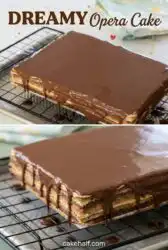
The faint rasp of an offset spatula skimming across a cold chocolate glaze confirms that you have achieved the flat, mirror-like surface required for a professional presentation.

The Opera Cake represents the pinnacle of balanced French pastry construction, offering a sequence of textures that define technical excellence. Within this storied dessert, every millimeter of the almond sponge and coffee buttercream must be accounted for to reach the correct architectural height. This guide will lead you through the exacting disciplines of the biscuit Joconde and the pâte à bombe buttercream, ensuring your result rivals the windows of the finest Parisian shops.
The Craft Behind This Opera Cake
Prep: 150 min · Serves: 10 · Difficulty: Advanced
- Precisely balanced layers of almond and coffee.
- Technical mastery of the pâte à bombe buttercream.
- Elegant presentation with a sharp mirror glaze.
- Professional results from a measured, unhurried approach.
- Deep satisfaction in completing a classic challenge.
Developing a chocolate indulgence requires the quiet patience that this multi-layered masterpiece demands from every dedicated home baker.
This is the recipe that proves your commitment to the subtle disciplines of the French pastry bench.
Get The Full Cake Recipe
Print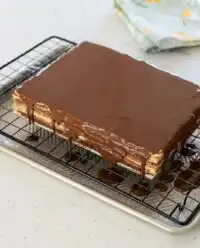
Opera Cake
- Total Time: 3 hours 15 mins
- Yield: 10 servings
- Diet: Vegetarian
Description
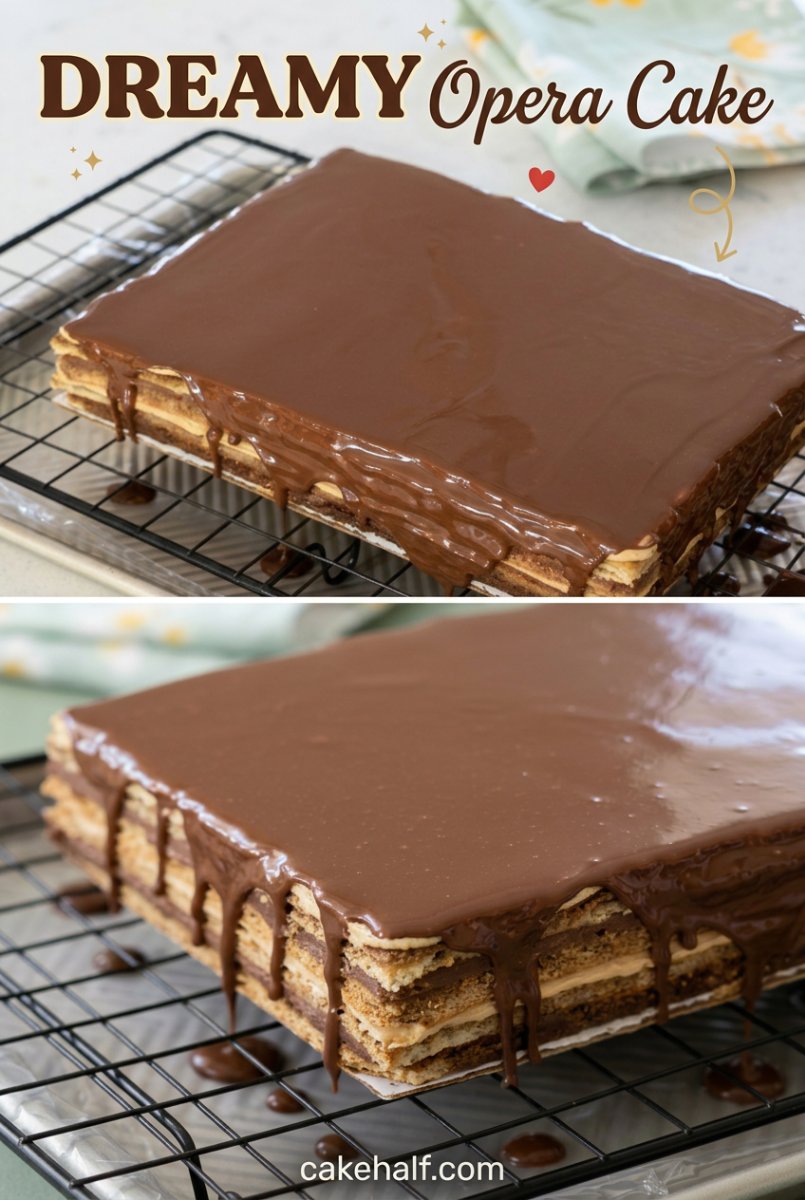
This classic French Opera Cake features precise, thin layers of almond-based Joconde sponge, coffee-infused buttercream, and rich dark chocolate ganache. Finished with a high-gloss chocolate mirror glaze, this technical masterpiece offers a perfect balance of textures and coffee-chocolate harmony.
Ingredients
- Whole eggs
- Almond flour
- Powdered sugar
- Granulated sugar
- Egg whites
- All-purpose flour
- Unsalted butter
- Water
- Ground coffee
- Cognac
- Egg yolks
- Milk
- 58% Couverture dark chocolate
- Heavy cream
- Neutral oil
Instructions
- Prepare sponge base. Whisk whole eggs, almond flour, and powdered sugar to ribbon stage, fold in meringue and flour, then bake in thin sheets.
- Infuse coffee syrup. Dissolve sugar in water, steep with ground coffee for fifteen minutes, strain, and stir in cognac once cooled.
- Make coffee buttercream. Infuse milk with coffee, temper into whisked yolks and sugar, cook into a custard, then whip into softened butter.
- Create chocolate ganache. Melt chocolate and stir in hot heavy cream in stages to create a tight, glossy emulsion.
- Assemble cake layers. Layer Joconde sponge with coffee syrup soak, ganache, and buttercream, repeating to build height before chilling.
- Apply mirror glaze. Spread a final coat of melted chocolate and neutral oil over the chilled cake for a brilliant, smooth surface.
- Slice for serving. Use a hot, clean knife to make decisive vertical cuts for crisp, professional cross-section presentation.
Notes
- Measure all ingredients by weight in grams to ensure the structural integrity of the sponge and fillings.
- Ensure all components reach room temperature before assembly to prevent the buttercream from curdling.
- Keep a container of hot water nearby to clean and heat your knife between every single cut for clean lines.
- Avoid over-mixing the Joconde batter after adding flour to prevent a rubbery texture that resists the soak.
- Prep Time: 150 mins
- Cook Time: 45 mins
- Category: Dessert
- Method: Baking
- Cuisine: French
The Mise en Place
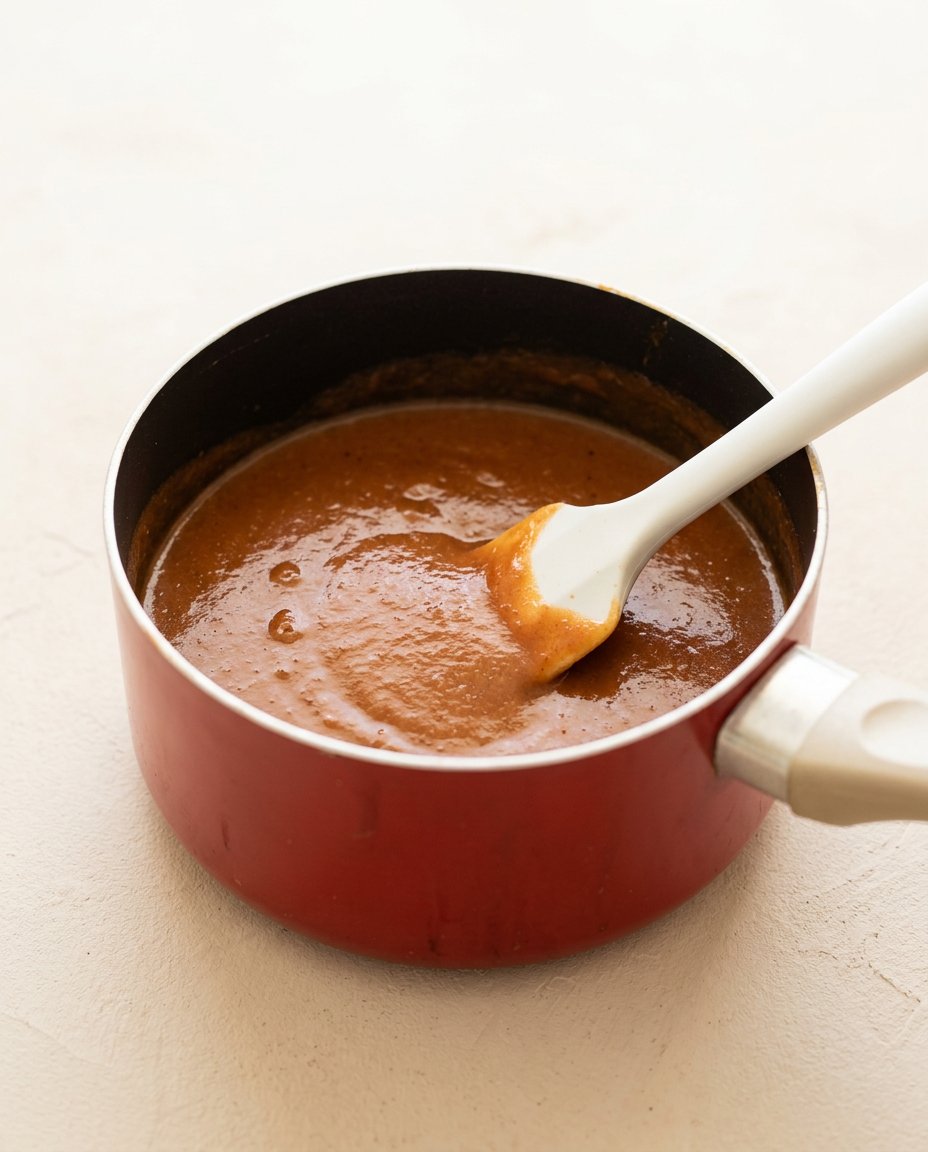
Approaching this complex assembly requires a disciplined organization of your workstation and a commitment to high-quality fats and chocolates. You will find that the interaction between the almond flour and the whipped egg whites creates a structure that is both flexible and absorbent, essential for the generous coffee soak.
- Almond Flour: Provides the foundational structure and nutty flavor profile for the Joconde sponge without adding heavy gluten.
- Egg Yolks: Used in the pâte à bombe to create a buttercream that is exceptionally stable and rich.
- 58% Couverture Chocolate: Chosen for its specific cocoa butter content, allowing for a fluid ganache and a glaze that remains soft enough to cut.
- Cognac: Cuts through the richness of the buttercream and ganache, providing a necessary brightness to the coffee syrup.
- Quality Butter: Its high fat content determines the stability and mouthfeel of the final coffee buttercream layers.
- Ground Coffee: Requires a fine grind to provide the concentrated infusion needed for both the syrup and the cream.
| Ingredient | Why It Matters |
|---|---|
| Powdered Sugar | Provides a fine, tender crumb in the almond sponge. |
| Granulated Sugar | Stabilizes the meringue and sweetens the coffee infusion. |
| Heavy Cream | Creates a silken emulsion in the chocolate ganache layers. |
| Neutral Oil | Maintains the fluidity and gloss of the final chocolate glaze. |
The Technique Laid Out
Step 1: Prepare the Biscuit Joconde
Begin by whisking your whole eggs, almond flour, and powdered sugar until the mixture reaches the ribbon stage, which is the precise moment when lifted batter falls in a slow, unbroken stream. In a separate, scrupulously clean bowl, whip the egg whites with granulated sugar to create a firm, glossy meringue that will provide the cake’s lift. Gently fold the meringue into the almond base, followed by the sifted flour and melted butter, being careful not to deflate the aeration you have worked to build. Spread the batter across your sheet pans with a steady hand, aiming for a thickness of no more than five millimeters before baking until the surface feels slightly springy.
Step 2: Create the Concentrated Coffee Syrup
Heat the water and sugar in a small saucepan until the granules have completely dissolved and the liquid begins a gentle simmer. Remove the pan from the heat and stir in the ground coffee, covering the vessel with a lid to allow the infusion to develop its full depth over fifteen minutes. Strain the liquid through a fine-mesh sieve to remove every trace of grit, then stir in the cognac once the liquid has cooled slightly. This syrup is intended to be generous; do not be alarmed by the volume, as the sponge will absorb every drop to achieve the characteristic moisture of a true Opera.
Step 3: Master the Coffee Buttercream
Infuse your milk with ground coffee in the same manner as the syrup, ensuring a concentrated flavor that will stand up to the butter. Whisk the egg yolks and sugar until pale, then slowly temper in the hot coffee-infused milk while continuing to whisk to prevent the yolks from scrambling. Return this mixture to a low heat, stirring constantly until it thickens into a light custard that coats the back of a spoon. Once this base has reached room temperature, whip it into your softened, high-quality butter until the texture becomes exceptionally light and airy.
Step 4: Emulsify the Chocolate Ganache
Melt your dark couverture chocolate gently over a bain-marie or in short bursts in the microwave to avoid scorching the delicate cocoa solids. Heat the heavy cream until it reaches a bare simmer, then add it to the chocolate in four separate stages, stirring from the center outward to create a tight emulsion. You will see the mixture transform from a broken, dull appearance to a glossy, smooth consistency that flows easily from the spatula. If the ganache appears too liquid for spreading, allow it to rest at room temperature until it achieves a consistency similar to peanut butter.
Step 5: Assemble the Opera Cake Layers
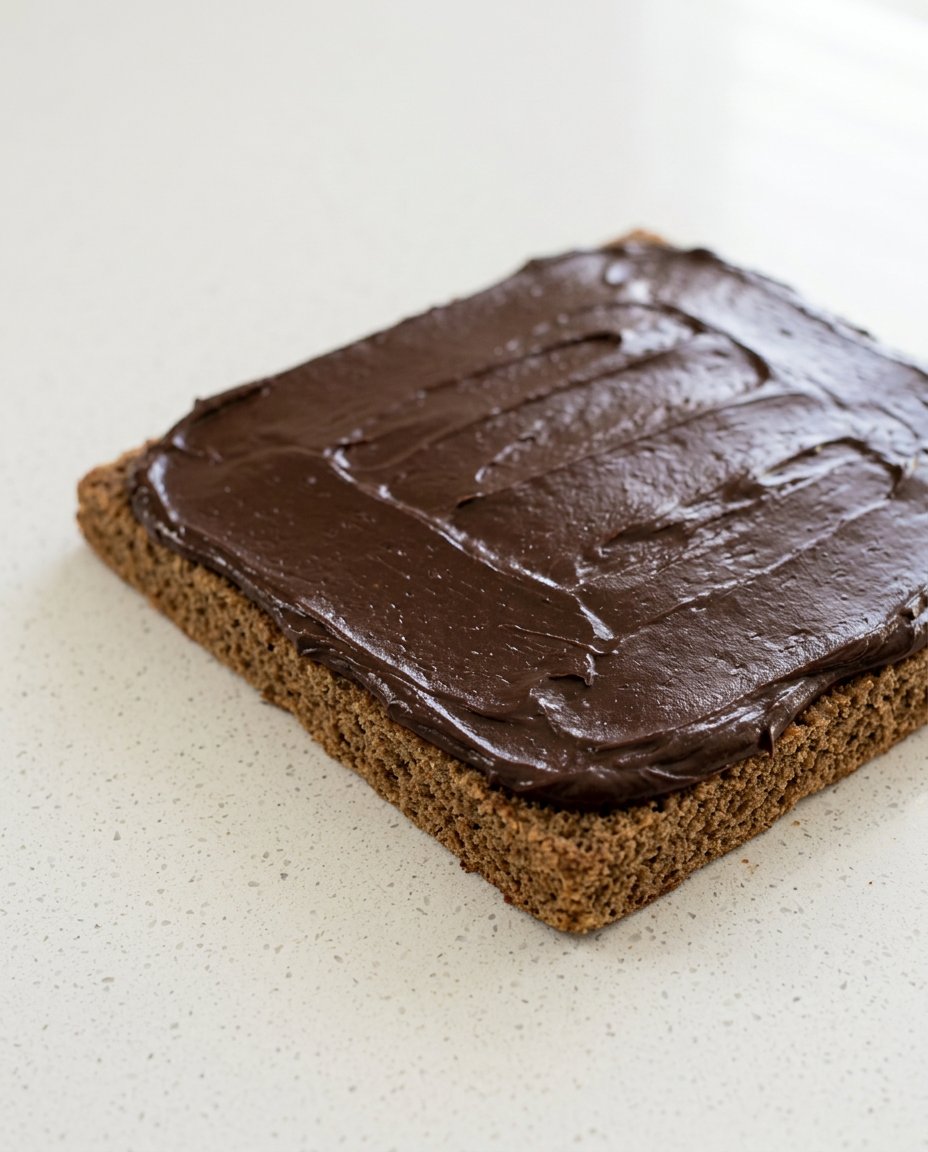
Place your first layer of Joconde on a board, baked side down, and apply a thin coating of melted chocolate to create a moisture barrier. Once set, flip the cake over and apply a thorough soaking of coffee syrup before spreading a thin, even layer of ganache across the surface. Position the second sponge, soak it again, and apply a layer of the coffee buttercream, using an offset spatula to keep the surface perfectly level. Continue this pattern until all four sponge layers are integrated, finishing with a final, smooth layer of buttercream that will act as the foundation for your glaze.
Step 6: Apply the Mirror Glaze
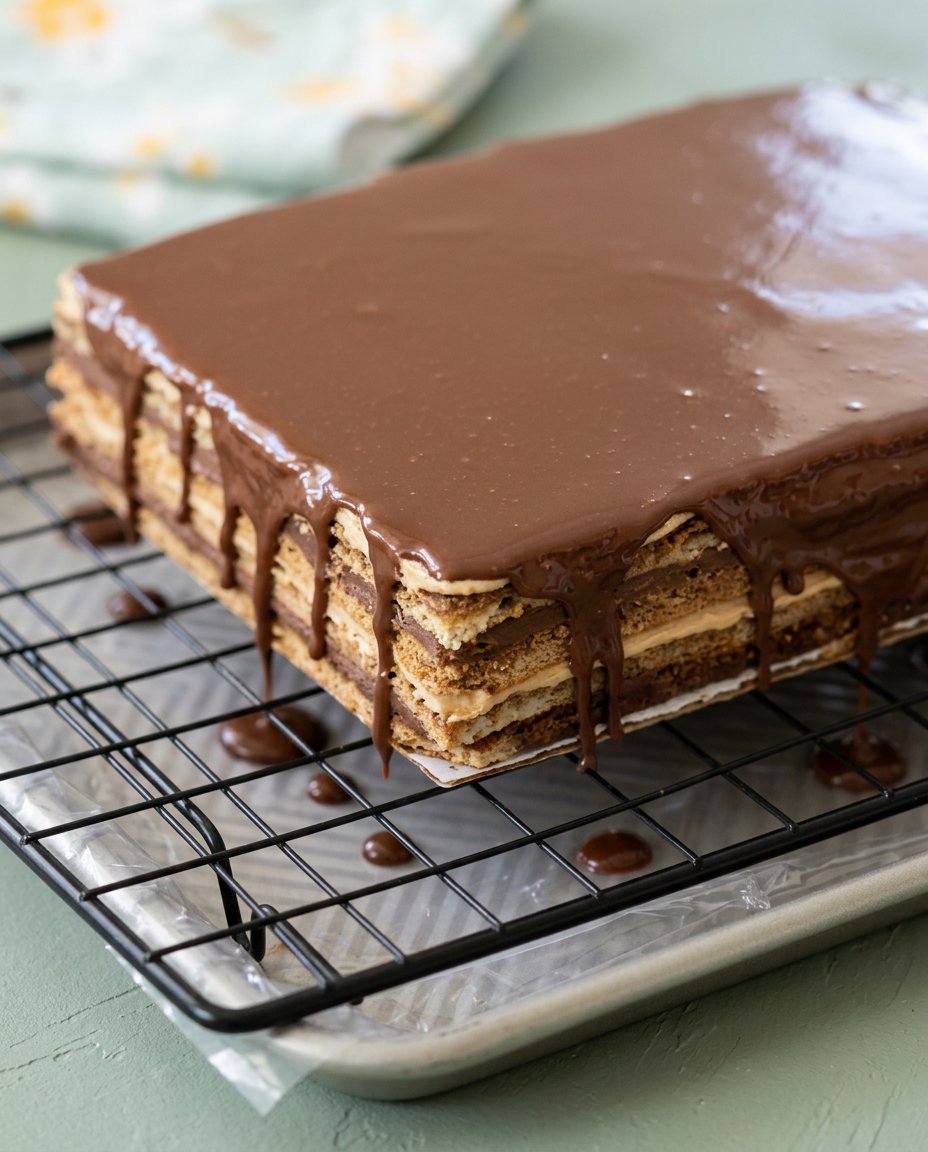
After the assembled cake has chilled for at least one hour to confirm the internal layers are firm, prepare your final chocolate glaze with oil for a brilliant sheen. Melt the chocolate and oil together, stirring gently to avoid the introduction of air bubbles which would mar the finished surface. Pour the glaze over the center of the cold cake and spread it toward the edges in three or four long, confident strokes of your offset spatula. This speed is necessary to prevent the glaze from setting before it has reached the perimeter, which would result in an uneven finish.
Step 7: Slice for the Professional Reveal
Transfer the cake to a cutting surface and prepare a tall container of hot water and a clean, dry towel for your knife. Dip a long, sharp chef’s knife into the water, wipe it completely dry, and make a single, decisive vertical cut to trim the uneven edges of the cake. Repeat this cleaning and heating process for every single cut to ensure the cross-section remains clean and the layers do not smear into one another. You will see the clear definition of the seven distinct layers, which serves as the final proof of your technical care throughout the process.
Technical Notes
Maintaining your ingredients at room temperature is an instruction, not a suggestion, as cold eggs will cause your Joconde batter to break and lose its essential volume.
If your buttercream appears to curdle or separate while you are adding the coffee base, it is likely because the temperatures of the butter and the custard were too far apart. You can often fix this by gently warming the bottom of the bowl with a hairdryer for a few seconds while continuing to whip the mixture at high speed.
When spreading the layers, use a small spirit level or a ruler to confirm that each application of cream and ganache is uniform in height across the entire surface of the sponge. You can find more details on the composition and heritage of this classic opera cake recipe to understand the traditional proportions.
To achieve the most professional finish on your ganache, ensure your chocolate ganache cake layers are handled with a warm spatula to keep the surface smooth. This prevents the formation of ridges that would be visible through the final glaze.
Avoid over-whipping the Joconde batter once the flour is added, as developing too much gluten will lead to a rubbery sponge that resists the coffee syrup soak.
Always use a scale to measure your ingredients in grams, as the margin for error in an architectural cake like this is too narrow for the variability of volume-based cup measurements.
Frequently Asked Questions
Why do they call it an opera cake?
The cake was famously named by Cyriaque Gavillon’s wife in honor of the Paris Opera House, the Palais Garnier. The layers were said to resemble the tiers of the theater, and the elegant, sophisticated flavors were intended to appeal to the opera-going crowd. It remains a symbol of French culinary artistry and high-society tradition.
What is the difference between Tiramisu and opera cake?
While both desserts feature coffee and sponge elements, the Opera Cake uses a thin almond Joconde sponge and a butter-based coffee cream. Tiramisu relies on ladyfingers soaked in espresso and a light mascarpone cheese custard. The Opera Cake is a structured, firm cake designed for clean slicing, whereas Tiramisu is much softer and often served with a spoon.
What is opera cake made of?
An authentic Opera Cake consists of six or seven distinct layers, including three layers of almond Joconde sponge soaked in coffee syrup. These are sandwiched between two layers of coffee buttercream and one layer of chocolate ganache. The entire assembly is topped with a smooth chocolate glaze and often decorated with gold leaf or chocolate calligraphy.
What is so special about opera cake?
The specialty of this cake lies in its height and the extreme thinness of its layers, which must all be uniform to provide a balanced bite. It manages to deliver intense coffee and chocolate flavors without being overly heavy, thanks to the light aeration of the sponge. Achieving the perfect mirror-like glaze is considered a badge of honor for many pastry students.
Can I make this cake ahead of time?
Yes, this cake actually improves when made at least twenty-four hours in advance. The resting time allows the coffee syrup to migrate evenly through the sponge and the flavors of the buttercream to mature. It should be stored in the refrigerator but brought to room temperature for ten minutes before serving for the best texture.
Why is my chocolate glaze dull instead of shiny?
A dull glaze often results from either over-mixing, which introduces air, or a lack of fat to keep the chocolate fluid. The addition of a neutral oil is essential to provide that mirror-like sheen and to keep the glaze from cracking when you slice into the cake. Always ensure your glaze is poured while it is slightly warm over a very cold cake.
Thoughtful Alternatives
You may choose to replace the cognac in the coffee syrup with a dark rum or a coffee liqueur if you prefer a different aromatic profile in the soak. This change should be made in equal volume to maintain the hydration levels of the sponge.
While the classic version uses almond flour, a hazelnut Joconde offers a deeper, more toasted flavor that pairs exceptionally well with the coffee and chocolate elements. If you choose this path, ensure the hazelnut meal is ground as finely as the almond flour to maintain the delicate crumb of a crepe cake style sponge.
For a lighter presentation, you can omit the final chocolate glaze and instead dust the top layer of buttercream with a fine layer of cocoa powder. This creates a matte finish that is less intimidating to slice while still providing the necessary bitterness to balance the sweet cream.
Before You Serve
Presentation is the final step in honoring the labor you have invested in this recipe. Serve each rectangular slice on a chilled white porcelain plate to provide a sharp contrast against the dark chocolate and golden sponge layers. A small, clean sprig of mint or a single coffee bean placed on the corner of the slice can provide a simple but effective visual accent.
Accompany the cake with a small glass of the same cognac used in the syrup or a cup of dark, unsweetened espresso. The bitterness of the coffee will help reset the palate between bites of the rich buttercream and ganache. For a special occasion, you might consider serving this alongside a chocolate truffle cake to offer guests a variety of chocolate textures.
A Word Before You Slice
Completing an Opera Cake is a testament to your growth as a baker and your willingness to embrace the small disciplines that lead to a beautiful result. You have moved beyond simple mixing into the realm of architectural pastry, where every gram and every minute of chilling serves a specific purpose. Precision is not a constraint. It is the freedom to repeat success, and you now possess the knowledge to recreate this masterpiece whenever the occasion demands it.
Take a moment to appreciate the clean lines and the glossy finish of your chocolate mousse cake layers before the first serving. We invite you to share your progress and join our community of dedicated bakers on our social channels.