Scaling a dessert down to a tight, six-inch tower means every single slice delivers a concentrated burst of crisp sweetness without the structural collapse of oversized platters.

Assembling a raw Watermelon and Berry Layer Cake demands that we treat fresh melon not as a cheap picnic side, but as a pristine structural medium. By carving clean, level tiers and packing the spaces with dense summer fruit, we build a towering centerpiece that defies standard baking physics. This small-batch design gives you the absolute control needed to keep every berry locked in its exact coordinate. We are skipping the heavy flour and hot ovens to let the architecture of clean sugar shine through.
Why Small-Batch Works Here: The Truth Behind My Watermelon and Berry Layer Cake
Prep: 25 min · Serves: 6 · Difficulty: Easy
- Tiered design creates stunning visual dinner party drama.
- Slicing smaller rounds prevents tragic structure collapses.
- Custom fruit arrangements offer endless flavor experimentation.
- Zero oven time keeps your kitchen completely cool.
- Fresh lemon juice preserves bright, beautiful orchard colors.
Traditional massive fruit displays often degenerate into soggy, structurally compromised heaps within minutes of slicing. Shrinking the footprint of your build down to a controlled six-inch diameter guarantees that each slice remains completely upright on the plate. If you have ever struggled with soggy sponge bases, shifting your focus to a pure fruit structure offers a refreshing alternative to traditional baking. This small-scale format keeps the structural integrity completely manageable, allowing you to create vertical height without risking a disastrous leaning tower.
Using this small-batch format allows us to obsess over the geometric alignment of every strawberry slice and blueberry anchor. We can channel the same creative energy that goes into a summer berry poke cake into a completely raw, architectural format. Precision is our friend here, guaranteeing that every portion feels deliberate and elegant rather than accidental. Slicing through these miniature tiers yields an incredibly clean cross-section that shows off your careful handiwork beautifully.
This is the raw showstopper that changes how your guests view summer dessert tables forever.
Get The Full Cake Recipe
Print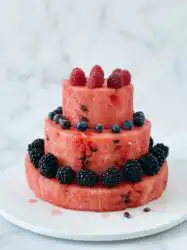
Watermelon and Berry Layer Cake
- Total Time: 25 mins
- Yield: 6 servings
- Diet: Vegan, Gluten-Free
Description
This refreshing, raw summer dessert uses fresh watermelon as a structural base, layered with crisp orchard fruits and berries for a beautiful, architectural presentation. It is the perfect cool-down treat that avoids the oven while offering a stunning centerpiece for any seasonal gathering.
Ingredients
- 1 whole seedless watermelon
- 2 fresh white peaches
- 2 crisp green apples
- 1 cup fresh strawberries
- 1 cup fresh blueberries
- 2 tablespoons fresh lemon juice
Instructions
- Carve the base. Slice three one-inch thick cylinders from the watermelon and trim the rinds to create uniform six-inch circular tiers.
- Prepare the fruit. Slice the peaches and apples into thin sheets, toss with lemon juice, and hull the strawberries into flat slices.
- Assemble the layers. Place the largest watermelon disc on a platter, cover with a layer of strawberries and peaches, and fill gaps with blueberries before stacking the next tier.
- Secure the structure. Check the stability of the stack and insert wooden skewers through the center if additional support is needed to prevent sliding.
- Decorate the top. Use a small cutter to shape apple slices into stars or diamonds and arrange them on the top tier with the remaining berries.
Notes
- Always pat the watermelon discs dry with paper towels to prevent slippage between layers.
- Keep all fruit chilled until the moment of assembly to maintain maximum structural firmness.
- Use a very sharp, non-serrated carving knife to ensure clean, professional-looking edges.
- Weigh your watermelon discs before stacking to ensure even weight distribution and prevent leaning.
- Prep Time: 25 mins
- Cook Time: 0 mins
- Category: Dessert
- Method: No-Bake
- Cuisine: American
What You Actually Need
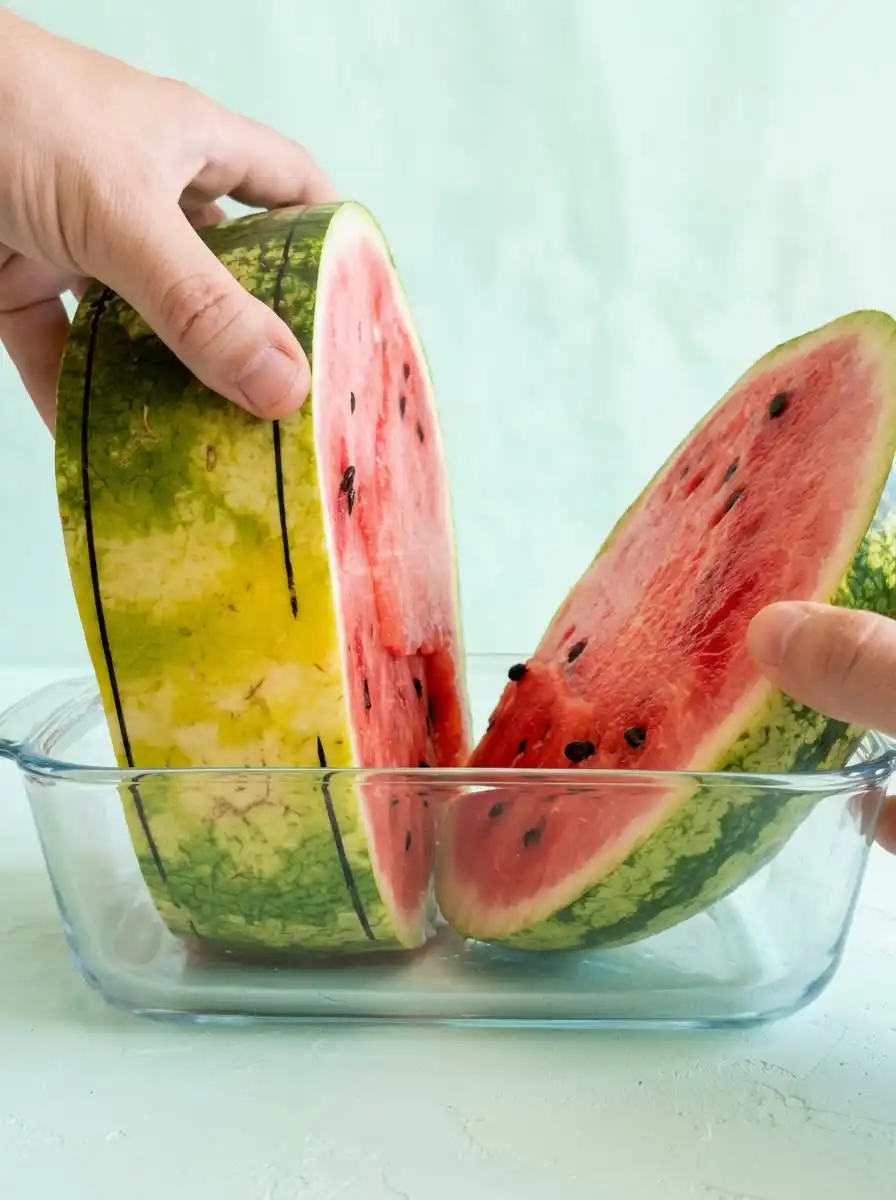
Building a dessert entirely from fresh agricultural ingredients requires selecting specimens with flawless structural integrity. We are relying on the natural crispness of melon and stone fruits to support the entire vertical weight of our creation. Each selection on this list serves a specific culinary and structural purpose in our raw masterpiece.
- Whole seedless watermelon: The structural backbone of our build, requiring a uniform, dense cylinder to support the upper tiers. It must feel heavy for its size and sound hollow when tapped, indicating a crisp, firm interior.
- Fresh white peaches: These add a delicate perfume and soft texture that contrasts beautifully against the crisp melon. Select peaches that are still slightly firm to ensure they can be sliced into thin, structural planks without disintegrating.
- Crisp green apples: These provide necessary tartness and a sturdy, dense flesh that holds decorative shapes without bruising. Their bright, clean acidity cuts through the heavy water content of the surrounding berries.
- Fresh strawberries: Sliced flat, these act as the red mortar holding our melon layers in precise, level alignment. They provide natural traction between the slick watermelon slices, keeping the tiers from shifting.
- Fresh blueberries: Spherical and firm, these fill the structural gaps and prevent the upper layers from tilting. Their deep color creates gorgeous contrast against the pale peaches and bright red strawberries.
- Fresh lemon juice: The chemical shield that halts oxidation, keeping our white orchard fruits from turning dull brown. A simple light coating preserves the clean, crisp colors of your sliced apples and peaches.
| Ingredient | Why It Matters |
|---|---|
| Seedless Watermelon | Forms the dense, sturdy tiers that carry the weight of the entire build. |
| Sliced Strawberries | Acts as level shims between the wet melon layers to prevent slipping. |
| Green Apples | Adds tart contrast and provides durable flesh for custom cookie-cutter shapes. |
| Fresh Lemon Juice | Prevents enzymatic browning on the sliced apples and delicate peaches. |
| Blueberries | Fills structural voids to guarantee the cake remains upright. |
The Method
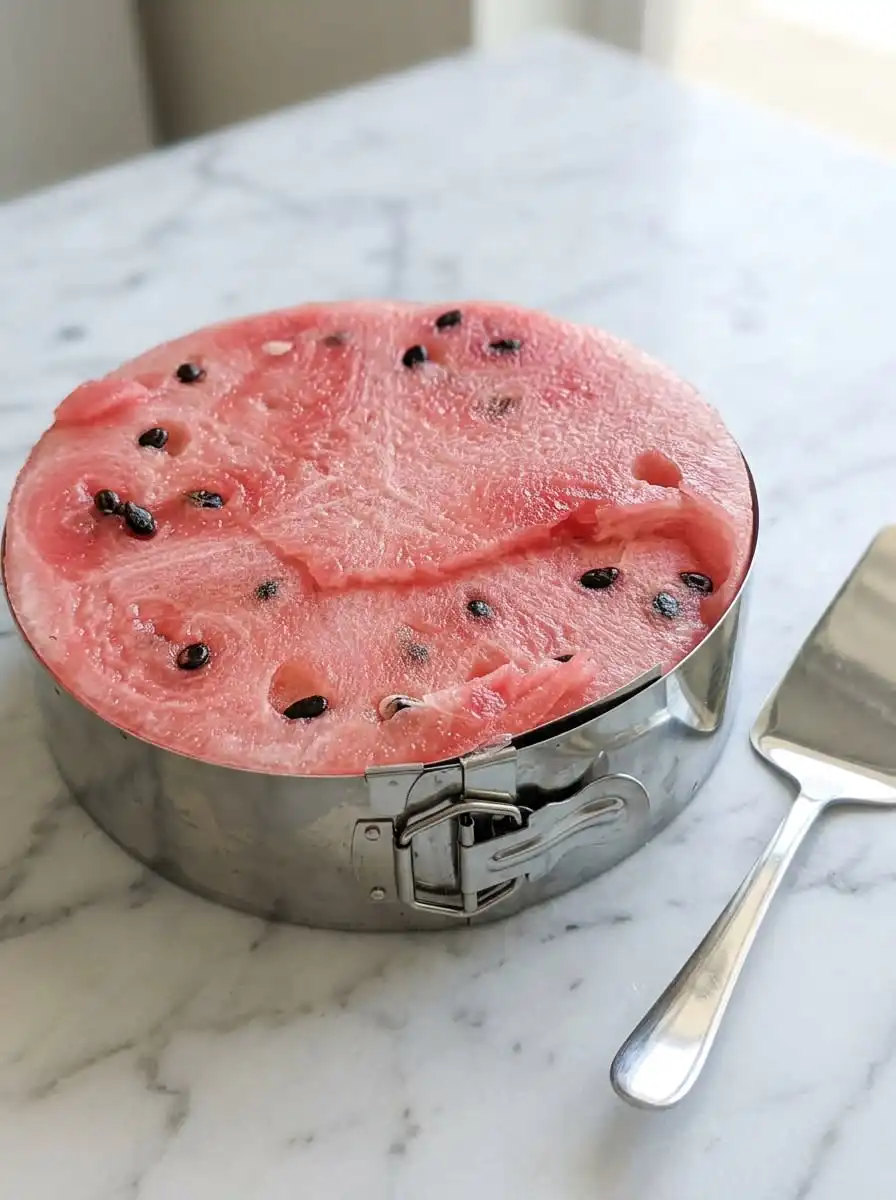
Step 1: Carving the Base Tiers
Position your seedless watermelon flat on a heavy cutting board to secure its footing. Slice off both rounded ends to expose the deep, ruby-pink flesh inside. Cut three identical cylinders that measure roughly one inch in height. Use a sharp, six-inch cake pan or a small plate as a template to trim away the tough green rinds into clean, vertical walls.
Step 2: Prepping the Fruit Inlays
Slice your white peaches and green apples into uniform quarters on a clean surface. Cut these pieces into thin, precise sheets about a quarter of an inch thick. Immediately toss the apple and peach pieces in fresh lemon juice to preserve their ivory color. Prepare your fresh strawberries by hulling them and cutting them into flat, stackable slices.
Step 3: Assembling the Watermelon and Berry Layer Cake
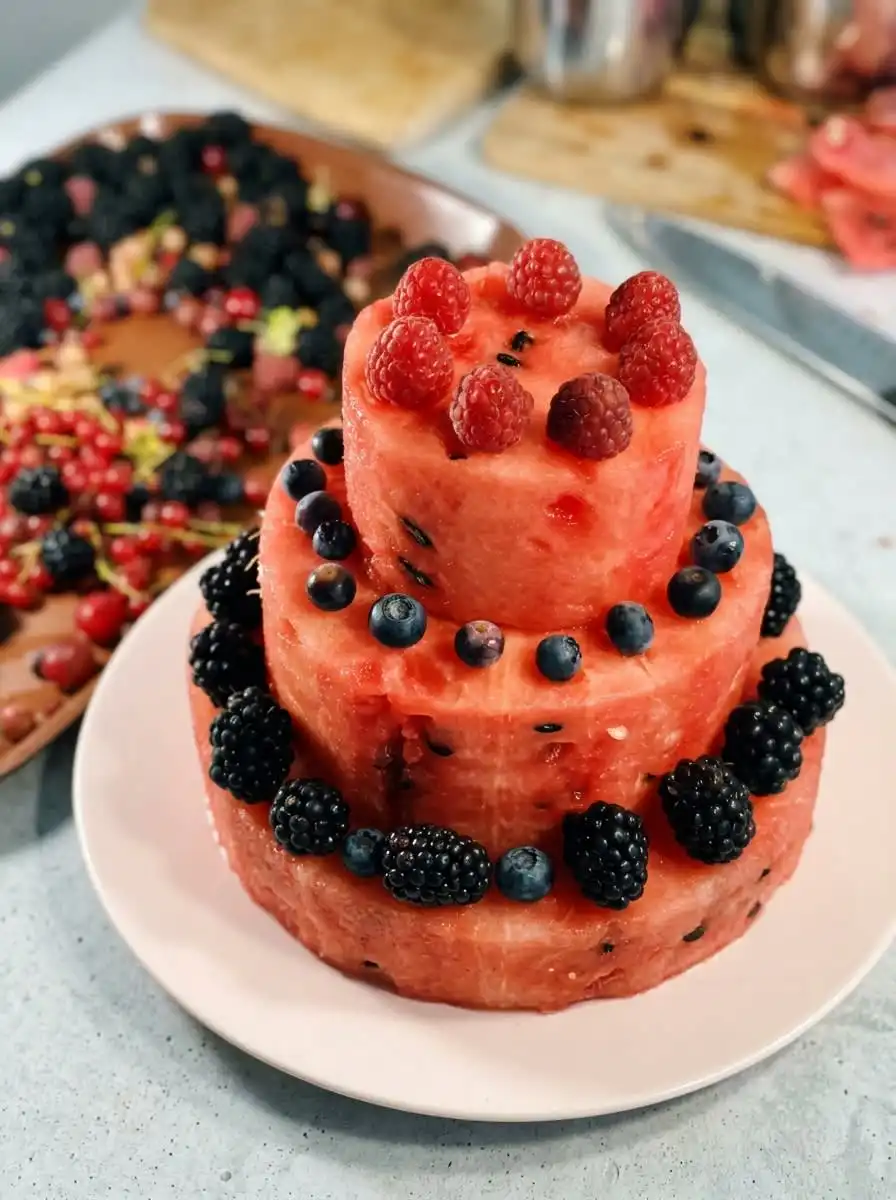
Lay your largest trimmed watermelon disc directly in the center of your chosen serving platter. Arrange a level layer of sliced strawberries and peaches across the wet surface of the melon. Scatter a handful of blueberries into the open gaps to lock the fruit shim into place. Carefully position the second watermelon layer directly on top, checking that the sides align vertically.
Step 4: Locking the Core Structure
Observe the balance of your two-tier stack to guarantee there is no leaning or sliding. If the fruit layers feel slick, gently insert two wooden skewers down through the center of the structure. Trim the tops of the skewers with clean kitchen shears so they rest directly below the top surface. Place the final, smallest melon tier onto the skewers to complete the main tower.
Step 5: Applying the Top Garnishes
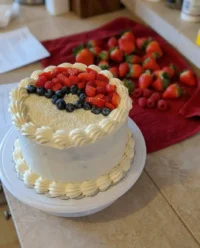
Use a small metal cutter to stamp out stars or diamonds from your lemon-bathed green apple slices. Arrange these sharp shapes on the very top of your fruit tower in a striking pattern. Pile the remaining blueberries and peach slices around the center shapes to build a crown of color. Inspect the assembly from eye level to confirm the structure looks balanced and steady.
The Details That Matter
Watermelon contains immense water content, which can act as a lubricant between tiers. Press paper towels firmly onto both sides of your carved melon rounds before stacking them to absorb excess moisture. This creates a tacky surface that helps the fruit layers grip each other tightly. Refer to professional fresh melon cake preparation techniques to understand how surface drying prevents overall structure slipping.
To keep your tiers evenly balanced, use your kitchen scale to weigh each carved melon disc before assembly. Guaranteeing each layer has a uniform thickness prevents your towers from leaning under their own weight. This level of precision is exactly what separates sloppy home assemblies from professional pastry-quality creations. We want to aim for structural perfection that commands attention on the table.
If your top tier begins to slide sideways, your fruit shims are uneven or too wet. Gently lift the top tier, wipe the melon surfaces dry with a fresh towel, and re-level the strawberry slices underneath. Re-inserting the skewers at a slight outward angle will also lock the shifting layers back into position. Taking this quick corrective action saves your centerpiece from a slow, dramatic tilting disaster.
Always chill your raw melon slabs in the refrigerator for at least two hours before attempting to carve them. Cold melon flesh is significantly firmer and cleaner to cut than warm, room-temperature fruit. Keeping your components icy cold prevents the natural sugars from weeping and creating a puddle on your platter. Cold ingredients also hold their geometric shapes much better during assembly.
For those who want to introduce a rich element to contrast the juicy fruit, consider serving this alongside a bowl of chilled topping. If you prefer dairy-free options, pairing this cake with a dollop of angel food cake coconut whipped cream berries brings a rich, tropical finish to each slice. The creamy coconut fat balances the sharp acidity of the fresh lemon juice nicely. It transforms a simple raw fruit dish into a fully realized dessert experience.
Always use a long, non-serrated carving knife that has been freshly sharpened to shape your melon rinds. A dull blade will bruise the delicate flesh, forcing out precious juices and leaving ragged edges on your tiers. A clean, single-pass slice preserves the structural cell walls of the melon for maximum stability. Sharp tools reduce friction and keep your workspace tidy from start to finish.
Frequently Asked Questions
How do you keep fruit from falling off?
The secret to holding the fruit in place is drying the watermelon slabs thoroughly with paper towels before stacking them. Creating a dry, slightly tacky surface prevents the sliced berries and peaches from sliding off. Additionally, using small wooden skewers hidden within the center of the cake provides a solid vertical anchor that holds all the fruit layers in precise alignment. This simple step guarantees your tower stays beautiful throughout the entire party.
Can you make a watermelon cake the night before?
You should avoid fully assembling this cake the night before because watermelon naturally weeps water once it is cut. Storing a fully assembled cake overnight results in a pool of liquid at the base and sliding fruit layers. Instead, carve your watermelon tiers and slice your decorative fruits the night before, store them separately in airtight containers, and assemble the cake fresh on the day of your event. This strategy keeps your fruit incredibly crisp and vibrant.
What frosting goes best with a watermelon cake?
If you want to add a frosting layer, a stabilized coconut whipped cream or a thick Greek yogurt frosting works beautifully. Traditional heavy buttercream is too dense and sweet, and it will slide off the wet surface of the melon. Always pat the melon completely dry before spreading a thin, even layer of whipped topping over the exterior. Serving the frosting on the side is also an excellent option for guests to customize their slices.
What are the best fruits to decorate with?
Firm, low-moisture fruits like blueberries, blackberries, and sliced strawberries are excellent because they hold their shape and provide natural friction. Stone fruits like peaches and nectarines add great color, while green apples work wonderfully for custom decorative cutouts. Avoid overly soft or watery fruits like overripe raspberries or citrus slices, which can make the layers slide. These selections keep the assembly looking clean and professional.
How long does a watermelon and berry cake last?
Once assembled, this fresh fruit cake is best enjoyed within two to three hours for optimal texture and presentation. If you have leftovers, they can be stored in the refrigerator for up to twenty-four hours in a covered container. Be aware that the melon will continue to release moisture, so the leftovers will be slightly soft and wet. Consuming it fresh guarantees you experience the best possible crunch and flavor.
Can you freeze a watermelon cake?
You must never freeze a watermelon cake because freezing permanently damages the cellular structure of raw melon. When defrosted, the frozen melon will collapse into a mushy, waterlogged mess that completely ruins the cake’s architecture. Always enjoy this dessert fresh and cold directly from the refrigerator. Freezing ruins the crisp, clean texture that makes this recipe so satisfying.
How do you make a watermelon layer cake?
You make a watermelon layer cake by cutting thick, seedless watermelon slices into uniform rounds using a cake pan as a guide. These rounds are then stacked vertically with thin layers of fresh, sliced fruits acting as structural mortar between each tier. Securing the center with skewers ensures the towers remain stable and ready for elegant slicing. It is an easy, heat-free way to make a gorgeous summer centerpoint.
Where to Deviate
Shake up the flavor profile by dusting the interior fruit layers with finely grated lime zest and minced fresh mint leaves. The aromatic oils in the mint slice through the dense sweetness of the melon, offering a sophisticated twist. This clean, herbaceous adjustment makes the cake feel even more mature and refreshing during high-summer celebrations. It is a simple way to elevate the sensory profile without adding processed sugar.
Swap out the peach slices for sliced bananas and white dragon fruit to create a holiday theme. This simple color adjustment transforms your raw dessert into a striking centerpoint for seasonal gatherings. By leaning into this classic palette, you can easily mimic the visual style of a traditional patriotic berry cake without turning on your hot kitchen oven. Your guests will love the clean, themed colors on display.
Replace the peaches and green apples with thin ribbons of ripe mango and brilliant kiwi rounds. The tropical acidity of kiwi balances the water-heavy melon flesh, adding a brilliant green contrast to the red base. Be sure to slice the mangoes incredibly thin to keep them from sliding off the slick watermelon surface. This tropical version is especially popular for beach parties and tiki-themed gatherings.
Cutting, Plating, Presenting
Slicing this raw creation requires a long, thin, sharp knife to guarantee clean cuts through the varied fruit textures. Avoid using a sawing motion, which can dislodge the delicate berry shims and push the layers out of alignment. Press the blade straight down through all the tiers in one smooth, confident movement, wiping the knife clean between each slice. This clean technique preserves the visual drama of the cross-section, revealing the colorful bands of fruit within.
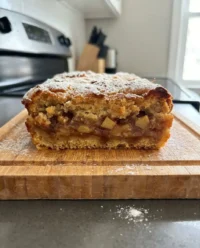
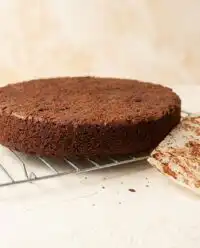
Plating each slice flat on its side rather than upright prevents any accidental collapses on your guests’ plates. Serve this refreshing treat on chilled dessert plates to keep the natural fruit juices cold and crisp during warm summer afternoons. For a more substantial dessert spread, consider serving this alongside a light, sponge-based cake with fruit to offer your guests a beautiful contrast in textures. This thoughtful combination caters to those who want a classic baked good as well as those seeking raw freshness.
Pairing this dish with clean, refreshing beverages helps emphasize the bright sweetness of the orchard fruits. Chilled herbal teas, iced hibiscus infusions, or a crisp sparkling water with a twist of lime make excellent accompaniments. Avoid heavy, sugary sodas that would overwhelm the delicate, natural profiles of the fresh watermelon and ripe peaches. A simple beverage pairing keeps the entire dessert experience feeling light and revitalizing.

The Takeaway
Baking does not always require a hot oven, a mountain of flour, or hours of waiting for cakes to cool. By treating fresh, seasonal fruit with the same structural respect we give to traditional sponge layers, we create a light, beautiful alternative. This raw cake proves that small-batch innovation is about using fresh ingredients in unexpected ways to surprise our guests. It invites us to play with our food and break traditional pastry rules with confidence.
If you love this refreshing approach to raw summer baking, try comparing it to our light angel food cake with berries to see how different textures highlight summer produce. Both styles celebrate the natural brightness of fresh berries while keeping your dessert menu light, clean, and elegant. Taking risks in the kitchen is how we find our next favorite classic, and this recipe is your excellent starting point. Do not be afraid to customize the fruit layers to match whatever is fresh at your local market.
Please share your beautiful fruit cake creations with our creative baking community online. Pin your stunning vertical towers on Pinterest, post your slicing videos on TikTok, and join the lively conversation on our Facebook page. We cannot wait to see how you customize your fruit tiers and shake up the summer dessert game! Happy raw assembly, and remember that you are the ultimate variable in your kitchen.