This recipe card was yellowed at the edges, tucked behind a divider labeled ‘Comfort’ in my mother’s old tin box. It wasn’t fancy, just a few lines of blue ink describing a cake that relied on the simple magic of oats and boiling water. I remember how the kitchen smelled whenever she made this—like warm cinnamon and toasted coconut on a rainy Tuesday afternoon. It was the kind of treat that didn’t need a holiday to feel special.

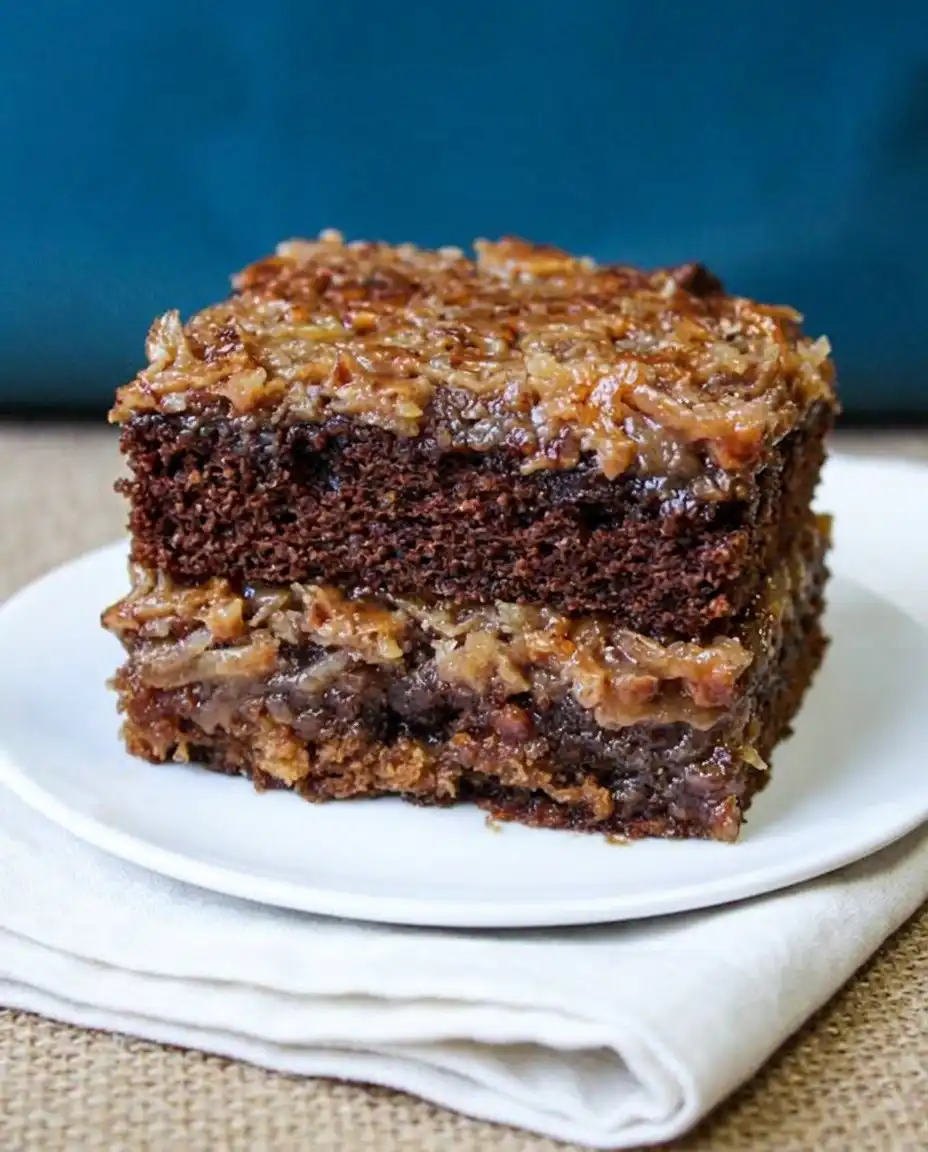
This Oatmeal Cake is a testament to the beauty of humble staples found in every pantry. It offers a moist, tender crumb topped with a broiled, crunchy layer of nuts and coconut that feels like a warm hug from the past. We don’t need much to make something special, just a little time, a heavy mixing bowl, and the patience to let the oats soak until they are just right.
The Magic of This Humble Heritage Cake\n\nThere is something deeply grounding about a cake made from oats. In an era where desserts often strive to be towering spectacles of neon frosting and complex layers, this Oatmeal Cake stands as a reminder that simplicity is a virtue. The first thing you will notice is the texture. Because the oats are soaked in boiling water before they ever touch the flour, they soften into the batter, creating a crumb that is incredibly moist without being heavy. It is a soft, spiced base that carries the warmth of cinnamon and the deep earthiness of nutmeg in every bite.\n\nThen, of course, there is the topping. This isn’t a traditional buttercream that sits heavy on the tongue. Instead, it is a broiled confection of shredded coconut, chopped nuts, and brown sugar. When it hits the heat of the broiler, the sugars bubble and caramelize, binding the coconut and nuts into a golden, lacquered crust. The contrast between the soft, pillow-like cake and the shattered-glass crunch of the topping is what has kept this recipe in rotation for nearly a century. It is a cake that tastes of home, of quiet afternoons, and of the enduring wisdom of bakers who knew how to make a masterpiece out of a handful of grains.
Print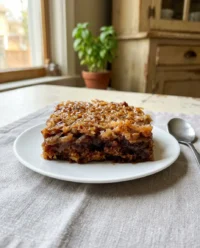
Oatmeal Cake
- Total Time: 1 hour 5 mins
- Yield: 12 servings
- Diet: Vegetarian
Description
This moist, heritage Oatmeal Cake features a spiced base made with soaked old-fashioned oats and a decadent, broiled topping of shredded coconut and crunchy nuts. It is a nostalgic pantry-staple dessert that perfectly balances a tender crumb with a caramelized, golden crust.
Ingredients
- 1 cup old-fashioned oats
- 1 1/4 cups boiling water
- 1/2 cup unsalted butter, softened
- 1 cup granulated sugar
- 1 cup firmly packed brown sugar
- 2 large eggs
- 1 teaspoon vanilla extract
- 1 1/3 cups all-purpose flour
- 1 teaspoon baking soda
- 1/2 teaspoon salt
- 1 teaspoon ground cinnamon
- 1/2 teaspoon ground nutmeg
- 6 tablespoons unsalted butter, melted
- 1 cup shredded coconut
- 1/2 cup chopped pecans or walnuts
- 2/3 cup brown sugar
- 1/4 cup evaporated milk
Instructions
- In a small heat-proof bowl, combine the old-fashioned oats and boiling water; let the mixture sit for 20 minutes to allow the oats to soften.
- Preheat your oven to 350°F (175°C) and grease a 9×13 inch baking pan.
- In a large mixing bowl, cream together the softened butter, granulated sugar, and 1 cup of brown sugar until light and fluffy.
- Beat in the eggs one at a time, then stir in the vanilla extract and the soaked oatmeal mixture.
- In a separate bowl, whisk together the flour, baking soda, salt, cinnamon, and nutmeg.
- Gradually add the dry ingredients to the wet batter, mixing just until the flour streaks disappear.
- Pour the batter into the prepared pan and bake for 30 minutes, or until a wooden skewer inserted in the center comes out clean.
- While the cake is baking, combine the melted butter, shredded coconut, chopped nuts, 2/3 cup brown sugar, and evaporated milk in a small bowl.
- Spread the topping evenly over the warm cake immediately after removing it from the oven.
- Switch the oven to the broil setting and return the cake to the oven for 2-3 minutes until the topping is bubbling and a deep golden brown.
Notes
For the best results, ensure your eggs are at room temperature to create a smoother emulsion in the batter. When broiling the topping, stay close to the oven door and watch carefully, as the high sugar content in the coconut and nuts can cause the topping to burn within seconds of reaching perfection.
- Prep Time: 30 mins
- Cook Time: 35 mins
- Category: Dessert
- Method: Baking
- Cuisine: American
The Simple Pantry Staples\n\nWhen I look at this list of ingredients, I see a history of sensible baking. These are items that were always on hand in Grandma’s kitchen, kept in heavy glass jars and ceramic crocks. There is no need for fancy extracts or hard-to-find flours here.\n\n* Old-Fashioned Oats: These are the heart of the cake. Do not use the quick-cooking kind; they lack the soul and body needed for this specific texture.\n* Boiling Water: This is the secret step. It coaxes the starch out of the oats and creates that signature moisture.\n* Unsalted Butter: We use butter in both the cake and the topping for a rich, creamy mouthfeel that oil simply cannot replicate.\n* Granulated and Brown Sugar: The combination gives us sweetness and a hint of molasses depth.\n* Warm Spices: Cinnamon and nutmeg provide that nostalgic aroma that fills the whole house.\n* Evaporated Milk: This is for the topping. It provides a concentrated creaminess that helps the coconut and sugar meld into a rich caramel.\n* Shredded Coconut and Nuts: These provide the necessary crunch. I prefer pecans for their buttery flavor, but walnuts are a classic choice as well.
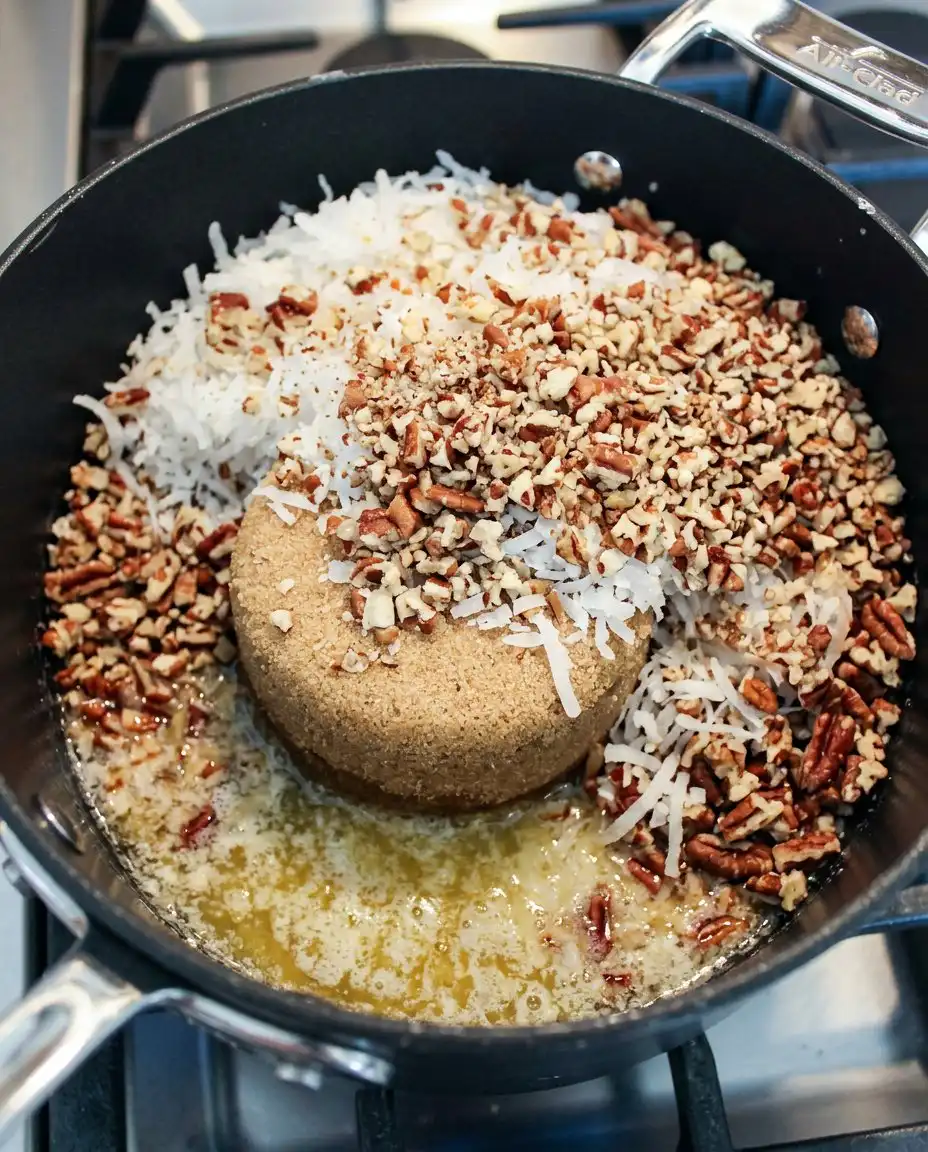
The Baking Process\n\n### Step 1: Soften the Oats\n\nBegin by bringing your water to a rolling boil. In a small heat-proof bowl, measure out your old-fashioned oats and pour the boiling water directly over them. Let this sit quietly for 20 minutes. This gives the oats time to absorb the liquid and soften, which is the key to the cake’s unique structure.\n\n### Step 2: Prepare the Oven and Pan\n\nWhile the oats are resting, preheat your oven to 350 degrees Fahrenheit (175 degrees Celsius). Take a bit of butter and grease a 9×13 inch baking pan. I like to use a glass dish so I can see the golden edges as they form.\n\n### Step 3: Cream the Butter and Sugars\n\nIn a large mixing bowl, cream together the softened butter, granulated sugar, and firmly packed brown sugar. You want to beat them until the mixture looks light and somewhat fluffy. Add the eggs one at a time, beating well after each addition to make certain everything is fully incorporated.\n\n### Step 4: Incorporate the Oats and Vanilla\n\nStir in the vanilla extract and then add the soaked oatmeal mixture. At this point, the batter might look a bit thin or separated, but do not worry. This is exactly how it should look before the dry ingredients are introduced.\n\n### Step 5: Sift in the Dry Ingredients\n\nIn a separate bowl, whisk together the all-purpose flour, baking soda, salt, cinnamon, and nutmeg. Gradually add this to the wet ingredients, mixing just until the white streaks of flour disappear. Be gentle here; over-mixing can lead to a tough cake.\n\n### Step 6: The Initial Bake\n\nPour the batter into your prepared pan and smooth the top with a spatula. Place it in the center of the oven and bake for 30 minutes. You’ll know it’s ready when a wooden skewer inserted into the center comes out clean.\n\n### Step 7: Prepare the Topping\n\nWhile the cake is in its final minutes of baking, melt the butter for the topping in a small saucepan. Stir in the coconut, chopped nuts, brown sugar, and evaporated milk. Mix it well until it forms a thick, spreadable paste.\n\n### Step 8: The Finishing Touch\n\nAs soon as the cake comes out of the oven, spread the topping evenly over the warm surface. Switch your oven to the broil setting. Place the cake back in, but stay close by. Broil for just a few minutes until the topping is bubbling and a deep golden brown. Watch it carefully, as the sugars can turn from perfect to burnt in a matter of seconds.
Secrets from the Recipe Box\n\nOne of the most important things to remember is the soak time for your oats. If you rush this part, you might find little chewy bits in your cake that feel out of place. Giving them the full twenty minutes allows the moisture to penetrate to the very center of each grain. Another tip I learned from years at the oven is to use room temperature eggs. They incorporate much more smoothly into the butter and sugar, creating a more stable emulsion for the batter. \n\nIf you find your topping is too thick to spread, add an extra tablespoon of evaporated milk to thin it out slightly. This cake is very similar in spirit to a vintage cake that focuses on texture and pantry-ready ingredients. Always keep an eye on that broiler; every oven has its own personality, and some are much hotter than others. You want a gentle caramelization, not a charred surface. For the best flavor, I recommend toasting your nuts for five minutes in a dry pan before adding them to the topping mix.
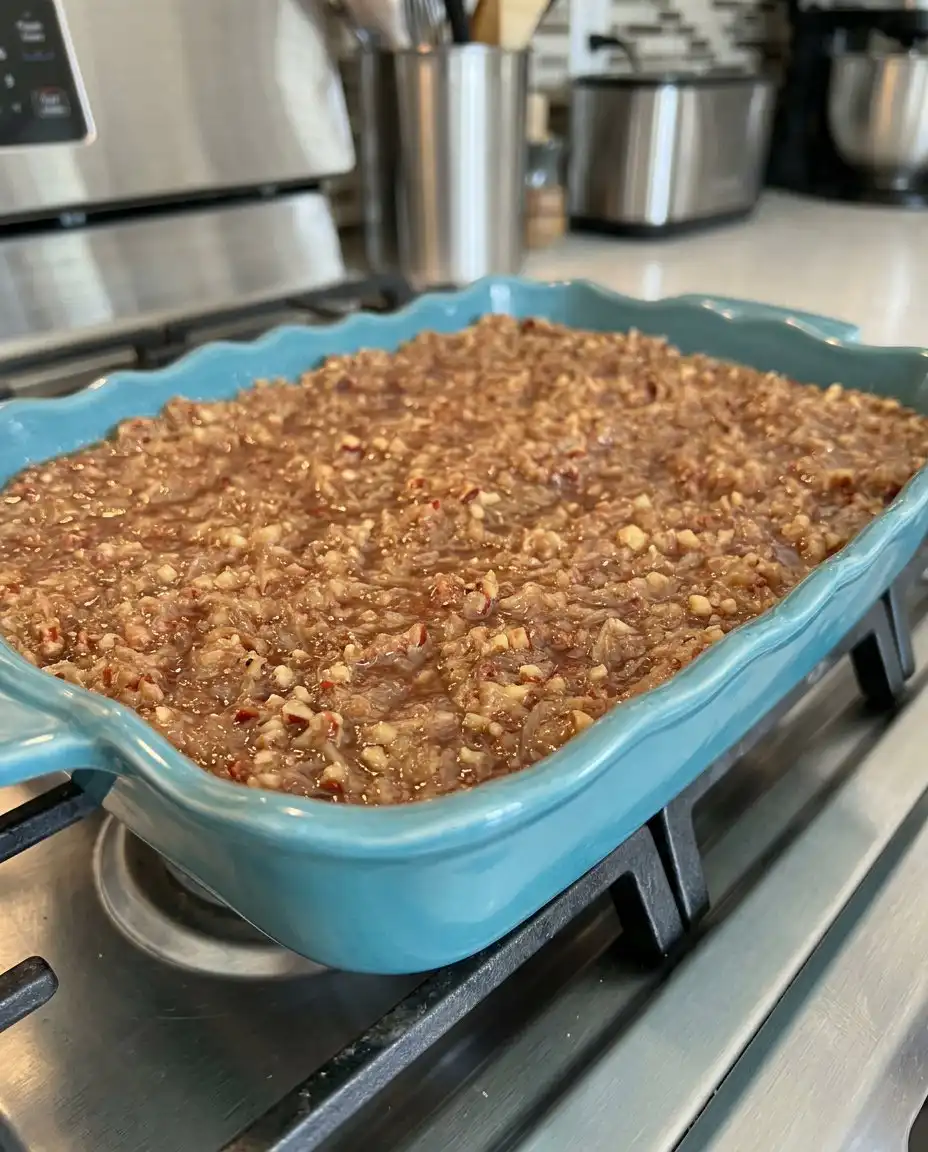
Classic Variations to Try\n\nWhile the traditional coconut and nut topping is hard to beat, there are ways to make this recipe your own without losing its heritage feel. For those who aren’t fans of coconut, you can increase the amount of nuts and add a half-cup of crushed graham crackers to the topping for a different kind of crunch. If you want a deeper flavor, try replacing the granulated sugar in the cake with dark brown sugar for a more pronounced molasses note. \n\nYou might also consider adding a handful of golden raisins to the batter if you enjoy a bit of fruitiness, much like the fruit additions in a blueberry coffee cake. For a festive twist during the holidays, a pinch of ground cloves or ginger added to the flour mixture provides a lovely warmth that pairs beautifully with the oats. Some families even like to add a dollop of whipped cream on top of the broiled frosting just before serving to cut through the richness of the caramel.
At the Table\n\nThis cake is at its absolute peak when served slightly warm, just long enough for the topping to set but while the crumb is still tender. I love to serve a thick square of it on a small floral plate alongside a steaming cup of black coffee or a cold glass of milk. It is a wonderful addition to a brunch spread, sitting comfortably next to something like a purple carrot cake for a variety of textures and colors.\n\nBecause this is a sturdy cake, it also travels well. It was a staple at church potlucks and family reunions because it doesn’t require refrigeration and stays moist for days. If you are serving it for a more formal gathering, a small sprig of fresh mint or a few fresh berries on the side adds a touch of brightness to the plate. It is a cake meant for sharing, for passing around the table while stories are told and memories are made.