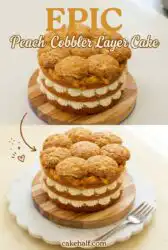
Baking a towering three-layer cake usually feels like a logistical nightmare, but shrinking the scale to nine-inch rounds ensures every crumb stays perfectly saturated with stone fruit juices.

This Peach Cobbler Layer Cake is a textural masterclass designed for those who find standard sponges entirely too polite. By introducing cornmeal into the batter, we provide a structural grit that stands up to the heavy, roasted fruit filling without collapsing into a soggy mess. You are not just making a cake; you are constructing a vertical homage to the best parts of a summer harvest, complete with a crunchy cobbler topping that provides the necessary contrast to velvety frosting.
Why Small-Batch Works for this Peach Cobbler Layer Cake
Prep: 45 min · Serves: 12 · Difficulty: Medium
- Cornmeal adds a satisfyingly rustic crumb structure
- Roasted peaches provide concentrated jammy summer flavor
- Liquid pectin ensures the filling stays put
- Cobbler discs offer a unique crunchy topping
- Buttermilk creates a tangy and tender crumb
This is the bold, fruit-forward experiment that finally makes the standard peach cake feel like a distant memory.
Get The Full Cake Recipe
Print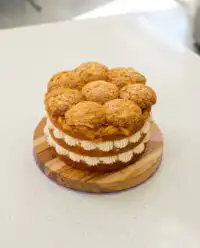
Peach Cobbler Layer Cake
- Total Time: 1 hour 45 mins
- Yield: 12 servings
Description
This impressive three-layer cake features a rustic cornmeal sponge layered with deeply roasted, pectin-thickened peaches. Topped with crunchy cobbler biscuit clusters, it perfectly balances southern comfort with sophisticated structural integrity.
Ingredients
- 4 1/2 cups all-purpose flour
- 1 1/2 cups cornmeal
- 2 1/4 cups sugar
- 3 tablespoons baking powder
- 1 1/2 teaspoons salt
- 3 cups buttermilk
- 6 large eggs
- 2 tablespoons lemon zest
- 2 teaspoons vanilla extract
- 1 1/2 cups melted butter
- 10 peaches, peeled and wedged
- 1/2 cup sugar (for peaches)
- 1 tablespoon liquid pectin
- 1 cup heavy whipping cream (for topping)
Instructions
- Prepare oven and pans. Preheat oven to 350°F and grease three 9-inch round pans with parchment paper liners.
- Combine dry ingredients. Whisk together flour, cornmeal, sugar, baking powder, and salt in a large bowl until uniform.
- Whisk liquid components. Combine buttermilk, eggs, lemon zest, vanilla, and cooled melted butter in a separate vessel.
- Integrate the batter. Slowly mix the wet ingredients into the dry, stopping as soon as the flour streaks disappear to avoid over-mixing.
- Bake cake layers. Divide batter equally into pans and bake for 30-40 minutes until golden and set.
- Roast the peaches. Toss peach wedges with sugar, strain the syrup, then roast at 350°F for 20 minutes.
- Glaze the fruit. Combine reserved syrup with pectin, toss with roasted peaches, and return to oven for 20 minutes until bubbling.
- Create cobbler topping. Combine remaining dry ingredients with cold butter and cream to form dough, then scoop onto a prepared pan and bake for 15-20 minutes.
Notes
- Weigh your flour using a digital scale to prevent the cake from becoming dense and dry.
- Chill the roasted fruit filling for at least two hours before assembly to ensure the layers remain stable.
- If the cobbler dough feels too soft or sticky to scoop, place it in the freezer for 10 minutes.
- Use the blanching method for peaches to remove skins quickly without losing fruit flesh.
- Always use room-temperature eggs and buttermilk to ensure a proper emulsion when mixing the batter.
- Prep Time: 45 mins
- Cook Time: 60 mins
- Category: Dessert
- Method: Baking
- Cuisine: Southern
Build Your Mise en Place
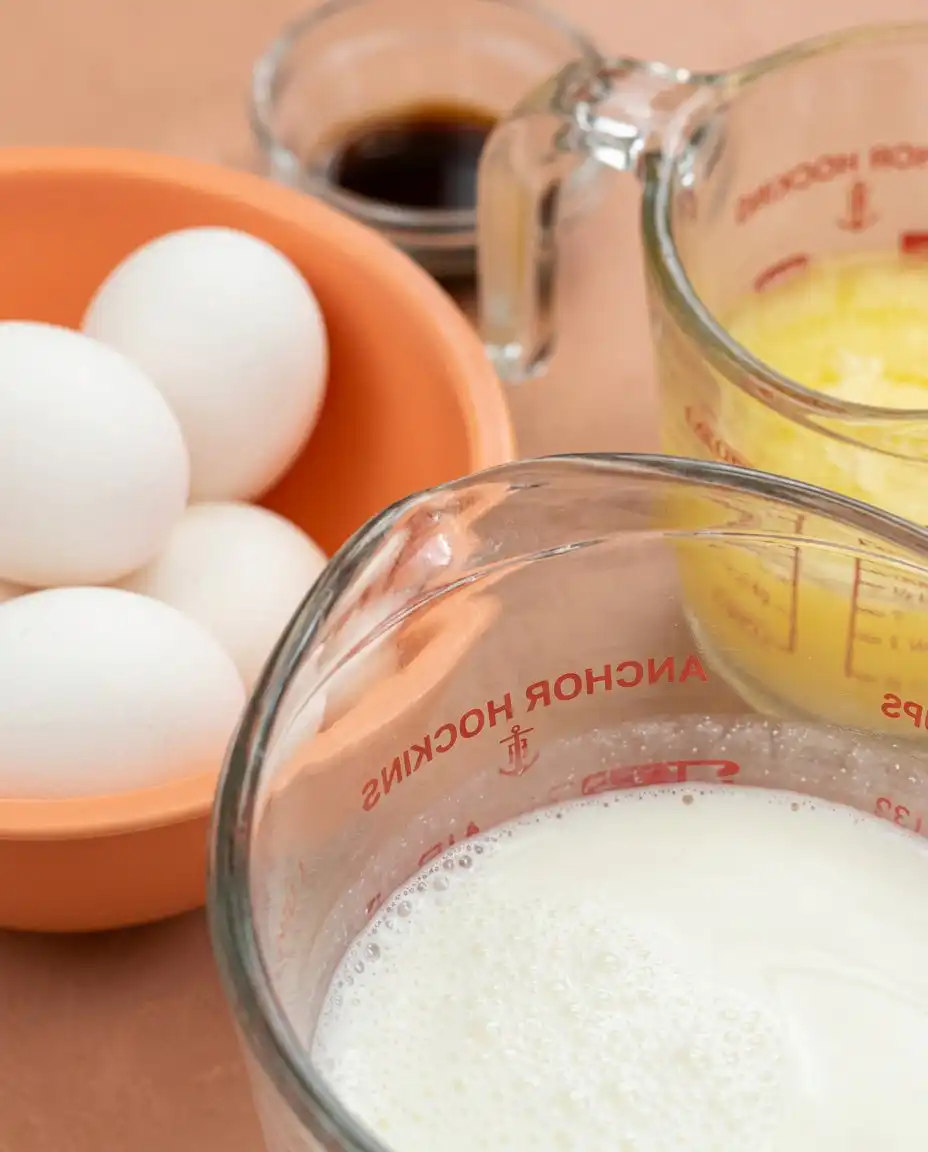
Success in high-hydration cakes depends entirely on the quality of your fats and the precision of your dry ratios. We use a combination of all-purpose flour for soft structure and cornmeal for a rustic, Southern-inspired bite that mimics a traditional cobbler crust. The roasted peaches are the true stars here, requiring a specific balance of sugar and acid to prevent them from becoming one-dimensional sweetness.
- Cornmeal: This provides the essential ‘tooth’ to the cake, preventing the moist peaches from turning the layers into mush.
- Buttermilk: The high acidity reacts with the leavening agents to produce a tall, airy rise that keeps the dense fruit filling aloft.
- Liquid Pectin: A secret weapon that binds the roasted peach juices into a thick glaze so your cake doesn’t slide apart during slicing.
- Chilled Butter: Specifically for the topping, cold cubes are vital to creating those flaky, biscuit-like clusters that define the cobbler experience.
- Lemon Zest: We use a significant amount to cut through the richness of the butter and highlight the floral notes of the peaches.
- All-Purpose Flour: Provides the necessary gluten framework to support three layers of heavy fruit and frosting.
| Ingredient | Why It Matters |
|---|---|
| Cornmeal | Adds structural integrity and a rustic, gritty texture |
| Liquid Pectin | Thickens fruit juices to prevent soggy cake layers |
| Buttermilk | Tenderizes the crumb while providing a subtle tang |
| Lemon Zest | Brightens the stone fruit and balances the sugar |
Let’s Bake
Step 1: Prep Your Pans and Oven
Begin by preheating your oven to 350 degrees Fahrenheit. The timing is critical because the leavening agents in the batter begin to react the moment they hit the liquid, so you want the oven ready to receive the pans immediately. Grease the sides of three nine-inch round cake pans with softened butter and line the bottoms with parchment paper rounds. This extra layer of protection ensures that even with the high sugar content, your layers will release cleanly without leaving their edges behind.
Step 2: Combine the Dry Architecture
In a large mixing bowl, whisk together 4 1/2 cups of all-purpose flour, 1 1/2 cups of cornmeal, 2 1/4 cups of sugar, 3 tablespoons of baking powder, and 1 1/2 teaspoons of salt. The whisking process serves two purposes: it removes lumps and aerates the mixture for a lighter final result. You should see a uniform pale yellow color throughout the bowl, indicating the cornmeal is evenly distributed. Do not skip the salt, as it is the primary engine for heightening the flavor of the corn and peach.
Step 3: Emulsify the Liquid Components
In a separate vessel, whisk the 3 cups of room-temperature buttermilk with the 6 eggs until completely smooth and no streaks of yolk remain. Add the 2 tablespoons of lemon zest and 2 teaspoons of vanilla extract, followed by the 1 1/2 cups of melted and slightly cooled butter. It is imperative that the butter is not hot, or you risk scrambling the eggs and ruining the emulsion. The mixture should look like a pale, fragrant custard before it touches the dry ingredients.
Step 4: The Final Batter Integration
Slowly pour the wet mixture into the dry ingredients while whisking gently from the center outward. Stop the moment the last streak of flour disappears; over-mixing at this stage will develop too much gluten and result in a tough, bread-like cake. The batter will be thick and smell strongly of lemon and toasted corn. Divide the batter evenly between your three prepared pans, using a kitchen scale to ensure each layer is identical in weight for even baking.
Step 5: Bake the Peach Cobbler Layer Cake
Slide the pans into the oven and bake for 30 to 40 minutes. You are looking for a light golden-brown color on the surface and a toothpick that comes out clean when inserted into the center. The aroma of sweet corn and vanilla will fill your kitchen as the cakes reach their peak volume. Once baked, let them cool in the pans for ten minutes before transferring them to a wire rack to reach room temperature completely.
Step 6: Prepare the Roasted Peach Filling
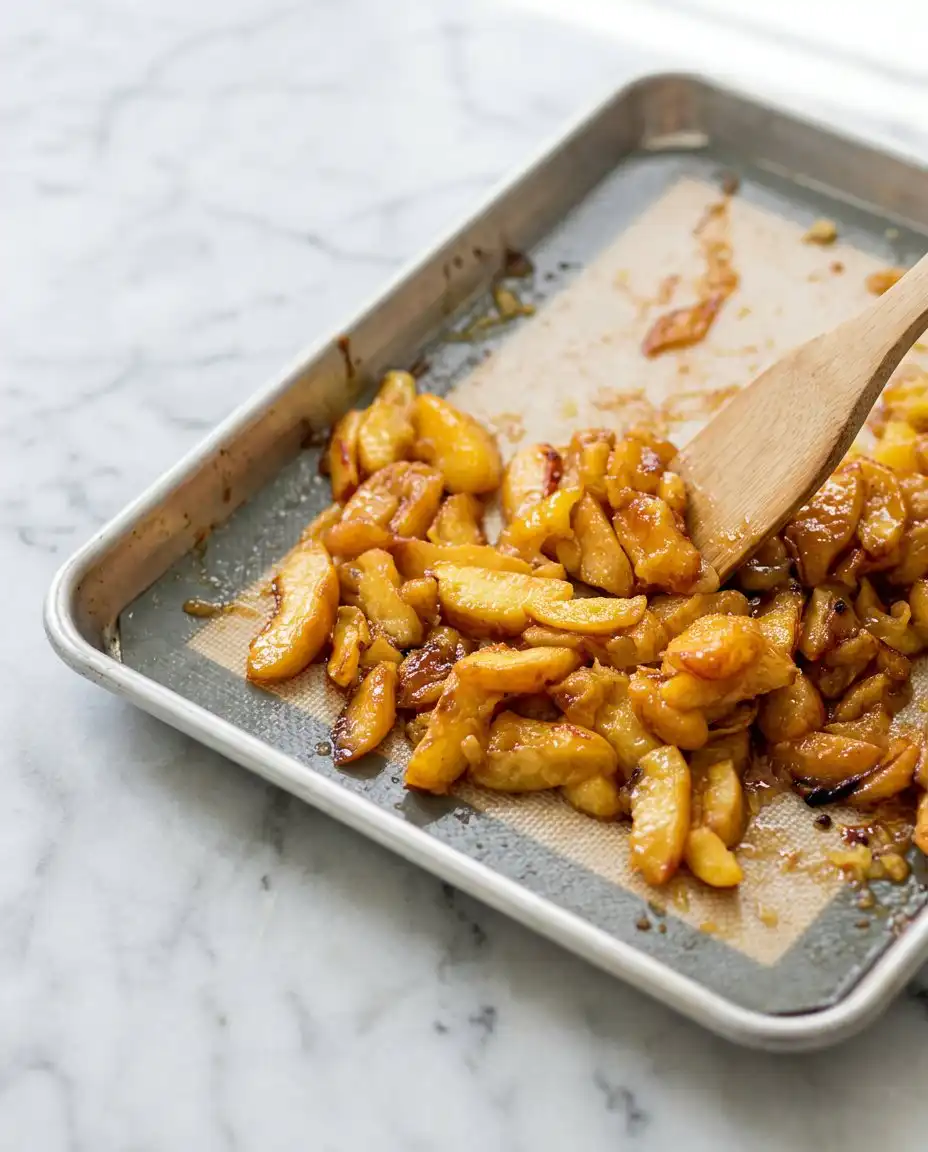
Toss 10 peeled and wedged peaches with 1/2 cup of sugar and let them macerate for 20 minutes to draw out their natural syrups. Strain the peaches, reserving every drop of that liquid for later use. Spread the peach wedges onto a baking tray and roast at 350 degrees for 20 minutes until they soften and their edges begin to caramelize. This roasting step is the rebel move that concentrates the fruit flavor far beyond what raw peaches could ever achieve.
Step 7: Glaze and Set the Fruit
While the peaches roast, mix the reserved juice with 1 tablespoon of liquid pectin to create a thick, stable syrup. Remove the hot peaches from the oven and gently toss them with this pectin mixture before returning the tray to the oven for another 20 minutes. The fruit should look glossy and the liquid should be bubbling and thick. Let this mixture cool entirely before you even think about putting it near your cake layers, or it will melt your frosting on contact.
Step 8: Construct the Cobbler Topping
Flip a nine-inch pan upside down on a baking tray and grease the bottom and top edges before applying a parchment round. Mix the flour, cornmeal, sugar, baking powder, and salt, then rub in the chilled butter until the mixture resembles coarse sand. Stir in the whipping cream until a dough forms, then use an ice cream scoop to place mounds of dough in a flower pattern on the pan. Bake for 15 to 20 minutes until the topping is golden and crisp, providing the final crunchy element for your assembly.
Notes from Testing
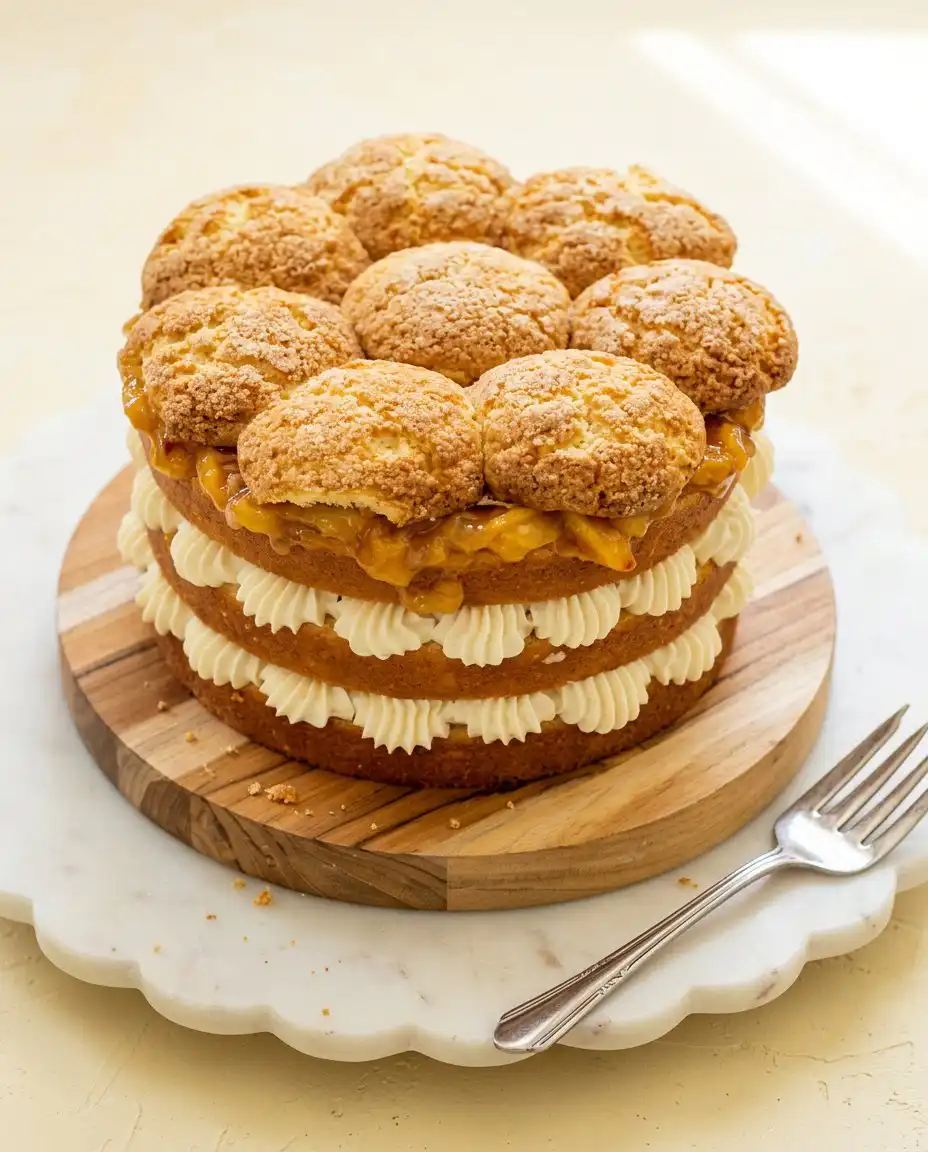
Precision with your kitchen scale is not a suggestion; it is a requirement for a cake this large. Measuring flour by the cup is a gamble that usually ends in a dry, crumbly mess, so weigh your ingredients to ensure the buttermilk can properly hydrate every gram of starch. If you find your cake layers are doming too much in the center, lower your oven temperature by 25 degrees and bake for slightly longer to ensure a flat top for easier stacking.
Temperature control is the difference between a masterpiece and a disaster. If your roasted peach filling is even slightly warm when you begin assembly, the residual heat will liquefy your buttercream and cause the layers to slide. Always chill your fruit filling for at least two hours in the refrigerator before using it as a layer divider. This stability is what allows for that beautiful cross-section cut that reveals the architecture of the cake.
If the cobbler topping becomes too soft to scoop, place the dough in the freezer for ten minutes before forming the flower pattern. High-fat doughs react poorly to warm hands, and keeping the butter cold until it hits the oven ensures the maximum amount of lift and flake. This technique is similar to how we handle the crust in an old fashioned oven baked peach cobbler to get those distinctive ridges.
Don’t be afraid to roast your peaches until they look almost too dark. The Maillard reaction on the fruit adds a complex, smoky sweetness that balances the sugar in the frosting. If your peaches are particularly juicy and the filling looks too thin after roasting, you can simmer the pectin mixture on the stovetop for three minutes to activate the thickening agents more aggressively before tossing it with the fruit.
When peeling peaches, use the blanching method to save time and fruit flesh. A quick thirty-second dunk in boiling water followed by an ice bath causes the skins to slip off with zero effort. This keeps the wedges intact and beautiful for the interior layers. For more advanced flavor profiles, consider studying how to properly brown butter for cake frostings to add a nutty depth to the final assembly.
If your cake feels too fragile to move, wrap the cooled layers in plastic wrap and chill them for an hour. Cold cake is much easier to handle and less likely to crack when you are spreading heavy fruit and frosting. This simple step turns a stressful assembly process into a controlled, professional-level construction project.
Frequently Asked Questions
How do you peel peaches?
The most efficient way to peel peaches is the blanching method. Score a small ‘X’ in the bottom of each fruit, drop them into boiling water for 30-60 seconds, and then immediately plunge them into a bowl of ice water. The skin will loosen and can be wiped away with your fingers, leaving the fruit perfectly intact for wedging.
Can I halve this recipe?
You can certainly halve this recipe to make a single layer or a smaller two-layer cake using six-inch pans. When doing so, use a kitchen scale to divide the eggs by weight, as three eggs might be slightly too much or too little depending on their size. Adjust the baking time down to 25-30 minutes and monitor for the same visual cues of golden edges and a clean toothpick.
Why is there cornmeal in a layer cake?
Cornmeal acts as a structural reinforcement that prevents the cake from becoming waterlogged by the fresh fruit filling. It also provides a rustic, crunchy texture that mimics the flavor profile of a traditional cobbler crust. Without it, the high moisture content of the roasted peaches would likely cause a standard vanilla sponge to collapse or turn gummy.
Can I use frozen peaches for the filling?
Frozen peaches are a viable substitute if fresh ones are out of season, but you must thaw and drain them completely first. Because frozen fruit releases more water, you may need to increase the liquid pectin to 1.5 tablespoons to ensure the filling reaches the correct thickness. Roast them exactly as you would fresh fruit to concentrate the sugars and improve the texture.
How should I store the leftover cake?
Due to the fresh fruit filling, this cake should be stored in the refrigerator in an airtight container or under a cake dome. It will stay fresh for up to three days, though the cobbler topping will lose some of its crunch over time. For the best flavor, let individual slices sit at room temperature for 20 minutes before serving so the butter in the cake can soften.
What is the purpose of liquid pectin here?
Liquid pectin is used as a stabilizer to turn the roasted peach juices into a thick, jam-like consistency that won’t run. Unlike cornstarch alone, pectin provides a cleaner set that holds up better under the weight of multiple cake layers. This ensures that when you cut into the cake, the fruit stays in place rather than spilling out the sides.
Take It Somewhere Else
If peaches aren’t at their peak, you can easily swap them for nectarines or even apricots without changing the chemistry of the pectin glaze. The stone fruit family is interchangeable in this format, though you may need to adjust the sugar slightly if using tarter fruit like plums. A plum version offers a striking purple interior that contrasts beautifully with the golden cornmeal crumb found in a traditional peach upside down cake.
For a winterized version, try substituting the peaches for roasted spiced apples and swapping the lemon zest for orange. The cornmeal still provides that excellent structural support, but the flavor profile shifts toward a cozy, autumnal dessert. You can find inspiration for these fruit transitions by looking at different types of fruit thickeners for baking to see how different acids react with the pectin.
Changing the pan size is also an option if you want a more intimate presentation. You can bake this batter in two 8-inch deep-dish pans for a thicker, more substantial slice, though you will need to increase the bake time by about 10 minutes. This creates a denser, more pudding-like texture in the center that reminds me of a sophisticated peach dump cake but with the elegance of a tiered dessert.
The Final Call
Presentation is everything when you have spent this much time on the architecture of a cake. Serve each slice with a generous dollop of unsweetened whipped cream to balance the intensity of the roasted peaches. The cream acts as a palate cleanser between bites of the rich, cornmeal-studded sponge and the sugary cobbler topping. If you want to lean into the Southern roots of this dish, a side of buttermilk ice cream is a rebel move that elevates the entire experience.
For a casual summer gathering, plate the cake on a rustic wooden board rather than a formal stand. The slight crumbles from the cobbler topping and the visible fruit layers look best when they aren’t trying to be too perfect. You can even drizzle a little extra peach syrup over each plate for added visual drama. If you find yourself with extra peaches, consider making a quick peach dump cake as a secondary, low-effort option for larger crowds.
This cake is best enjoyed outdoors as the sun sets, capturing the fleeting essence of stone fruit season. Pair it with a cold glass of sparkling cider or a crisp Riesling to highlight the acidity of the lemon zest and the floral notes of the peaches. The contrast between the chilled wine and the dense, buttery cake creates a sensory experience that your guests will be talking about long after the last crumb is gone.
Make It Yours
You have just proven that a cake doesn’t have to be delicate to be sophisticated. By embracing the grit of cornmeal and the concentrated power of roasted fruit, you’ve moved beyond the basic recipes found in every other blog. This Peach Cobbler Layer Cake is a testament to the idea that small-batch baking allows for a level of detail and structural integrity that massive commercial cakes simply cannot match. It is a bold, conviction-filled dessert that demands respect at the table.
Take this method and make it your own by experimenting with different stone fruits or spices in the roasted filling. The recipe is a starting point, and you are the variable that determines the final character of the bake. Once you have mastered this layered version, you might find yourself returning to the simplicity of a peach cobbler pound cake for weekday cravings. Whatever you choose, keep pushing the boundaries of what a home kitchen can produce.
I want to see your results, especially that glorious cross-section shot. Share your progress and your rebel swaps with the community so we can all keep innovating together. You can find me and more flavor experiments on Pinterest, Facebook, and TikTok. Small batch, full conviction—now go cut yourself a massive slice.