Grandmother always kept a seasoned cast iron skillet on the cool back burner, ready for the sweet summer afternoon when the pineapples were ripe and the kitchen filled with quiet joy.

There is a quiet, sacred beauty in baking a classic Cast Iron Skillet Pineapple Upside Down Cake on a warm afternoon.
For generations, this humble dessert has brought families together around the heavy pine table, waiting for that magical moment when the skillet is inverted to reveal its caramelized crown.
The rich scent of brown sugar melting into butter evokes memories of a simpler time, when cakes were built with patience rather than modern shortcuts.
Let us slow down and gather the ingredients to recreate this heirloom cake in your own kitchen today.
Why We Keep Coming Back to Cast Iron Skillet Pineapple Upside Down Cake
Prep: 15 min · Serves: 8 · Difficulty: Medium
- Golden caramelized crust forms naturally in cast iron.
- Tender crumb stays moist from rich sour cream.
- Sweet pineapples pair beautifully with rich brown sugar.
- Classic design brings nostalgic charm to any table.
- Simple pantry ingredients create an unforgettable family tradition.
When you crave the sweet nostalgia of a caramelized fruit topping, this skillet cake offers the same comforting warmth as our classic peach upside down cake. This beloved vintage recipe is the quiet centerpiece of our Sunday gatherings.
Get The Full Cake Recipe
Print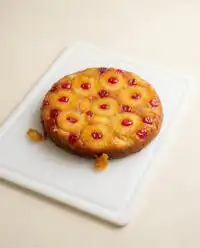
Cast Iron Skillet Pineapple Upside Down Cake
- Total Time: 1 hour 25 mins
- Yield: 8 servings
- Diet: Vegetarian
Description
This classic, nostalgic dessert features tender, moist cake topped with a golden layer of caramelized pineapples and cherries. Baked in a seasoned cast iron skillet, it provides an unforgettable, warm centerpiece for any gathering.
Ingredients
- 8 pineapple rings (canned, patted dry)
- 9 maraschino cherries
- 1/2 cup unsalted butter
- 1 cup brown sugar
- 1/2 cup sour cream
- 1/4 cup whole milk
- 1 large egg
- 1 teaspoon vanilla extract
- 2 tablespoons pineapple juice (reserved from can)
- 1 1/2 cups all-purpose flour
- 1 teaspoon baking powder
- 1/2 teaspoon baking soda
- 1/4 teaspoon salt
Instructions
- Prep oven and ingredients. Heat your oven to 350°F (177°C) and pat the pineapple rings and maraschino cherries dry with a paper towel to remove excess moisture.
- Combine wet ingredients. Whisk softened butter and brown sugar until pale, then stir in sour cream, milk, egg, vanilla, and pineapple juice.
- Fold dry ingredients. Sift in flour, baking powder, baking soda, and salt, folding gently with a wooden spoon until just combined.
- Melt butter. Set the cast iron skillet over low heat on the stovetop to melt the butter completely, then remove from heat.
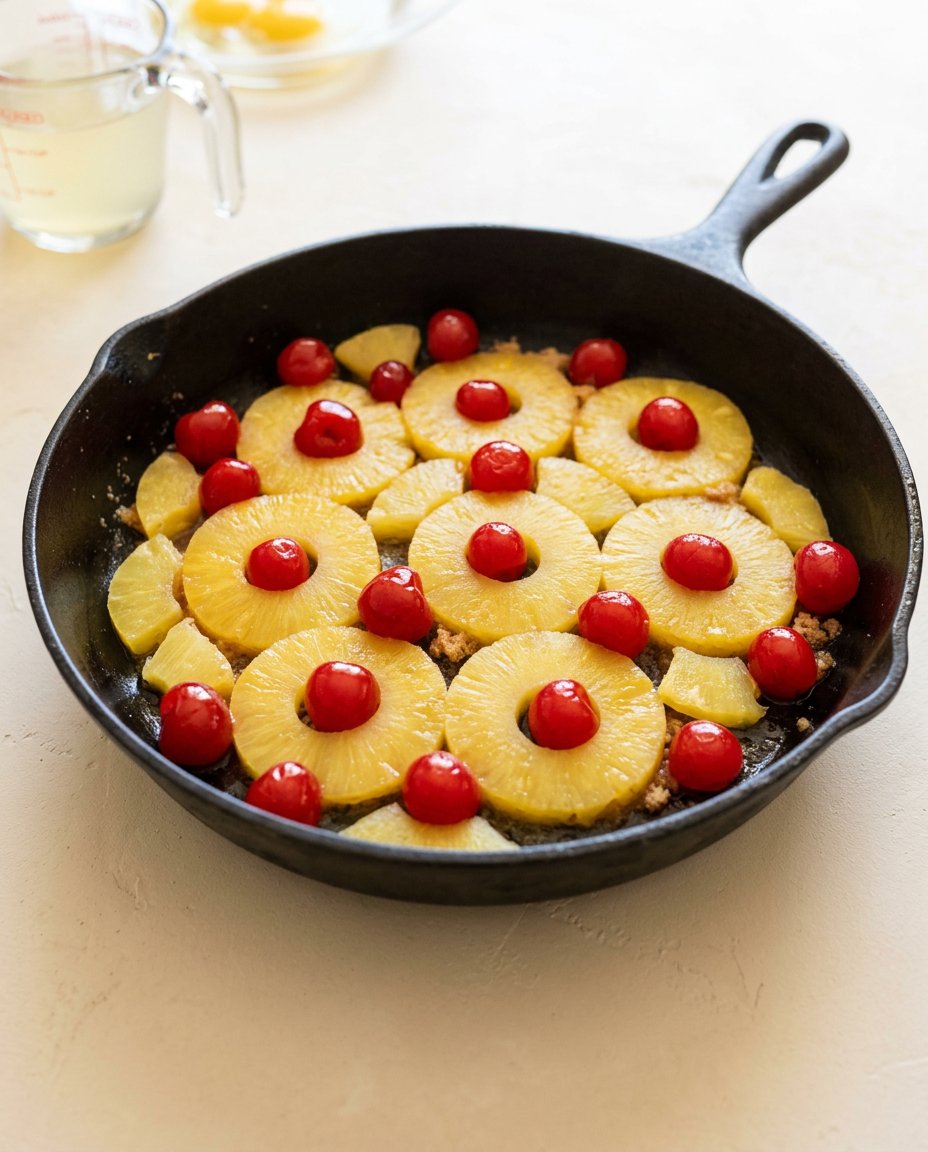
- Assemble fruit layer. Sprinkle brown sugar over the melted butter, then arrange the dried pineapple rings and cherries in a circular pattern.
- Add the batter. Spoon the batter over the fruit and spread evenly with an offset spatula, ensuring the fruit is fully covered.
- Bake the cake. Bake on the middle rack for forty-five minutes or until a toothpick inserted into the center comes out clean.
- Cool and invert. Let the cake rest for twenty-five minutes, then invert onto a serving plate carefully to reveal the caramelized topping.
Notes
- Ensure all dairy and egg components are at room temperature to prevent the butter from seizing when mixed.
- Use the spoon-and-level method when measuring flour to avoid a dense, heavy cake crumb.
- Patting the fruit thoroughly dry is essential to prevent a watery caramel layer at the base of the cake.
- Allow the cake to rest for the full duration before inverting to ensure the structure holds together perfectly.
- Prep Time: 15 mins
- Cook Time: 45 mins
- Category: Dessert
- Method: Baking
- Cuisine: American
Gathering Your Ingredients
Before we begin, let us gather the honest, simple staples that fill our pantry shelves. Each component plays an essential role in creating the tender crumb and sticky, caramelized fruit topping that defines this historic bake.
- Pineapple rings: Canned pineapple slices provide the classic fruit design while lending sweet juice to tenderize the cake batter.
- Maraschino cherries: Placed gently in the center of each ring, they add a beautiful splash of ruby color and a sweet bite.
- Unsalted butter: Melted directly in the skillet, it forms the rich foundation for our dark sugar caramel topping.
- Brown sugar: This deep sugar caramelizes against the hot cast iron, creating a rich sauce that coats the fruit.
- Sour cream: Adding this thick dairy ingredient guarantees a soft, tender cake crumb that never dries out in the oven.
- Pineapple juice: Reserved from the can, this golden nectar infuses the cake crumb with a gentle tropical aroma.
| Ingredient | Why It Matters |
|---|---|
| Pineapple rings | Yields the beautiful fruit crown and provides essential moisture. |
| Brown sugar | Melts into a dark, buttery caramel sauce against the cast iron. |
| Sour cream | Creates a tender, velvety crumb that stays soft for days. |
| Pineapple juice | Infuses the batter with natural, bright fruit flavor throughout. |
Step by Step in Teresa’s Kitchen
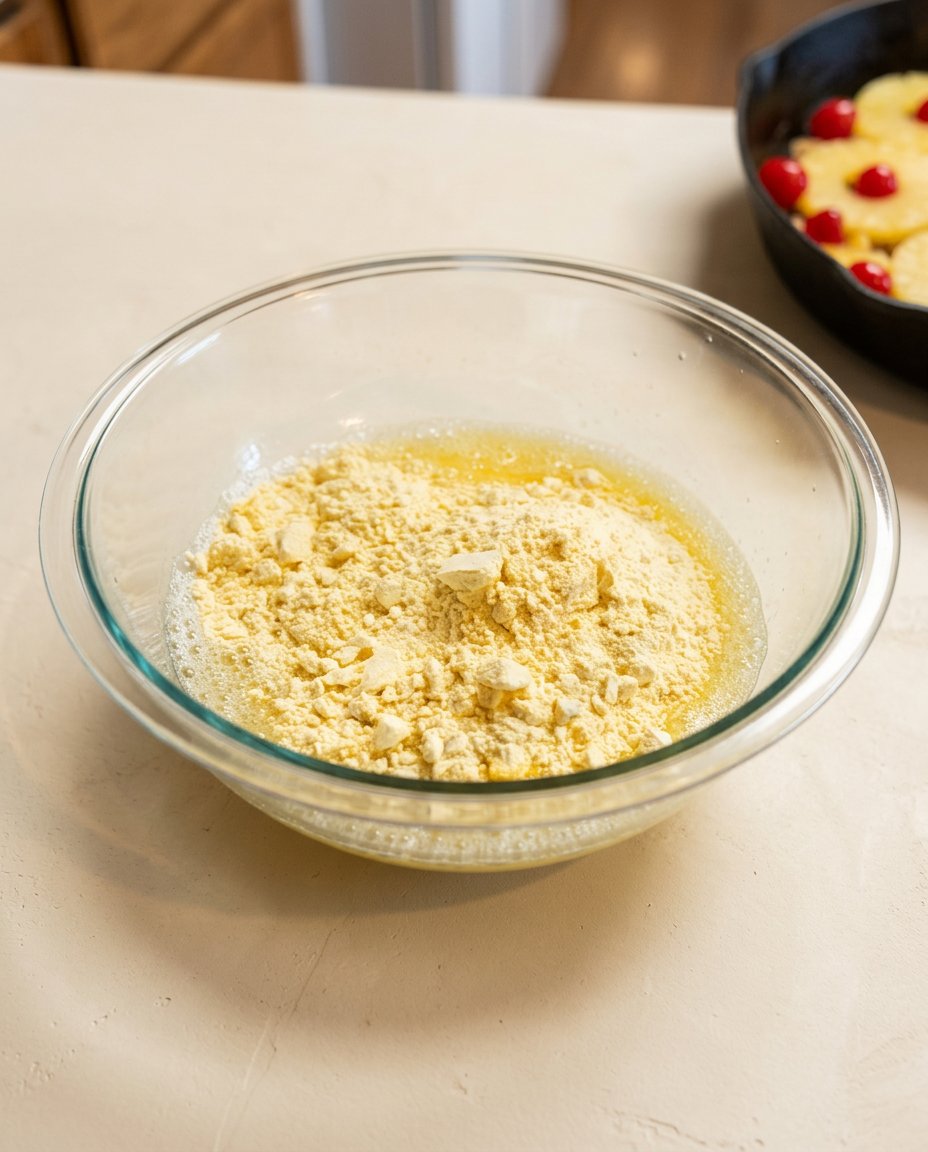
Step 1: Prep Your Oven and Ingredients
Heat your oven to 350°F (177°C) and make sure your ingredients are sitting at room temperature. Take a soft towel and pat the pineapple rings and maraschino cherries dry until no excess moisture remains on their surfaces. This small step prevents the caramelized topping from becoming soggy or watery during the baking process.
Step 2: Combine the Wet Ingredients
In a large glass bowl, whisk the softened butter and brown sugar together until the mixture is soft and pale. Gently stir in the sour cream, whole milk, large egg, vanilla extract, and golden pineapple juice. The batter will smell sweet and bright, promising a wonderfully fragrant cake.
Step 3: Fold in the Dry Ingredients
Sift the all-purpose flour, baking powder, baking soda, and salt directly into your wet mixture. Use a worn wooden spoon to gently fold the ingredients together until a thick, smooth batter forms. Be careful not to overmix, as quiet restraint here keeps the baked crumb light and tender.
Step 4: Melt the Butter in Your Cast Iron Skillet
Set your heavy cast iron skillet over low heat on the stovetop and melt the unsalted butter slowly. Once the butter is completely melted, turn off the heat to prevent the fat from burning or scorching. The warm aroma of melted butter should gently fill your kitchen space.
Step 5: Assemble the Fruit Topping
Sprinkle the dark brown sugar evenly over the warm melted butter in the bottom of your skillet. Arrange eight dried pineapple slices in a beautiful circular pattern, placing nine maraschino cherries in the centers and open spaces. This classic design is the very heart of the vintage presentation.
Step 6: Spread the Cast Iron Skillet Pineapple Upside Down Cake Batter
Spoon the thick batter gently over the arranged pineapple rings and cherries, taking care not to disturb the fruit pattern underneath. Use a offset spatula to smooth the surface of the Cast Iron Skillet Pineapple Upside Down Cake batter so it bakes evenly. The batter should cover the fruit completely, sealing the caramel beneath.
Step 7: Bake to a Rich Golden Brown
Slide the heavy skillet onto the middle rack of your preheated oven and bake for forty-five minutes. You will know the cake is ready when a wooden toothpick inserted into the center comes out clean and the edges pull away slightly from the cast iron. The kitchen will be filled with the deep scent of warm caramelized sugar and sweet vanilla.
Step 8: Cool and Flip the Warm Skillet Cake
Remove the skillet from the oven and let it rest on a wire rack for twenty-five minutes. Place a large serving plate firmly over the top of the warm skillet, then carefully invert it in one smooth, confident motion. Lift the skillet slowly to reveal the glistening, caramelized fruit topping resting beautifully on the soft cake.
Secrets from the Recipe Box
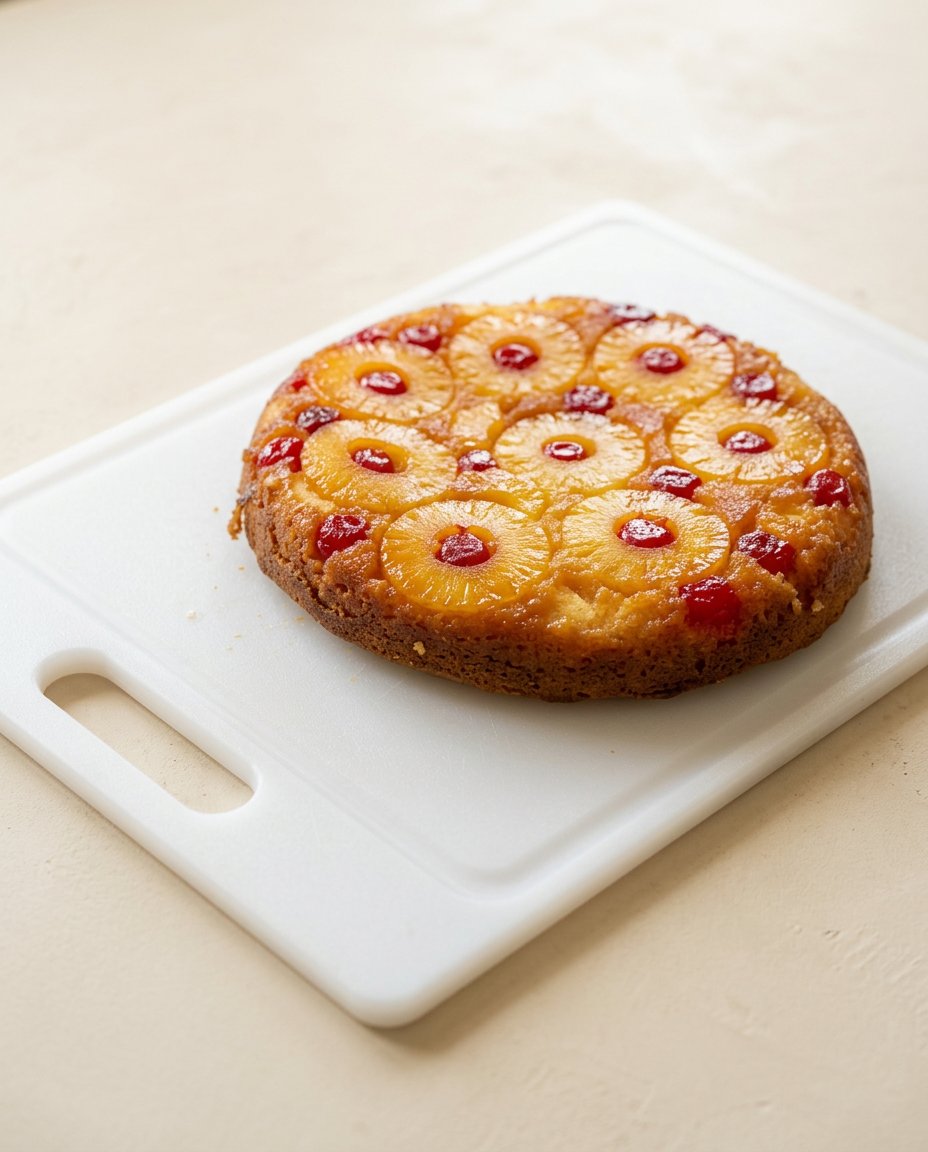
Never skip drying your pineapple slices with clean paper towels before arranging them in the cast iron skillet. If your caramelized topping turns out watery, it is usually because excess juice thinned the butter and brown sugar mixture during baking. Pressing the fruit gently between towels guarantees a thick, sticky caramel coating.
Always use a properly seasoned cast iron skillet to prevent the sweet fruit from sticking to the bottom. If pineapples stick to the pan, the skillet seasoning might be thin, or the cake cooled too long before being inverted. Learning traditional cast iron skillet baking methods will help you maintain your pan for generations.
Let the baked cake rest for exactly twenty to thirty minutes before you try to flip it onto a serving plate. Flipping too soon causes the hot cake to break apart, while waiting too long allows the caramelized sugar to cool and stick permanently to the pan. If the cake feels stuck, warm the bottom of the skillet on the stovetop for a minute to melt the sugar again.
Make sure your milk, sour cream, and egg are at room temperature before mixing them into the batter. Cold ingredients can cause the melted butter to seize and clump, which leads to an uneven crumb structure. You can read about similar batter techniques in our best pineapple cake guide.
Measure your flour using the spoon-and-level method rather than scooping directly from the bag. Scooping packs the flour tightly into the cup, which adds too much flour and makes the cake dense. A light, tender crumb depends on accurate flour measurements every single time.
Frequently Asked Questions
How do you get a pineapple upside-down cake out of a cast iron skillet?
Let the cake cool in the skillet for twenty to thirty minutes so the caramel can set slightly. Place a large, flat serving platter over the skillet, hold both firmly with oven mitts, and invert them quickly. Lift the skillet straight up slowly so the fruit releases cleanly without sliding.
Do you have to flip a skillet pineapple upside-down cake immediately?
No, do not flip the cake immediately after removing it from the oven because the caramelized topping is still too runny and hot. Waiting twenty to thirty minutes allows the structure to settle and the sugar to thicken. However, do not let it cool completely, or the caramel will harden and stick to the iron.
How do you keep pineapples from sticking to the cast iron?
Make sure your cast iron skillet is well-seasoned and generously coated with melted butter before adding the sugar. Patting the pineapple rings dry before placing them in the skillet also helps prevent sticking. If the sugar caramelizes properly in the butter, the cake will slide out easily.
Can I use a boxed cake mix for a skillet pineapple upside-down cake?
Yes, you can use a high-quality yellow cake mix if you are short on time. Simply prepare the topping in your skillet with butter, brown sugar, and fruit, then pour the prepared box batter over the top. We always recommend making the batter from scratch for the best texture and nostalgic flavor.
What size skillet is best for a pineapple upside-down cake?
A ten-inch seasoned cast iron skillet is the ideal size for this traditional recipe. It accommodates eight pineapple rings beautifully and allows the batter to bake to the perfect thickness. If you use a twelve-inch skillet, the cake will be much thinner and may bake faster.
Can I use fresh pineapple instead of canned pineapple?
Yes, fresh pineapple can be used if it is ripe, sweet, and sliced to an even thickness. Make sure to peel and core the fresh fruit carefully before cutting it into rings. Canned pineapple is often preferred because the rings are uniform in size and the juice is ready to use in the batter.
How should I store leftover pineapple upside-down cake?
Store any leftover cake in an airtight container in the refrigerator for up to three days. Because of the moist fruit topping, keeping it cold prevents spoilage and maintains the structure. Warm individual slices gently in the oven or microwave before serving.
Classic Variations
For a warm autumnal twist, you can substitute sweet sliced peaches for the canned pineapples during the late summer harvest. This adaptation creates a beautiful stone fruit dessert that pairs wonderfully with a pinch of ground cinnamon in the batter. You can read our lovely classic peach upside down cake story to see how beautiful this fruit swap looks when served.
If you want a deeper flavor, replace the light brown sugar in the topping with dark muscovado sugar. The extra molasses in the dark sugar creates a richer caramel topping that tastes almost like toffee. This variation goes wonderfully with a pinch of fresh nutmeg grated into the cake batter.
You can bake this cake in a square baking dish or round cake pan if you do not own a cast iron skillet. Make sure to grease the pan thoroughly with butter before adding the brown sugar and fruit layer. While you lose the exceptional heat retention of cast iron, the cake remains sweet, tender, and incredibly comforting.
Sitting Down Together
This warm skillet cake is best enjoyed when sliced directly at the table while still slightly warm from the oven. Serve each sweet portion with a simple dollop of freshly whipped cream or a scoop of cold vanilla bean ice cream. The cold cream melts beautifully into the warm caramel sauce, creating a wonderful contrast of temperatures.
Hang out with your loved ones around the table on a quiet Sunday afternoon to share this nostalgic dessert. Pour hot black tea or freshly brewed coffee to balance the rich sweetness of the caramelized brown sugar topping. You can find inspiration for creating beautiful family memories around classic desserts in our brown sugar peach upside down cake story.
For a lovely summer gathering, place the skillet in the center of a rustic wooden table decorated with fresh wildflowers. The golden pineapple rings and bright cherries make an elegant presentation that requires no extra decoration. Sharing this cake is a gentle reminder of the simple joys of home baking.

Before You Close the Recipe Box
Baking this classic cake is a beautiful way to slow down and honor the traditions of those who baked before us. The simple combination of sweet pineapples, caramelized sugar, and a tender cake crumb never fails to bring warmth to the heart. We hope this heirloom recipe brings joy and comfort to your kitchen table.
If you enjoyed this vintage bake, we invite you to explore more traditional recipes from our kitchen. Our comforting no bake caramel peach upside down cake story offers another wonderful way to enjoy caramelized fruit desserts. Let us continue to keep the old ways of baking alive, one sweet slice at a time.
Please share your baking journey with us by leaving a comment below or sharing your beautiful skillet cakes on our social spaces. You can find more vintage baking inspiration and connect with our community on Pinterest, Facebook, and TikTok. Until we meet again in the kitchen, bake with love and patience.