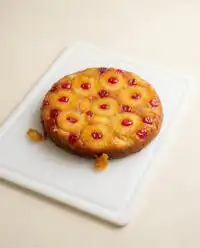
My grandmother always said that some fruits are meant to be turned upside down so their sweet juices can soak directly into the heart of the cake.

There is a quiet rhythm to baking a Mango Upside Down Cake that modern recipes often overlook. Standing at the counter, you watch the sugar turn a deep amber, smelling the sweet scent as it fills the kitchen. The kitchen table feels still and peaceful, far removed from the rush of the world outside. When you flip the warm pan, the caramelized fruit reveals its golden beauty, reminding us of simpler times.
Why This Mango Upside Down Cake Belongs on Your Table
Prep: 20 min · Serves: 8 · Difficulty: Medium
- Rich caramel topping made from scratch
- Tender crumb that stays moist for days
- Golden mangoes that caramelize beautifully in the oven
- Simple ingredients found on your pantry shelves
- Warm memories of grandmother’s cozy kitchen
This classic peach upside down cake inspired me to bring the same comforting warmth to our summer table with sweet, fresh mangoes. This is the sweet dessert my family gathers around the table for during warm summer afternoons.
Get The Full Cake Recipe
Print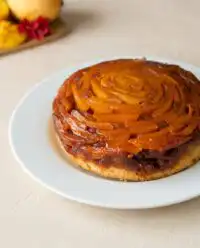
Mango Upside Down Cake
- Total Time: 1 hour 5 mins
- Yield: 8 servings
Description
This traditional Mango Upside Down Cake features a rich, scratch-made amber caramel topping and a tender, moist crumb. Perfect for summer gatherings, this classic dessert highlights the beautiful, tropical sweetness of caramelized mango slices.
Ingredients
- Fresh mango slices
- Unsalted butter
- All-purpose flour
- Powdered sugar
- Granulated sugar
- Whole milk
- Eggs
- Baking powder
- Salt
- Vanilla essence
Instructions
- Caramelize the sugar. Heat granulated sugar and water in a heavy saucepan until it reaches a deep amber color, then pour into a square baking pan.
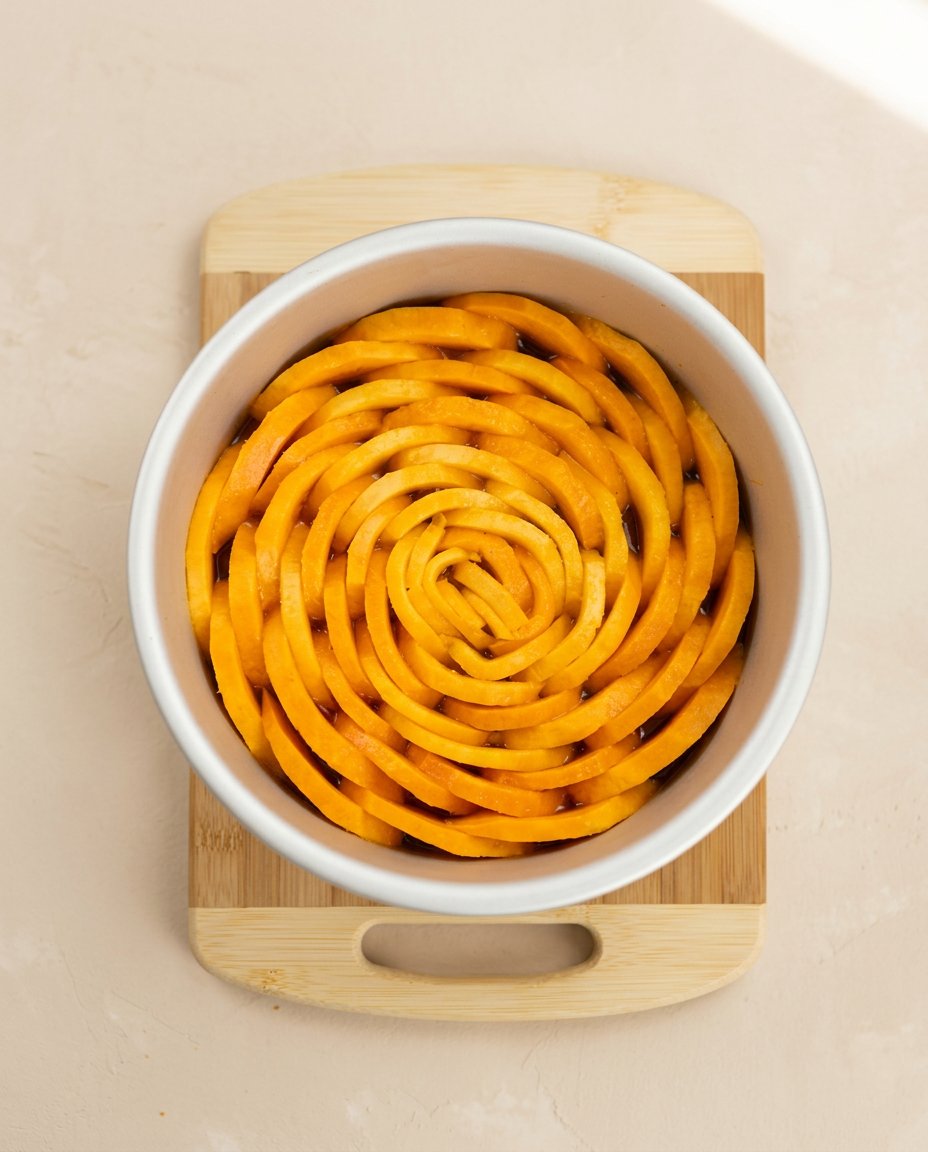
- Arrange the fruit. Place fresh mango slices closely together over the warm caramel layer.
- Cream butter and sugar. Beat room-temperature butter and sifted powdered sugar in a large bowl until light and fluffy.
- Add the eggs. Incorporate eggs one at a time, beating thoroughly after each addition until smooth.
- Sift dry ingredients. Combine flour, baking powder, and a pinch of salt by sifting them into the wet mixture.
- Mix the batter. Add milk and vanilla, then gently fold the dry ingredients into the wet until just combined.
- Fill the pan. Spread the batter evenly over the mango slices, smoothing the top and tapping to release air bubbles.
- Bake the cake. Bake at 180 C (350 F) for 35 to 40 minutes until golden and a toothpick comes out clean.
- Flip and serve. Rest for 10 minutes, loosen edges, and invert onto a platter to reveal the caramel-coated mangoes.
Notes
- Use firm, ripe mangoes to prevent the topping from becoming soggy during the baking process.
- Ensure all dairy and eggs are at room temperature to achieve a stable and smooth batter emulsion.
- Avoid over-mixing the batter once the flour is added to maintain a light and tender cake texture.
- The cake must rest for exactly ten minutes before flipping to ensure the caramel remains intact and the fruit stays in place.
- Always use a heavy-bottomed saucepan for the caramel to ensure even heat distribution and prevent burning.
- Prep Time: 20 mins
- Cook Time: 45 mins
- Category: Dessert
- Method: Baking
- Cuisine: American
Gathering Your Ingredients

Before we begin, let us gather what we need from our pantry shelves. Preparing our ingredients at room temperature is the secret to a smooth batter that bakes evenly. Taking this unhurried step respects the old way of baking that my grandmother always practiced.
- Fresh Mango Slices: Sweet, firm fruit provides the golden topping that defines this traditional dessert.
- Unsalted Butter: High-quality butter creates a rich, tender crumb that melts in your mouth.
- All-Purpose Flour: This staple provides the classic structure, making the cake soft yet sturdy enough to hold the fruit.
- Powdered Sugar: Using finely milled sugar helps the batter stay light, fluffy, and incredibly smooth.
- Caramelized Sugar: Cooking granulated sugar with a splash of water creates the deep amber lacquer that coats the fruit.
- Whole Milk: A splash of milk adds the necessary moisture to bind our dry ingredients together beautifully.
| Ingredient | Why It Matters |
|---|---|
| Fresh Mango Slices | Forms the sweet, caramelized topping when flipped |
| Unsalted Butter | Brings richness and a soft, delicate crumb to the cake |
| All-Purpose Flour | Gives the cake its traditional structure and stability |
| Powdered Sugar | Creates a tender texture that keeps the cake moist |
Step by Step in Teresa’s Kitchen
Step 1: Caramelize the Sugar
We start by heating the granulated sugar and water in a small, heavy saucepan over low heat. Watch the sugar closely as it melts, resisting any urge to stir the pan. After about twelve to fifteen minutes, the liquid will transform into a rich, deep amber caramel. Pour this warm, golden caramel directly into your square baking pan, tilting it gently to coat the bottom.
Step 2: Arrange the Sweet Fruit
Carefully lay the fresh fruit slices over the warm caramel layer in your baking pan. You want to arrange them closely together, as they will shrink slightly while baking in the oven. The yellow fruit looks like a mosaic against the dark amber caramel. Set the pan aside on your counter while we prepare the cake batter.
Step 3: Cream the Butter and Sugar
In a large glass bowl, place your room-temperature butter and beat it gently with a wooden spoon or mixer. Once the butter is soft and pale, sift in your powdered sugar. Beat these ingredients together until the mixture is light and fluffy. This step incorporates the tiny pockets of air that give our cake its tender texture.
Step 4: Incorporate the Farm-Fresh Eggs
Add the eggs one at a time, beating thoroughly after each addition. Each egg should be completely absorbed before the next one is introduced to the bowl. The batter will look creamy and smooth as the eggs emulsify with the sweet butter. If the mixture looks slightly curdled, do not worry, as the flour will bring it back together.
Step 5: Sift the Dry Ingredients
Set a fine sifter over your bowl of creamed ingredients. Measure your all-purpose flour, baking powder, and a pinch of salt directly into the sifter. Tap the side gently, letting the flour fall like a soft blanket of winter snow over the wet ingredients. Sifting together is the traditional way to remove lumps and distribute the leavening evenly.
Step 6: Mix the Mango Upside Down Cake Batter
Pour in the fresh milk and vanilla essence, then gently fold the flour mixture into the wet ingredients. Use a wide spatula to fold from the bottom of the bowl upward, combining the ingredients without overworking the gluten. The batter should be thick, smooth, and fragrant with the warm scent of real vanilla. This is the heart of our Mango Upside Down Cake.
Step 7: Fill the Baking Pan
Spoon the thick batter gently over the arranged mango slices in your baking pan. Use an offset spatula to spread the batter evenly, being careful not to disturb the fruit underneath. Tap the pan gently on your wooden counter once or twice to release any trapped air bubbles. The batter should completely cover the caramel and fruit, sealing them inside.
Step 8: Bake to Golden Perfection
Place the pan in your preheated oven at 180 C (350 F) and bake for thirty-five to forty minutes. The kitchen will soon fill with the warm, sweet aroma of caramelized fruit and butter. You will know the cake is done when the top is golden brown and a toothpick inserted into the center comes out clean. Let the pan rest on a wire rack for ten minutes before flipping.
Step 9: The Final Flip
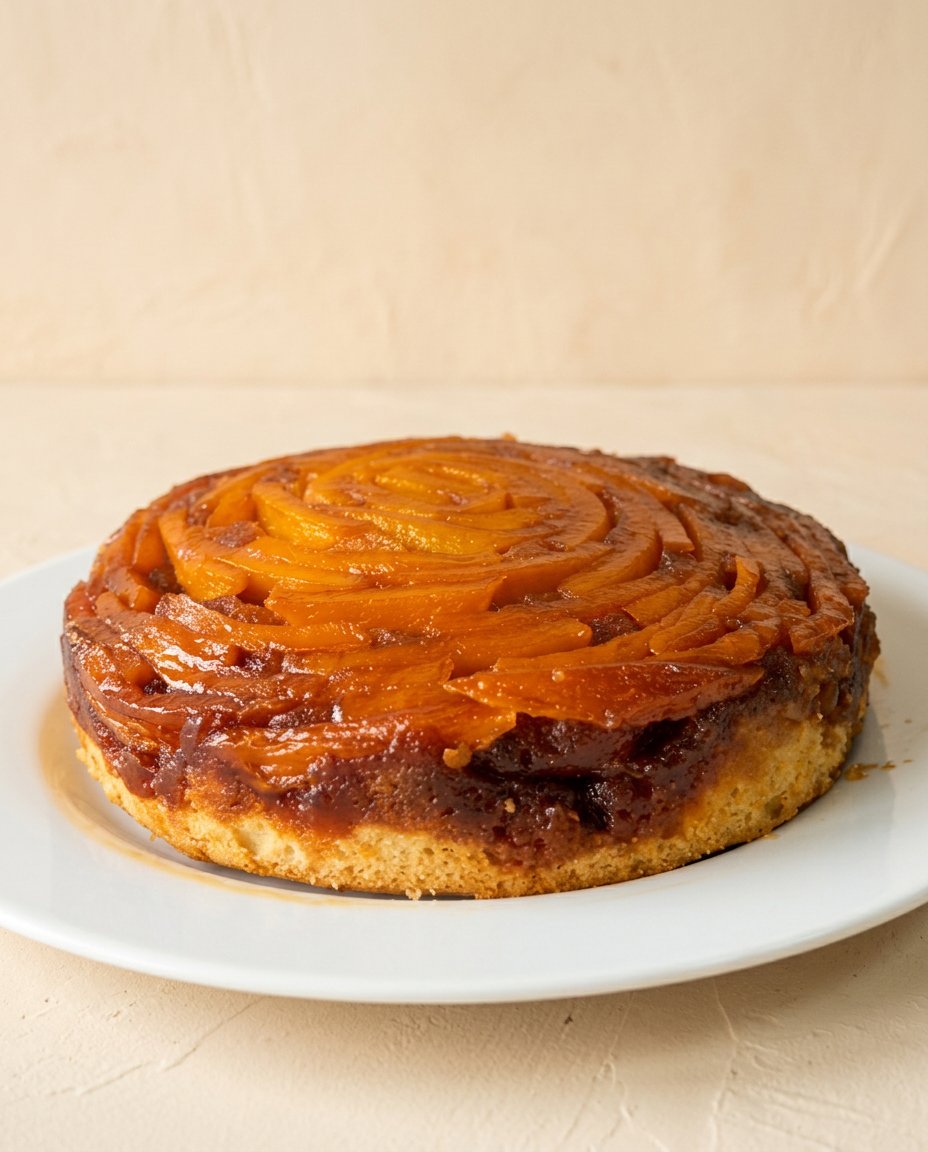
Run a thin knife carefully around the edges of the warm pan to loosen the cake from the sides. Place a large serving platter upside down over the pan, then firmly grasp both and flip them over in one smooth motion. Let the pan rest upside down for a quiet moment, allowing the caramel to drizzle down over the fruit. Gently lift the pan to reveal the beautiful, caramelized topping.
Secrets from the Recipe Box
To keep your fruit from sticking, always use a high-quality baking pan and grease the sides well even though the caramel coats the bottom. If you find the caramel has hardened too quickly before you can arrange the fruit, place the pan in the warm oven for a minute to soften it. This gentle warmth makes the amber base pliable once again without burning.
Selecting the right fruit is crucial for achieving the perfect texture in your final bake. Choose mangoes that are sweet and fragrant but still firm to the touch when gently squeezed. If you use fruit that is too ripe, it will release too much moisture during baking and make the top of your cake soggy.
If your cake turns out dry or dense, it is often because the flour was measured too heavily in the kitchen. Traditional bakers always spoon the flour into the measuring cup and level it off rather than scooping directly from the bag. To master this classic texture, you might also enjoy reading our traditional apple cake recipe for more guidance on scratch baking.
When caramelizing sugar, always use a heavy-bottomed saucepan to distribute the heat evenly. If your sugar begins to crystallize or turn grainy, a tiny pinch of cream of tartar added to the water can prevent this. Never leave the stove during this process, as caramel can go from golden to burnt in a matter of seconds.
Allowing your eggs and butter to reach room temperature before mixing is essential for a smooth emulsion. Cold ingredients will cause the creamed butter to seize, resulting in an uneven bake and a dense crumb. If your batter appears split, warm the bowl gently over a pot of steaming water for a few seconds to restore its creamy texture.
Letting the baked cake rest for exactly ten minutes before flipping is the golden rule of upside-down baking. If you flip the cake too early, the delicate fruit topping may slide off the warm surface. If you wait too long, the caramel will cool and stick to the pan, leaving the beautiful fruit behind.
Frequently Asked Questions
How do you flip an upside-down cake without breaking it?
To flip the cake safely, let it cool for exactly ten minutes so the structure sets. Place a flat serving platter over the pan, hold both firmly with oven mitts, and turn them over in one swift, confident motion. Let the pan sit for a moment before lifting it straight up.
Should you eat mango upside-down cake warm or cold?
This traditional dessert is best enjoyed warm from the oven when the caramel is still soft and gooey. However, it is also delicious when served cold the next day with a cup of hot tea. The sweetness of the mangoes deepens as the cake rests.
Can you make mango upside-down cake in a skillet?
Yes, a well-seasoned cast-iron skillet is a wonderful vessel for this rustic bake. The heavy metal distributes the heat beautifully, creating a deep caramel and a crisp edge. Prepare the caramel directly in the skillet on the stove before arranging the fruit.
What is the best type of mango for upside-down cake?
Firm, sweet varieties like Kent, Keitt, or Tommy Atkins work beautifully because they hold their shape during baking. Avoid overly stringy or fibrous mangoes, as they can be difficult to slice and chew. The fruit should be ripe but still firm.
Can you use canned or frozen mangoes?
While fresh fruit is always preferred in our kitchen, you can use frozen mango slices if they are thoroughly thawed and patted dry. Avoid canned mangoes as they are often packed in syrup and contain too much moisture. This excess liquid will make the cake soggy.
Does mango upside-down cake turn brown when baked?
The cake batter will bake to a beautiful golden brown, while the mangoes on the bottom will caramelize into a deep yellow-orange. The caramel sauce coats the fruit, giving it a rich amber glaze when flipped. If the top of the cake browns too quickly in the oven, tent it loosely with foil.
Can you substitute mango for pineapple in upside-down cake?
Absolutely, this recipe can be adapted with pineapple slices for a classic vintage dessert. The buttery crumb pairs beautifully with almost any sweet, acidic fruit. Ensure the fruit slices are of a uniform thickness to ensure even baking.
Through the Seasons
During the autumn months when mangoes are scarce, you can adapt this recipe using other sweet stone fruits. Slices of ripe peaches or plums make a wonderful alternative that caramelizes just as beautifully under the sweet butter batter. For a classic take on stone fruit baking, you can try our beloved peach cake to bring warmth to your table.
Adding a hint of warm spice to the flour mixture can create a deeper flavor profile for cozy winter evenings. A pinch of ground cardamom or fresh ginger folded into the batter complements the sweet mango perfectly. These gentle spices heighten the tropical fruit notes, reminiscent of the traditional spices used in this traditional mango upside down cake preparation.
If you prefer a smaller dessert, this recipe can be easily baked in individual ramekins or small cast-iron skillets. This rustic presentation is perfect for intimate family gatherings where each guest receives their own golden portion. Adjust the baking time down to twenty minutes, watching for that familiar golden brown edge to appear.
At the Table
Serving this dessert is an occasion in itself, best shared with loved ones around a sun-drenched table. A warm slice of this cake needs very little accompaniment, as the caramel sauce provides ample sweetness. A simple dollop of unsweetened whipped cream or a scoop of vanilla bean ice cream balancing on the side is perfect.
For an afternoon gathering, pair this sweet treat with a pot of hot black tea or freshly brewed coffee. The bitterness of the warm drink contrasts beautifully with the rich, caramelized mangoes and buttery crumb. This is the ultimate cake with fruit to celebrate the simple joy of baking from scratch on a quiet Sunday.
When presenting the cake, slice it using a sharp serrated knife to cut clean through the caramelized fruit layer. Wipe the blade with a warm, damp cloth between slices to make sure each piece looks beautiful on the plate. Sharing these golden slices is a simple way to bring a touch of sunshine to your family table.
Before You Close the Recipe Box
As you slide the warm cake onto your favorite platter, you are participating in a tradition that spans generations. Baking from scratch is not about speed or convenience; it is a quiet act of love. This golden dessert brings a piece of summer into your home, letting you slow down and savor the sweet moments.
If you found comfort in this baking journey, you might also enjoy reading our classic peach upside down cake story for more nostalgic inspiration. Our recipe box is filled with simple, honest treats meant to be shared with those you cherish most.
We invite you to share your baking journey with us and join our community of vintage bakers. You can find more cherished family favorites and behind-the-scenes moments from our kitchen on Pinterest, Facebook, and TikTok. Until we meet again at the mixing bowl, keep your kitchen warm and your heart full.